

Natural Selection
Natural Selection Is Not Evolution!
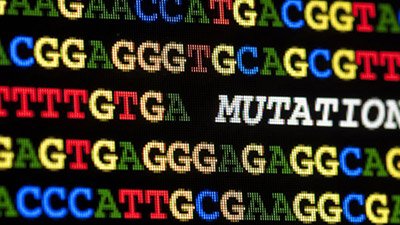
The supposed vehicles of evolution are mutations, natural selection, and other mechanisms that—when combined with that pixie dust of time—allegedly led to the development of all life forms present today. However, natural selection merely redistributes or reduces preexisting genetic information, and mutations often corrupt the information.
Natural Selection and Creationists
The creationist view of natural selection is supported biblically and scientifically. Natural selection is a God-ordained process that allows organisms to survive. It is an observable reality that occurs in the present and takes advantage of the variations within the kinds and works to preserve the genetic viability of the kinds.
Natural Selection and New Information
Natural selection cannot generate brand new genetic information. It simply doesn’t work that way. Instead, it filters information that already exists. The general theory of evolution is the idea that single-celled organisms gained new genetic information over millions and billions of years, and eventually arrived at “higher life-forms” such as man.
Adaptation in Plants
If living things such as plants have been observed to adapt to their environment—isn’t that evolution? Adaptation of plants does not prove evolution.
Does Natural Selection Prove Evolution?
Distinguishing natural selection from Darwinian evolution (the latter combines natural selection with the idea that all life has an ancestor in common) is one of the primary challenges modern creationists face in the origins debate. Experimental confirmation of natural selection is interpreted as proof of Darwin’s theory.
Natural Selection Topics

Articles About Natural Selection
-
Sept. 9, 2025 from Answers in Depth
How biblical kinds differ from modern species, a history of speciation models, and why the biblical model better explains the natural world
-
May 3, 2019 from Answers in Depth
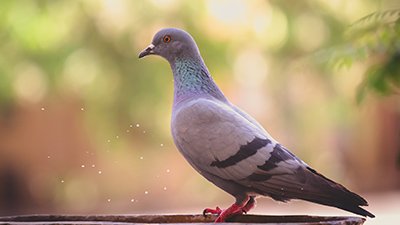
A study looked at the colors of lice on the feathers of numerous varieties of pigeons. According to the authors, the research was proof of evolution. Is it so?
-
Aug. 5, 2017 from Essays on Origins: Creation vs. Evolution
Darwin reasoned that if animals can be selectively bred by man to produce certain traits, then nature can select for limitless traits by natural selection.
-
Dec. 22, 2016 from Answers in Depth
Scientists from Northwestern University have developed a mathematical model that may help explain animal ornamental mysteries.
-
Book Chapter2.4 Natural Selection, Yes; Evolution, NoMarch 28, 2016 from Creation: Facts of Life
Natural selection does not lead to continual improvement (evolution); it only helps to maintain features that organisms already have (creation).
-
Book Chapter2.3 Change, Yes; Evolution, NoMarch 26, 2016 from Creation: Facts of Life
There are obviously all kinds of “change through time” that are not evolution, so evolution must be only a particular kind of change through time.
-
Book Chapter2.2 Natural SelectionMarch 19, 2016 from Creation: Facts of Life
There is considerable evidence that Darwin was indeed correct about natural selection and the “war of nature.”
-
Jan. 1, 2016 from Answers Magazine
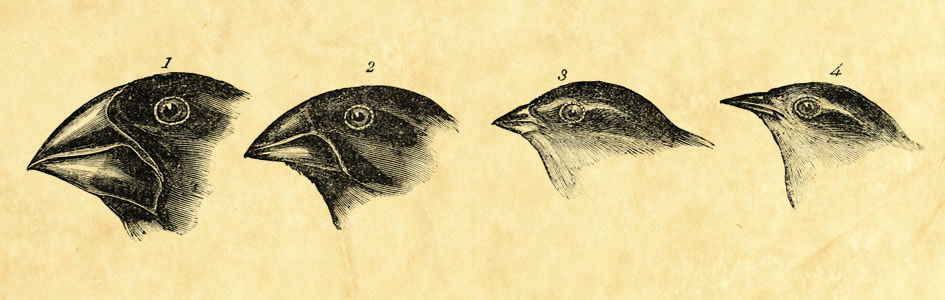
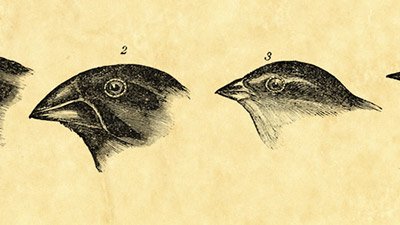
When Charles Darwin studied finches from the Galápagos Islands, he attributed their variations to natural selection. Is there any truth to his claims?
-
Magazine Department ArticleBig Bang and Evolution Still a Big Question . . .July 1, 2014 from Answers Magazine
Statistics from an AP poll conducted in March 2014
-
In-Depth ArticleHow Cavefish Went Blind, and Why It MattersFeb. 17, 2014 from Answers in Depth
What makes cavefish go blind? Now we know (or at least we have evidence for a strong possibility). But it isn’t evolution!
-
July 1, 2013 from Answers Magazine
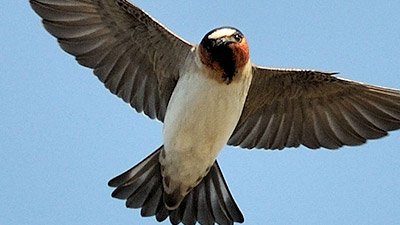
Natural selection does not produce new genetic information that leads to different types of birds.
-
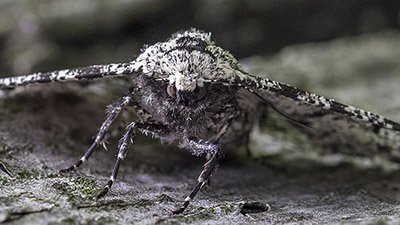
Peppered Moth AgainFeb. 18, 2012 from News to Know
Peppered moth: “the poster child of Darwinian evolution”
-
-
Jan. 22, 2012 from Answers Magazine
Creationists believe in natural selection.
-
Yeast Begat YeastJan. 21, 2012 from News to Know
“Evolution in progress” said to show how easily multicellularity evolved
-
Warp Factor Evolution, LieutenantJan. 7, 2012 from News to Know
Bulletin: salmon evolve at warp speed . . . into salmon!
-
-
The Eyes Have ItApril 30, 2011 from News to Know
So with peacocks—the classic Darwinian example of sexual selection—do the eyes have it or not?
-
Skin Color and Natural SelectionFeb. 26, 2011 from News to Know
Another prominently reported example of “evolution” illustrates just the opposite—and supports the creationist critique of Darwinian evolution


Support the creation/gospel message by donating or getting involved!

Answers in Genesis is an apologetics ministry, dedicated to helping Christians defend their faith and proclaim the good news of Jesus Christ.
- Customer Service 800.778.3390
- Available Monday–Friday | 9 AM–5 PM ET
- © 2026 Answers in Genesis