


Insects
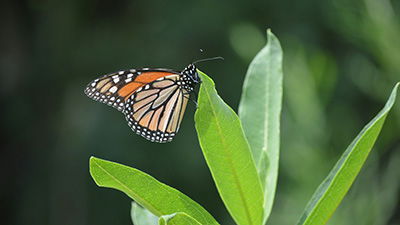
Beautiful Butterflies
Butterflies are found worldwide. They live on every continent, except Antarctica, and in many diverse environments. They come in a variety of shapes and sizes, and their colors span the rainbow. Like flowers in flight, butterflies manifest the artwork of God across the globe.
Fire-loving Beetle
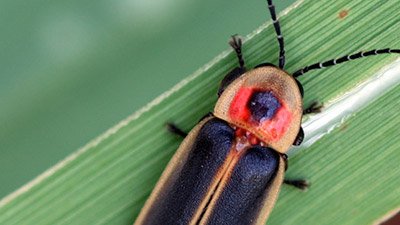
The Melanophila beetle is one of many creatures that actually hunt for fires. Its name means “black-loving” because the beetle likes freshly burned, blackened wood, where the female lays her eggs. Often the charred wood is still hot and smoldering when the beetles arrive.
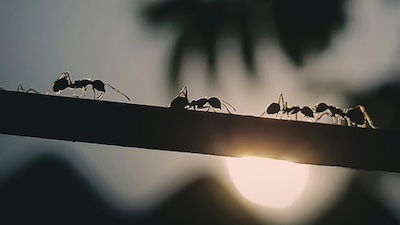
Amazing Ants
Ants have taken over the world, it seems, but they didn’t do it alone! One reason they’re so successful is their ability to communicate with each other—where to go, what to watch out for, how to help.
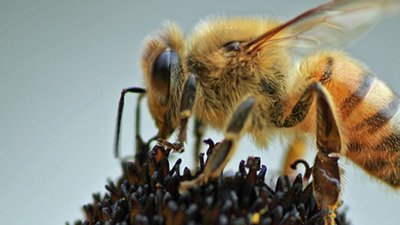
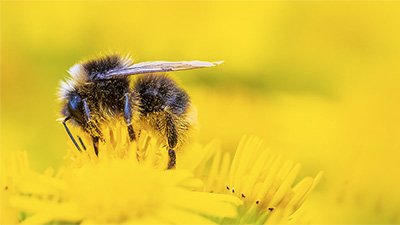
Bee Scouts
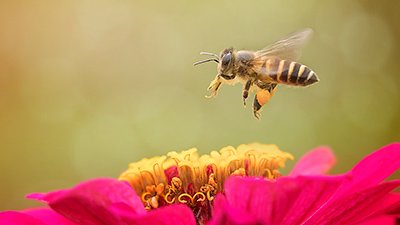
Bee scouts seek out new flowers and new sources of food. But what motivates a bee scout? What makes her take risks, explore the unfamiliar, unselfishly bring back news of her discoveries and set out again to spend herself for the sake of the hive?
Articles About Insects
-
Oct. 1, 2025 from Answers Magazine
Many creatures camouflage to evade predators, but the orchid mantis uses its costume to attract a meal.
-
Sept. 23, 2025 from Ken Ham Blog
Scientists have observed, for the first time ever, queen Iberian harvester ants cloning another species.
-
June 20, 2025 from Ken Ham Blog
Which came first—the butterfly or the flower? Evolutionary ideas claim the butterfly existed long before flowering plants, but does this make the best sense of the evidence?
-
Jan. 2, 2024 from Answers Magazine
The next time you see a honeybee, take a moment to thank the Creator for his abundant provision through these amazing little creatures.
-
Oct. 20, 2023 from Answers in Depth
Carpenter ant colonies evade zombie apocalypse because only the climbing dead become weapons of mass dispersion.
-
Oct. 15, 2023 from Answers Magazine
If God is good, why are some creatures so bad?
-
June 18, 2023 from Answers Magazine
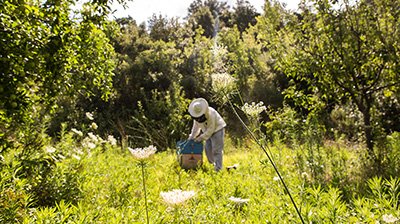
The author experienced firsthand God’s incredible design for bees—and mankind’s opportunity to steward even the smallest of God’s creatures.
-
Jan. 8, 2023 from Answers Magazine
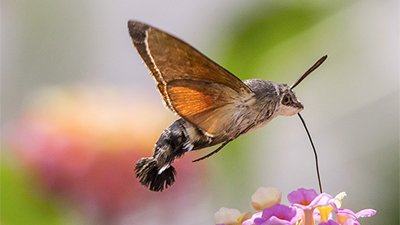
This agile flyer scoots in and out of tight spots faster than any plane Boeing or Airbus ever dreamed of.
-
Oct. 20, 2022 from Ken Ham Blog
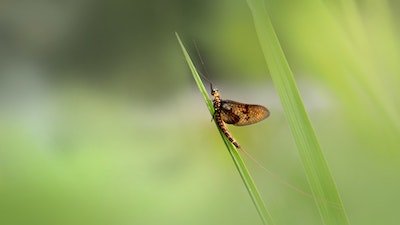
Breaking news: ancient (“35-million-year-old”) mayflies looked extremely similar to modern-day mayflies!
-
Oct. 9, 2022 from Answers Magazine
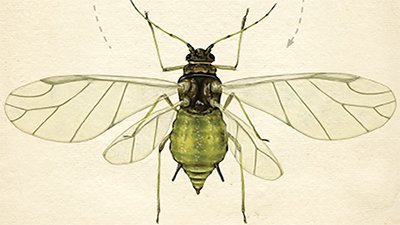
Animals that can grow wings in a single generation—only an imaginative Creator could think of that!
-
July 1, 2022 from Answers Magazine
A bumblebee may be an unwelcome sound to you. But for a flower, it’s positively electric.
-
Jan. 1, 2022 from Answers Magazine
This beetle’s colors serve as camouflage against the dense backdrop of trees and plants. How is this possible?
-
April 24, 2021 from Answers Magazine
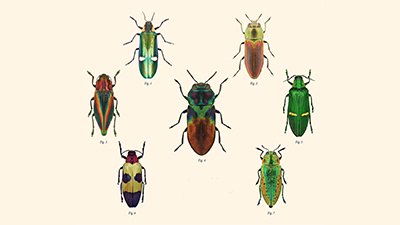
The most diverse order of animals on the planet is by far the beetle order. God shows how He can take one design and create a spectacular array of forms.
-
Sept. 6, 2020 from Answers Magazine
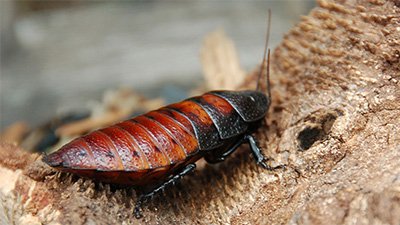
Shy, gentle, and easy to care for — does the hissing cockroach sound like an ideal pet?
-
Feb. 23, 2020 from Answers Magazine
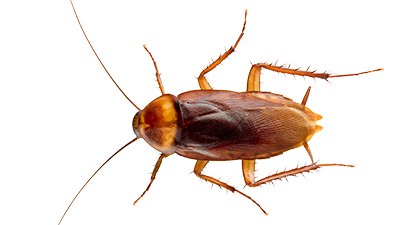
Despite their bad reputation, cockroaches were designed to do good things.
-
Dec. 22, 2019 from Answers Magazine
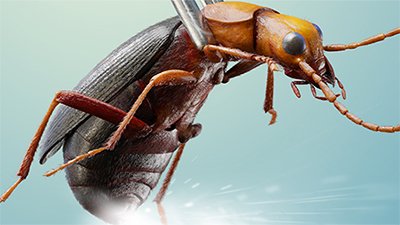
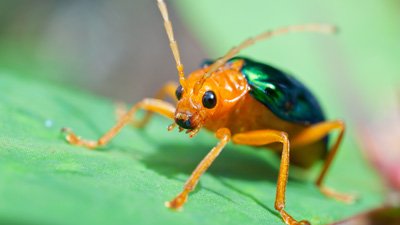
When Dr. Andy McIntosh investigated the bombardier beetle, he discovered explosive evidence of God’s intricate design.
-
Oct. 19, 2019 from The New Answers Book 4
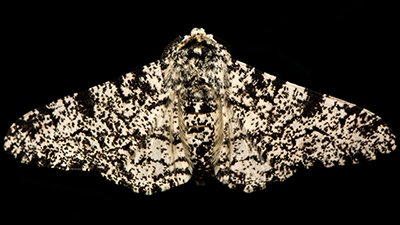
The story of the peppered moth has been set forth for decades as the prime example of evolution in action. But, are they really evidence of evolution?
-
June 26, 2019 from Answers in Depth
It was recently discovered that double-stranded microRNA (miRNAs) fed to honey bees conferred resistance to certain viral diseases that they were exposed to.
-
March 1, 2019 from Answers Magazine
When they work together, these insignificant insects can accomplish significant things.
-
Aug. 17, 2018 from Answers in Depth
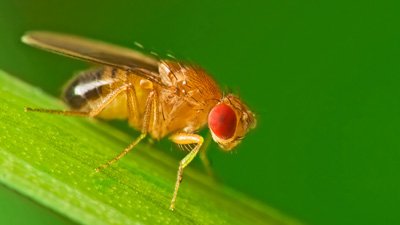
While design may be seen in all living creatures, the early development of the fruit fly shows the making of a “simple” fruit fly exhibits forethought.
-
Feb. 20, 2018 from Ken Ham Blog
Bombardier beetles are often discussed in creation literature because of their incredible design features, including the ability to shoot a boiling, noxious gas so they can escape predators.
-
Jan. 31, 2018 from Answers in Depth
How should young-earth creationists explain the formation of highly specific relationships between plants and insects?
-
Aug. 15, 2017 from 10 Cursed Creatures with Undeniable Design
The bombardier beetle’s tail end is equipped with twin “spray nozzles” (or gland openings) to shoot its gaseous ammunition.



Support the creation/gospel message by donating or getting involved!

Answers in Genesis is an apologetics ministry, dedicated to helping Christians defend their faith and proclaim the good news of Jesus Christ.
- Customer Service 800.778.3390
- Available Monday–Friday | 9 AM–5 PM ET
- © 2026 Answers in Genesis