

Mammals
Live-birth or Eggs?
Evolutionists aren’t joking when they ask, “What came first, the live-birth or the egg?” Evolutionists generally consider the egg-laying mode of reproduction to be more primitive than live-bearing. If egg-laying really is more primitive, then where are all the early egg-laying mammals?
The Platypus—Egg Laying Mammal?
The platypus has perplexed scientists since its discovery by Europeans in the late 18th century. There is nothing in the fossil record to indicate that the platypus was ever anything other than a platypus. It is not a living “transitional” form. It is a truly unique creature, and one that continues to baffle those who insist on making it fit into an evolutionary tree.
Apes and Tools
While apes are skilled tool-users, their skills are generally no better than the abilities of some birds, dolphins, and some elephants. As creationists, we know that the anatomical similarities between man and ape are the result not of a common ancestor, but of a common Creator. Furthermore, man was made in God’s image (Genesis 1:26–27).
The Cat Kind
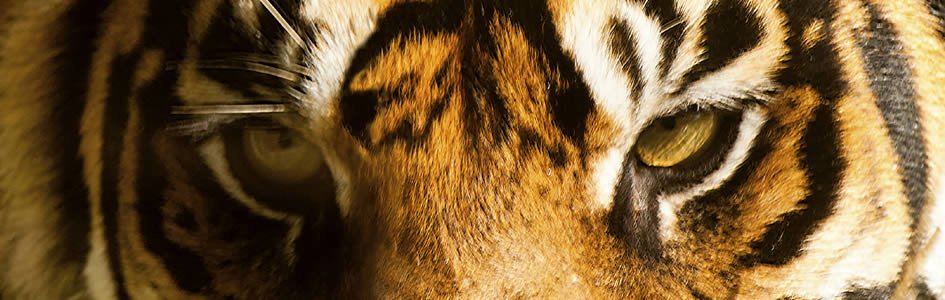
Whether it’s a fierce tiger basking in the sunshine or a fun-loving tomcat crouched and waiting to play with its owner, one of the most beautiful of God’s creatures is the cat. Big or small, roaring or purring, cats possess unique characteristics: they are meticulous groomers, they love to slink, pounce, and play, and they are independent.
The Dog Kind
The originally created canine, like all kinds of creatures, was created to reproduce after its kind. The canine genome originally created by God has provided the raw material for an innumerable variety of canines, but they are all still canines. No evolution in the molecules-to-man sense was required to produce dog diversity.
Articles About Mammals
-
Jan. 1, 2015 from Answers Magazine
Rummaging in the trash heap, scrambling to avoid cars at night—the opossum’s pervasiveness is a testament to his unique design: to make do.
-
July 1, 2014 from Answers Magazine
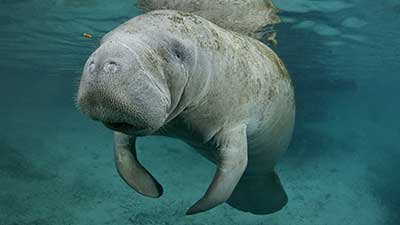
Gentle cows calmly grazing on fields of grass . . . at the bottom of the sea. Sound like science fiction?
-
Magazine Department ArticleThe Aww-Inspiring KoalaJan. 1, 2014 from Answers Magazine
If you hear “cute” and “Down Under,” what comes to mind? Surely it’s the koala.
-
Oct. 1, 2013 from Answers Magazine
Those pudgy pachyderms might look cute in the zoo, but don’t cross one in the wild.
-
Magazine ArticlePinnipeds—Blurring the BoundariesOct. 1, 2013 from Answers Magazine
We love to categorize creatures into neat little niches. But what about those strange creatures that dip their fins in two different worlds?
-
Which Came First: Egg-Laying or Live Bearing Mammals?Sept. 1, 2012 from News to Know
“Eggs-actly what evolved first, egg-laying or live-bearing mammals?” evolutionists ask.
-
Tiptoes and TrunksJan. 7, 2012 from News to Know
The “sixth” key to a balanced view of foot evolution . . . or design!
-
Oct. 1, 2011 from Answers Magazine
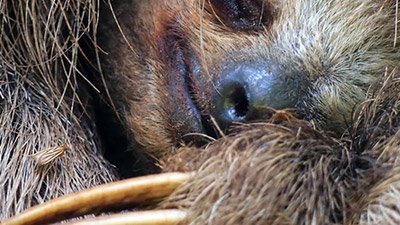
In all of God’s creation, the sloth has a unique claim to fame: the slowest mammal on the planet.
-
Jurassic Rat Now Considered Oldest Mammalian AncestorSept. 3, 2011 from News to Know
Once upon a time, in a Jurassic park long, long ago, grandmother rat climbed a tree.
-
Dec. 12, 2010 from Answers Magazine
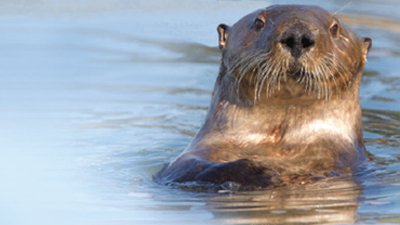
Fun-loving and playful on the surface, otters serve a critical role in the Creator’s underwater gardens.
-
July 1, 2010 from Answers Magazine
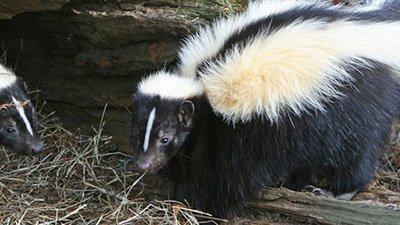
God has given the skunk the ability to live in a fallen world, by using a perfect defense mechanism.
-
Oldest Known Three-Dimensional Remnant of Mammal HairJune 19, 2010
Scientists have discovered the oldest known three-dimensional remnant of mammal hair.
-
Feb. 28, 2010 from Answers Magazine
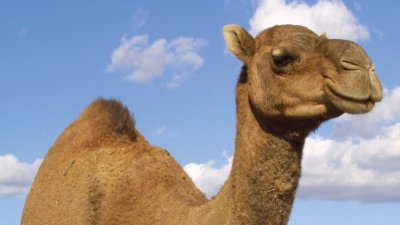
From their nose to their feet, camels are perfectly suited to their desert environments.
-
BBC News: “Aquatic Deer and Ancient Whales”July 11, 2009 from News to Know
Several species of chevrotains (mouse deer) hide from predators in the water. Does that prove evolution?
-
Robo-BatsJuly 11, 2009 from News to Know
As far as fliers go, most humans probably prefer watching birds or butterflies to bats. But in addition to sonar, bats have other interesting design features.
-
Images of the Mysterious Okapi Finally Captured on FilmSept. 13, 2008 from News to Know
It may be neither a unicorn nor a dinosaur, but the African okapi, which appears to be a strange combination of giraffe and zebra, was nonetheless long rumored to be a “mythical animal.”
-
Unicorn Deer found in ItalyJune 14, 2008
A unicorn has been spotted in Italy—“fantasy becoming reality,” says one scientist. So what is the reality?
-
Magazine Department ArticleNot Just Horsin’ AroundMay 5, 2008 from Answers Magazine
While horses have many uses, from transportation to recreation, they have provided Rebekah Holt an opportunity to teach others about the Creator.
-
Nov. 28, 2006 from Answers Magazine
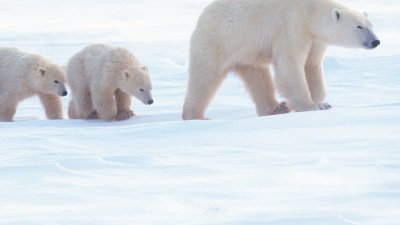
The polar bear is also referred to as the “white bear,” “sea bear,” and “northern bear.” An estimated 40,000 of them make their home on the southern edge of the Arctic ice cap.
-
Magazine ArticleKangaroo RatsJune 1, 2004, pp. 18–20
Despite its name and hopping gait, the kangaroo rat actually has more in common with a camel than with its much larger marsupial namesake.
-
Magazine ArticleMary Had a Little LambDec. 1, 2003, pp. 28–31
Remember the nursery rhyme, ‘Mary had a little lamb …’? No doubt this simple poem was based on a real, living, lamb. Somebody, somewhere thought and planned and wrote the rhyme. It required a designer
-
Magazine ArticleThe PlatypusMarch 1, 2002, pp. 40–43
The platypus has perplexed scientists since its discovery by Europeans in the late 18th century.
-
Magazine ArticleSpectacular, Surprising SealsSept. 1, 2000, pp. 28–32
Around the world, seals and sea lions represent different things to different people.
-
Pterosaurs and Bats Have Always Been Pterosaurs and Bats!March 10, 2000
These photographs show that bats have always been bats.


Support the creation/gospel message by donating or getting involved!

Answers in Genesis is an apologetics ministry, dedicated to helping Christians defend their faith and proclaim the good news of Jesus Christ.
- Customer Service 800.778.3390
- Available Monday–Friday | 9 AM–5 PM ET
- © 2026 Answers in Genesis