


How Do We Impart a Truly Biblical Worldview?
Part 3 of Theological Triage
Introduction
In the first article of this three-part series on biblical worldview, we explained the concept of “theological triage” to help us determine what biblical doctrines are essential for salvation, what doctrines are important enough to affect what church or Christian organization we join, and what doctrines we can amicably agree to disagree about in our relationships with other believers. For these kinds of questions, this concept is helpful. But theological triage is not adequate for deciding what is essential to a biblical worldview and how important the answer to the question of the age of the creation is.
In the second article, we considered what is essential for a truly (fully) biblical worldview in light of the fact that most Christians (according to national surveys) do not have a biblical worldview. We contended that in its most simple form, the biblical worldview can be stated as creation-fall-redemption-restoration. And we argued that the literal history of Genesis 1–11 is foundational to that worldview. All doctrines in the rest of the Bible are directly or indirectly built on the foundational truths of those first chapters.
At AiG, we like to flesh out that worldview a little more memorably with what we call the “Seven C’s of History,” using seven words that start with “C”: Creation, Corruption (the fall), Catastrophe (the flood of Noah), Confusion (the tower of Babel), Christ (the sinless God-man), Cross (Christ’s atoning sacrifice and resurrection), and Consummation (the second coming of Christ). Over the last 200 years, most of the church has ignored, superficially considered, or rejected the first four C’s. History has shown that sooner or later many people will reject the last 3 C’s. That is exactly what we are witnessing in America and the rest of the once-“Christian” Western world as we have sunk into moral insanity and spiritual darkness today.
The biblical worldview is categorically opposed to the naturalistic, materialistic (i.e., atheistic) worldview that dominates the beliefs and teaching of the academic world, as we showed visually in part 2 of this article series. This naturalistic worldview did not arise from a scientific study of the world but from anti-biblical, philosophical assumptions, which have been used to interpret scientific observations to develop the stories of cosmological, geological, biochemical, biological, and human evolution.
This means that if with our belief in God and in the gospel of Jesus Christ, we incorporate biological evolution and/or the story of millions of years of earth history and/or the big bang view of the universe, then we have only a partially biblical worldview. It is a syncretistic worldview mixing the truth of God’s Word with anti-biblical ideas and stories about the past. And as I (Terry) know from lecturing in 38 countries on every continent, most Christians have a syncretistic worldview (at least when it comes to the question of origins and the age of the creation).
In this third and final article, we want to offer counsel on how parents, pastors, Christian school teachers, seminary professors, and missionaries can impart that biblical worldview to those they teach. How can we help others see the foundational importance of Genesis 1–11 for a fully biblical worldview? And how can we equip them with biblical and scientific evidence to defend the truth of those opening chapters of the Bible?
We Cannot Impart What We Ourselves Don’t Have
We must be committed to biblical authority.
First, we must commit ourselves to Scripture as the supreme authority in our lives for determining truth. We must be convinced that the Bible is the inspired, inerrant Word of God. Since it is the only divinely inspired, inerrant book, it must be the supreme authority in all that it teaches, not just in matters of religion and morality or theology and the gospel. Its teachings must sit in judgment over all the truth claims (no matter how scholarly or how widely believed) of sinful human beings.
We must commit ourselves to Scripture as the supreme authority in our lives for determining truth.
Many Christian leaders say they hold to a high view of Scripture. But that is too vague. What does “high” mean? Many will say they hold to the “inspired, inerrant Word of God.” All the members of the Evangelical Theological Society sign a doctrinal statement every year to affirm that. But as a long-time member of ETS, I (Terry) know that the majority of ETS members accept the millions of years if not also evolution. So they do not hold to the supreme authority of Scripture, but rather to the supreme authority of “science” regarding origins.
To have a fully biblical worldview and impart that to other believers, we must be firmly committed to the supreme authority of Scripture in every area of our lives, including our view of Genesis 1–11.
We must interpret the Bible correctly.
Given the supreme authority of Scripture, it follows that Scripture must interpret Scripture. We must compare Scripture with Scripture as we read and study. And since the Bible is the inerrant Word of the Creator, we know that it will never contradict itself. It speaks with perfect harmony and absolute truth.
Anyone who has even a modest acquaintance with the Bible realizes that there are different kinds of literature in the Bible: historical narrative, poetry, prophecy, parables, and epistles. Scholars and attentive lay Bible readers have recognized that these kinds of literature have significantly different characteristics. Poetry and prophecy have a lot of symbolic language, similes, and metaphors. Parables are illustrative true-to-life stories but are not accounts of actual historical events. Epistles are teaching letters. There are historical statements in poetry (e.g., Psalms 105–106), prophetic books (e.g., Isaiah 36 and Jeremiah 32), and epistles (e.g., 2 Corinthians 11:23–33 and Galatians 1:11–24). And there are poetic statements in historical books (e.g., Genesis 2:23, Exodus 15:1–18, and 1 Samuel 2:1–10). But these things are usually obvious to the attentive reader.
But Genesis 1–11 has the characteristics of Hebrew historical narrative, as even many old-earth Old Testament scholars contend.1 Therefore, these opening chapters of the Bible should be interpreted as historically accurate in their details just like Genesis 12–50, Joshua, Judges, 1 and 2 Samuel, and the narrative portions of the Gospels and Acts, for example. This is confirmed by the fact that Jesus and the New Testament authors always referred to Genesis 1–11 as straightforward history and clearly were young-earth creationists.2
Jesus confronted the syncretistic, unbelieving Jews of his day when he repeatedly said to them “It is written . . .”3 and “Have you not read . . .?”4 In so doing, he referred to all the major parts of the Old Testament: the writings of Moses (Pentateuch), the poetic books, the prophetic books, and the historical books. While there are certainly nonliteral phrases or verses or chapters in the Old Testament and some things are hard to understand (Daniel 12; 1 Peter 1:10–12; 2 Peter 3:16), Jesus clearly indicated that the default hermeneutic (principle of Bible interpretation) is “Just read it. It means what it says!” In other words, if the plain sense makes good sense, don’t seek another sense. And we do that by paying attention to the historical context (derived from Scripture itself), and the words, grammar, and immediate context of the passage we are considering.
We must be able to explain why it matters what we believe about Genesis 1–11.
If we are going to impart the fully biblical worldview to other Christians, we must first explain why Genesis matters. Most Christian laypeople, pastors, apologists, Bible scholars, and other Christian leaders think that as long as a person believes in God and the gospel, it really doesn’t matter when and how God created. Therefore, they are not interested in looking carefully at Genesis 1–11 and the creation vs. evolution issue, Noah’s flood, or the age of the creation.
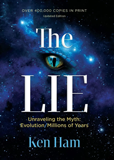
So we must learn how to connect the truth of these chapters to the great moral, spiritual, and cultural issues of our day, such as abortion, euthanasia, LGBTQ+, racism, wokeism, critical theory, and social justice, and to the key questions of “Does God exist?” and “If God is loving, all-powerful, and good, why is there death and suffering?” An excellent resource to help you learn how to communicate why Genesis matters and especially why the age of the creation matters is Ken Ham’s The Lie because Ken has mastered this over decades of experience. This is what helps Christians see why they should reject not only biological evolution but also millions of years of geological and cosmological evolution. In fact, Darwin’s theory of biological evolution would have died in the womb, if in 1859 he didn’t already have a scientific establishment believing in millions of years of geological evolution.
In particular, Christians who don’t think the age of the creation matters need to come to grips with the biblical/theological problem of having millions of years of animal disease, death, and extinction and other natural evils (hurricanes, earthquakes, volcanoes, asteroid impacts, etc.) before Adam was created and in a time period that God called “very good” (Genesis 1:31). Such a belief is incompatible with the character of God revealed in Scripture and with what the Bible teaches are the consequences of Adam’s fall in sin. These truths (which are not hard to understand) are foundational to the gospel of Jesus Christ: why he came the first time and why he is coming again. Once a Christian sees the biblical/theological importance of Genesis, then he or she will be motivated to want to learn some of the scientific evidence confirming Genesis 1–11, which is foundational to a truly biblical worldview.5
We must be informed on some of the scientific evidence confirming the truth of Genesis.
We live in a scientific age. Most people in America and other Western countries (at least) received some instruction in science before they finished secondary school. And most lost people still think that if you can’t prove something scientifically, then it’s not truth—it’s just opinion. Most people (including a great portion of Christians) also think that science has proven that Genesis 1–11 is not literal history, at least not regarding how and when God created.
So as Christians who believe Genesis, we can and must (with or without having a science degree) educate ourselves in the basic answers to the most frequently asked questions about origins that reflect the pressure coming from evolutionist scientific claims. These questions include (but are not limited to):
- Where did Cain get his wife?
- How do dinosaurs fit in the Bible?
- Where did all the so-called “races” of people come from?
- Doesn’t radiometric dating prove the rocks are millions of years old?
- Doesn’t carbon dating prove that civilizations are much older than 6,000 years?
- Doesn’t it take millions of years for rock layers and fossils to form?
- Why is there death and suffering if God is so loving and powerful?
- Doesn’t natural selection prove evolution?
- Were the days of Genesis 1 really literal (24-hour) days?
- Was Noah’s flood global?
- How can we see distant stars if the universe is only about 6,000 years old?
Knowing answers to these questions will strengthen your faith and equip you to be bolder in proclaiming the gospel to people who are lost in sin and heading for hell and deceived by the scientific majority.
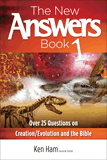
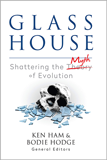
Most of those questions are answered in short chapters in The New Answers Book, Vol 1, which deals with 27 of the most-asked questions. Glass House and The Young Earth are also very helpful as a good starting point. Regardless of a person’s level of scientific understanding, most teens and adults can understand these books.
Today, we need millions of Christians in the church who can answer these questions that are so common in our world. It doesn’t mean that you have to know the answer so well that you could write the chapters in the book. But more Christians need to make some effort to learn what they can on these questions. And they are questions that I (Terry) have encountered in every one of the 38 countries where I have been privileged to lecture, and I (Troy) have answered for over 15 years for people from many countries who have written to AiG’s Correspondence Department. Not everyone asks these questions, but almost everyone would be interested in the biblical and scientific answers that refute the evolutionary fairy tales (taught as scientific fact) that they have heard all their lives in schools, the media, movies, science programs on television, and on vacations to state and national parks.
Suggestions for Parents
With that kind of basic foundation in creation apologetics, parents need to teach their children and grandchildren and not just leave it to the church to do. Both the Old and New Testaments speak to this (Deuteronomy 6:6–8, 11:18–20; Ephesians 6:4).
Fathers, teach through Genesis 1–11 in family devotions. Help your children understand those chapters and how to defend the truth of them in the face of our culture’s skepticism. Ken Ham’s Creation to Babel will help you do that. Answers for Kids has 30 lessons for kids, ages 8–11. Answers Books for Kids give one-page answers to about 160 questions that kids, ages 6–11, are asking. Parents can read and discuss one question at a time, or the kids can read on their own. For topical studies on cultural and social issues, as well as apologetics for teens, we would recommend Quick Answers to Social Issues and Quick Answers to Tough Questions.
Since we live in a computer age, you also need to expose your kids to various creationist websites. AiG’s website has a whole section for young children with answers to their questions, activities they can do, and videos to watch. And there are literally thousands of articles that teens can understand and explore. The search engine on the AiG website will help them find answers they are looking for.
Kids who are taught to believe Genesis 1–11 but are not also given creation apologetics to defend that belief can easily be led away from the Lord by evolutionist high school or college teachers. We must equip them to defend the faith and give them a burden to boldly proclaim the gospel to their generation that has been so brainwashed with the lies of evolution, millions of years, and the big bang.
We must equip them to defend the faith and give them a burden to boldly proclaim the gospel to their generation that has been so brainwashed with the lies of evolution.
It is critical to help your kids understand the role of assumptions in the interpretation of scientific evidence related to origins. Help them learn the difference between an observation, an assumption, an interpretation, and a fact. Evolutionists label lots of things as “fact” when they are actually interpretations or even assumptions of their naturalistic worldview. Furthermore, these “facts” are constantly overturned and/or revised by newer “facts.” But the media seldom draws that to the attention of the public (except in the fine print of articles). Based on what you can learn from this short article, reinforce often the difference between observational sciences (e.g., biology, chemistry, physics, engineering, medical research) that use repeatable, observable experiments to give us cures for disease or new technology versus historical sciences (e.g., archaeology, geology, paleontology, cosmology) that try to reconstruct the unobservable, unrepeatable past to create a story. When you watch a natural program on TV together or go to state or national parks or natural history museums and listen to an evolutionist, help your children spot the unstated assumptions that come from the naturalistic worldview driving the evolutionist story.
Also, look for opportunities in everyday life to point out things in the natural world that confirm the truth of Genesis 1–11. Help them see the design and beauty in creation and what that teaches us about our Creator (as Job 12:7–10 and Romans 1:20 indicate). But remind them that the fall and God’s curse in Genesis is critical for understanding why there is death and disease and other bad things in creation (like tornadoes or hurricanes or floods).
Finally, bring your family to the Creation Museum and Ark Encounter to deepen their understanding.
Additional Suggestions for Pastors, Christian School Teachers, and Missionaries
If you have not already done so, we encourage you to consider two 1-hour lectures. “Millions of Years: The Idea’s Unscientific Origin and Catastrophic Consequences” will help you understand historically how we got to the place today where most of the world and most of the church and its leaders don’t believe Genesis regarding creation, Noah’s flood, and the age of the creation. “Did God Create over Millions of Years” presents seven reasons why Christians should reject all the various ways that Christians have interpreted Genesis 1 to try to harmonize it with millions of years of geological and cosmological evolution.
If you are a pastor, preach through Genesis 1–11. Most pastors have never done that. When you do, connect that truth to the objections coming from “scientific evidence” for evolution and millions of years. Also connect it to the great moral issues in the culture (abortion, LGBTQ+, racism, etc.). Of course, repeatedly emphasize the critical relevance of Genesis to the gospel and the authority of Scripture. And in your preaching, point people to creationist resources (websites, books, videos, etc.). Stress the importance of learning creation apologetics, which will deepen their faith and make them bolder witnesses in our lost world.
As you prepare to lovingly, humbly, and boldly deliver the truth to your congregation, do not fear the old-earth proponents (including scientists) in your congregation. “The fear of man lays a snare, but whoever trusts in the Lord is safe” (Proverbs 29:25). Remember that you are accountable to God, not church members, for your faithfulness to his Word. Do your homework in the creationist literature above so that you are prepared to handle objections or to point them to resources that will do that (including The New Answers Book, Vol 1, Glass House, and The Young Earth). Most old-earth Christians (including those trained in science) have not read the best young-earth creationist literature. We know this because we listen to or read what they say, and they show little, if any, familiarity with creationist literature, and generally, they raise objections that young-earth creationists have repeatedly refuted for years.
For your Sunday school, Christian school, or homeschool families in your church, consider using the Answers Bible Curriculum, which over the course of four years of 200 lessons not only explains the whole Bible chronologically but also teaches the students (preschool to adult) how to defend their faith in this skeptical age.
If your church has a library, make sure that it has good young-earth creationist literature for all ages (the Super Library Pack would be a good collection). Since DVDs are becoming obsolete, let people know about the 7,000+ videos on Answers TV.
Additional Suggestions for Seminary Professors
All seminary professors should have a well-informed, fully biblical worldview because, regardless of their academic specialization, they are training the next generation of teachers, pastors, and scholars. In our day, that means every seminary professor should have a good understanding of at least some of the basic creationist literature to be able to answer the most common skeptical questions raised against Genesis 1–11, such as The New Answers Book, Vol 1, which deals with 27 of the most-asked questions, Glass House, and The Young Earth. There is no excuse for ignorance in this area. You should also understand where the millions of years idea (and the church’s compromise with it) came from historically, which this lecture explains. We are dealing with a 200-year-old problem in the church!
Consider in the courses you teach where it would be helpful to integrate teaching, reading, and/or writing assignments that would require the students to grapple with the biblical text and the best creationist resources to defend the truth of Genesis 1–11. Consider writing an article in your area of expertise that would defend some of those truths and help call the church back to the authority of Scripture.
Make use of your cultural authority in the church as a seminary professor by developing one or more lectures or sermons explaining and defending the truth of Genesis and pointing your listeners to creationist resources. In light of Titus 1:9 and Jude 3, respectfully but boldly refute the teachings of evangelical leaders and scholars who are undermining the truth of Genesis 1–11. It is often the case that the truth is not made clear to people until we expose what is false and even name those who are leading the church astray (as Paul did in Galatians 2:11–14).
Consider this article or this lecture on inerrancy explaining why and how so many leaders and scholars who believe in the inerrancy of Scripture have nevertheless accepted millions of years and rejected young-earth creation. Consider this critique of three of the leading systematic theology texts used in seminaries in America and many other countries to deepen your as well as your students’ understanding of the nature and extent of the syncretism in the church today on the issue of the age of the creation.
Also consider adding to your library and promoting to your students the 14-author, biblical and historical defense of Genesis 1–11, Coming to Grips with Genesis, and the 16-author, biblical and scientific defense of the literal truth about Adam, Searching for Adam. Other very helpful, scholarly, seminary-level books have been written by Andrew Kulikovsky (Creation, Fall, and Restoration: A Biblical Theology of Creation, Christian Focus, 2009), Douglas Kelly (Creation and Change: Genesis 1:1–2:4 in the Light of Changing Scientific Paradigms, Christian Focus, 2021, rev. ed.), Jonathan Sarfati (The Genesis Account: A Theological, Historical, and Scientific Commentary, Creation Book, 2015), Cornelis Van Dam (In the Beginning: Listening to Genesis 1 and 2, Reformation Heritage, 2021), and David A. McGee (Day or Age: Evaluating Progressive Creationism, Exegetica Publ., 2023, a thorough refutation of Hugh Ross’s old-earth view).
Conclusion
We desperately need far more Christians to embrace and boldly defend a fully biblical worldview, which is built on the foundational truth of Genesis 1–11.
The teaching of evolution and millions of years has been the greatest attack on the truth and authority of Scripture over the last 200 years. And that attack has come from outside and inside the church. It has undermined the authority of the Bible in the church and in the culture, and that is the root cause of the rejection of the Bible’s teaching on marriage, gender, sex, racism, abortion, and more. Christians cannot ignore these challenges.
We desperately need far more Christians (especially pastors, missionaries, and seminary professors) to embrace and boldly defend a fully biblical worldview, which is built on the foundational truth of Genesis 1–11. Without that foundation and creation apologetics instruction to defend that truth, Christians will continue to be open to deception regarding evolution and millions of years, as well as deceptions about all kinds of ideas and claims that flow out of a rejection of the truth of Genesis 1–11 as we continue to move toward the return of Jesus Christ, our glorious Creator, Savior, and coming King.



Footnotes
- See, for example, the arguments in Walter Kaiser, The Old Testament Documents: Are They Reliable and Relevant? (Downers Grove, IL: IVP, 2001), 53–83.
- See chapters 11 and 12 in Coming to Grips with Genesis and Terry Mortenson, “Jesus, Evangelical Scholars, and the Age of the Earth,” Answers in Depth 2 (August 1, 2007), https://answersingenesis.org/age-of-the-earth/jesus-evangelical-scholars-and-the-age-of-the-earth/.
- Matthew 4:4, 7, 10; 11:10, 21:13, 26:24, 31; Mark 7:6, 9:12–13, 14:21, 27; Luke 4:4, 8, 10, 7:27, 19:46, 24:46; John 6:45, 8:17.
- Matthew 12:3, 5, 19:4, 21:16, 42, 22:31; Mark 2:25, 12:10, 26; Luke 6:3, 10:26.
- For a brief article on this point see, Ken Ham, “The ‘God’ of an Old Earth,” Answers in Genesis, September 1, 1999, https://answersingenesis.org/who-is-god/god-is-good/the-god-of-an-old-earth/. For a more in-depth discussion, see Terry Mortenson, “The Fall and the Problem of Millions of Years of Natural Evil,” Answers in Depth 7 (July 18, 2021), https://answersingenesis.org/theory-of-evolution/millions-of-years/the-fall-and-the-problem-of-millions-of-years-of-natural-evil/.
Support the creation/gospel message by donating or getting involved!

Answers in Genesis is an apologetics ministry, dedicated to helping Christians defend their faith and proclaim the good news of Jesus Christ.
- Customer Service 800.778.3390
- Available Monday–Friday | 9 AM–5 PM ET
- © 2026 Answers in Genesis