
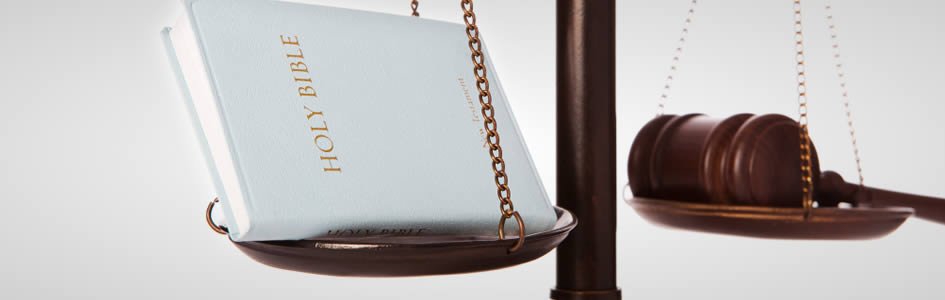
Is the Bible True?
Can We Really Prove the Bible Is True?
“How do you know the Bible is true?” That’s a fair question and worthy of a thoughtful answer. Do you know your Bible well enough to give a satisfying response?
Does the Bible Have Errors?
Almost all theologians agree Scripture is in some measure God’s revelation to the human race. But to allow that it contains error implies God has mishandled inspiration and has allowed His people to be deceived for centuries until modern scholars disentangled the confusion.
The Bible’s Accuracy and Authority
Ever since the serpent said to Eve, “Indeed, has God said?” the Word of God has been questioned and attacked. The serpent’s words focused on two important elements: the Bible’s accuracy and its authority.
Is the New Testament Reliable?
Can we trust the New Testament as a reliable record of what actually happened, and do we possess what was actually written in the first century?
Articles About Is the Bible True?
-
Sept. 2, 2025 from Answers Magazine
Social media and television bombard us daily with contradictory claims. How can we find the meat among the bones? Just ASK.
-
April 13, 2025 from Answers Magazine
From archaeology to astronomy, evidence from many fields points to the veracity of God’s Word.
-
Oct. 21, 2024 from Ken Ham Blog
A recent article pokes fun at those who read the Bible “literally,” specifically calling out the flood account as “pretty farfetched.”
-
July 14, 2024 from Answers Magazine
Without the original texts of the Bible in our hands, how can we be sure our surviving copies don’t contain lots of mistakes?
-
April 1, 2023 from Answers Magazine
How do we know the Bible is true? Consider these five reasons to trust God’s Word from the very first verse.
-
April 5, 2022 from Answers in Depth
How theological scholars, who affirm the truthfulness of the Bible, actually sabotage its authority through their science-over-Scripture hermeneutic.
-
Nov. 28, 2021 from Answers Magazine
Quote mining means fudging facts or leaving out crucial details that misrepresent the meaning of the quote.
-
Oct. 22, 2021 from Answers in Depth
“There is a book . . .” Ken Ham reminded Nye at their 2014 debate, and the Bible’s history is history we can trust.
-
Oct. 3, 2021 from Answers Magazine
We don’t need to abandon our defense of the Scripture to emphasize the resurrection.
-
July 10, 2020 from Answers in Depth
Exploring the biblical and ancient Near Eastern historical evidence shows how the book of Job records actual events.
-
July 24, 2019 from Answers Magazine
Most Christians at least give lip-service to following Christ. But what about His view of the Old Testament?
-
May 25, 2018 from Answers Magazine
Some believe that the Bible speaks authoritatively about morality and religion, but not history and science. Is that viable, based on Scripture?
-
Feb. 16, 2017 from Apologetics Web Series
Many people deny that Scripture teaches its own inerrancy, but Brian Edwards shows that, based on Scripture, Christians should absolutely hold to biblical inerrancy.







Support the creation/gospel message by donating or getting involved!

Answers in Genesis is an apologetics ministry, dedicated to helping Christians defend their faith and proclaim the good news of Jesus Christ.
- Customer Service 800.778.3390
- Available Monday–Friday | 9 AM–5 PM ET
- © 2026 Answers in Genesis