


Fossils
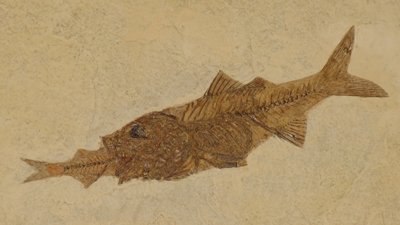
Throughout the world’s rock layers there are billions of fossils, the remains of organisms that were catastrophically buried largely during the global Flood (2348 BC). Understandably the vast majority of these are marine creatures and they were buried quickly and sequentially by habitat.
Purchase the full Check This Out! video
The Making of a Fossil
Do fossils require millions of years to form? Hardly! Even secular geologists now recognize that rocks form very quickly.
Fossils of Dinosaur National Monument
Each visitor to Dinosaur National Monument sees the same evidence—massive amounts of dinosaur (and other) fossils all jumbled together. How one explains the formation of this fossil bed depends on one’s worldview. When viewed from a biblical perspective, the evidence is consistent with what one would expect from a worldwide Flood.
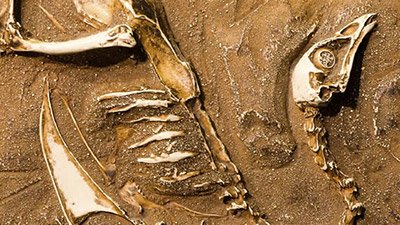
Putting Fossils Back Together
This research reminds us of the caution we should accord to every fossil reconstruction. Especially when it comes to supposed “ape-men” like Lucy, Ardi, and others, we must be aware of the fact that evolutionary ideas may be (consciously or subconsciously) guiding the reconstruction.
Five Fossil Mysteries
We can never answer all the questions. But with practice at “fossil sleuthing” from a biblical perspective, at least we can get better and better at evaluating each new discovery in a God-honoring way that might yield new insights into God’s person and work.
Articles About Fossils
-
Jan. 16, 2020 from Ken Ham Blog
There are 85 reports of organic remains in fossils, some supposedly half a billion years old. A global flood makes more sense of the data than the mainstream timeline.
-
Jan. 9, 2020 from Ken Ham Blog
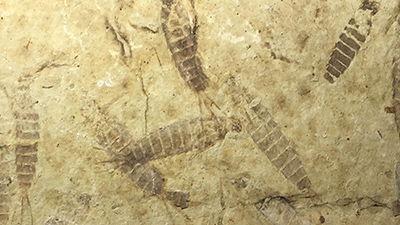
Soft tissue discovered in fossilized bugs negates the idea of millions of years.
-
Jan. 1, 2020 from Answers Magazine
Evolutionists like to talk about change, so how do they explain so many living creatures that look like their fossilized ancestors?
-
Nov. 1, 2019 from Answers Magazine
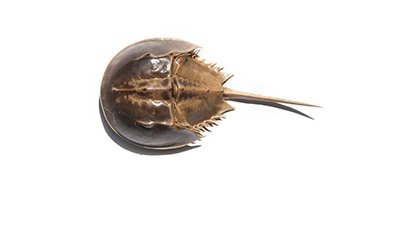
Horseshoe crabs are called “living fossils” because the ones you see in aquariums today look the same as their ancestors deep in the fossil record.
-
Jan. 18, 2019 from Answers in Depth
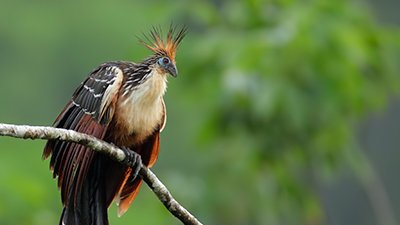
The hoatzin is a very unique bird, a conglomeration of traits typical of birds, reptiles, and mammals. Its most unique features are distinctly un-birdlike.
-
Oct. 16, 2018 from Answers in Depth
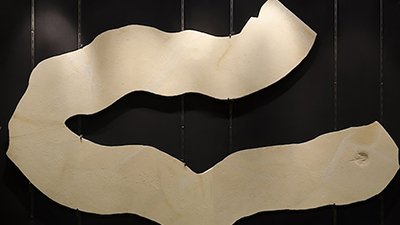
Ichthyosaurus is well studied, and research on their skeletons has provided evidence for incredible design and the global flood.
-
April 5, 2018 from Ken Ham Blog
A recent news item carried the story of scientists who are recording the results of a really smelly study that involves watching fish and worms rot.
-
Oct. 20, 2016 from Answers in Depth
Despite a large body of evidence for the authenticity of the dinosaur tissue, there remains a pattern of denial within the evolutionist community.
-
Oct. 1, 2016 from Answers Magazine
Beautifully preserved fossils are so common that we overlook how unusual they are.
-
June 28, 2016 from Answers in Depth
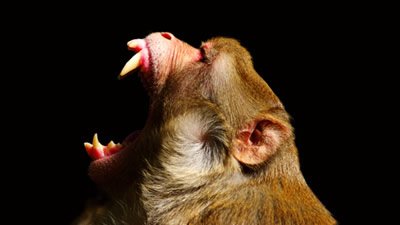
Animals can show up in the oddest places and make evolutionists scratch their heads as is the case with the newly discovered monkey fossils.
-
Book Chapter3.1 The Fossil Evidence—IntroductionMarch 28, 2016 from Creation: Facts of Life
Can changes from molecules-to-man (macroevolution) be explained by (extrapolated from) the process of mutation-selection (microevolution)?
-
In-Depth ArticlePreserved Cretaceous Collagen and Dinosaur Blood: Common Clues to a Catastrophic Past?June 22, 2015 from Answers in Depth
Evolutionists have come to largely accept the fact that soft tissues can be preserved in fossils for an extraordinarily long time. But millions of years . . . ?
-
Magazine Department ArticleI Must Go Down to the Seas AgainApril 1, 2015 from Answers Magazine
Cartorhynchus lenticarpus, whose discovery was hailed last November, is being hailed as an evolutionary link, but this characterization is premature.
-
Magazine Department ArticleGrounds for ReevaluationApril 1, 2015 from Answers Magazine
The fossil of a creature resembling a groundhog that lived during the time of dinosaurs has become an anomaly for evolutionists.
-
Common Ancestor Hidden in Burgess ShaleMarch 10, 2012 from News to Know
Burgess Shale said to shelter “the most primitive known vertebrate and therefore the ancestor of all descendant vertebrates, including humans.”
-
Which Version of History Do Fossils Reflect?March 10, 2012 from News to Know
Fossil diversity “accurately reflects history”—but which version of history?
-
-
Classifying the Blue Whale by Jaw TypeAug. 27, 2011 from News to Know
Another big mouth beast becomes an honorary member of the baleen club.
-
-
Lizard Found Trapped in AmberOct. 30, 2010
We’ve all seen photographs of insects, arachnids, and other small creatures trapped in amber. But a lizard?
-
Oldest Found Remains of AnimalsAug. 21, 2010
Last week it was the oldest remains of the earth. This week, it’s the oldest remains of animals.

Support the creation/gospel message by donating or getting involved!

Answers in Genesis is an apologetics ministry, dedicated to helping Christians defend their faith and proclaim the good news of Jesus Christ.
- Customer Service 800.778.3390
- Available Monday–Friday | 9 AM–5 PM ET
- © 2026 Answers in Genesis