

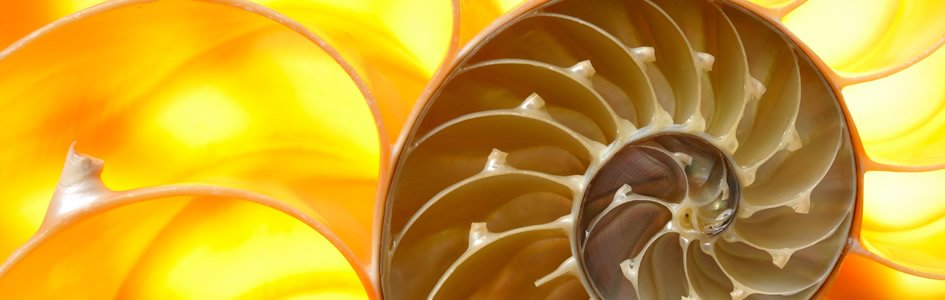
Design in Nature
Sixth Senses in Animals
Our five senses cannot detect everything. The world is full of information beyond our reach, but many animals have “sixth senses”—super senses that enable them to experience other dimensions of our world. These bonus senses help these creatures survive and thrive in their habitats.
Amazing Design in Cells
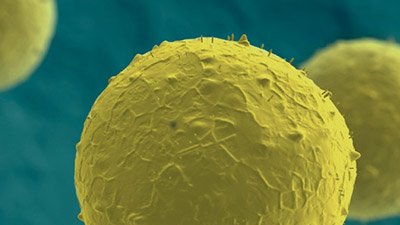
If our genes and cells arose randomly through competition for supremacy, then how can we explain so many wonderful processes where cells are programmed to sacrifice themselves for the good of the whole, especially during development?
Divinely Designed Defenses
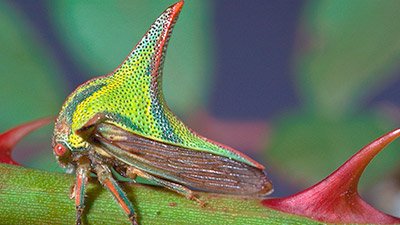
The defense mechanisms of just about every group in the animal kingdom could provide us with a lifetime of enjoyable study. It appears that these abilities were genetically present in the original creatures, but activated after Adam sinned, when God cursed the creation.
Horse Leg Bones
At first glance, horse legs appear to be poorly designed. Taking a closer look at the equine leg bone, however, scientists have discovered unexpected features that give it amazing strength and may inspire new engineering ideas.
Articles About Design in Nature
-
Oct. 26, 2025 from Answers Magazine
Nature reveals so much more about God’s character than a few hints we might easily overlook.
-
Jan. 1, 2025 from Answers Magazine
Metallic nodules on the ocean floor are found to produce their own oxygen. Despite evolutionists’ wishful thinking, these nodules are a nod to the Creator.
-
Jan. 4, 2024 from Answers Magazine
God made his handiwork so clear that even a child can see it (Romans 1:18–20). The beauty of his work is inescapable—and an undeniable witness to his existence.
-
Oct. 18, 2020 from Answers Magazine
We’ve all heard about “the five senses”—sight, taste, touch, smell, and hearing. But are there other ways to experience the world?
-
March 6, 2016 from Answers Magazine
God designed a clever coat of insulation that makes life a breeze for animals that call the arctic their home.
-
Magazine Department ArticleColors on Our Creator’s CanvasJan. 1, 2016 from Answers Magazine
God brushed the canvas of His creation in colorful strokes that could only have come from His hand.
-
The Evolutionary Problem of Feedback MechanismsDec. 26, 2014
One of the things that becomes a total contradiction to the proposition of biological evolution is the reality of feedback.
-
In-Depth ArticleCaffeine: Convergently Evolved or Creatively ProvidedSept. 20, 2014 from Answers in Depth
Did caffeine evolve again and again or did our Common Designer provide many plants with the genes to make it?
-
In-Depth ArticleThe Wonderfully Made Design of the Skin and Its MicrobiomeJuly 16, 2014 from Answers in Depth
Microbes live in a mutualistic relationship with the human body, make up the human microbiome, and play a role in our health by modulating the immune system.
-
In-Depth ArticleHow the Scorpion Got Its StingFeb. 3, 2014 from Answers in Depth
A genetically engineered toxin is said to show how scorpions evolved.
-
Magazine Department ArticleGear UpJan. 1, 2014 from Answers Magazine
The journal Science reported in September the discovery of the first mechanical gears to be found in a living organism.
-
Nov. 25, 2012 from Answers Magazine
You don’t have to travel far to enjoy a getaway that will also build your biblical worldview.
-
Nov. 18, 2012 from Answers Magazine
Taking a closer look at the equine leg bone, scientists have discovered unexpected features giving amazing strength and may inspire new engineering ideas.
-
Jan. 11, 2012 from Answers Magazine
If our genes and cells arose randomly through competition for supremacy, then how can we explain so many wonderful processes where cells are programmed to sacrifice themselves?
-
Oct. 23, 2011 from Answers Magazine
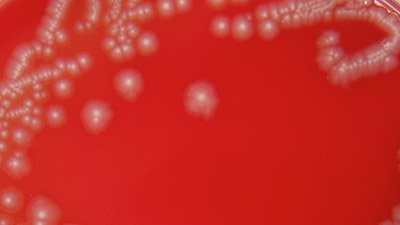
Everything in God’s creation was originally “very good,” but now many microbes cause disease and death.
-
Oct. 16, 2011 from Answers Magazine
If God made a perfect world, where did harmful abilities come from?
-
Aug. 22, 2011 from Answers Magazine
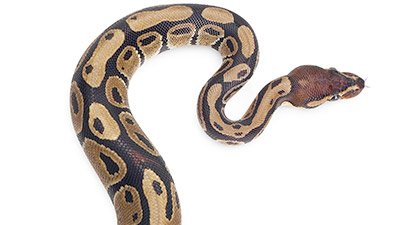
Snakes are killing machines.
-
Them Bones, Them Thigh BonesMarch 12, 2011 from News to Know
What amazing structure is strong yet lightweight? And just as importantly, who was the designer?
-
-
Trio of Design RemindersJune 27, 2009 from News to Know
Three stories this week provide salient reminders of the design apparent in creation—whether it be in structures we’re just beginning to understand, or in engineers taking cues from nature to construct their machines.
-
June 7, 2009 from Answers Magazine
The Curse ushered in a brutal world of animals hunting and killing each other to survive.
-
The D(esigned)-WordMay 9, 2009 from News to Know
An element of nature “designed”—a slip-up or a rare admission?
-
A Fly’s Nervous System Aids in FlightAug. 2, 2008 from News to Know
No wonder houseflies can be so difficult to target: their guidance-control systems are sophisticated enough that they may inspire improvements to control systems in autonomous air vehicles.
-
The Gecko Tail and Its FeatsMarch 22, 2008 from News to Know
Regardless of the attention given to those clingy gecko feet, gecko tails play an important role in keeping the mobile little creatures agile.






Support the creation/gospel message by donating or getting involved!

Answers in Genesis is an apologetics ministry, dedicated to helping Christians defend their faith and proclaim the good news of Jesus Christ.
- Customer Service 800.778.3390
- Available Monday–Friday | 9 AM–5 PM ET
- © 2026 Answers in Genesis