

Microbiology
Life’s Support System
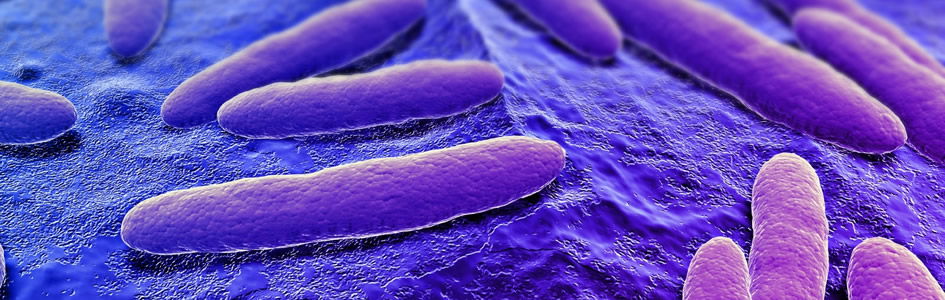
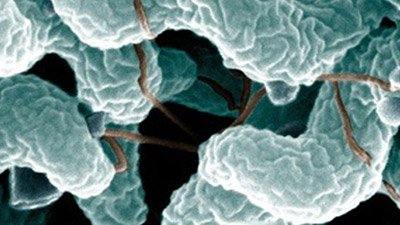
The Creator filled the earth with all the chemicals that living things could ever need. But special “go-betweens” were necessary to move these treasures from their safe hiding places and convert them into forms we can use. That’s where bacteria come in.
The Origin of Microorganisms
Evolutionists must explain how cells, once they emerged from lifeless matter, diversified into the many life forms we see today. It is supposed that some extinct ancestor of the archaebacteria and eubacteria developed the necessary biologic machinery to survive.
Microorganism Helps Develop Site-specific Drug Delivery
Who knew that a well-known parasite might lead to the next major breakthrough in medical treatment? Scientists are leading the way to understand how microscopic creatures (primarily Giardia lamblia) move through the bloodstream. The goal? Construct micro-robots that can navigate the dangerous twists and turns of the bloodstream.
Indestructible Microscopic Wonder
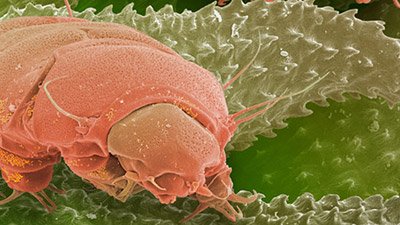
Scientists discovered that water bears can survive pressure up to six times the deepest ocean trench’s pressure. When subjected to the complete vacuum of space and direct radiation from the sun, they lived. Water bears can even survive for almost ten years totally dehydrated. To resurrect them, all you have to do is add water.
Articles About Microbiology
-
Dec. 14, 2014 from Answers Magazine
God created bacteria to perform vital roles in every imaginable environment.
-
Nov. 7, 2014 from The New Answers Book 3
If God created everything good and with a purpose, why are there disease-causing bacteria and viruses in the world?
PDF Download -
Oct. 14, 2014 from Answers in Depth
Germophobes beware: a new study suggests that all adults have face mites. But did they follow us through evolutionary history?
-
Oct. 13, 2014 from Answers in Depth
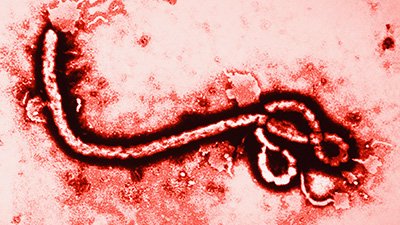
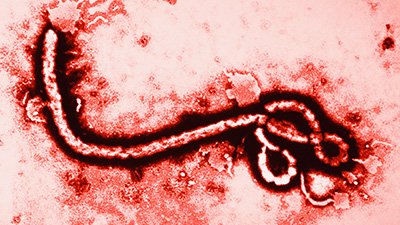
Ebola is a virus with a high mortality rate. The outbreak in West Africa has killed thousands. Where is God amid all this death, disease, pain, and suffering?
-
In-Depth ArticleThe Wonderfully Made Design of the Skin and Its MicrobiomeJuly 16, 2014 from Answers in Depth
Microbes live in a mutualistic relationship with the human body, make up the human microbiome, and play a role in our health by modulating the immune system.
-
In-Depth ArticleStop-or-Go DNA Codes Reveal Rampant Rule-Breaking in the Language of LifeMay 31, 2014 from Answers in Depth
When does “stop” mean “go”? Surprisingly often! The DNA code common to all living things is not quite as uniform as previously thought.
-
Jan. 1, 2014 from Answers Magazine
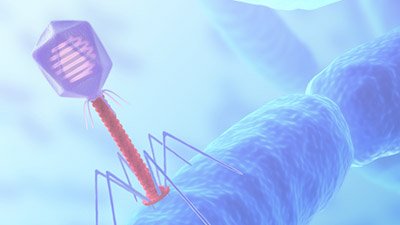
If God’s creation was originally “very good,” wouldn’t we find some good roles that viruses play, even in our fallen world?
-
Technical In-Depth ArticleSurvey of Microbial Composition and Mechanisms of Living Stromatolites of the Bahamas and Australia: Developing Criteria to Determine the Biogenicity of Fossil StromatolitesDec. 18, 2013 from Answers in Depth
Microbes, fully-functioning stromatolites, and even stromatolite reefs may have been created by God before Day Three of the Creation Week.
-
April 7, 2013 from Answers Magazine
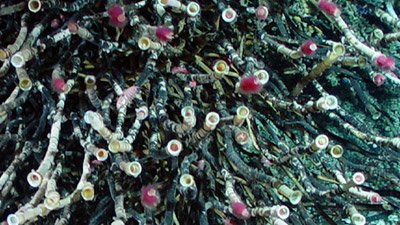
Some locations on earth seem just too extreme to support life. One such extreme environment is vents at the bottom of the ocean.
-
Feb. 10, 2013 from Answers Magazine
“Cute” may not be the best word to describe water bears. But once you learn more about them, words like “indestructible,” “one of a kind,” and “unbelievable” jump to mind!
-
Oct. 1, 2012 from Answers Magazine
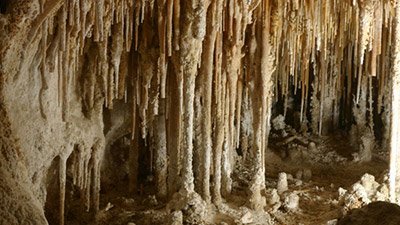
Scientists were shocked to discover bacteria hidden deep in caves—far from any contact with humans—that already had the ability to fight antibiotics.
-
Magazine Department ArticleMore Than HumanOct. 1, 2012 from Answers Magazine
For years it was considered quackery to transplant “healthy” bacteria into the gut of sick patients.
-
Secret of Self-Propelled Corkscrew RevealedMay 19, 2012 from News to Know
Secret of self-propelled cyanobacterium’s internal corkscrew unveiled.
-
Magazine Department ArticleThe Dead Sea, Not So Dead After AllApril 1, 2012 from Answers Magazine
Even the most extreme parts of our planet contain life, including the bottom of the so-called Dead Sea.
-
Magazine Department ArticleThis Yeast Doesn’t RiseApril 1, 2012 from Answers Magazine
Researchers William Ratcliff and Michael Travisano recently earned accolades for—as they put it—“re-creating” evolution.
-
-
Oldest Hairy Microbes Found In “Snowball Earth”Dec. 10, 2011 from News to Know
From “snowball” to “snowball,” evolution experimented with modern microbes.
-
Ancient Protein a Potent AntimicrobialOct. 1, 2011 from News to Know
Answers for antibiotic resistance sought in “ancient” Australian antimicrobials.
-
In-Depth ArticleSerratia marcescens: The Miracle BacillusJuly 20, 2011 from Answers in Depth
The objectives of this article are to explain the mysterious appearance of crimson-colored bacteria on food and communion bread/wafers, over the centuries, as well as to describe the biological basis
-
In-Depth ArticleMoving Forward in Our Understanding of Molecular MotorsMay 11, 2011 from Answers in Depth
During scientific discovery more questions often arise. This leads to one of the most wondrous aspects of science: the more we learn, the more we realize how much is left to learn.
-
Magazine Department ArticlePoisoned ThinkingApril 1, 2011 from Answers Magazine
Scientists have shown that some bacteria can substitute arsenic in place of phosphorus in their DNA and other molecules.
-
The Little Microbes That CouldJan. 22, 2011 from News to Know
Geologists have discovered microbes living inside salt crystals. The twist? The microbes are said to be 34,000 years old!
-
Dec. 5, 2010 from Answers Magazine
The Creator filled the earth with all the chemicals that living things could ever need. Bacteria play a special role in converting them into forms we can use.
PDF Download


Support the creation/gospel message by donating or getting involved!

Answers in Genesis is an apologetics ministry, dedicated to helping Christians defend their faith and proclaim the good news of Jesus Christ.
- Customer Service 800.778.3390
- Available Monday–Friday | 9 AM–5 PM ET
- © 2026 Answers in Genesis