



The Research Report
20 Years of Science
For two decades, Answers magazine has featured the works and writings of many scientists conducting research from a biblical, young-earth creation worldview. From tracing the global flood in the Grand Canyon rocks, to making groundbreaking genetic discoveries, to digging up artifacts that confirm biblical history, creation scientists have deeply expanded our knowledge of the world.
And their work isn’t finished. As they find answers, more questions seem to arise. We’ve asked scientists at Answers in Genesis to reflect on some advancements in their fields over the last two decades and to share their hopes for the future of creation research.
Geology
In the inaugural issue of Answers magazine, Dr. Andrew Snelling contributed an article on the fallacies of radioactive dating of rocks. In many issues since, his passion for geology has encouraged readers to believe in and defend a literal Genesis and global, catastrophic flood.

Snelling is grateful for the invention of new technologies over the years that have allowed geologists to study features in rocks that would have otherwise been inaccessible or would have required the rock’s destruction.
Much research is now confirming the truths found in Genesis. “The folding of the rock layers that today make up the walls of the Grand Canyon has been proven to have occurred while the layers were still moist and soon after their deposition,” Snelling says. “This evidence is consistent with the recent, yearlong flood cataclysm described in Genesis.”
During the next 20 years, Snelling hopes a more robust model will be developed for the history of radioisotope decay from a biblical perspective. Currently, secularists and even many Christians use radioisotope dating to promote the idea that the universe is billions of years old. He also hopes to see a better consensus on the location of the flood/post-flood boundary in the rock record.
Molecular Genetics
Dr. Georgia Purdom was another contributor to the first issue of Answers. In her field of genetics, she says the biggest advancement over the last two decades is the ease and pace of DNA sequencing. Today, a human genome can be sequenced in just a few hours for less than $1,000, while 20 years ago it took several years and cost much more.
Another development is confirmation that human chromosome 2 is not the result of a fusion in the past. “Evolutionists must explain how chimps have 24 pairs of chromosomes and humans have 23, yet we supposedly share a common ancestor,” Purdom explains. “The evolutionary story is that at some point after the human line diverged from a common ancestor, a fusion of two chromosomes occurred, resulting in all humans having 23 pairs of chromosomes. Initial evidence seemed to support that human chromosome 2 was a likely candidate. If a fusion of two chromosomes had occurred, creationists postulated that it occurred either in Adam and Eve or in Noah’s family. But sequencing analysis performed by Dr. Jeffrey Tomkins at the Institute for Creation Research has shown definitively that human chromosome 2 is not the result of a fusion.”
Purdom hopes that further research will offer a better understanding of the differences between organisms within a kind and between kinds at the DNA level. Currently, distinguishing between kinds is mainly determined at the morphological and reproductive levels—whether organisms can breed and produce offspring. If we’re someday able to determine kinds through DNA sequencing, we would have a more systematic way to know the boundaries of a kind.
Archaeology
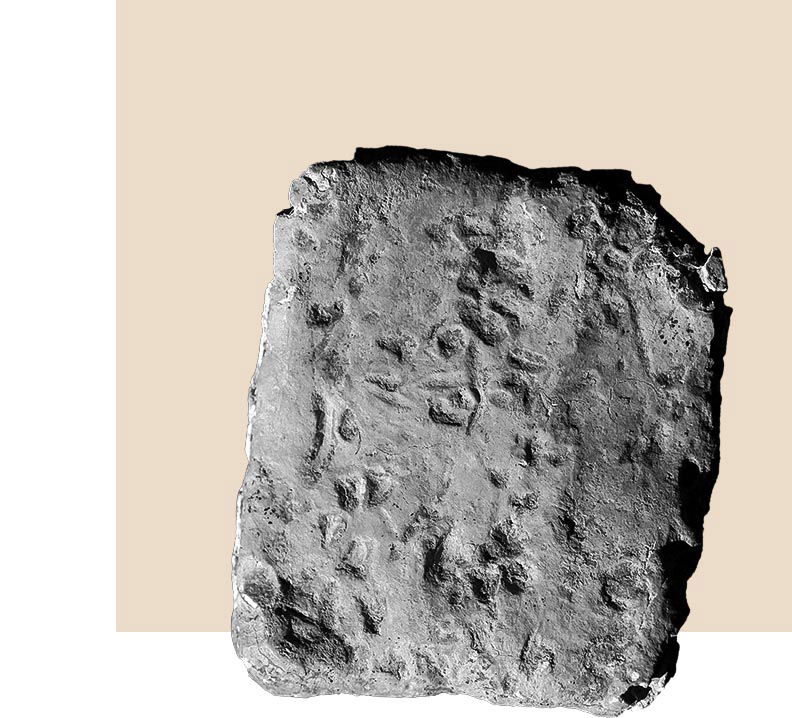
Dr. Henry Smith is the administrative director of the Shiloh Archaeological Excavations for Associates for Biblical Research. He cites wet sifting as the greatest advancement in his field over the last 20 years. Wet sifting is a technique that uses water to wash mud or dust from small artifacts that may have otherwise been missed with the dry sifting process. The wet sifting technology allowed the team at the Mount Ebal excavation site to discover a lead curse tablet from the Judges era.
According to Smith, wet sifting has the potential to revolutionize biblical archaeology but is often resisted by other archaeologists because it is labor-intensive and costly, and water is often scarce at dig sites. Over the next 20 years, he hopes to see wet sifting implemented at archaeological sites around Israel.
Engineering
Stuart Burgess has a passion for inventing engineering systems inspired by the natural world. In the last 20 years, he has developed a deeper appreciation for God’s incredible design of biomechanics in organisms such as whales and birds.

Over the last two decades, his field has seen significant progress in prosthetics as scientists copy the design of the human body. Burgess believes these advancements confirm the truth of the Bible by showing that God’s designs are superior to anything we could create with technology.
He hopes that we will soon discover how synovial fluid (a thick liquid between joints) lubrication works.
Chemistry
Dr. Alan White received a PhD in organic chemistry from Harvard University. He says, “Like all of science, chemistry is based on a logical design. Atoms and sub-atomic particles were specifically designed to produce the materials God needed to create the earth, the stars, and life.”
Technological advancements in chemistry have enabled new techniques to recover ancient DNA, one of the greatest findings in the field of the last 20 years. Soft tissue has been found in supposedly ancient fossils, and fossilized pigments have been recovered in feathers that were dated at over 100 million years old. But it is unlikely that these tissues and pigments could have lasted after being fossilized for the supposed millions of years that secular scientists claim. These discoveries are some of our best evidences of the truth found in Genesis, consistent with a young earth.
White hopes we will soon better understand the degradation rates of protein and DNA in fossils.
Biology
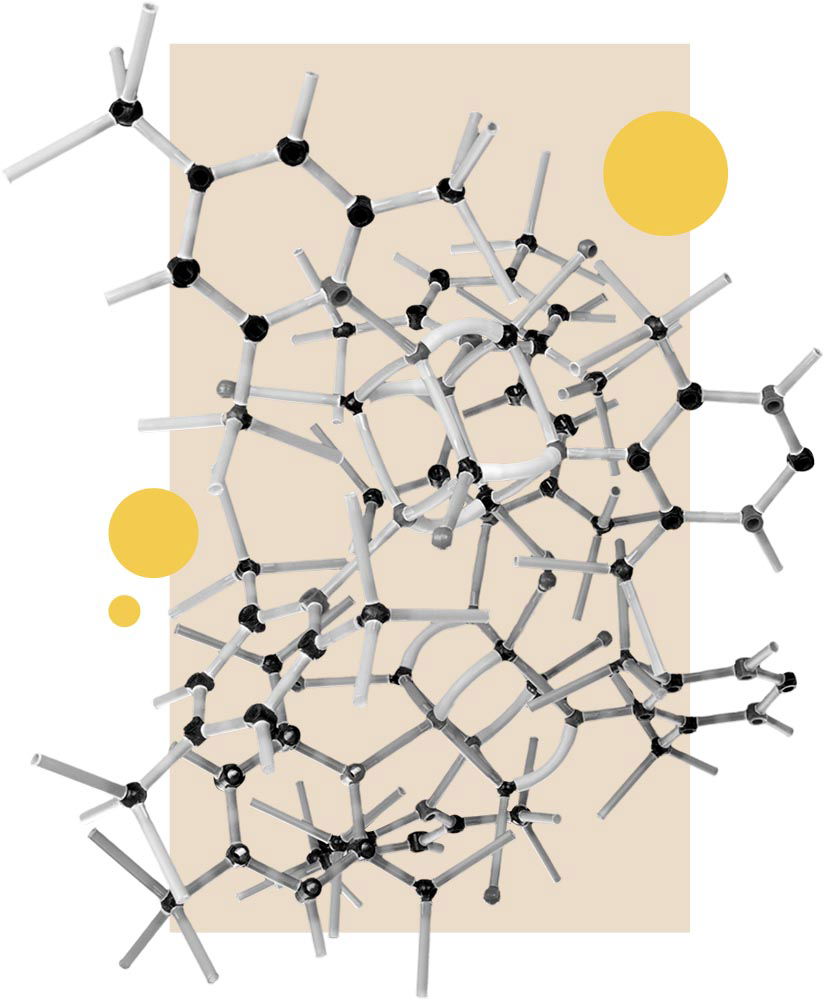
Dr. Jeanson, a research biologist with Answers in Genesis, says his field approaches several questions: Does DNA look designed or evolved? What is the origin of species? What is the origin of humans? What is the history of humanity?
Many discoveries have been made in the field of genetics over the last 20 years. One example concerns so-called junk DNA. “When the human genome sequence was first published, it was widely proclaimed that our DNA was full of junk—useless leftovers from evolution,” Jeanson explains. “A steady drumbeat of research findings over the last two decades have overturned this view and shown that our DNA is highly functional.”
Through his work, Jeanson has confirmed biblical history. He says, “Genesis 10 depicts a family tree of males. With the male-inherited Y chromosome DNA, we have been able to identify this structure at the base of the global, human DNA-based family tree.” Additionally, Abraham’s descendants have been positively identified by tracing the male-inherited Y chromosome DNA.
But Jeanson says one of the most shocking discoveries in his field in the last two decades is that the pre-Columbian Americas were settled at least three times. He hopes to unravel the rest of the history of the pre-Columbian Americas, with a strong focus on Latin America and on the Amazon.
Meteorology
Michael Oard served as a meteorologist with the US National Weather Service for 30 years. According to Oard, a large advance in meteorology over the last 20 years is an increase in the accuracy of weather models. Today, they are generally accurate out to five days and sometimes out to eight or nine days. Twenty years ago, they were accurate only out to about three days.
Though weather models have increased in accuracy, Oard laments that the accuracy of climate models has not advanced much. He hopes that researchers continue to question and examine the results of climate models when it comes to global warming because all models require estimates of some variables, which can add error to the model.
Aerospace
Before joining Answers in Genesis, “Rocket Rob” Webb was the lead navigation engineer for various NASA programs, including the Parker Solar Probe mission—the first mission to “touch” the sun. This is just one of the many forward leaps within the space industry in the last two decades. Another includes the launching of the James Webb Space Telescope (JWST), which allows us to see farther into the cosmos and in greater detail than ever before. Satellite miniaturization, deep space navigation, and autonomous spacecraft systems have also advanced significantly over the last 20 years.
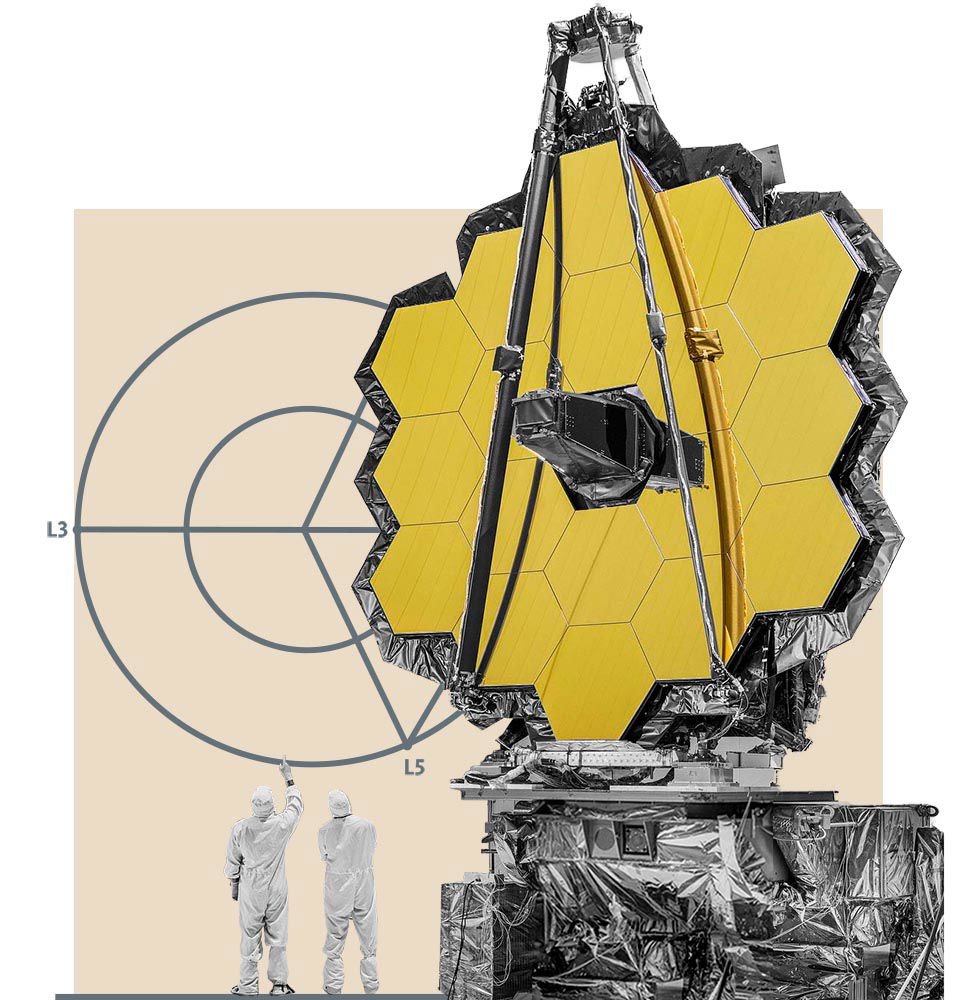
Despite the significant progress, Webb reports that there are still many ongoing mysteries in space exploration. Saturn’s rings, for instance, appear too young and pristine to be billions of years old—an observation that doesn’t fit with secular long-age models but is consistent with biblical creation.
Additionally, Webb says that scientists are still learning about space radiation, including how it varies across solar systems, interacts with spacecraft and biological systems, and affects long-duration space missions.
Webb says, “These things remind us that, despite all our technological progress, we’ve really only scratched the surface in understanding the complexities of spaceflight. From a biblical creation perspective, it’s actually a humbling reminder that we’re studying a universe far more intricate than we could ever imagine. And the more we discover new things, the more we see and understand God’s amazing design.”
He hopes that future discoveries will continue to expose flaws in secular models, giving creation scientists the chance to present better explanations and models that are grounded in God’s Word.
Answers Magazine
July–September 2025

This anniversary issue celebrates a legacy of unwavering commitment to a biblical worldview and the ongoing impact of creation-based apologetics.
Browse Issue


Support the creation/gospel message by donating or getting involved!

Answers in Genesis is an apologetics ministry, dedicated to helping Christians defend their faith and proclaim the good news of Jesus Christ.
- Customer Service 800.778.3390
- Available Monday–Friday | 9 AM–5 PM ET
- © 2026 Answers in Genesis