
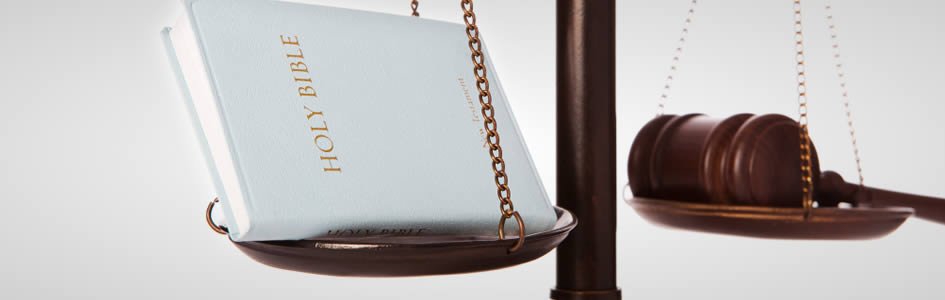
Is the Bible True?
Can We Really Prove the Bible Is True?
“How do you know the Bible is true?” That’s a fair question and worthy of a thoughtful answer. Do you know your Bible well enough to give a satisfying response?
Does the Bible Have Errors?
Almost all theologians agree Scripture is in some measure God’s revelation to the human race. But to allow that it contains error implies God has mishandled inspiration and has allowed His people to be deceived for centuries until modern scholars disentangled the confusion.
The Bible’s Accuracy and Authority
Ever since the serpent said to Eve, “Indeed, has God said?” the Word of God has been questioned and attacked. The serpent’s words focused on two important elements: the Bible’s accuracy and its authority.
Is the New Testament Reliable?
Can we trust the New Testament as a reliable record of what actually happened, and do we possess what was actually written in the first century?
Articles About Is the Bible True?
-
Jan. 29, 2017 from Answers Magazine
Polls show that the twentysomethings sitting next to you in the pews may not embrace your faith. What happened to them?
-
Oct. 15, 2016 from Already Compromised
Truth is at the heart of what has become warfare in the marketplace of worldviews. Which ideas will get your attention and gain prominence in your mind?
-
Dealing with SkepticsFeb. 2, 2016 from Answers Update
They need to be shown that what we see in this world around us only makes sense in the light of God’s Word.
-
Book ChapterNot What You’d ExpectOct. 3, 2015 from Already Gone
On the surface they appear to be very similar. As we studied the research findings further, we soon found we were dealing with two different types of individuals who were no longer attending church.
-
Magazine Department ArticleDo We Have an Answer to Every Question?Oct. 1, 2015 from Answers Magazine
God’s Word never promises to answer every human question.
-
Oct. 1, 2015 from Answers Magazine
When people ask why we believe what we do, many are hesitant to quote the Bible. After all, few people believe the Bible, and many parts are hard to explain.
-
In-Depth ArticleA Critique of Dr. Peter Enns’ Book The Bible Tells Me SoFeb. 26, 2015 from Answers in Depth
Dr. Peter Enns continues his destructive influence on Christian faith and the Bible in his assault on God’s Word in his book The Bible Tells Me So.
-
Jan. 1, 2015 from Answers Magazine
Scripture alone is a sufficient source of knowledge about God; nature is not.
-
In-Depth ArticleWere New Testament Books Forged?Nov. 12, 2014 from Answers in Depth
This review will provide a cursory review of Forged, critique Ehrman’s methodology, and expose his many exaggerated conclusions.
-
Nov. 11, 2014 from Answers Magazine
Jesus Christ and His followers were fearless when it came to proclaiming God’s Word. What gave them such boldness and self-assuredness?
-
Research PaperReview of the Lecture “Evolution & Creation: Conflicting or Compatible?”Oct. 22, 2014 from Answers in Depth
Drs. Elizabeth Mitchell and Terry Mortenson discuss a recent local presentation that they attended.
-
Aug. 24, 2014 from Answers Magazine
Even if you don’t yet know any other compelling evidences that the Bible is true, you should know the experience of your own life.
-
Aug. 10, 2014 from Answers Magazine
Every claim the Bible makes about science is not only true but crucial for filling in the blanks about the origin of the universe.
-
May 4, 2014 from Answers Magazine
When children start to ask tough questions about the Bible, even when they are very young, what should you do?
-
In-Depth ArticleThe Rise and Fall of Inerrancy in the American Fundamentalist MovementMay 16, 2012 from Answers in Depth
This article will survey the history of Christian fundamentalism in America along with its strengths and weaknesses, victories and defeats, and the significance of the doctrine of biblical inerrancy
-
Magazine Department ArticleNot Just a Container of TruthOct. 5, 2011 from Answers Magazine
“The Bible contains truth,” we often hear. But what do such words really mean? Behind them is a flawed view of biblical authority, with deadly consequences.
-
April 1, 2011 from Answers Magazine
If you actively share your faith, you’ll be asked, “How do you know the Bible is true?”
-
Online Apologetics ToolkitApril 1, 2011
“How do you know the Bible is true?” Do you know your Bible well enough to give a satisfying response?
-
Jesus Believed Every Event of the Old TestamentApril 1, 2011
The debate about the Bible’s accuracy is not a secondary, theoretical concern. The integrity of Jesus Christ Himself is at stake. He accepted the Old Testament’s historical accounts as real.
-
Magazine Department ArticleNo Easy AnswersApril 1, 2011 from Answers Magazine
God’s Word—even in the hands of a child—is sufficient to penetrate even the thorniest thicket.
-
April 1, 2011 from Answers Magazine
Among the many amazing evidences that confirm the Bible’s divine origin, surely the wealth of fulfilled prophecies is near the top.
-
April 1, 2011 from Answers Magazine
With all the knowledge and resources readily available today, God’s children have no excuse for not being prepared to “Give a defense to everyone who asks you a reason for the hope that is in you.”
-
Answers Magazine Preview: Vol. 6, No. 2March 27, 2011 from Core Ministry News
If you actively share your faith, it won’t take long before you’re asked, “How do you know the Bible is true?”


Support the creation/gospel message by donating or getting involved!

Answers in Genesis is an apologetics ministry, dedicated to helping Christians defend their faith and proclaim the good news of Jesus Christ.
- Customer Service 800.778.3390
- Available Monday–Friday | 9 AM–5 PM ET
- © 2026 Answers in Genesis