
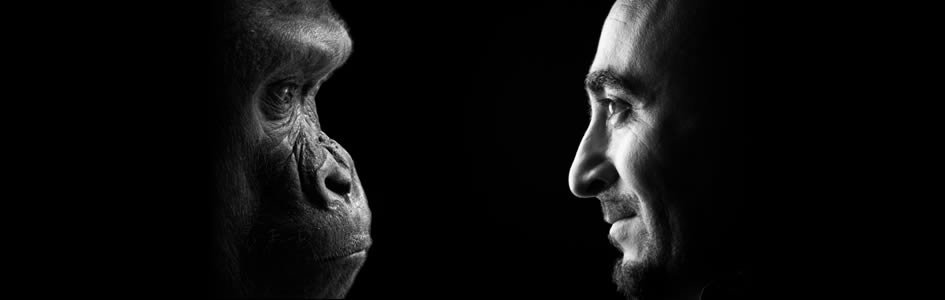
Are Humans Animals?
Whether they realize it or not, every person’s answer to this question directly reflects their worldview, and whether they accept man’s explanation of the world’s history or God’s account of history that is recorded in the Bible.
Are Humans Animals: Overview
Despite the claims and beliefs of many, humans are not animals. At the heart of this issue lies this question—where did humans come from? In other words, did we evolve or were we created? This question is foundational to both evolution and Christianity, two worldviews that are in direct opposition to one another.
Contents

Humans Are Not Animals
Intuitively we know—as much as some try to fight it—that humans are not animals, that something is different about us. Just looking around at the world in everyday life, we know there is an obvious difference. We don’t expect the same things from animals as we do from one another—we have standards, even down to the fact that we clothe ourselves and have such a thing as dignity.
Every society and culture has rules and expectations, and when people deviate from those norms, the culture pushes back. Most of the human world is civil and recognizes that when human beings act in animalistic ways, whether through committing horrific acts of violence or even pretending to be actual animals, those acts are an aberration, not the norm. Even when civility is absent, we are able to recognize that absence and recognize that something has gone wrong.
There is a huge and obvious divide between humans and animals. From our mental capacity to our physical abilities, our creativity to our ingenuity, humanity has declared itself to be set apart from the animal world in every way. At a basic level, everyone can recognize there is a fundamental difference between humans and animals, even if they can’t define or articulate it. Animals at the zoo live in enclosures, and even our own pets do not clean up their waste. It’s we who recognize and understand that their waste needs to be properly disposed of—animals do not have this awareness and it’s obvious on so many levels. While some in today’s culture celebrate a rejection of obvious truth, their beliefs are only a delusion, and the rest of the world would be fools, at best, to validate it—those who indulge the delusional are the worst offenders.

If Humans Aren’t Animals, What Are They?
To answer the question of what humans are if not animals, we need to start at the beginning. The first two chapters of the book of Genesis record the creation of the world. In that creation account, the creation of mankind is specifically detailed and gives us the following information:
- God created mankind in his own image (Genesis 1:26)
- God created mankind as male and female (Genesis 1:27)
- God gave mankind dominion over everything that moves on the earth (Genesis 1:28)
- God formed man from the dust of the ground and breathed life into his nostrils (Genesis 2:7)
In the very first verses of the Bible and throughout the rest of Scripture, we see that mankind is a unique creation. God breathed life into Adam (Genesis 2:7), created mankind in his image (Genesis 1:26, 27), and gave us dominion over creation (Genesis 1:26, 28). Nowhere does Scripture give a hint of an idea that mankind is equal to animals. In fact, it goes to great lengths to show the unique relationship the Creator has—and wants—with his image-bearers.
While there are lots of ideas regarding what humans are, and consequences and logical conclusions of those ideas, for Christians the fundamental question on this topic is this: Who gets to say what we are? Do we all get to decide for ourselves what we are? Is there a global governing board that gets to decide what we are? Is there a committee somewhere that decides? No, the Creator who knitted us together and formed our inward parts (Psalm 139:13) gets to say who we are and does so through his Word. What he says is true whether we accept or deny it. And that’s the choice before us: Do we accept the authority of God’s Word in our life or not?
Some will claim that humans are just highly evolved animals, but here are just a few of the issues with that statement.
- It is a failure to understand the basic biblical principle that human beings are made in the image of God, unique and set apart from the rest of creation.
- It weakens the morality and high regard we are to have for human life. If humans are just animals, the big moral questions of our day become minor conflicts that are barely worth batting an eye over. Abortion? Why not. Euthanasia? Why not. Eugenics? Why not.
- It undermines Genesis history. If humans are evolved animals, animals were killing each other and dying from disease long before any human walked the earth. Therefore, Adam wouldn’t be specially created in the image of God, and he certainly wouldn’t be responsible for the ages of animal death and suffering that would have preceded him.
- It nullifies Jesus’ sacrifice for sins. If Adam’s sin didn’t break our relationship with God, then Christ can’t reconcile us. Christ came to fix what Adam broke, but if Adam didn’t break it, Christ can’t fix it. And if death and suffering were part of God’s “very good” creation (which must be true if humans evolved from animals), then it doesn't need to be fixed, and we have no reason to expect a consummation where a world without death and suffering is restored.
The Bible’s immediate distinction between mankind and animals in the creation account unequivocally states that man is the pinnacle of God’s creation. When God declared that mankind is to have dominion over creation (Genesis 1:26), including animals, he communicated at a very fundamental level that humans are not animals.

How Are Animals Different from People?
While God gave humans dominion over the animals, the Bible makes it clear that we are to properly care for them and steward all of creation well. In the book of Matthew, we see how God cares for the birds of the air and yet holds them in their rightful place, saying, “Look at the birds of the air: they neither sow nor reap nor gather into barns, and yet your heavenly Father feeds them. Are you not of more value than they?” (Matthew 6:26). God cares for his creation, and as his image-bearers with dominion over creation, we are called to care for it too.
So what are the differences between animals and humans? First, our mental capacity and abilities. God gave us incredible minds to create, to innovate, to build, to reason. Our minds are incredible and complicated and are unrivaled across all of creation. We possess the ability to take the ideas that exist only in our minds and execute on them, using our bodies to bring them to fruition, to work together, to communicate and express ourselves and understand one another. We would be completely shocked to see many things that we take for granted on display in animals. While animals can express emotion and can reflect some of these characteristics, they do so on a scale that pales in comparison to humans. Rather than cause us to consider whether we are related, animals’ characteristics are an opportunity to remember that God’s creation is incredible, and we should care for it the way he calls us to.
We should hold animals in a rightful place in our lives and in the world. There are people who elevate animals to an improper position, sometimes placing greater value on protecting and preserving animal life than human life. There are others who misuse, abuse, or just do not value this part of God’s creation. Both sides have failed to consider the necessary application of what God’s Word says. Animals have their rightful place in this world as part of God’s creation, but animals are also to be viewed in their rightful place—they are not humans, they are not equal to humans, and they should not take the place of humans. They are not on equal footing with God’s image-bearers.

What Does “The Image of God” Mean?
What does it mean to be made in the image of God? To reflect the image of God is not physical—because God is not physical, he is spirit—rather, it’s a reflection of God’s attributes. While we cannot perfectly reflect God’s attributes because we are sinners who live in a fallen world, we still can, and do, imperfectly reveal them. We reflect the image of God through things like love, self-awareness, justice, grace, mercy, righteousness, and holiness. These attributes are at the core of humanity. Because humans are made in God’s image, we must uphold human dignity and the sanctity of life.
While all of the physical creation exists to declare the glory of God and is created by him, humans are uniquely created in God’s image. And as image-bearers, God wants to have a relationship with us—he sent his Son to live among us, to reveal himself to us, and to show us the way so that we could become children of God (John 1:12). When we confess with our mouths that Jesus is Lord and believe in our hearts that God raised him from the dead (Romans 10:9), when we come to a saving faith in Christ Jesus, God gives us the Holy Spirit to work in us to draw us nearer to him.
The Holy Spirit isn’t at work in animals. As we read Scripture, the Holy Spirit is at work in us, convicting us of sin and opening our eyes to what God has revealed to us. Not only do animals lack the ability to engage with God’s Word, but they also do not reap the rewards of doing so. Animals do not pray to God. They do not seek to glorify him or to have a relationship with him. While that’s also true for a lot of mankind, the Bible reveals the reality that though some of mankind will reject God, God has clearly revealed himself through his creation, so everyone is without excuse for their unbelief (Romans 1:20).

People on Display in the Zoo
Some people have so completely denied reality and instead embraced the idea that humans are animals that they go to extraordinary lengths to advance that narrative. We don’t have to travel too far back in history to see examples of zoos that have featured special human exhibits—exhibits that feature human beings living in the zoo, in their own enclosures, alongside the “other” zoo animals.
These provocative displays were meant to elicit a strong response as viewers grapple with the underlying question: Are we really nothing more than animals? And for those without a biblical foundation, for those who have accepted the premise of evolution, there is no solid footing to combat this false assertion.
The consequences of the wrong view of humanity have been devastating for all of humanity. It’s easier to kill unborn children, the unwanted, the elderly, and the disabled when none of us start life with any particular value. The bad ideas that were on display at the zoo are playing out in real time in the world around us. Where did these false ideas come from that have reduced humanity to the same level as animals?
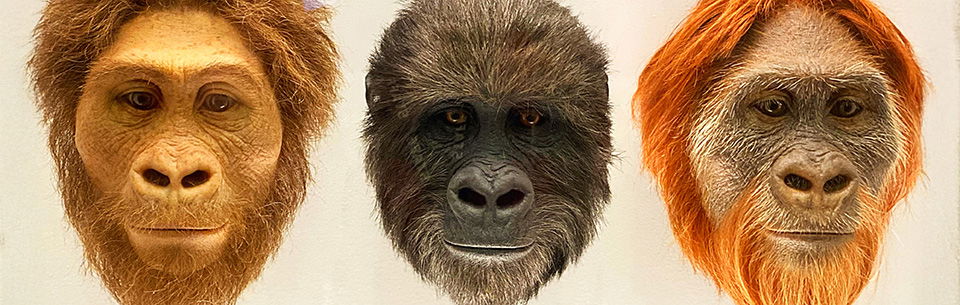
The Evolution Connection
We are surrounded by secular, anti-God, and anti-biblical ideas in today’s culture. The lie about the origins of life has been successful. People would rather believe outlandish claims than have their foundation in a Creator. Why? Because the proper response to having a Creator is to submit, knowing that would be the best thing for them (John 3:20). And so the easier solution is to create an alternate idea, one where humans and animals are the same and we all get to live our lives the way we want. The “easier” answer is evolution.
The belief that humans are animals is a direct consequence of evolution—it is the natural conclusion of the evolutionary mindset. When God is rejected, then comes the idea that life came from nonlife—that molecules and cells began to organize, develop, learn, and grow, and over billions of years, they managed to organize into the complex beings known today as animals (and in this line of thinking, humans are included).
The question of whether humans are animals has real-world implications and consequences for all of mankind. If humans are just animals, what we are witnessing before our very eyes makes sense—the lack of regard for human life, whether through abortion, euthanasia, or celebrating the murder of someone in society who “had it coming.” Evolution’s stain on humanity is very real, and has very real consequences.

Why Did God Make Apes Look So Much Like People?
If humans are not animals, why do apes (supposedly) look so much like people? And why would God create apes if he knew they would be used to further the unbiblical idea that humans and apes are related? These are questions that people ask, sometimes innocently, and sometimes with the goal of undermining the foundational, biblical truth.
So where is this question coming from? If we weren’t fed evolutionary ideas from the time we were young, would this even be a question? Do we really look that much like apes? There are commonalities between humans and a lot of animals, but does that mean we’re all related? To look around and see similarities in design doesn’t prove evolution, but rather it suggests that there is a Creator who has made effective use of his good design by using that design, or variations of it, in multiple ways.

Can You Be a Christian and Believe in Evolution?
Every Christian will get their theology or biblical application wrong in some way at some point. When it comes to God’s Word, we must be lifelong learners—working to properly read and apply it. It is worth working through our questions and beliefs, considering their implications in light of Scripture so that we grow in our faith and love for God. And that’s another one of the amazing things about being a human: We can think deeply, reason with ourselves, and apply the laws of logic—and our good and gracious heavenly Father can work in our hearts and minds to draw us ever nearer to himself.
Ideas have consequences. Each Christian should ask themselves, “What are the consequences or natural results of this particular belief?” In this case, does it diminish the value of mankind and thus bring dishonor to God to believe that humans are just animals? Does it elevate animals to an unbiblical position? Scripture makes it clear that the answer to both questions is yes.
Ultimately, humans are a unique creation, set apart and made to reflect the image of our Creator. Humans were human from the beginning. We have been given a great responsibility to love God, love one another, and properly steward his creation while we await the return of our Savior. An incredible responsibility that God himself has entrusted to us, his image-bearers.
Articles About Are Humans Animals?
-
May 19, 2019 from Answers Magazine
We can argue about DNA, brain size, and upright stature, but Genesis 1 emphasizes an infinitely greater privilege that sets mankind apart.
-
In-Depth ArticleWhat Does It Mean to Be Human?Jan. 1, 2016 from Answers in Depth
Is being human just a matter of accumulating qualities that humans have, even if evolutionists could find a way that ape-like creatures could have done so?
-
Aug. 8, 2015 from Answers in Depth
A recent two-part piece on The BioLogos Forum admits that meshing evolution and the image of God that all humans possess is a “challenging issue.”
-
Feedback ArticleWhy Did God Create Apes with Human Features?June 13, 2015 from Feedback
“If God knew that apes and the like would be used so passionately by evolutionists to support their theory, why did he create them?”
-
Book Chapter4.4 Differences Between Human Life and Animal Life (OB16)Sept. 27, 2012 from Did God Use Evolution?
The Bible clearly distinguishes between man and beast—something evolution does not do.
-
-
The Close Relationship Between Humans and AnimalsJuly 24, 2010
From pets to livestock, humans often have a close relationship with animals. But is that part of the story of human evolution?
-
Crows Intellectually Close to ManApril 24, 2010
They’re back in the news: crows, which sometimes seem to rival—or beat out—dolphins and chimps for the title of “man’s closest intellectual rival.”
-
Spanish Parliament Supports Extending Human Rights to AnimalsJune 28, 2008
For the first time, a national legislature has voiced support for extending human rights to animals.
-
Chimps Outpacing Humans in Short-Term Memory TestsMay 17, 2008 from News to Know
Chimps are seen outpacing humans in a computer-based mental challenge in a National Geographic News video.
-
Magazine Department ArticleThe Chimp Connection?Sept. 17, 2007 from Answers Magazine
The idea that humans and chimpanzees are related species is an evolutionary concept almost ingrained in society.
-
Chimp-Human Hybridization: Two of a Kind or Two Different Kinds?May 31, 2006
There seems to be a never-ending stream of media reports that promote evolution. The latest is the provocative notion that there was hybridization between human and chimpanzee ancestors.
-
Human Rights for Chimpanzees?March 25, 2006
The mental image inferred by the suggestion of granting “humanity” to chimps owes more to a “chimp tea party” mentality than to actual science.
-
Primetime for “Primates”Aug. 30, 2005
As a visible way to buttress evolutionary claims, the London Zoo has the three men and five women displayed next to (but separated by a fence) their "primate relatives".
-
Magazine ArticleAping ArtSept. 1, 1997, pp. 56–57
She thought it was a great discovery. However, the painting was done by Gypsy the chimpanzee.
-
Magazine ArticleDifferences Between Humans and AnimalsSept. 1, 1995, pp. 45–46
Are there differences between humans and animals, or are we free to be animals like our evolutionary ancestors—as low-down as snakes, and to make pigs of ourselves, and to act like donkeys.


Support the creation/gospel message by donating or getting involved!

Answers in Genesis is an apologetics ministry, dedicated to helping Christians defend their faith and proclaim the good news of Jesus Christ.
- Customer Service 800.778.3390
- Available Monday–Friday | 9 AM–5 PM ET
- © 2026 Answers in Genesis