
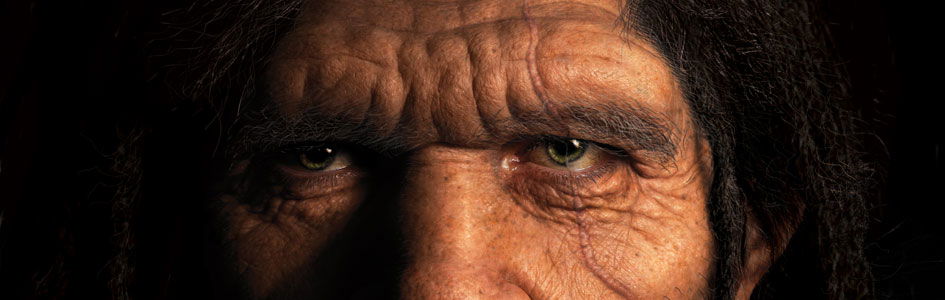
Neanderthal
Neanderthals were a group of humans, descended from Adam and Eve, who lived in the harsh post-Flood world. Archaeology confirms they made instruments, make-up, jewelry, weapons, and ritually buried their dead. Many humans today share DNA with Neanderthals. This fully human lineage died out sometime after the Flood.
Neanderthal DNA
A new genetic study, published in the journal Science, compared the Neanderthal genome to the genes of five humans alive today. The comparison revealed that in some individuals, up to 4% of the total genome was of Neanderthal origin.
Makeup for Neanderthals
Archaeologists uncovered shells containing yellow and red pigment residues at Neanderthal dig sites in southern Spain. Coupled with similar evidence found in Africa, the pigments paint a picture of Neanderthals far more sophisticated than their stereotype.
Neanderthal tools
Contrary to their reputation as some sort of sub-human brute, Neanderthals displayed a great deal of technological skill in the manufacture of their tools. Neanderthals were not only fully human but evidently were very skilled people coping with the harsh world of the post-Flood Ice Age.
Neanderthals Fully Human
The Neandertals are not mysterious, but rather incredibly intriguing. We view them as the fully human ancestors of some modern humans, probably some Europeans and western Asians. They were a post-Flood, Ice Age people, specializing in hunting the large, grazing animals that were abundant towards the end of the Ice Age.
Articles About Neanderthal
-
Neaderthals Prove Technical Capabilities in Jersey CavesSept. 3, 2011 from News to Know
Neanderthal technical prowess belies brutish reputation.
-
Neanderthal NeighborsMay 21, 2011 from News to Know
So, were Neanderthals and “modern humans” neighbors in Russia or not?
-
Neanderthal NiftinessMarch 19, 2011 from News to Know
Neanderthals were no novices when it came to wielding fire, new evidence suggests—evidence that adds to our understanding of Neaderthals as intelligent, modern humans.
-
Outsmarting OurselvesFeb. 12, 2011 from News to Know
Human brains are getting smaller, yet we’re apparently getting smarter. Does that mean dinosaurs with walnut-sized brains could have actually been geniuses?
-
Did Neanderthal Children Grow Faster?Nov. 20, 2010 from News to Know
Did Neanderthal children grow up more quickly than the rest of us?
-
Neanderthal Brains Compared to Chimps'Nov. 13, 2010
Talk about insulting: our Neanderthal kin/ancestors, who have already taken years of unfair abuse, are now having their brains compared to chimps’!
-
Radiocarbon Dating: Neanderthals Not as Smart as We ThoughtOct. 23, 2010 from News to Know
Radiocarbon dating of an archaeological site in France has some researchers claiming that Neanderthals weren’t as smart as we thought. But the evidence can more easily be interpreted as both confirming Neanderthal intelligence and casting doubt on radiocarbon dating methods.
-
Neanderthals: Fully HumanJuly 24, 2010
Evolutionists, like creationists, believe that Neanderthals were fully human, the same species as we are.
-
Magazine Department ArticlePutting a New Face on NeanderthalsJuly 1, 2010 from Answers Magazine
Aside from certain skeletal characteristics, Neanderthals were probably no different from other humans
-
Modern Humans with Neanderthal HistoryMay 8, 2010
A new genetic study has revealed that many modern humans have Neanderthal ancestry.
-
Incorrect Neanderthal StereotypeJan. 16, 2010 from News to Know
The stereotype of Neanderthals is that they were hulking, hairy troglodytes quite different from “refined” modern humans. Now there’s even more evidence of how incorrect that stereotype is.
-
MSNBC/Discovery: “Neanderthals Made Mammoth Jerky”June 27, 2009 from News to Know
Neanderthals, though so often treated as subhuman, left a growing amount of evidence to remind us of their humanity.
-
The First European?May 9, 2009 from News to Know
The mock-up represents the “earliest known modern European,” supposedly 35,000 years old—yet he looks just like what creationists would suggest.
-
Another Branch of the FamilyFeb. 21, 2009 from News to Know
Does the partially complete sequencing of the Neanderthal genome challenge creationists’ view that they were fully human?
-
Neanderthal SymphonyFeb. 14, 2009 from News to Know
In April of last year we heard a Neanderthal voice for the first time. Now it’s time to hear Neanderthal music.
-
Magazine Department ArticleNo Stone UnturnedJan. 1, 2009 from Answers Magazine
When we think of Neanderthal, many of us still envision a hairy, backward subhuman.
-
Bringing Neanderthals BackNov. 29, 2008
If we’re bringing back mammoths, should we let Neanderthals join the party? And what would they think of our auto insurance TV commercials?
-
Remains Suggest Neanderthal Diet Included Dolphins and SealsSept. 27, 2008 from News to Know
Fine dining for our Neanderthal kin may have consisted of some seafood delicacies—both familiar and unfamiliar to modern tongues.
-
DNA Offers a Rendering of Neanderthal FaceSept. 20, 2008
She may seem a little rough around the edges, but Wilma, the National Geographic Society’s new Neanderthal re-creation, is fully human.
-
Neanderthal Tools as Complex as Those of Modern HumansAug. 30, 2008
To our Neanderthal readers: pardon our past arrogance and TV commercials about cavemen—not to mention other incorrect portrayals of you!
-
Tools Forged by Neanderthals Discoverd at DigJune 28, 2008
Numerous tools, thought to have been forged by Neanderthals, have been uncovered in England.
-
Neanderthal Teeth Illuminates Botanical DietMay 3, 2008
A study of dental plaque has shown that the Neanderthal diet was at least partially botanical, reports National Geographic News.
-
Scientists Determining Vocal Qualities of NeanderthalsApril 19, 2008
You’re wandering the ominous halls of a secular natural science museum after hours one night. Walking through the “prehistoric” man displays, the model of a 30,000-year-old Neanderthal behind you opens his mouth and ekes out a ghastly sentence: “Evolution . . . is . . . true!”
-
Culture Considered the Key Differential Between Modern Humans and NeanderthalsMarch 22, 2008
It wasn’t skull differences—or any other biological difference—that ultimately separated “modern” humans and their supposedly different kin the Neanderthals, according to a recent anthropology study.
Support the creation/gospel message by donating or getting involved!

Answers in Genesis is an apologetics ministry, dedicated to helping Christians defend their faith and proclaim the good news of Jesus Christ.
- Customer Service 800.778.3390
- Available Monday–Friday | 9 AM–5 PM ET
- © 2026 Answers in Genesis