


Radiometric Dating
Radiometric dating measures the decay of radioactive atoms to determine the age of a rock sample. It is founded on unprovable assumptions such as 1) there has been no contamination and 2) the decay rate has remained constant. By dating rocks of known ages which give highly inflated ages, geologists have shown this method can’t give reliable absolute ages.
Radiometric Clock
Many geologists claim that radiometric “clocks” show rocks to be millions of years old. However, to read any clock accurately we must know where the clock was set at the beginning.
Radiometric Dating and the Age of the Earth
Most people think that radioactive dating has proven the earth is billions of years old. After all, textbooks, media, and museums glibly present ages of millions of years as fact. Yet few people know how radiometric dating works or bother to ask what assumptions drive the conclusions.
Radiometric Dating Accurate?
Is the earth approximately four billion years old? This figure wasn’t established by radiometric dating of the earth itself. Most people are not aware of this.
Radiohalos
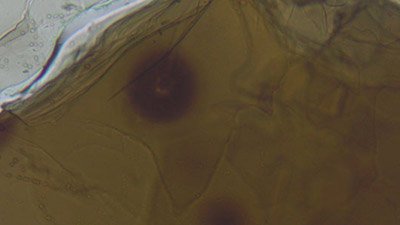
Radiohalos shouldn’t exist, according to conventional wisdom! Though they are very tiny, polonium radiohalos have a huge message that cannot be ignored. They point to a catastrophic origin for granites, consistent with the biblical timeframe for earth history and God’s judgment during the Flood.
Articles About Radiometric Dating
-
Nov. 12, 2023 from Answers Magazine
How much do we really know about all those human and ape fossils displayed in museums and textbooks? The dating methods aren’t as rock-solid as most people assume.
-
Aug. 23, 2021 from Ken Ham Blog
Evolutionary geologists claim diamonds are billions of years old, but they ignore major issues with radiometric dating and Carbon-14 in diamonds.
-
Jan. 23, 2020 from Answers in Depth
Uranium-lead radioisotope dating is now the preferred absolute dating method among geochronologists. But there are several problems with this particular method.
-
Sept. 16, 2017 from Essays on Origins: Creation vs. Evolution
Selected data and unprovable assumptions are a problem with all methods for determining the age of the earth, as well as for dating its fossils and rocks.
-
April 24, 2017 from How Do We Know the Bible Is True? Volume 2
Let’s take a closer look at the radioactive dating method and the radiometric dating methods and see how reliable they really are.
-
March 27, 2017 from Answers in Depth
NCSU’s recent research revealed an “oversight in a radioisotope dating technique used to date everything from meteorites to geologic samples.”
-
Oct. 27, 2016 from Answers in Depth
New chemical analyses appear to show that some of the early mantle rock may have survived until today in rock formations called flood basalts.
-
Technical In-Depth ArticleHelium Diffusion Rates Support Accelerated Nuclear DecayMay 4, 2016 from Answers in Depth
A significant fraction of the earth’s radioactive elements, particularly uranium and thorium, appear to be in the granitic rock of the upper continental crust.
PDF Download -
Feedback ArticleAre the RATE Radiocarbon (14C) Results Caused by Contamination?May 6, 2015 from Feedback
Internet posts continue to accuse the RATE team of ignoring clear evidence of contamination. But is this really the case?
-
Technical In-Depth ArticleRocks Around the Clock: Do Zircons Contain Reliable Time Stamps and Early Earth’s Secrets?Feb. 26, 2014 from Answers in Depth
Despite debate about the accuracy of the uranium “clocks” they contain, scientists say they’ve found a zircon with a confirmed age of 4.4 billion years.
-
Feb. 19, 2014 from Answers Magazine
Radiometric dating is often used to “prove” rocks are millions of years old.
-
Feedback ArticleFeedback: Dating Rocks Helps Creation ScientistsNov. 22, 2013 from Feedback
Dr. Andrew Snelling explains how radioactive dating methods may help us derive not absolute but relative ages of rocks.
-
July 1, 2012 from Answers Magazine
Geologists have discovered a great mystery—tiny black circles, called radiohalos, formed by polonium decay. Where'd it come from, and where'd it go?
-
-
Feedback ArticleRadiometric Dating and ProofDec. 30, 2011 from Feedback
Isn’t radiometric dating irrefutable proof that the earth is approximately four billion year old? Dr. Andrew Snelling, AiG—U.S., responds.
-
Feedback ArticleDating TechniquesMay 6, 2011 from Feedback
Just how far off are the commonly accepted dating methods? Dr. Andrew Snelling explains.
-
March 16, 2011 from Answers Magazine
Interpreted in a biblical framework, radiometric dating methods help us better understand the earth's history since creation six thousand years ago.
-
Technical In-Depth ArticleRadioisotopes and the Age of the EarthMarch 9, 2011 from Answers in Depth
This article summarizes the purpose, history, and intermediate findings of the RATE project five years into an eight-year effort.
PDF Download -
Solar Flares and Radioactive Decay RelationshipAug. 28, 2010
Last year we mentioned research that showed a relationship between earth’s distance from the sun and the rate at which certain elements undergo radioactive decay—an eyebrow-raising linkage.
-
Feedback ArticleFallacious RefutationsAug. 27, 2010 from Feedback
Dr. Andrew Snelling, AiG–U.S., explains how to deal with refutations of creationist material
-
Aug. 4, 2010 from Answers Magazine
Once you understand the basic science of radiometric dating, you can see how wrong assumptions lead to incorrect dates.
-
Magazine ArticleRadiometric DatingApril 1, 2010 from Answers Magazine
Does radiometric dating show that rocks are millions of years old? No!
-
Technical In-Depth ArticleWhole-Rock K-Ar Model and Isochron, and Rb-Sr, Sm-Nd, and Pb-Pb Isochron, “Dating” of the Somerset Dam Layered Mafic Intrusion, AustraliaMarch 24, 2010 from Answers in Depth
The Somerset Dam layered mafic intrusion in southeast Queensland, Australia, has been conventionally dated as Late Triassic by the apparently successful application of radioisotopic dating techniques.
PDF Download -
Technical In-Depth ArticleThe Relevance of Rb-Sr, Sm-Nd, and Pb-Pb Isotope Systematics to Elucidation of the Genesis and History of Recent Andesite Flows at Mt. Ngauruhoe, New Zealand, and Implications for Radioisotopic DatingJan. 6, 2010 from Answers in Depth
Mt. Ngauruhoe in the Taupo Volcanic Zone of New Zealand erupted andesite lava flows in 1949 and 1954, and avalanche deposits in 1975.
PDF Download



Support the creation/gospel message by donating or getting involved!

Answers in Genesis is an apologetics ministry, dedicated to helping Christians defend their faith and proclaim the good news of Jesus Christ.
- Customer Service 800.778.3390
- Available Monday–Friday | 9 AM–5 PM ET
- © 2026 Answers in Genesis