
Ice Age
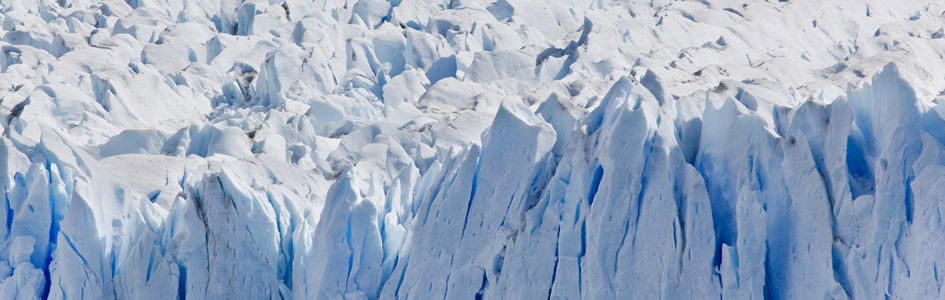
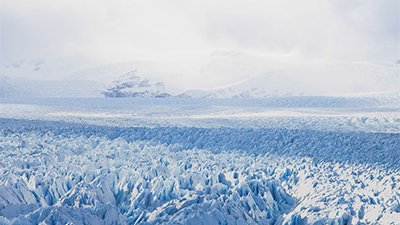
The Ice Age was a period of several hundred years that began within a short time following the global Flood of Noah’s Day. During this time, global temperatures cooled and glaciers covered one-third of Earth’s surface. The Flood’s after-effects, such as warmer oceans and cooler air temperatures, created the necessary conditions.
When Was The Ice Age?
The Bible gives us the big picture of human history—as well as some critical details—which helps us narrow down when the ice built up and then melted away. After two centuries of research, we now have enough information to begin recreating scenes from the rise and fall of the Ice Age.
What Started the Ice Age?
Two particular aspects of the Flood were instrumental in causing the Ice Age: (1) extensive volcanic activity during and after the Flood, and (2) the warm oceans following the Flood. We know the extent of the Ice Age because the glaciers left features on the landscape similar to features we observe around glaciers today.
Woolly Mammoth Mystery
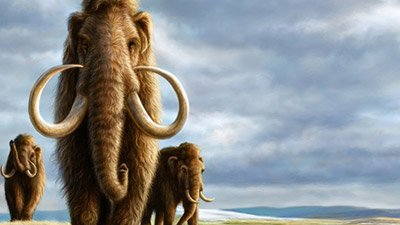
Woolly mammoths probably died after the Flood because there are thousands of carcasses scattered across Alaska and Siberia resting above Flood deposits. There must have been sufficient time for the mammoths to have repopulated these regions after the Flood. The post-Flood Ice Age provides an explanation for the mystery of the woolly mammoths.
Gene Study Suggests Native Americans Came from Siberia
As people groups spread out across Asia and into Africa and Europe, a population traversed a landbridge connecting Siberia to North America (a landbridge since submerged in the Bering Strait). From there, the group populated the continent and diversified both genetically and culturally.
Articles About Ice Age
-
March 1, 2020 from Answers Magazine
Secular scientists struggle to explain what caused the cyclical ice ages that many believe happened in the past.
-
Was Mammoth Extinction Caused by Rapid Global Warming?Nov. 28, 2015
Both the Ice Age and the many millions of woolly mammoths buried in Siberian permafrost have been major mysteries for about years despite numerous theories.
-
Book ChapterDo Ice Cores Show Many Tens of Thousands of Years?Feb. 16, 2014 from Frozen in Time
From the top of the Greenland ice sheet, glaciologists further claim that they can count the annual layers downward. They arrive at 110,000 years for the top 90 percent. Is their claim justified?
-
Magazine Department ArticleIce Age FeedbackJan. 1, 2014 from Answers Magazine
Secular scientists are finally showing by their research that they recognize a problem creationists have been pointing out for decades.
-
Does a Recycled Climate Model Explain Evolutionary Ice Ages?Aug. 22, 2013 from News to Know
The magical model that creates cyclic ice ages from practically nothing
-
Magazine ArticleWhen Was the Ice Age in Biblical History?April 1, 2013 from Answers Magazine
The Bible doesn’t say, “And then there was an Ice Age.” Yet it does help us narrow down when the ice built up and then melted away.
-
Magazine ArticleSpecial Feature—Mysteries of Our Frozen PastApril 1, 2013 from Answers Magazine
Few people dispute that an Ice Age once struck the planet, leaving telltale marks. But many mysteries remain.
-
April 1, 2013 from Answers Magazine
Geophysicists have a love-hate relationship with “the Ice Age.”
-
Magazine Department ArticleAfter the RainbowFeb. 26, 2013 from Answers Magazine
Have you ever wondered what it was like when Noah first stepped off the Ark? Imagine the changes!
-
Who Killed the Iceman?Nov. 16, 2012
PBS recently aired an intriguing documentary covering an investigation into the death of earth’s oldest cold case. How and why was Ötzi killed?
-
A Snail’s Tale of the PastAug. 13, 2011 from News to Know
Protein degradation purported to peer into the past.
-
Book ChapterThe Ice AgeFeb. 17, 2011 from Evolution Exposed: Earth Science
When we start our reasoning from the truth of Scripture, we can develop a model to help us understand the one and only Ice Age.
-
Frozen Mountains MeasuredFeb. 28, 2009 from News to Know
A mountain range the size of the European Alps—larger than anyone expected—has finally been measured.
-
Oct. 14, 2008 from Answers Magazine
The Flood of Noah’s day was the greatest catastrophe in earth history, and it involved much more than rain.
-
Migrant Native AmericansDec. 1, 2007
A new genetic study conducted at the University of Michigan “bolsters claims that Native Americans are descended from one migrant group that crossed a lost land link from modern Siberia to Alaska.”
-
Book ChapterWhere Does the Ice Age Fit?Nov. 22, 2007 from The New Answers Book 1
The ice age is a popular topic that is often discussed. Sadly, most people hear the secular/uniformitarian view and don’t look at this subject from a biblical perspective.
-
Still Trying to Make Ice Cores OldDec. 28, 2006
Dr. Hugh Ross’s Reasons to Believe website featured a new result from the Dome C ice core.
-
Book ChapterWoolly Mammoths—Flood or Ice Age?Oct. 1, 2004 from Frozen in Time
There is plenty of evidence that the woolly mammoths in Siberia, Alaska, and the Yukon and almost all other surficial sites in the Northern Hemisphere died after the Flood.
-
Book ChapterPossible Explanations for Disharmonious AssociationsOct. 1, 2004 from Frozen in Time
There are four possible explanations for the unique mix of cold- and heat-loving animals that were common during the Ice Age.
-
Book ChapterThe Confusion of Elephant and Mammoth ClassificationOct. 1, 2004 from Frozen in Time
It is likely that all mammoths should be classified as one species, or at least within one biblical kind.
-
Book ChapterThe SnowblitzOct. 1, 2004 from Frozen in Time
The Genesis flood provides the two ingredients necessary for an ice age. From this point on we can use basic meteorology to estimate the storm patterns and where ice sheets would develop.
-
Book ChapterThe Peak of the Ice AgeOct. 1, 2004 from Frozen in Time
After the Flood drained off the land, the world’s ocean and land temperatures were constantly changing as they strove toward the relative equilibrium we experience today.
-
Book ChapterCatastrophic MeltingOct. 1, 2004 from Frozen in Time
Accelerated melting would mark the end of the Ice Age.
-
Book ChapterOnly One Ice AgeOct. 1, 2004 from Frozen in Time
We often hear glacial geologists speak of numerous ice ages, as if it is certain. They hypothesize up to 30 different ones, each separated by interglacials, during the past 2.5 million years.
Support the creation/gospel message by donating or getting involved!

Answers in Genesis is an apologetics ministry, dedicated to helping Christians defend their faith and proclaim the good news of Jesus Christ.
- Customer Service 800.778.3390
- Available Monday–Friday | 9 AM–5 PM ET
- © 2026 Answers in Genesis