
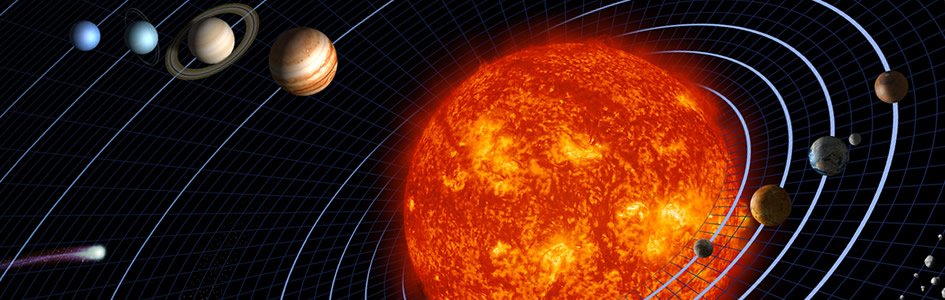
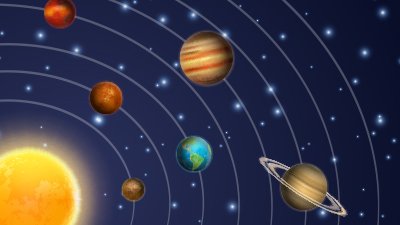
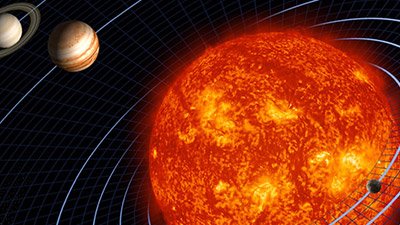
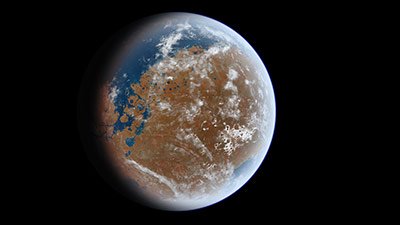
By Harman Smith and Laura Generosa (nee Berwin), graphic artists and contractors to NASA's Jet Propulsion Laboratory, via Wikimedia Commons
Solar System
Origin of the Solar System
The nebular hypothesis is simply a story to describe what may have happened in the “prehistoric” solar system. There are no observations to support the claims that natural processes over millions of years could form a solar system.
Problems for Solar System Theories
Over and over again in astronomy, cosmic collisions are invoked as a sort of magic wand to rescue evolutionary theories from the facts. The planet Uranus is tilted over, therefore, something hit it. Venus’s rotation contradicts evolutionary predictions—therefore, something hit it. Mercury is too dense for evolution—therefore, something hit it.
Sun Raw Material Is Different Than the Planets
Since everything formed from the same raw materials, NASA expected the chemistry to be the same throughout. But the isotope ratios found in these solar wind particles do not match those on earth.
Age of the Solar System
Evolutionists and young earth creationists both agree that the earth is about the same age as the solar system. Evolutionists believe that both formed spontaneously about 4.5 billion years ago. Young-earth creationists believe that the earth was formed on Day One and the rest of the solar system and universe on Day Four.
Articles About Solar System
-
Sept. 21, 2025 from Answers Magazine
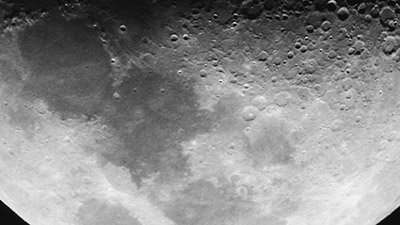
Each moon’s spectacular features point to the workmanship of God.
-
March 16, 2023 from Ken Ham Blog
A new headline proclaimed the discovery of another evolutionary problem, this time describing a “forbidden” planet that “shouldn’t exist.”
-
Feb. 27, 2023 from Ken Ham Blog
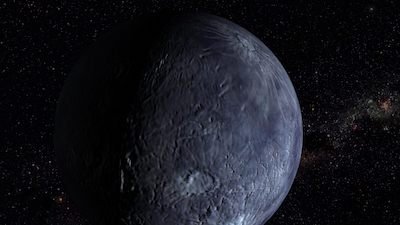
Scientists are looking into possibilities for why Quaoar’s rings are the way they are—but I actually already have the big picture answer!
-
Feb. 19, 2023 from Answers Magazine
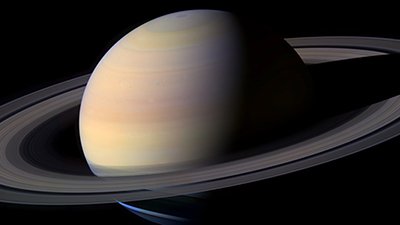
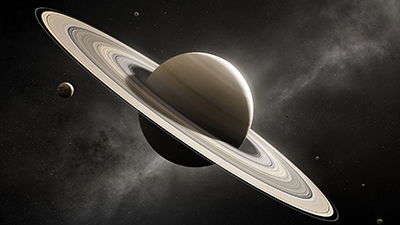
The Cassini-Huygens mission vastly improved our understanding of Saturn. The space probe Cassini’s most amazing discovery was the clear testimony to Saturn’s young age and that it had a Creator.
-
Nov. 1, 2022 from Ken Ham Blog
Mars is nicknamed “the red planet” (and rightly so!). So why did a recent article refer to Mars as “a pale blue dot”?
-
March 13, 2022 from Answers Magazine
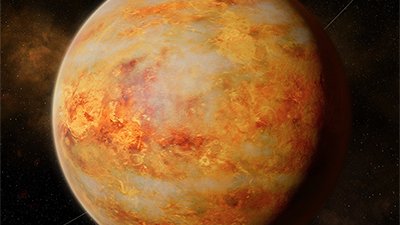
Despite some similarities, Earth and the planet next door have very different purposes.
-
March 2, 2022 from Answers in Depth
A biblical overview for why our week is only seven days, how the secular world explains it, and the benefits we enjoy from God’s ordained work-rest weekly pattern
-
Feb. 6, 2021 from The New Answers Book 4
The solar system supposedly formed gradually from the collapse of a cloud of gas and dust. Obviously, this idea is at odds with the biblical creation narrative.
-
Jan. 6, 2021 from Answers in Depth
There has been some debate among theologians as to whether the sun and the moon will exist in the eternal state.
PDF Download -
Oct. 3, 2019 from Ken Ham Blog
Saturn’s rings are made up of billions of particles of dust, rock, and ice, all orbiting the planet together. But exactly how old are Saturn’s rings?
-
April 8, 2018 from Answers Magazine
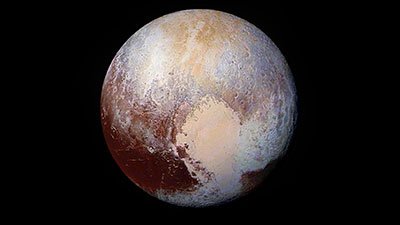
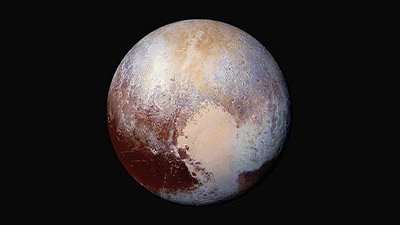
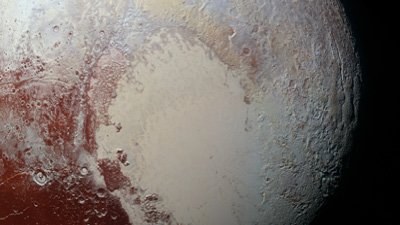
When a probe flew by Pluto, it made a shocking discovery: the surface is young. Astronomers are still scrambling to explain why.
-
Aug. 28, 2016 from Answers Magazine
Did Mars once contain vast oceans? Some creationists now think so.
Support the creation/gospel message by donating or getting involved!

Answers in Genesis is an apologetics ministry, dedicated to helping Christians defend their faith and proclaim the good news of Jesus Christ.
- Customer Service 800.778.3390
- Available Monday–Friday | 9 AM–5 PM ET
- © 2026 Answers in Genesis