

How Science Confirms a Literal, Historical Adam and Eve
But hasn’t science overwhelmingly proven that we are related to the apes?
An increasing number of professing evangelical scholars and leaders doubt or deny some or all of the details about Adam in Genesis. They do so because they believe that science has proven overwhelmingly that we are related to the apes through millions of years of evolution. But is this so? And does it matter?
The Historicity of Adam
Genesis 1–11 is inerrant history, not poetry, historical fiction, or mythology.1 The 13-fold use of the Hebrew word toledoth (translated as “history,” “account,” or “generations”) in Genesis,2 alongside the waw-consecutive, imperfect verb form, shows that these 11 chapters are historical narrative. The genealogies in Genesis 5, 11, Luke 3, and the many comments of Jesus, Paul, and Peter show that Genesis 1–11 should be interpreted as literally as we do the accounts of the virgin birth, crucifixion, and resurrection of Jesus.3 So what does Scripture teach about the origin of man?
The Literal Truth About Adam
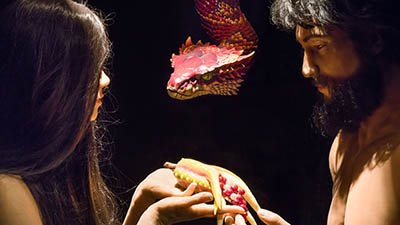
Adam and Eve were created on the sixth literal day of history and were uniquely made in the image of God.
According to Genesis 1:26–28, Adam and Eve were created on the sixth literal day of history and were uniquely made in the image of God. They were created to rule over the rest of creation. Adam was created to understand and use spoken language (Genesis 2:7–25). Adam had the reasoning ability to name animals and discern that he was alone—the only human being—until God made Eve.
Genesis 2:7 clearly states that God made Adam’s body from the dust of the ground, added the divine breath, and Adam became a “living creature” (Hebrew: nephesh chayyah). The same Hebrew words, nephesh chayyah, describe sea creatures, flying creatures, and land animals (Genesis 1:20–21, 24, 2:19, 9:9–15). They are all living creatures (though they are not made in the image of God). God did not make a living creature by natural processes over millions of years and transform that living creature into a human being. The first man, Adam, was supernaturally made from literal dust (cf. Genesis 3:19; 1 Corinthians 15:45–47). Genesis 2:7 is impossible to harmonize with human evolution.
Genesis 2:22 says Eve, the first woman (Genesis 3:20), was made from a preexisting living creature (Adam). But this was by supernatural surgery, not by any natural process.
The fall of Adam and Eve not only produced immediate spiritual death (Genesis 3:8) but also precipitated God’s judgment in initiating the process of physical death (Genesis 3:19). God also cursed the nonhuman creation (Genesis 3:14, 17–18; Romans 8:18–25). In Genesis 3:15, God gave the first promise of the coming Messiah to save sinners. Then God made coats of skin, implying the first blood sacrifice as a covering for sin (Genesis 3:21), pointing to the Lamb of God (Jesus) who provides forgiveness of sin (John 1:29) for those who repent and believe the gospel.
God created the earth to be inhabited by man (Isaiah 45:12, 18), and he created the heavenly bodies so man can tell time (Genesis 1:14). But if the big bang theory is true, then God waited billions of years after he made the stars, sun, moon, and earth before he made man. What kind of God would say and do this? These statements only make sense if Adam was created five days after God created the earth and two days after he made the heavenly bodies.
Referring to Genesis 1–2 in Mark 10:1–9, Jesus affirmed that God created Adam and Eve at the “beginning of creation.”4 Paul likewise taught that “since the creation of the world,” humans have seen the witness of creation to the existence and some attributes of God (Romans 1:20). Jesus and Paul were clearly young-earth creationists: Adam was not created billions of years after the beginning, as implied by the evolution story.
But What About the “Overwhelming Scientific Evidence”?
The idea of millions of years of earth history was invented in the minds of anti-Christian geologists in the late-eighteenth and early-nineteenth centuries by using naturalistic, uniformitarian assumptions to interpret the evidence.5
Fossil Evidence?
Since the discovery of “Neanderthal Man” in 1856 in Germany, evolutionists have trotted out numerous examples of fossil evidence to “prove beyond question” that we evolved from some apelike creature over millions of years. From 1864 until recently, evolutionists said neanderthals were a different species, Homo neanderthalensis. Today, many evolutionists classify them as fully human for many good reasons. They made sophisticated spears and tools, jewelry, glue, boats, flutes from bear femurs, and homes from animal skins. They painted cave art, used fire to cook, cared for their sick, and ceremonially buried their dead. Genetic and anatomical evidence indicates they could speak, and they interbred with anatomically modern humans.6
“Piltdown Man” was announced in 1912 as an ape-man who lived 500,000 to a million years ago. In the following decades, he was discussed in 500 scientific papers7 and presented as evidence of human evolution in the famous “Scopes Evolution Trial” in 1925.8 But in 1953, “Piltdown man” was exposed as a deliberate hoax concocted by some of the leading scientists in Britain.
In 1922, Henry Fairfield Osborn (director of the American Museum of Natural History in New York City, 1908–1935) declared to the public that “Nebraska Man” was an apelike ancestor based on a single fossil tooth! But in 1927, after more fossil evidence was discovered in Nebraska, it was quietly revealed (in a technical journal) to be from an extinct species of pig.
In 1970, in commenting on the Piltdown hoax, the prominent evolutionist Lord Solly Zuckerman declared,
Students of fossil primates have not been distinguished for caution when working within the logical constraints of their subject. The record is so astonishing that it is legitimate to ask whether much science is yet to be found in this field at all. The story of the Piltdown Man hoax provides a pretty good answer.9
In 1974, “Lucy” was declared to be a “missing link” ape-woman. But compelling evidence, recognized by even some evolutionists, shows that she and other Australopithecines are 100% apes.10
In 1993, in a review of an evolutionist book on human origins, Chris Stringer, another world-famous evolutionary expert on the subject, said,
The study of human origins seems to be a field in which each discovery raises the debate to a more sophisticated level of uncertainty. . . . True to the traditions of the field, the arguments swirl around the questions of the correct classification of the fossils and of the presumed relationships between the species of humans and pre-humans.11
From 1997 to the present, Dr. Carl Werner and his wife have visited 122 natural history museums and universities all over the world. They have photographed thousands of original fossils and interviewed over 100 leading evolutionists about the evidence for evolution, especially the evolution of man. What they discovered was a trail of false claims, hidden evidence, manipulation of the evidence, fraud, and sharp disagreement among evolutionist experts. Anyone who thinks the scientific evidence for human evolution is strong needs to consider Werner’s revealing interviews and photos of the actual fossil evidence. The world has been deceived.12
Genetic Evidence?
Like the fossil evidence, genetics also confirms Genesis and refutes evolution. For many years, the media and science magazines have told the world that the DNA of chimpanzees and humans “are nearly 99 percent the same.”13 But to arrive at that percentage, evolutionists did not compare the whole genomes of chimps and humans and used the human genome as a structural framework (which thereby assumed ape-to-human evolution is a fact).
But in 2016, Dr. Jeffrey Tomkins (geneticist at the Institute for Creation Research) carefully analyzed the published genomic data and concluded that the genomes of humans and chimps are only about 85% the same.14 In May 2025, in the prominent journal Nature, evolutionists confirmed that percentage as a result of mapping the whole genome of apes without using the human genome as a template.15
Dr. Tomkins and Dr. Nathaniel Jeanson (genetics expert at Answers in Genesis) have also shown that genetics confirms that all humans are descended from just two humans and that the mutation rate in the human genome confirms the biblical timescale for Adam, not the evolutionist timescale for the first Homo sapiens.16
Does It Matter What We Believe About Adam?
The biblical and scientific evidence overwhelmingly exposes the lie that humans evolved from some apelike ancestors over millions of years. The account of Adam and Eve in Genesis is literally accurate history. They were created supernaturally only a little more than 6,000 years ago.17
The Bible’s teaching about Adam and Eve is critical to correct thinking about gender, marriage, abortion, racism, and the authority of Scripture.18 The myth of millions of years of animal disease, death, extinction, and other natural evils before Adam undermines the clear biblical truth about the original very good creation, the cosmic impact of the fall, and the future redemption of the creation at the return of Christ and thereby assaults the character of God.19
Many old-earth creationists affirm a literal, historical Adam but accept the billions of years. This reflects an inconsistent hermeneutic, as I have shown elsewhere.20 Christians should reject all old-earth views, not just theistic evolution.21
Adam is foundational to the gospel message of salvation.
Most importantly, Adam is foundational to the gospel message of salvation. He brought sin and physical and spiritual death into the human race. But Jesus, the last Adam, came to give spiritual life and ultimately resurrected physical life to all those who repent of their sins and trust in Jesus Christ as Savior and Lord (Romans 5:12–21; 1 Corinthians 15:20–28, 42–50). We have no gospel without the last Adam. But we can’t have the gospel without the first Adam either. Let God be true, but every man a liar (Romans 3:4)!
This article is adapted and republished by permission from the fall 2025 edition of Eikon, the journal of the Council on Biblical Manhood and Womanhood.


Footnotes
- Even most old-earth proponents in the church recognize that Genesis 1–11 is history. See, for example, Walter Kaiser, The Old Testament Documents: Are They Reliable and Relevant? (Downers Grove, IL: IVP, 2001), 53–83.
- Genesis 2:4, 5:1, 6:9, 10:1, 10:32, 11:10, 11:27, 25:12, 25:13, 25:19, 36:1, 26:9 and 37:2.
- For a scholarly defense of the young-earth view of Genesis 1–11 that is also understandable to thoughtful lay people, see the 14-author work, Terry Mortenson and Thane H. Ury, eds., Coming to Grips with Genesis (Green Forest, AR: Master Books, 2008).
- For a short defense of this statement, see Terry Mortenson, “But from the Beginning of . . . the Institution of Marriage?,” Answers in Genesis, November 1, 2004, https://answersingenesis.org/family/marriage/but-from-the-beginning-of-the-institution-of-marriage/. For a longer discussion, see Terry Mortenson, “Jesus, Evangelical Scholars, and the Age of the Earth,” Answers in Depth 2, August 1, 2007, https://answersingenesis.org/age-of-the-earth/jesus-evangelical-scholars-and-the-age-of-the-earth/, which is similar to chapter 11 in Coming to Grips with Genesis.
- See my lecture (based on my PhD research), Terry Mortenson, “Millions of Years: The Idea’s Unscientific Origin and Catastrophic Consequences,” Answers in Genesis, August 26, 2008, https://answersingenesis.org/media/video/age-of-the-earth/millions-of-years/; as well as Terry Mortenson, “The History of the Development of the Geological Column,” Answers in Genesis, August 8, 2007, https://answersingenesis.org/age-of-the-earth/the-history-of-the-development-of-the-geological-column/; and Terry Mortenson, “Philosophical Naturalism and the Age of the Earth: Are They Related?,” Answers in Genesis, March 2, 2005, https://answersingenesis.org/age-of-the-earth/are-philosophical-naturalism-and-age-of-the-earth-related/.
- See Marvin Lubenow, “Neanderthals: Our Worthy Ancestors,” in Terry Mortenson, ed., Searching for Adam: Genesis and the Truth About Human Origins (Green Forest, AR: Master Books, 2016), 263–286.
- Glen Levy, “Top 10 Shocking Hoaxes,” Time, March 16, 2010, https://content.time.com/time/specials/packages/article/0,28804,1931133_1931132_1931125,00.html.
- Regarding that farcical trial that made a fool of a leading old-earth creationist, see Terry Mortenson, “The 1925 Scopes Evolution Trial: Why It Matters 100 Years Later,” Christ Over All, July 18, 2025, https://christoverall.com/article/concise/the-1925-scopes-evolution-trial-why-it-matters-100-years-later/.
- Solly Zuckerman, Beyond the Ivory Tower (New York: Taplinger Publishing Co., 1970), 65.
- See David Menton’s illustrated lecture, “Lucy: She’s No Lady,” Answers in Genesis, August 11, 2015, https://answersingenesis.org/media/video/evolution/lucy-shes-no-lady/. The late Dr. Menton was a respected human anatomy medical professor (Washington University School of Medicine) and expert on the claimed fossil evidence for human evolution.
- Chris Stringer, review of Origins Reconsidered: In Search of What Makes Us Human, by Richard Leakey, Scientific American (May 1993), 88.
- See The Grand Experiment Video Series, especially video episodes 3–8 on human evolution at https://www.thegrandexperiment.com/video-series.
- Elizabeth Kobert, “Skin Deep,” National Geographic (April 2018), 32–33.
- Jeffrey P. Tomkins, “Analysis of 101 Chimpanzee Trace Read Data Sets: Assessment of Their Overall Similarity to Human and Possible Contamination with Human DNA,” Answers Research Journal 9 (2016): 294–298, https://answersresearchjournal.org/analysis-chimpanzee-trace-read-data-sets/.
- DongAhn Yoo et al., “Complete Sequencing of Ape Genomes,” Nature 641 (May 8, 2025): 401–418, https://www.nature.com/articles/s41586-025-08816-3.
- Nathaniel Jeanson and Jeffrey P. Tomkins, “Genetics Confirms the Recent, Supernatural Creation of Adam and Eve,” in Mortenson, Searching for Adam, 287–330.
- In Searching for Adam, 16 experts defend the literal truth about Adam biblically, theologically, historically, paleontologically, genetically, anatomically, socially, and morally.
- Mortenson, Searching for Adam, 459–501, https://answersingenesis.org/adam-and-eve/adam-morality-gospel-and-authority-of-scripture/.
- Terry Mortenson, “The Fall and the Problem of Millions of Years of Natural Evil,” Answers in Depth 7, July 18, 2012, https://answersingenesis.org/theory-of-evolution/millions-of-years/the-fall-and-the-problem-of-millions-of-years-of-natural-evil/.
- See my 20,000-word critique of Wayne Grudem’s critique of theistic evolution: Terry Mortenson, “Theistic Evolution: A Response to Wayne Grudem, Making the Same Errors He Opposes in Others,” Answers Research Journal 14 (February 17, 2021): 11–36, https://answersresearchjournal.org/theistic-evolution-response-grudem/. For a shorter 3,000-word summary, see Terry Mortenson, “Wayne Grudem’s Seriously Inconsistent Opposition to Theistic Evolution,” Answers in Depth 17, May 13, 2022, https://answersingenesis.org/creationism/old-earth/wayne-grudem-inconsistent-opposition-theistic-evolution/.
- See my lecture, Terry Mortenson, Did God Create over Millions of Years?, Answers TV, August 26, 2024, https://www.answers.tv/videos/did-god-create-over-millions-of-years.

Support the creation/gospel message by donating or getting involved!

Answers in Genesis is an apologetics ministry, dedicated to helping Christians defend their faith and proclaim the good news of Jesus Christ.
- Customer Service 800.778.3390
- Available Monday–Friday | 9 AM–5 PM ET
- © 2026 Answers in Genesis