

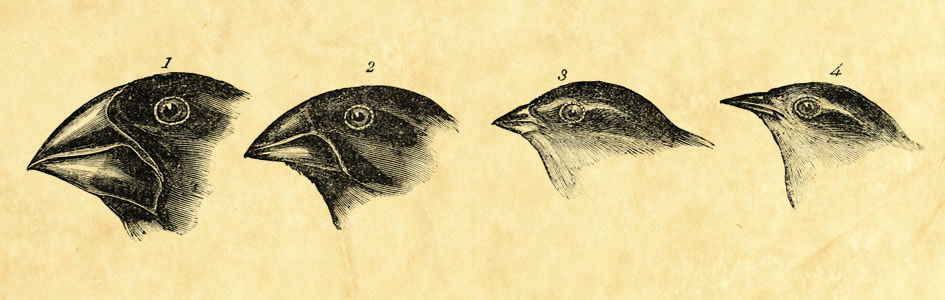
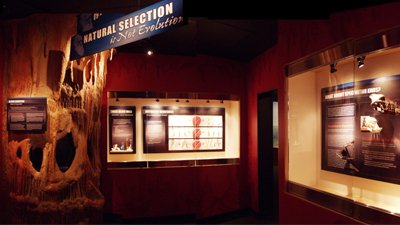
Natural Selection
Natural Selection Is Not Evolution!
The supposed vehicles of evolution are mutations, natural selection, and other mechanisms that—when combined with that pixie dust of time—allegedly led to the development of all life forms present today. However, natural selection merely redistributes or reduces preexisting genetic information, and mutations often corrupt the information.
Natural Selection and Creationists
The creationist view of natural selection is supported biblically and scientifically. Natural selection is a God-ordained process that allows organisms to survive. It is an observable reality that occurs in the present and takes advantage of the variations within the kinds and works to preserve the genetic viability of the kinds.
Natural Selection and New Information
Natural selection cannot generate brand new genetic information. It simply doesn’t work that way. Instead, it filters information that already exists. The general theory of evolution is the idea that single-celled organisms gained new genetic information over millions and billions of years, and eventually arrived at “higher life-forms” such as man.
Adaptation in Plants
If living things such as plants have been observed to adapt to their environment—isn’t that evolution? Adaptation of plants does not prove evolution.
Does Natural Selection Prove Evolution?
Distinguishing natural selection from Darwinian evolution (the latter combines natural selection with the idea that all life has an ancestor in common) is one of the primary challenges modern creationists face in the origins debate. Experimental confirmation of natural selection is interpreted as proof of Darwin’s theory.
Articles About Natural Selection
-
-
Jan. 22, 2012 from Answers Magazine
Creationists believe in natural selection.
-
Yeast Begat YeastJan. 21, 2012 from News to Know
“Evolution in progress” said to show how easily multicellularity evolved
-
Warp Factor Evolution, LieutenantJan. 7, 2012 from News to Know
Bulletin: salmon evolve at warp speed . . . into salmon!
-
-
The Eyes Have ItApril 30, 2011 from News to Know
So with peacocks—the classic Darwinian example of sexual selection—do the eyes have it or not?
-
Skin Color and Natural SelectionFeb. 26, 2011 from News to Know
Another prominently reported example of “evolution” illustrates just the opposite—and supports the creationist critique of Darwinian evolution
-
Evolutionary CuckoosJan. 15, 2011 from News to Know
Have Australian birds “taken a new evolutionary step”? Or is this another cuckoo example of “evolution” in action?
-
Cane Toad: “Evolution” in Action?Oct. 23, 2010 from News to Know
Is the cane toad invading Australia the latest example of “evolution” in action?
-
Natural Selection Not at WorkJuly 17, 2010 from News to Know
Natural selection, the force driving so-called “survival of the fittest,” is at the heart of both evolutionist and creationist explanations for life’s diversity. But in one strange case, natural selection is not at work on an animal.
-
Large-Scale Natural Selection TestMay 15, 2010
Scientists have run one of the largest-scale tests of natural selection ever. Does the result do anything to convince us of Darwin’s theory?
-
Caterpillar Communication from Ambulation?April 17, 2010
Could caterpillar communication have come from ambulation?
-
Evolution at a Snail's PaceMay 16, 2009 from News to Know
It’s supposedly evolution in action but the evolution is proceeding like a snail creeping downhill.
-
Molucules Don't Make the ManMay 2, 2009 from News to Know
Scientists have built a molecular system that “evolves” in the lab. But like other such systems that have gone before it, this doesn’t prove Darwin.
-
Cod Evolution No-GoFeb. 28, 2009 from News to Know
Another example of “evolution in action”—need we even bother examining the reality to confirm this isn’t what Darwin predicted?
-
Book ChapterIs Natural Selection the Same Thing as Evolution?Feb. 9, 2009 from The New Answers Book 1
Natural selection is an observable process that is often purported to be the underlying mechanism of unobservable molecules-to-man evolution.
-
Twitchy LizardsJan. 24, 2009 from News to Know
Lizards are busy “evolving” again—is it more proof for Darwinism?
-
The “Eyes” Have ItJan. 13, 2009
Darwin suggested that if a graded series of organisms, each with some sort of eye, can be found then this would mean that the eyes could have been produced by natural selection.
-
When Hunters Fuel 'Evolution'Jan. 10, 2009 from News to Know
Losing or gaining anatomical features, changing colors, growing bigger or smaller—it doesn’t matter how a biological population is changing, it’s evolution!
-
Debating the Origin of SexDec. 6, 2008
At the beginning He made them male and female—emphasis on the “and”?
-
Natural Selection Theory Strengthened By Armored Fish StudySept. 6, 2008 from News to Know
It’s yet another rock-solid proof of Darwin’s theory—at least in the eyes of Darwinists.
-
Dung Beetle Used in Argument For Natural SelectionAug. 30, 2008
Britain’s leading newsmagazine weighs in on “one of the lies regularly promulgated by creationist ideologues.” Uncalled-for, ugly allegations aside, we have to, ironically, wonder about the “truth” of that statement.
-
In-Depth ArticleMuch Ado About MothsApril 23, 2008 from Answers in Depth
This is the fascinating story about how, due to a combination of environmental changes and selective predation, a moth turned into, well, a moth.
PDF Download -
Examining Elephant Tusk "Evolution"Jan. 26, 2008
One story this week takes a close look at an examples of “evolution” in nature. But is there anything that can’t be explained through the biblical model of origins?
Support the creation/gospel message by donating or getting involved!

Answers in Genesis is an apologetics ministry, dedicated to helping Christians defend their faith and proclaim the good news of Jesus Christ.
- Customer Service 800.778.3390
- Available Monday–Friday | 9 AM–5 PM ET
- © 2026 Answers in Genesis