

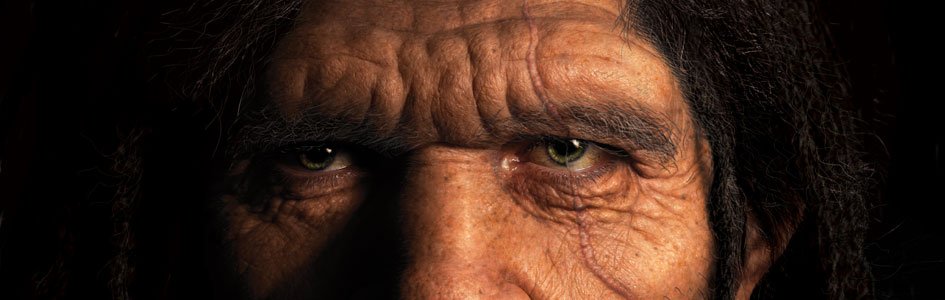
Human Evolution
There are only three ways to make an ape-man: 1) make an ape more human-like, 2) make a human more ape-like, or 3) fraudulently mix the two together. Homo naledi, a new fossil species discovered in a South African cave chamber, is another example of trying to make an ape more human-like.
Humans and Chimps Alike?
Determining the genetic basis for differences between humans and chimps does not explain the origin of those differences. We share not a common ancestor but a common Designer.
Who Were Cave Men?
Genetics has clearly established that Neanderthals and Denisovans were fully human. Any physical differences should be viewed as nothing more than variations that can occur within the human race descended from Adam and Eve.
Fossils of Cave Men
Human fossils —and their stone tools—are strikingly similar everywhere they are found in the Lower and Middle Pleistocene layers. These people had large brow ridges, small chins, and receding foreheads.
Evolving Intelligence
Evolutionary anthropologists believe mental abilities had to evolve. Yet they note large gaps in this archaeological record across which it is difficult to discern whether mental evolution was gradual or punctuated by leaps and losses.
Articles About Human Evolution
-
-
Evidence For Continuing Human Evolution Arguably IrrelevantOct. 8, 2011 from News to Know
Big deal over small, arguably irrelevant changes
-
Magazine Department ArticleTruth or Consequences?April 1, 2011 from Answers Magazine
This is not a “top ten” list prepared for a late-night comedian or a TV game show.
-
Evolution Goes On?March 5, 2011 from News to Know
Darwinists are quick to insist that humans evolved. But do they think we’re still evolving?
-
Human Jawbone Found: Doesn’t Fit Evolutionary StepsOct. 30, 2010
Experts in the ever-changing topic of human evolution thought they had most of it figured out—when our ancestors left Africa, the major evolutionary steps since then, etc. But a human jawbone discovered in China just doesn’t fit.
-
Smithsonian Exhibition—Deception and AtheismJuly 26, 2010 from Answers Update
The purpose of this exhibit on the origin of man is not only to indoctrinate children and adults in evolution, but also atheism!
-
Are Tibetans the Most Evolved Humans?July 3, 2010
Are Tibetans the most evolved humans? Just what does that mean?
-
Similarities Between Humans and Plants Result of Evolution?Feb. 20, 2010
Creationists argue that similarities between humans and apes aren’t due to evolution. What about similarities between humans and plants?
-
Ways We Could EvolveNov. 28, 2009 from News to Know
Slow science news week? Try some science fiction instead.
-
Unbecoming of HumansNov. 3, 2009
PBS TV in America is proclaiming that due to “an explosion of recent discoveries [that shed] light on . . . our hominid relatives,” it’s time to broadcast another documentary on human evolution.
-
Are You Evolving?Oct. 24, 2009 from News to Know
Many humans believe evolution does indeed happen. Is it happening to them as well?
-
Kin ConfusionJune 27, 2009 from News to Know
For all the years of proclaiming chimpanzees as our closest living evolutionary cousins, some evolutionists think we may actually be more closely related to orangutans.
-
In-Depth ArticleAre Humans and Chimps Related?April 29, 2009 from Answers in Depth
It is one of the most-asked questions we now receive at Answers in Genesis: If human and chimp DNA are so similar, does this show a common ancestor?
PDF Download -
Instantaneous EvolutionApril 18, 2009 from News to Know
Early humans weren’t very good at swinging from trees. But if you think that has evolutionists doubting human evolution, think again.
-
Magazine Department ArticleMutant HumansApril 1, 2009 from Answers Magazine
The idea of human evolution may be a thing of the past
-
Human Ancestors Had Flexible FeetNov. 22, 2008
The flip-flops of the past weren’t footwear, but rather feet. That’s 99 percent evolutionary spin and 1 percent imagination.
-
Geneticist Says Human Evolution Has EndedOct. 11, 2008
That’s one small step for a man, one giant falling-flat-on-its-face step for mankind’s evolution.
-
Sarcasm Now Considered as an Evolutionary Survival SkillJune 28, 2008
We at Answers in Genesis think evolutionary theory is just about the greatest thing since sliced bread. And so is sarcasm! Well, at least it gives us a little license to “pour it on” a bit, at least in this piece.
-
Cultural Evolution of Counting OverturnedJan. 19, 2008 from News to Know
A new look at the counting systems of some Pacific islanders is overturning previously held views on the “cultural evolution” of counting.
-
Magazine Department ArticleStooping Low for EvolutionDec. 18, 2006 from Answers Magazine
It was all over the world's media, including a BBC-TV documentary-family members in Turkey who walk hunched over, using their hands as well as their feet.
-
The Evolution of Childbirth?Nov. 15, 2006
Sara Sklaroff’s “The Evolution of Childbirth—A Horror Story” reflects the secular worldview that says evolution “designed” the supposedly inferior process of human birth.
-
FOXP2 and the Non-Evolution of Human LanguageMay 3, 2006
Even though FOXP2 has a similar sequence and a similar function in other organisms, it serves a unique role in the context of a human being to facilitate language.
-
Chimps as Smart as Preschoolers?Jan. 6, 2000
The Associated Press (AP) reported on January 6 that a chimpanzee “performed about as well as an average (Japanese) preschool child" on similar numerical tests.
-
Age of Aboriginal Art DisputedMay 7, 1997
This article talks about the proclaimed 'ancient' aboriginal art and how the date has recently been revised down.
Support the creation/gospel message by donating or getting involved!

Answers in Genesis is an apologetics ministry, dedicated to helping Christians defend their faith and proclaim the good news of Jesus Christ.
- Customer Service 800.778.3390
- Available Monday–Friday | 9 AM–5 PM ET
- © 2026 Answers in Genesis