

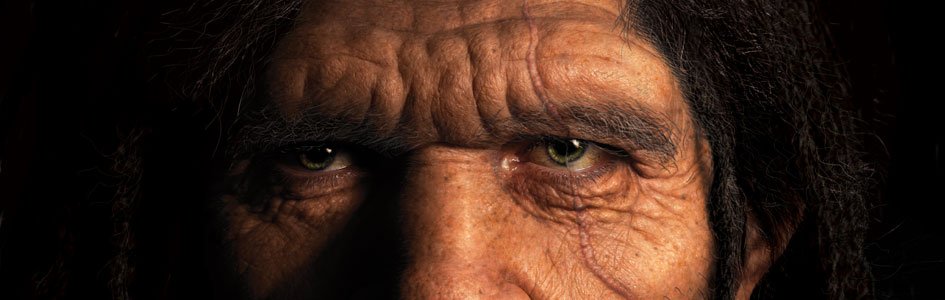
Human Evolution
There are only three ways to make an ape-man: 1) make an ape more human-like, 2) make a human more ape-like, or 3) fraudulently mix the two together. Homo naledi, a new fossil species discovered in a South African cave chamber, is another example of trying to make an ape more human-like.
Humans and Chimps Alike?
Determining the genetic basis for differences between humans and chimps does not explain the origin of those differences. We share not a common ancestor but a common Designer.
Who Were Cave Men?
Genetics has clearly established that Neanderthals and Denisovans were fully human. Any physical differences should be viewed as nothing more than variations that can occur within the human race descended from Adam and Eve.
Fossils of Cave Men
Human fossils —and their stone tools—are strikingly similar everywhere they are found in the Lower and Middle Pleistocene layers. These people had large brow ridges, small chins, and receding foreheads.
Evolving Intelligence
Evolutionary anthropologists believe mental abilities had to evolve. Yet they note large gaps in this archaeological record across which it is difficult to discern whether mental evolution was gradual or punctuated by leaps and losses.
Articles About Human Evolution
-
March 19, 2018 from Ken Ham Blog
The famous evolutionary primatologist Jane Goodall studied chimpanzees in Tanzania. She originally thought they were nice, but she learned otherwise.
-
Oct. 6, 2017 from Answers in Depth
Scientists report the biochemical footprint of a particular sugar polymer—a type that modern humans cannot make—has been found in an ancient African fossil.
-
July 15, 2017 from Essays on Origins: Creation vs. Evolution
Evolutionists insist that the underlying similarity of all animals, including man, is compelling evidence for their evolution from a common ancestor.
-
Dec. 16, 2016 from Answers in Depth
A study in Proceedings of the National Academy of Sciences suggests that the modern practice of Caesarean section is rapidly altering human evolution.
-
In-Depth ArticleHobbits of Flores Were an Archaic Human Variety, Studies SuggestJuly 15, 2016 from Answers in Depth
Could hobbits be a dwarfed variety of Homo erectus, an archaic human whose presence in Southeast Asia, specifically Flores, has been demonstrated?
-
In-Depth ArticleIs Your Allergy-Prone Immune System the Result of Neanderthal Influence?Feb. 18, 2016 from Answers in Depth
Three of the genes that control our immune system's first line of defense (and our allergies) bear a significant footprint from Neanderthals.
-
Jan. 1, 2016 from Answers Magazine
The Naledi skeletons in South Africa, whose discovery was announced last September, represent the latest species declared to be a likely human relative.
-
Technical In-Depth ArticleIs the Ledi Jaw the Missing Link in Human Evolution?March 21, 2015 from Answers in Depth
Evolutionists say the oldest human fossil, the Ledi jaw (LD 350-1), shows humans had evolved from ancestors like Lucy in East Africa 2.8 million years ago.
-
In-Depth ArticleCan Neanderthal Noses Sniff Out the Secret Paths of Human Evolution?Dec. 17, 2014 from Answers in Depth
Were Neanderthals our cousins, our ancestors, or just our fellow human travelers in the post-Babel world?
-
In-Depth ArticleMouse Memory Enhanced By Humanized “Language Gene”Sept. 25, 2014 from Answers in Depth
With mice and men, practice makes perfect, but a mouse with a man’s FOXp2 gene achieves perfection faster.
-
In-Depth ArticleIs Homo floresiensis a Legitimate Human “Hobbit” Species?Aug. 19, 2014 from Answers in Depth
Indonesia’s Flores Island was probably populated not by a Lilliputian human species but just ordinary people including a person with Down syndrome.
-
Aug. 14, 2014 from Answers in Depth
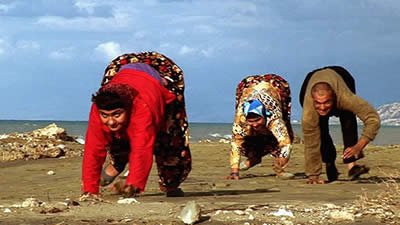
Uner Tan syndrome does not harbor the evolutionary “how” of human bipedality.
-
In-Depth ArticleDoes a Paleo-Diet Hold the Evolutionary Key for Good Nutrition?July 3, 2014 from Answers in Depth
Do modern man’s diseases spring from a mismatch between today’s diet and prehistoric anatomy?
-
Review: Your Inner ReptileApril 19, 2014 from Countering the Culture
The stars of the program were a group of reptiles that supposedly evolved into mammals, and the supporting cast consisted of baby opossums that gave their lives for the cause.
-
Cosmos Review: “Deeper, Deeper, Deeper Still”April 15, 2014 from Countering the Culture
What we read in God’s Word even helps us understand what we see in God’s world—including most of the scientific principles taught in this episode.
-
Review: Your Inner FishApril 12, 2014 from Countering the Culture
Your Inner Fish, hosted on PBS by fish paleontologist Neil Shubin, blends fishy fables with embryology, genetics, and human anatomy.
-
Did Our Ancestors Evolve Into Humans Feet First?Oct. 21, 2013 from News to Know
Belief that bipedal locomotion was the key to human evolution gets flipped on its hands.
-
Tie of Human Pregnancy to Bipedality Becomes ExtinctSept. 22, 2012 from News to Know
Convenient evolutionary answer tying human pregnancy to bipedality becomes extinct.
-
Did the Altruistic "Snuggle for Survival" Help Humans Evolve?June 30, 2012 from News to Know
From the first cells to humans, the evolution of life has been a “snuggle for survival,” says Harvard professor Martin Nowak.
-
Sweet ToothJune 16, 2012 from News to Know
“We have evolved to need coercion,” says Harvard biologist.


Support the creation/gospel message by donating or getting involved!

Answers in Genesis is an apologetics ministry, dedicated to helping Christians defend their faith and proclaim the good news of Jesus Christ.
- Customer Service 800.778.3390
- Available Monday–Friday | 9 AM–5 PM ET
- © 2026 Answers in Genesis