

Genetics
What Is DNA?
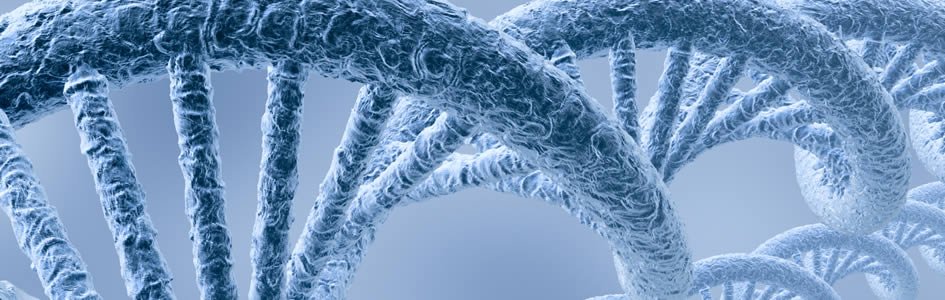
Scientists have discovered an unmistakable language within all living things. Like a miniature library, DNA stores piles of information in extraordinary molecules that specify the details of everything from the shape of flower petals to the color of your eyes. A supremely intelligent Author and Life-Giver left His indelible message in every living thing.
Genetics and Interbreeding
The species on earth today descend from the original created kinds of Genesis 1. The many inter-species breedings that are possible today (e.g., zonkeys, wholphins), as well as the close similarities within biological groups (e.g., the canine group) that are distinct from one another, remind us of this fact. But exactly why the created kinds have fractured into many incompatible species has only been answered indirectly by creationists.
Hox Gene—Gaining or Losing Genetic Information?
Successful evolution requires the addition of new information and new genes that produce new proteins that are found in new organs and systems. Losing structures, or misplacing their development, should not be equated with the increased information that is needed to form novel structures and cellular systems.
Genetics and “Creating ” Life
“Minimal genomes” is the number of genes considered essential for a bacterium to survive in a nutrient-rich, stress-free and competitor-free environment in the lab. Evolutionists believe if the genes universal to all life can be determined then it’s just a matter of tinkering with the existing genetic information via mutations to go from goo to you.
Articles About Genetics
-
March 12, 2018 from Ken Ham Blog
News headlines around the world proclaimed that the oldest known “Briton” (by secular dating methods) was dark-skinned, according to genetic analysis.
-
Oct. 6, 2017 from Answers in Depth
Scientists report the biochemical footprint of a particular sugar polymer—a type that modern humans cannot make—has been found in an ancient African fossil.
-
Aug. 3, 2017 from A Response to Adam and the Genome
In this article, we explore Venema’s claims in Adam and the Genome about genetic sequences that he thinks have lost their function.
-
July 6, 2017 from A Response to Adam and the Genome
Venema claims that the published, comprehensive genetic comparisons between humans and chimpanzees reveal a genetic identity of 95–98%.
-
June 29, 2017 from A Response to Adam and the Genome
In our series, we’ve discovered ample support that evolutionists fit facts to conclusions. In this article, we’ll continue to explore whether it is true.
-
April 30, 2017 from Answers Magazine
The discovery of an easy way to “edit” genes may someday make it possible to manufacture “designer babies.”
-
April 23, 2017 from Answers Magazine
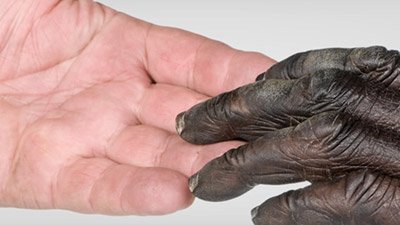
When you hear stories about the astonishing similarity between human and chimp DNA, there’s something they’re not telling you . . .
-
Oct. 9, 2016 from Answers Magazine
For more than a century Christians have looked for the scientific silver bullet that would destroy Darwinian evolution and prove biblical creation to be true.
-
In-Depth ArticleJust How Random Are Mutations?Aug. 18, 2016 from Answers in Depth
Changes to the sequence of nucleotides (e.g., mutations) can alter the genetic information of the organism, which, in turn can alter its physical features
-
In-Depth ArticleHow Are New Genes Made?April 21, 2016 from Answers in Depth
Evolutionists conclude “the birth of new genes is an important motor of evolutionary innovation,” but how are new genes made?
-
A Fresh Look at Human-Chimp DNA SimilarityDec. 30, 2015
Creationist scientists Drs. Tomkins and Bergman came up with an overall DNA similarity between humans and chimps of around 81%—quite a difference!
-
July 1, 2015 from Answers Magazine
Evolution would require an enormous amount of change. Modern laboratory experiments have tested bacteria’s ability to change. Is this ability truly unlimited?
-
In-Depth ArticleDenisovan Gene Gave Tibetans Their High-Altitude ToleranceJuly 19, 2014 from Answers in Depth
Tibetan natives ability to tolerate high-altitude conditions is a genetic inheritance obtained from mixing with the long-extinct Denisovan people.
-
In-Depth ArticleChromosome Tales and the Importance of a Biblical WorldviewJune 18, 2014 from Answers in Depth
When evidence is interpreted in a particular worldview, it can sound very convincing that the evidence supports that worldview.
-
In-Depth ArticleStop-or-Go DNA Codes Reveal Rampant Rule-Breaking in the Language of LifeMay 31, 2014 from Answers in Depth
When does “stop” mean “go”? Surprisingly often! The DNA code common to all living things is not quite as uniform as previously thought.
-
In-Depth Article“Field-Evolved Resistance” Leaves Rootworms to Ravage Corn CropsMarch 31, 2014 from Answers in Depth
Resistant rootworms can ravage corn if farmers put all their eggs in a genetically modified high-tech basket.
-
In-Depth ArticleWhy Do Arms and Legs Come in Pairs?Feb. 15, 2014 from Answers in Depth
You only have two arms and two legs because your gut got in the way, evolutionists say.
-
DNA Day: What Are We Celebrating?April 25, 2013
We’ve recently seen something of a bombardment of declared holidays and observances. In the midst of all these pseudo-holidays is one that has a particular relevance today: National DNA Day.
-
Ultrafast Parasite EvolutionFeb. 25, 2012 from News to Know
Bird parasite said to “evolve” rapidly while losing information.
-
-
The RNA-Way From Molecules-to-Man Remains MuddledJuly 16, 2011
The RNA-way from molecules-to-man remains mired by its complete lack of information.
-
Are Genetic Mechanisms For Speciation Multiple Choice?July 2, 2011 from News to Know
Speciation’s secrets are multiple-choice. What do phlox flowers, stickleback fish, monkeyflowers, and Bogota fruit flies have in common? They all suggest genetic mechanisms for speciation.
-
Persistent ProteinMay 7, 2011 from News to Know
Preservation of collagen fibers in a marine reptile fossil is said to prove “biomolecular preservation over deep time.”
-
Increasing Organisms' Genetic InformationNov. 6, 2010
Creationists often critique evolutionary theory as lacking a plausible mechanism for increasing organisms’ genetic information. But will University of California–Irvine research “shed light” in the void?



Support the creation/gospel message by donating or getting involved!

Answers in Genesis is an apologetics ministry, dedicated to helping Christians defend their faith and proclaim the good news of Jesus Christ.
- Customer Service 800.778.3390
- Available Monday–Friday | 9 AM–5 PM ET
- © 2026 Answers in Genesis