


A Biblical Approach to Human-Wildlife Conflict
The Elephant at the Door
From killing one another to simply being a nuisance, our world is full of conflict between humans and animals. What is the cause of this conflict, and how should Christians respond?
Whether it be hiking or scuba diving, I love exploring the world God has given to us. With the endless distractions of our hectic, noisy lives, it is important to step away and slip into the calm, reverent embrace of nature. There is nothing like enjoying a sunrise atop a hill in the Smoky Mountains or following a carefree sea turtle in the Gulf. Moments like these remind me of our place in the universe: created by God, in part to enjoy the beauty He has provided for our and His pleasure. As the hymn “All Things Bright and Beautiful” sweetly proclaims:
All things bright and beautiful
All creatures great and small
All things wise and wonderful
The Lord God made them all.
Unfortunately, while it is true that our world is filled with incredible creatures, every encounter with them is not quite so bright and beautiful. For example, a recent video from Yellowstone National Park shows an older man being tossed high in the air after a disgruntled bison (American buffalo) chased him down.1 Moments like these are far from uncommon. For example, I saw some close calls with elk when I visited Yellowstone. At one of the hot springs, a large group of tourists was getting far too close to a herd of elk, gesturing and laughing even though the elk were obviously agitated. Eventually, one of the bulls decided to protect its harem, chasing a number of tourists. While no one was injured, the elk eventually smashed into a car before running off.
Besides Yellowstone, interactions with wildlife happen everywhere, from bears roaming northwest suburbs to alligators haunting southeast golf ponds. In your own backyard, you probably have some of your own stories, such as deer eating your flowers or rabbits gobbling up your wife’s bean plants. Even in large cities, bird droppings are a constant source of annoyance for car owners and pedestrians alike. And encounters like this are nothing new. The conflict may be direct, in which crops and property are damaged or livestock or human lives are lost. Or the conflict may be indirect, where a rise in food prices is due to losses caused by animals. But throughout history, humans and wild animals have routinely been in conflict. To lay the foundation for why these conflicts occur and how we should respond, we will first examine human-wildlife conflict in the Bible.
Human-Wildlife Conflict in the Bible
As with so many aspects of Christianity and our worldview, the origins of human-wildlife conflict can be traced to Genesis.
As with so many aspects of Christianity and our worldview, the origins of human-wildlife conflict can be traced to Genesis. When God created man on day six, He specifically gave him “dominion over the fish of the sea and over the birds of the sky and over the cattle and over all the earth and over every creeping thing that creeps on the earth” (Genesis 1:26). This passage establishes that man is the most important aspect of God’s creation. As we approach human-wildlife conflict, we need to remember that the rest of creation serves as a resource for us to use and enjoy. Of course, this does not give us the liberty to hunt tigers to extinction or wipe out marine species due to overfishing. As numerous other Answers in Genesis articles emphasize,2 we as Christians have a responsibility to care for the earth, protecting and stewarding the resources God has provided for us. Yet we need to remember that it is the souls of men, women, and children that matter most to God, and should matter the most to us too.
After instituting man’s dominion, God next established both humans and animals as vegetarian in Genesis 1:29–30, only eating the “fruit of the tree.” With “every plant yielding seed . . . and every tree which has the fruit of the tree yielding seed” as nourishment and sustenance, God created a world in which humans and animals lived together in peaceful harmony. Sadly, thanks to man’s sinful nature, the utopian Garden of Eden was short-lived. Once Adam sinned, God drove man out of the garden and into the harsh world, filled with thorns, thistles, and death. It was likely at this point that animals, corrupted by Adam’s sin, began to kill and devour one another. Not only does the fossil evidence of the Flood demonstrate signs of injury from predators, but animals have also been unearthed with undigested bits of other creatures. For instance, a juvenile tyrannosaur was recently discovered with the remains of other dinosaurs in its stomach.3 Other examples include a squid in the process of catching its meal,4 a fish with another fish half consumed,5 and pterosaurs found with fish and squid in their stomachs.6 As for humans, it was not until Genesis 9, in the aftermath of the Flood, that God expressly gave them allowance to eat meat. Interestingly, in Genesis 9:2, the verse directly preceding the allowance of eating meat, God told Noah that “the fear of you and the dread of you shall be upon every beast of the earth.” This verse emphasizes that any remnants of the pre-Fall utopia between man and animals have been swept away, further establishing the dominance of humans over the rest of creation. This God-given fear also provided animals with a “sporting chance” to escape humans that would begin hunting them for food.
Throughout the rest of the Old Testament, we continuously see God using animals as a means of punishing either an individual or a nation for their wrongdoing. First, the plagues of frogs, gnats, flies, and locusts tormented the Egyptians for Pharaoh’s failure to heed the commandment of the Lord to free the Israelites (Exodus 8–10). In Exodus 23:28, God promised that He would “send hornets . . . so that they will drive out the Hivites, the Canaanites, and the Hittites before you.” However, God also warns the Israelites that if they did not follow Him, He would “send out among you the wild beasts of the field, which will bereave you of your children and cut down your cattle and reduce your number” (Leviticus 26:22). While the hornets may have been figurative, the wild beasts certainly were not. As evidence of this, when the Israelites grumbled against Moses, God allowed them to be beset by “fiery serpents” that killed many until Moses was instructed to raise a serpent on a pole, allowing for those who looked upon it to be saved from death (Numbers 21:5–9). While these were national punishments, animal attacks were also used to punish individuals. For instance, when Elisha was mocked by the children of Bethel in 2 Kings, Elisha’s curse of them was fulfilled by their mauling by two female bears (2 Kings 2:23–24). God further used wild lions to kill a man of God who disobeyed Him after burning incense (1 Kings 13) and a prophet who failed to injure another prophet, as God requested (1 Kings 20).
Of course, God does not use animals only as punishment. For example, He used ravens to feed Elijah (1 Kings 17:4) and the great fish to swallow Jonah, redirecting him back to the path that he should go to preach the gospel in Nineveh, thus saving the town (Jonah 1:17–2:10). However, conflict between humans and animals is often seen in the Bible as part of God’s judgment. As God emphasizes in Jeremiah 15:3, “I will appoint . . . the dogs to drag off, and the birds of the sky and the beasts of the earth to devour and bring to ruin.” And understanding the history of human-wildlife conflict in the Bible helps us contextualize the conflict we see today. While all human-wildlife conflict seen today is not necessarily the direct judgment of God, the conflict is broadly a result of Adam’s sin.
Human-Wildlife Conflict Throughout History
While humans and animals have been in conflict since Genesis, the emphasis historically was for humans to find ways to survive direct encounters with dangerous creatures. Since Westerners today primarily live in developed urban areas, it can be difficult for us to understand that most humans lived near heavily wooded, rural areas that had not been purged of predators. Thus, folklore was often used to teach children to stay close to home. Some of these tales focused on mythical creatures, for tales “concerning Icelandic elves and trolls no doubt served as warning fables. They prevented many children from wandering away from human habitations.”7 Others emphasized real predators. For instance, the 1800s story of “Goldilocks and the Three Bears” evolved into “a cautionary tale intended to teach children lessons about the hazards of wandering off on their own and exploring unfamiliar territory.”8 However, the Industrial Revolution led to vast urbanization, which was accompanied by widespread, organized hunts designed to deplete predators in Europe and the United States, both for sport and to keep people safe.
By the mid-1900s, perspectives on predatory creatures began to shift, along with the realization that man could not continue recklessly stripping the earth of its natural resources, including its wild animals, without some checks and balances. Unfortunately, much of the damage was already done, leading to the many vulnerable, coexisting populations of humans and animals we see today. Not only do these populations, especially in Africa and Asia, often threaten both animals’ and humans’ well-being, but differing philosophies and worldviews about how animals should be treated further exacerbate these issues. As we examine these conflicts, we will explore two major categories: habitat and food source.
Conflict over Habitat
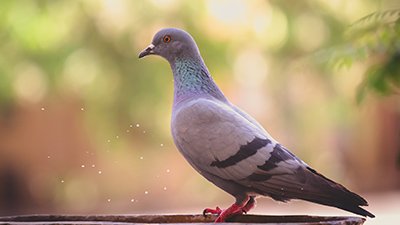
In America, perhaps the most frequently discussed topic in human-wildlife conflict is habitat loss. As we continue to expand our cities and suburbs, these changes have unintentionally limited the resources available to animals, resulting in more and more direct interactions with humans. For example, vehicle collisions with deer are frequently grumbled about on Long Island, New York, where I grew up. Since hunting with rifles is generally forbidden on the island, the overpopulation of deer has led to increasing accidents, with a 75% increase in deer strikes over eight years, from ~570 in 2016 to ~1,000 in 2024.9 And this is only a tiny fraction of incidents across the United States, with State Farm estimating that 1.1 million deer-related automobile claims were filed between July 1, 2024, and June 30, 2025, a slight decline from the previous year.10 Similarly, large numbers of flocking birds, including European starlings, can be hazardous to aircraft. When an Electra airplane collided with starlings in 1960, 62 lives were lost.11 The US Fish and Wildlife Service reports that over 250 deaths have occurred as a result of bird strikes since 1988, with ~$900 million in US civilian and aviation costs annually as a result of bird strikes.12 In both of these instances, deer and birds are merely inhabiting their normal habitats that have now been intruded upon by humans with their fast-moving vehicles and aircraft, leading to direct conflict.
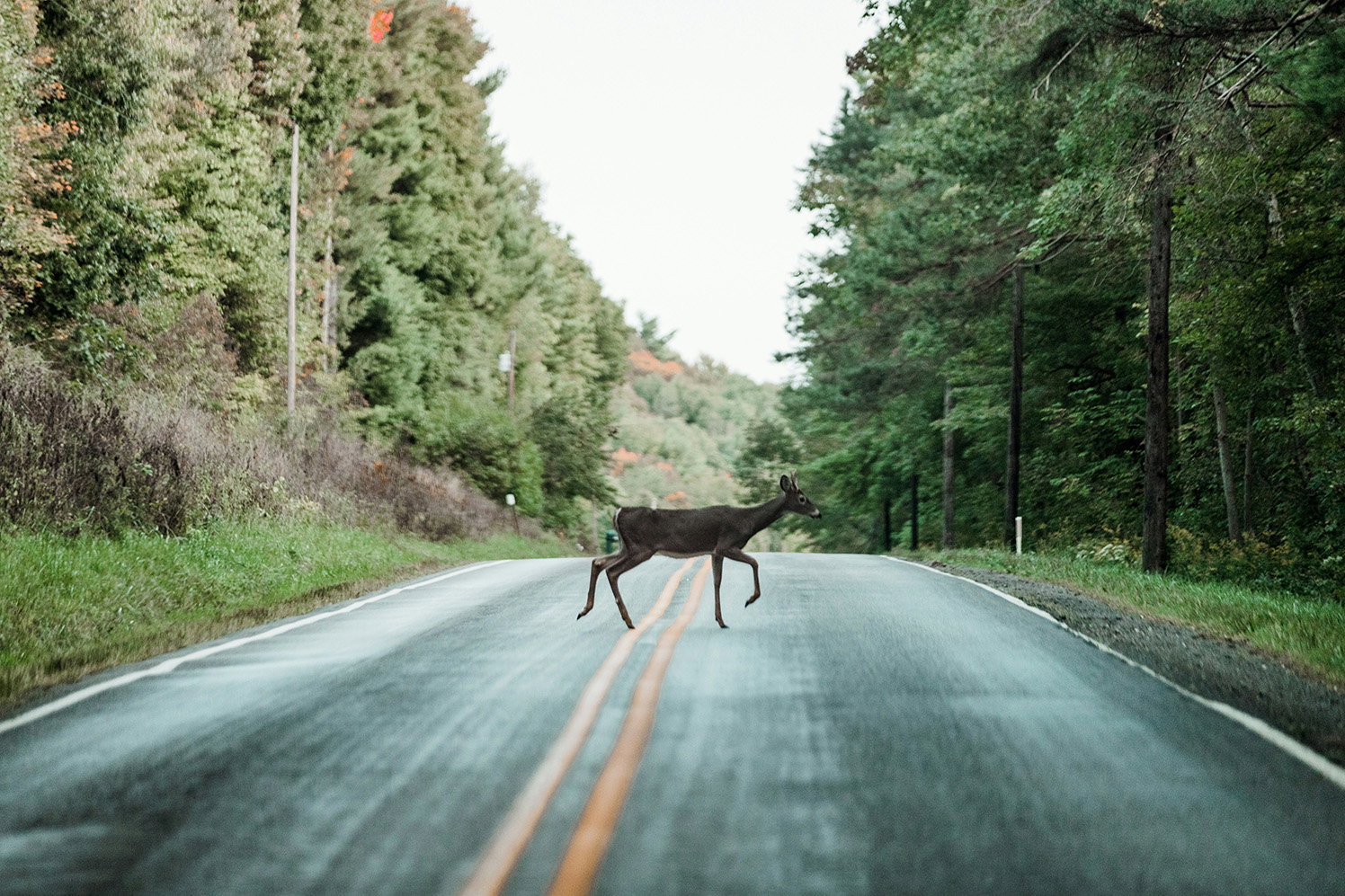
Photo by Donnie Rosie on Unsplash
Of course, conflicts over habitat occur in nearly every corner of the world. God has designed us humans to be highly adaptable; thus, we are constantly pushing deeper into the wilderness, turning swampy coasts into wealthy metropolises and the backcountries of the world into growing cities. However, our expansion can come at an indirect price for the animals that live there. In many cases, the creatures are dislocated, pushed out by the advancing humans. Nearly every major undomesticated creature, from kangaroos in Australia to tapirs in South America, are declining as a result of habitat loss.13,14
One of the most prominent human-wildlife conflicts over habitat involves elephants. In both Africa and Asia, elephants have been pushed out of much of their traditional land, as local villagers expand their croplands. While numerous wildlife preserves have been established to protect them, elephants cause indirect conflict by eating enormous amounts of vegetation and toppling trees, altering landscapes quickly. For example, in Kruger National Park in South Africa, elephant populations have increased by 5.3% yearly since 2013, with the population reaching over 31,000 in 2020.15 Historically, elephant populations were kept in check by the culling (selective killing) of herds by game wardens to avoid catastrophic damage to the environment. Though this method was stopped in 1995, the expanding population of elephants in the park has led to some encouraging that the park begin the practice again, while others insist the number of elephants is just right. Meanwhile, in Sri Lanka, 488 elephants and 187 people were killed in 2023 as a result of human-elephant interactions, the highest in the country’s history. The driving force of these interactions is the elephant’s historic habitat being “increasingly fragmented and disconnected, forcing elephants into human settlements in search of food and water.”16
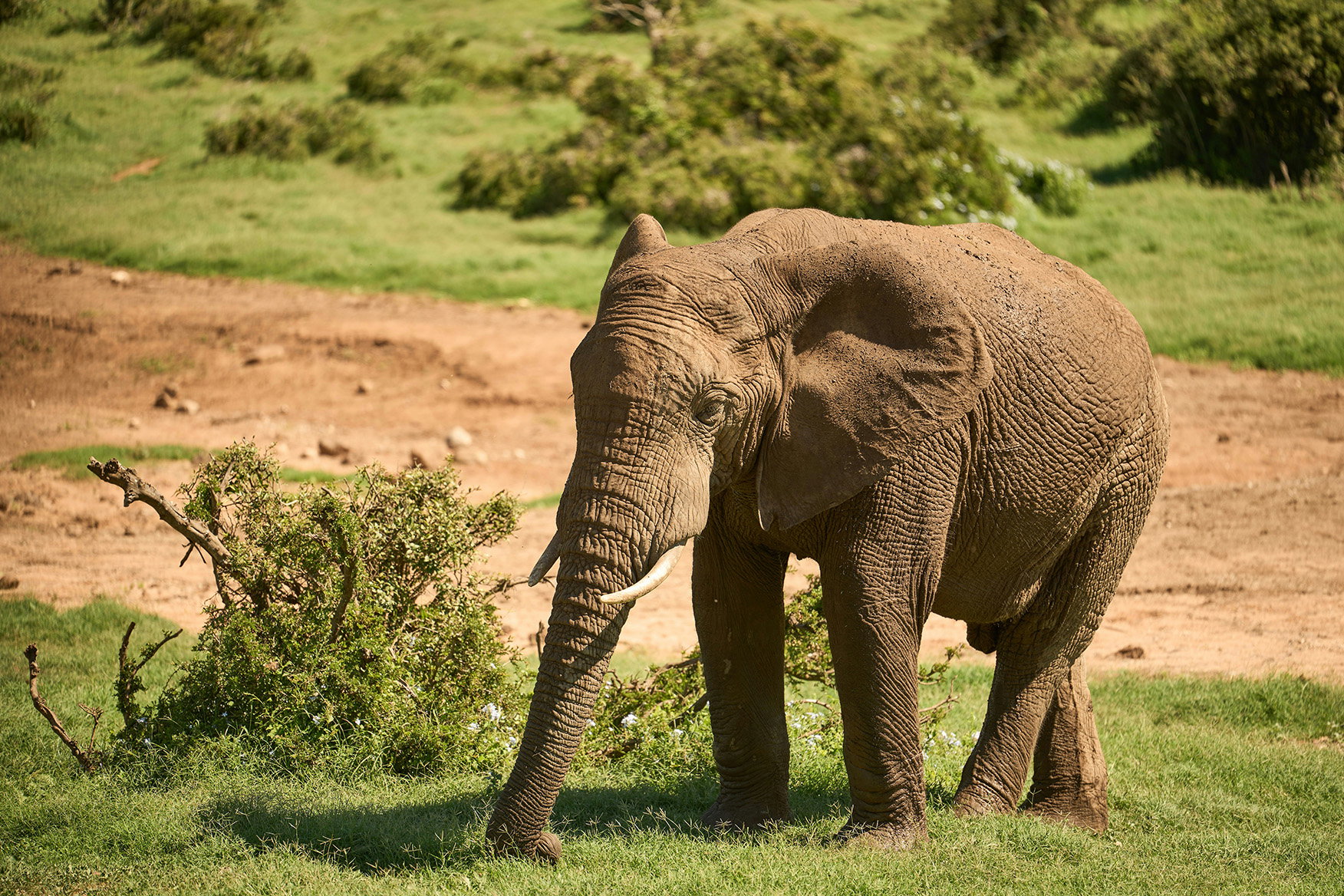
Photo by Wolfgang Hasselmann on Unsplash
Habitat loss not only increases interactions with animals searching for nourishment, but it also brings humans into contact with rogues such as Dhurbe, a wild elephant in Nepal responsible for at least 25 human deaths. In one tragic story, Dhurbe killed a couple in December of 2012 on the outskirts of Chitwan National Park. Heartbroken, their son moved his family far from the incident, only to have the same elephant kill his daughter-in-law and grandson 14 years later, in July of 2026.17 Thus, habitat loss is a pillar of human-wildlife conflict, laying the unfortunate groundwork that leads to further conflicts over food.
Conflict over Food Sources
Another major stress point of human-wildlife conflict is food supply, where humans and animals end up in the same locations looking for food. A prime example in the United States is the invasive European starling, which severely damages annual crop yields. Besides insects, starlings consume large amounts of fruit, including apples, peaches, and cherries, eating at least $800 million a year of American crops.18 These birds also eat cattle feed, consuming more than $300,000 of it over three years in Iowa alone, causing indirect food price increases, with the cost of mitigation often as high as the amount of crops the birds steal.19 And while starlings are considered a nuisance and permitted to be killed, other creatures, such as dolphins, are protected, even though they cause similar damage. For example, dolphins have been caught breaking into crab pots in Australia and fishing nets in the Mediterranean.20,21 Not only do these interactions cost fishermen potential revenue and the time and cost needed to repair nets, but the nets can tangle, injure, and drown dolphins.
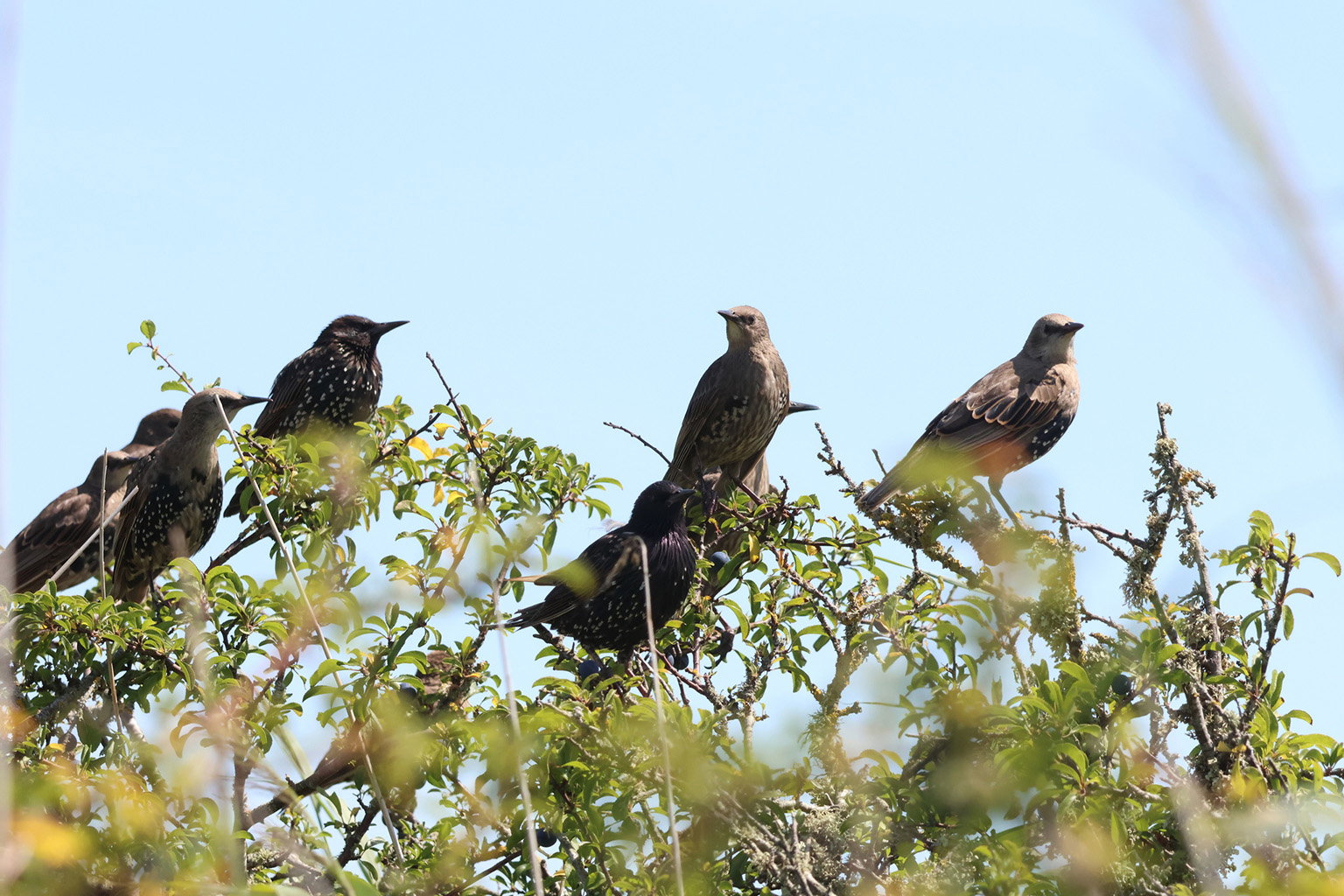
Photo by harrybeaman, CC BY 4.0, via iNaturalist
On land, baboons and elephants routinely steal sweet potatoes from villagers living outside Virunga National Park in the Democratic Republic of the Congo. It is illegal for the villagers to kill the creatures since both are protected species. Yet mitigation strategies are difficult since the preserve does not have the resources for building and maintaining electric fences or other means of preventing crop loss. As conservationist Francine Madden explains, “People go to parks asking for compensation for their animals coming out and destroying their crops, which in many ways is quite reasonable. . . . But few parks can set up compensation systems [that are] manageable.”22 With no recourse, angry villagers are prone to kill the creatures in an attempt to both rid themselves of the pests and raise awareness of their plight. However, conflict is not always the driving reason, as many villagers in Indonesia have been documented killing orangutans for food rather than because they merely find them a nuisance.23
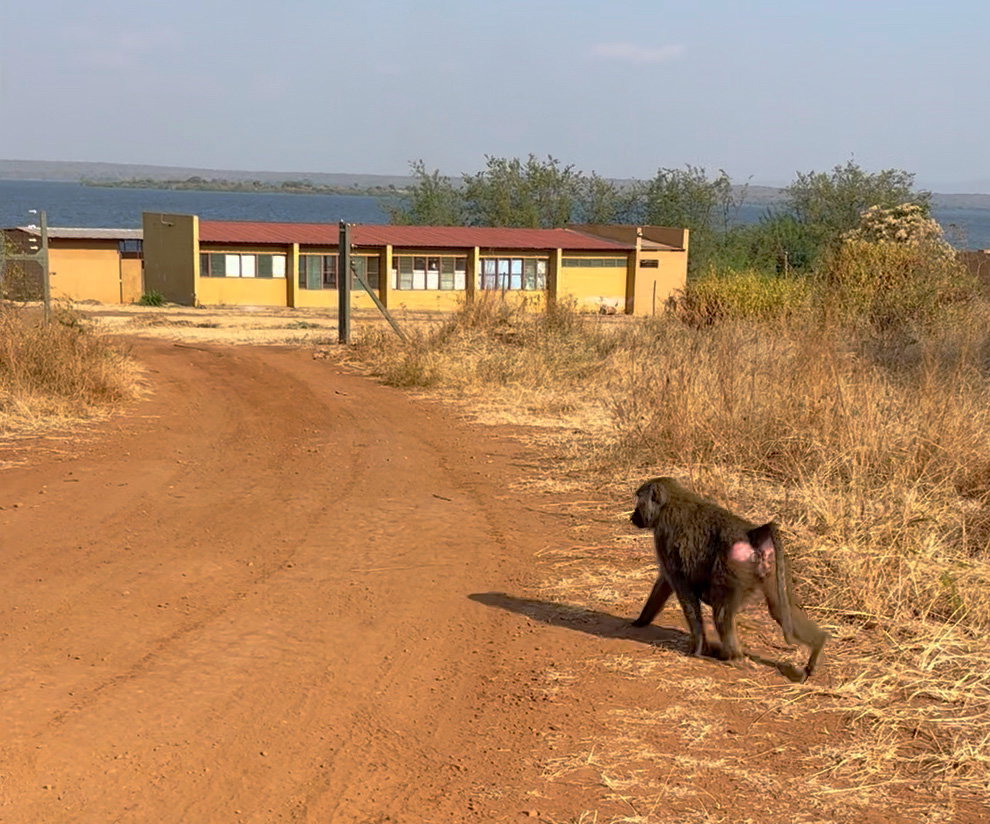
Photo by josh_noseworthy, CC BY 4.0, via iNaturalist. Image has been cropped.
Indonesia is far from the exception, for while I was on a mission trip in Ghana, Africa, one of the pastors explained that animals that escape reservations such as Mole National Park are quickly caught and eaten by Ghanaians. And even if the creatures are not being immediately killed and eaten, conflict over food sources can quickly lead to negative perspectives of the creatures. For instance, while the rhesus macaque is still revered by many in India, the monkey’s crop raiding has led to national frustration, resulting in the legalization of culling of rhesus macaques in 2010.24
What Should Be Our Response to Human-Wildlife Conflict?
Human-wildlife conflict is an unfortunate consequence of living in a fallen world. Not only has it existed since Genesis, but it will also continue until the end of the earth. In Revelation 6:8, John states that he saw Death, who was given power “to kill with sword and with famine, and with pestilence and by the wild beasts of the earth.” Later in the book, John describes that “out of the smoke came locusts upon the earth. . . . And they were not permitted to kill anyone, but to torment for five months. . . . And in those days men will seek death and will never find it; they will long to die, and death flees from them” (Revelation 9:3, 5–6). Thus, even in the last days, human-wildlife conflicts will continue.
Knowing these conflicts are here to stay, what should be our biblical response to them? A good example to look to would be David. First, like David, we must acknowledge that God is in control. As David proclaims in Psalm 91:13, “You will tread upon the fierce lion and cobra, the young lion and the serpent you will trample under down.” However, David did not merely look to God to solve his problems. In 1 Samuel 17:34–36, David recounts to King Saul that a lion and a bear would come and “take a lamb from the flock.” In response, David killed both of them in order to protect his flock. Rather than worrying about the consequences of killing the wild beasts, David instead acted, killing the intruders that threatened his livelihood.
God has given us the responsibility to rule over the earth and have dominion over it. However, after the Fall, this dominion must also be balanced with sustainability. As stewards of an estate would not squander the resources needlessly to fulfill their own desires, so should we avoid wasting our resources of earth. Knowing this, we need to find actionable solutions, which requires creativity and openness to differing viewpoints. It is not enough to shrug our shoulders and move on.
There is no blanket solution for human-wildlife conflict, just as there is no blanket way of solving world hunger or convincing lost souls that they are in need of Christ. An important attribute in trying to solve human-wildlife conflict is listening to the needs of the locals and working with them to solve the issue. This reminds me of a humorous song called “Mr. Jambo” that I recently encountered on YouTube. In the song, the singer recounts his visit to Africa, where a native African supposedly gives him great words of wisdom. However, as you listen to the song, you realize that the singer has no idea what the man really said and is just interpreting what he wants to hear. Meanwhile, the African is merely saying, “I don’t speak English. Do you have a translator? Stop yelling at me.”25 So often, experts will arrive in various locations around the world, thinking they have the answer that can solve human-wildlife conflicts. Just build fences to keep rabbits out of Australia or wipe out an entire species, like the wolves of Yellowstone. Yet little thought is given to the consequences of these actions, and often locals are not even consulted.
One of the most tragic examples of trying to solve human-wildlife conflict by brute force occurred in Maoist China. During their Four Pests campaign of the Great Leap Forward from 1958 to 1962, Chinese citizens were encouraged to kill sparrows that ate grain, seed, and fruit. Consequently, the persecution nearly drove the Eurasian tree sparrow to extinction, resulting in a decrease in rice yields and an explosion in locust populations that triggered the Great Chinese Famine, resulting in the deaths of two million people.26 When little thought is given to the consequences of our actions, disaster can occur, with the cure often worse than the disease.
Fortunately, we do know that human-wildlife conflict will not last forever. In Ezekiel 34:25, God promises to “cause harmful beasts to cease from the land so that they may live securely in the wilderness and sleep in the woods.” This is further elaborated upon in Isaiah:
And the wolf will dwell with the lamb,
And the leopard will lie down with the young goat,
And the calf and the young lion and the fatling together;
And a young boy will lead them.
Also the cow and the bear will graze,
Their young will lie down together,
And the lion will eat straw like the ox.
And the nursing baby will play by the hole of the cobra,
And the weaned child will put his hand on the viper’s den.
They will do no evil nor act corruptly in all My holy mountain,
For the earth will be full of the knowledge of Yahweh
As the waters cover the sea. (Isaiah 11:6–9)
Eventually, God will make all things new, restoring the utopia once found within the Garden of Eden.
Eventually, God will make all things new, restoring the utopia once found within the Garden of Eden. Until then, we must continue to seek to find answers to human-wildlife conflict. All things might not be “bright and beautiful,” but we can still appreciate the earth that God has given to us and use our talents to steward this incredible world around us.
Footnotes
- Amber Harding, “Bull Bison Sends Yellowstone Visitor Flipping Through the Air in Campground Attack Caught on Video,” OutKick, Fox News, July 12, 2026, https://www.foxnews.com/outkick-culture/bull-bison-sends-yellowstone-visitor-flipping-through-air-campground-attack-caught-video.
- E.g., Avery Foley, “Should We Take Care of the Earth?,” Answers in Genesis, April 22, 2026, https://answersingenesis.org/environmental-science/stewardship/should-we-take-care-of-the-earth/; Answers in Genesis, “Should Christians Save the Rhinos?,” May 1, 2019, https://answersingenesis.org/environmental-science/stewardship/should-christians-save-rhinos/.
- François Therrien, Darla K. Zelenitsky, Kohei Tanaka, Jared T. Voris, Gregory M. Erickson, Philip J. Currie et al., “Exceptionally Preserved Stomach Contents of a Young Tyrannosaurid Reveal an Ontogenetic Dietary Shift in an Iconic Extinct Predator,” Science Advances 9, no. 49 (2023): https://doi.org/10.1126/sciadv.adi0505.
- Ken Ham, “Squid Was Fossilized Catching Its Dinner,” Answers in Genesis, May 21, 2020, https://answersingenesis.org/fossils/squid-fossilized-catching-dinner/.
- Answers in Genesis, “Lessons Learned from a Fossil,” Answers Magazine 2, no. 2, May 14, 2007, https://answersingenesis.org/fossils/how-are-fossils-formed/lessons-learned-from-a-fossil/.
- BBC, “Fossils Show Flying Reptiles Ate Squid and Fish,” October 28, 2024, https://www.bbc.com/news/articles/cx2ym7zedrno.
- Ólina Thorvarðardóttir, “Spirits of the Land: A Tool for Social Education,” Bookbird 37 (1999): 33–34.
- Maria Tatar, The Annotated Classic Fairy Tales (New York: W. W. Norton and Company, 2002): 246.
- Peter Gill, “Deer Collisions Hit Record High on Long Island,” Newsday, March 19, 2026, https://www.newsday.com/long-island/transportation/deer-strikes-crash-pjlycu0c.
- State Farm, “New State Farm Data Reveals Fewer Animal Collisions, but Autumn Months Remain Most Dangerous,” September 16, 2026, https://newsroom.statefarm.com/new-state-farm-data-reveals-fewer-animal-collisions-but-autumn-months-remain-most-dangerous/.
- George M. Linz, H. Jeffrey Homan, Shannon M. Gaulker, Linda B. Penry, and William J. Bleier, “European Starlings: A Review of an Invasive Species with Far-Reaching Impacts,” Managing Vertebrate Invasive Species 24 (2007): 378–386.
- US Fish and Wildlife Service, “Threat to Birds: Collisions – Aircraft,” accessed June 15, 2026, https://www.fws.gov/story/threats-birds-collisions-aircraft.
- Dror Ben-Ami, Murray Sharp, Dennis Vink, Claire Galea, and Daniel Ramp, Counting Kangaroos: Fact or Fiction? Assessing the Reliability, Transparency and Sustainability of Kangaroo Population Estimates, A report prepared for Kangaroos Alive, October 24, 2005.
- Kevin M. Flesher and Emília Patrícia Medici, “The Distribution and Conservation Status of Tapirus terrestris in the South American Atlantic Forest,” Neotropical Biology and Conservation 17, no. 1 (2022): 1–19, https://doi.org/10.3897/neotropical.17.e71867.
- Sam Ferreira, “Big Trunks, Bigger Questions: Rethinking Elephant Numbers in Kruger,” South African National Parks, January 23, 2025, https://www.sanparks.org/conservation/scientific-services/stories/big-trunks-bigger-questions-rethinking-elephant-numbers-in-kruger.
- Sri Lanka Guardian, “Elephant Deaths Hit Record High as Conflict Deepens in Sri Lanka,” October 26, 2025, https://slguardian.org/elephant-deaths-hit-record-high-as-conflict-deepens-in-sri-lanka/.
- Jorge Fitz-Gibbon, “Infamous Killer Elephant Stalks Family—and Murders Four Members 14 Years Apart: ‘Nowhere Left for Us to Run,’” New York Post, July 12, 2026, https://nypost.com/2026/07/12/world-news/infamous-killer-elephant-dhurbe-stalks-family-in-nepal/.
- David Pimentel, Lori Lach, Rodolfo Zuniga, and Doug Morrison, “Environmental and Economic Costs of Nonindigenous Species in the United States,” BioScience 50, no. 1 (2000): 53–65, https://doi.org/10.1641/0006-3568(2000)050[0053:EAECON]2.3.CO;2.
- Services, United States Department of Agriculture Animal and Plant Health Inspection Service Wildlife Services, “Bird Damage Management in the Idaho Wildlife Services Program,” 1998.
- Andrew Alpin, “Dolphins Found Raiding Crab Pots and Stealing Bait off Australia in World’s First Footage,” Animals Around the Globe, April 18, 2025, https://www.animalsaroundtheglobe.com/dolphins-found-raiding-crab-pots-and-stealing-bait-off-australia-in-worlds-first-footage-5-236517/.
- Robin Thomas Ernest Snape, Annette Cameron Broderick, Burak Ali Çiçek, Wayne John Fuller, Nicholas Tregenza, Matthew John Witt et al., “Conflict Between Dolphins and a Data-Scarce Fishery of the European Union,” Human Ecology 46 (2018): 423–433, https://doi.org/10.1007/s10745-018-9989-7.
- Michael Shellenberger, Apocalypse Never (New York: HarperCollins, 2020), 75.
- Jacqueline T. Davis, Kerrie Mengersen, Nicola K. Abram, Marc Ancrenaz, Jessie A. Wells, and Erik Meijaard, “It’s Not Just Conflict That Motivates Killing of Orangutans,” PLoS One 8, no. 10 (2013): e75373, https://doi.org/10.1371/journal.pone.0075373.
- Raghav Saraswat, Anindya Sinha, and Sindhu Radhakrishna, “A God Becomes a Pest? Human-Rhesus Macaque Interactions in Himachal Pradesh, Northern India,” European Journal of Wildlife Research 61 (2015): 435–443, https://doi.org/10.1007/s10344-015-0913-9.
- Kyle Gordon, “Mr. Jambo,” YouTube, July 17, 2026, https://www.youtube.com/watch?v=qJBm1n8JUZ8&list=RDqJBm1n8JUZ8&start_radio=1.
- The Economist, “How the Persecution of Sparrows Killed 2m People,” October 22, 2025, https://www.economist.com/science-and-technology/2025/10/22/how-the-persecution-of-sparrows-killed-2m-people.


Support the creation/gospel message by donating or getting involved!

Answers in Genesis is an apologetics ministry, dedicated to helping Christians defend their faith and proclaim the good news of Jesus Christ.
- Customer Service 800.778.3390
- Available Monday–Friday | 9 AM–5 PM ET
- © 2026 Answers in Genesis