

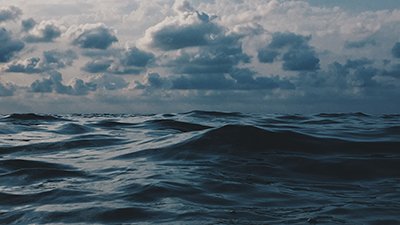
Photo by Penghao Xiong on Unsplash
Radically Erosive Raindrops!
Recent Research Implications for Noah’s Flood
In recent years, scientific observations have unveiled surprising truths about the erosive capabilities of raindrops. Now, new research indicates that raindrops, under the right conditions, can act as powerful erosion agents, dramatically altering landscapes and transporting significant amounts of sediment.1 This understanding can provide valuable insights into understanding the catastrophic erosional effects of rain during Noah’s flood and implications for sediment transport to ocean basins.
The New Findings on Raindrop Erosion
Traditional views of raindrop erosion have focused primarily on the impact and splash caused by raindrops when they hit the ground. However, groundbreaking research (pun intended) has shown that raindrops can roll downhill, much like tiny snowballs, and pick up soil, sand, and other materials along the way. These droplets form either two-lobed (peanut-shaped) or toroidal (doughnut-ring) objects. These were filmed using high-speed video (x100), traveling spectacular distances while they gathered up sediment.2 This phenomenon has been observed to occur particularly on sloped soil terrain, raising questions about the scale at which erosion can occur.
Observations—made by scientists during hikes in the Swiss Alps that led to lab experiments at Pennsylvania University—demonstrate how rolling raindrops can carry up to 10 times more sediment (notably the toroidal-shaped drops) than those that remain stationary. This capability not only amplifies soil erosion but also changes the landscape dramatically over time, enhancing our understanding of sediment transport processes.
The Biblical Context of Noah’s Flood
If we consider the erosive power of raindrops unveiled by recent research, we can hypothesize how the rain during Noah’s flood would have catastrophically eroded the land.
Genesis 7:12 states that “rain fell upon the earth forty days and forty nights” (see also Genesis 7:4). This detail is significant as it sets the stage for understanding the volume and persistence of rainfall during this event. If we consider the erosive power of raindrops unveiled by recent research, we can hypothesize how the rain during Noah’s flood would have catastrophically eroded the land, producing unimaginable sediment redistribution.
For context, according to UNESCO, the total average global amount of precipitation (rain and snow) that falls on all land each year is an astonishing 119,000 cubic kilometers (28,549.6 cubic miles) of water!3 This precipitation erodes vast amounts of sediments to the oceans via river transport. Recent research has calculated that 22 billion tons of sediments are eroded and deposited to the oceans annually.4
During the cataclysm of Noah’s flood, the sheer volume of rainfall far exceeded these figures, leading to the kilometers-thick layers of sediment presently seen in the rock record.
Rain—Before, During, and After the Flood
The question of whether there was rain before the flood has been widely debated. It has been suggested that while there is no definitive proof of rain prior to the flood, dismissing the possibility stretches the interpretation of Scripture too far.5 Furthermore, Genesis 8:2 indicates that rain ceased by day 150 of the flood. After the flood, the hydrologic cycle was present, evidenced by the rainbow that Noah saw through rain clouds, as well as the renewed seasonal cycles of planting and harvest outlined in Genesis 8:22 and 9:12–17.
Fossilized Raindrops and the Flood Boundary
Evidence of fossilized raindrop impressions exists in the rock record, which pose challenges to flood models to explain their timing. When fossilized raindrop impressions are correctly identified,6 they have been interpreted to present a likely boundary between pre-flood and flood sedimentation, a topic hotly debated among creationists.7 Moreover, the observation of trace fossils fits within the Briefly Exposed Diluvial Sediments (BEDS) model proposed by Mike Oard.8 Here, during the chaotic flood conditions, the lunar tides were still in operation, causing waters to daily rise and fall, depositing newly exposed layers of sediment. These allowed ephemeral marks to be formed and preserved, including raindrop impressions. Furthermore, creatures like dinosaurs attempting to flee the encroaching floodwaters left trackways.9 These were preserved, sometimes in stunning detail, as floodwaters rose and covered them with more muddy sediment, and included raindrop impressions!10
Conclusion
Recent discoveries about the erosive abilities of raindrops enhance our understanding of soil erosion and sediment transport processes. When viewed through the lens of biblical history, Noah’s flood illuminates these findings, revealing the devastating power of raindrops to erode and transport sediment to the ocean. In particular, the 40 days and nights of rainfall emphasize the sustained erosive force of rain during the flood that reshaped the planet.


Footnotes
- B. Trottet, D. Noto, D. J. Jerolmack, and H. N. Ulloa, “Sandball Genesis from Raindrops,” Proceedings of the National Academy of Science USA 122, no. 52 (2025): e2519392122, https://doi.org/10.1073/pnas.2519392122.
- The videos can be viewed at Erik Stokstad, “Watch These Raindrops Turn into Rolling ‘Sandballs,’” Science, December 22, 2025, https://doi.org/10.1126/science.zwuya21 and https://www.youtube.com/shorts/FbYGh9J6FH0.
- D. C. Agrawal, “Average Annual Rainfall over the Globe,” The Physics Teacher 51 (2013): 540–541, https://doi.org/10.1119/1.4830066.
- C. M. Fraticelli et al., “Latitudinal Controls on Stratigraphic Models and Sedimentary Concepts,” Society for Sedimentary Geology 108 (2014): https://doi.org/10.13140/RG.2.2.15659.54560.
- T. Mitchell, “Was There No Rain Before the Flood?,” Answers in Genesis, last featured January 8, 2013, https://answersingenesis.org/creationism/arguments-to-avoid/was-there-no-rain-before-the-flood/.
- Dr. Andrew Snelling points out problems with some supposed fossil raindrops: Andrew Snelling, “The Petrology of the Tapeats Sandstone, Tonto Group, Grand Canyon, Arizona,” Answers Research Journal 14 (2021): 159–254, https://answersresearchjournal.org/petrology-tapeats-sandstone-tonto-group/.
- M. J. Oard, “Raindrop Imprints and the Pre-Flood/Flood Boundary,” Journal of Creation 27, no. 2 (2013): 7–8, https://creation.com/en/articles/raindrop-imprints-and-flood-boundary.
- M. J. Oard, “Dinosaur Tracks and Eggs,” Creation 45, no. 4 (2023): 15–19, https://creation.com/en/articles/dinosaur-tracks-eggs.
- G. Cox, “Dinosaurs Stomping on Deep-Time Dogma,” Answers in Genesis, October 28, 2025, https://answersingenesis.org/dinosaurs/dinosaurs-stomping-deep-time-dogma/.
- P. Robinson, “High-Definition Dinosaur Skin Traces Left During a Rain Shower,” Creation Ministries International, last updated June 6, 2019, https://creation.com/en/articles/dinosaur-skin-traces.

Support the creation/gospel message by donating or getting involved!

Answers in Genesis is an apologetics ministry, dedicated to helping Christians defend their faith and proclaim the good news of Jesus Christ.
- Customer Service 800.778.3390
- Available Monday–Friday | 9 AM–5 PM ET
- © 2026 Answers in Genesis