

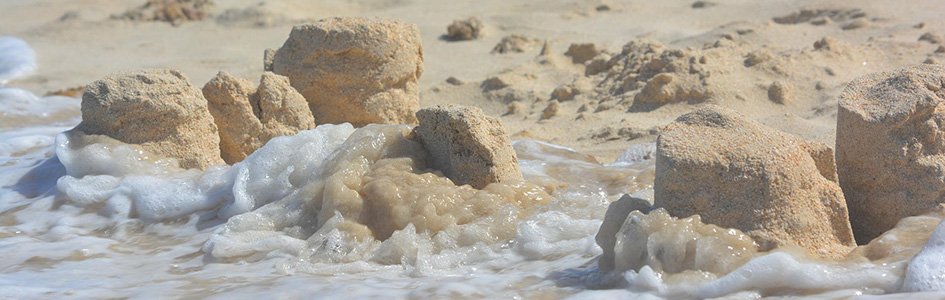
The Shifting Sand of Life’s Origin Story
Evolutionists’ history of early life on earth has been rewritten. What do their just-so stories reveal?
Our planet earth, as the conventional evolutionary story goes, formed from coalescing hot material that flung out from the solar nebula some 4.57 billion years ago.1 Initially, the surface covering this coalesced material was a global hot magma ocean. Eventually, the surface supposedly became a newly formed, barren wasteland of sharp rocks, strewn with lava flows from erupting volcanoes. The air was fuming with unbreathable gases. There was little or no liquid water. Just as things were starting to settle down, a barrage of meteorites tens of kilometers across came pummeling down from space, obliterating entire landscapes and sending vast plumes of debris high into the sky.
Conventional geologists believe this supposed barren world persisted for hundreds of millions of years. Finally, the story goes, the environment settled down enough so that watery oceans could form. And the biochemists say that conditions were finally right 3.5 billion years ago for microscopic life to somehow emerge.
A Hellish Beginning
This supposed vast span of time during the earth’s beginning has been divided by conventional geologists into two eons, according to the existing rock record. The oldest known rocks, the Acasta Gneiss in Northwestern Canada, are claimed to be 4.031 billion years old.2 The half billion years before that back to the earth’s formation is called the Hadean eon. The subsequent eon supposedly beginning at 4.031 billion years ago is called the Archean.3
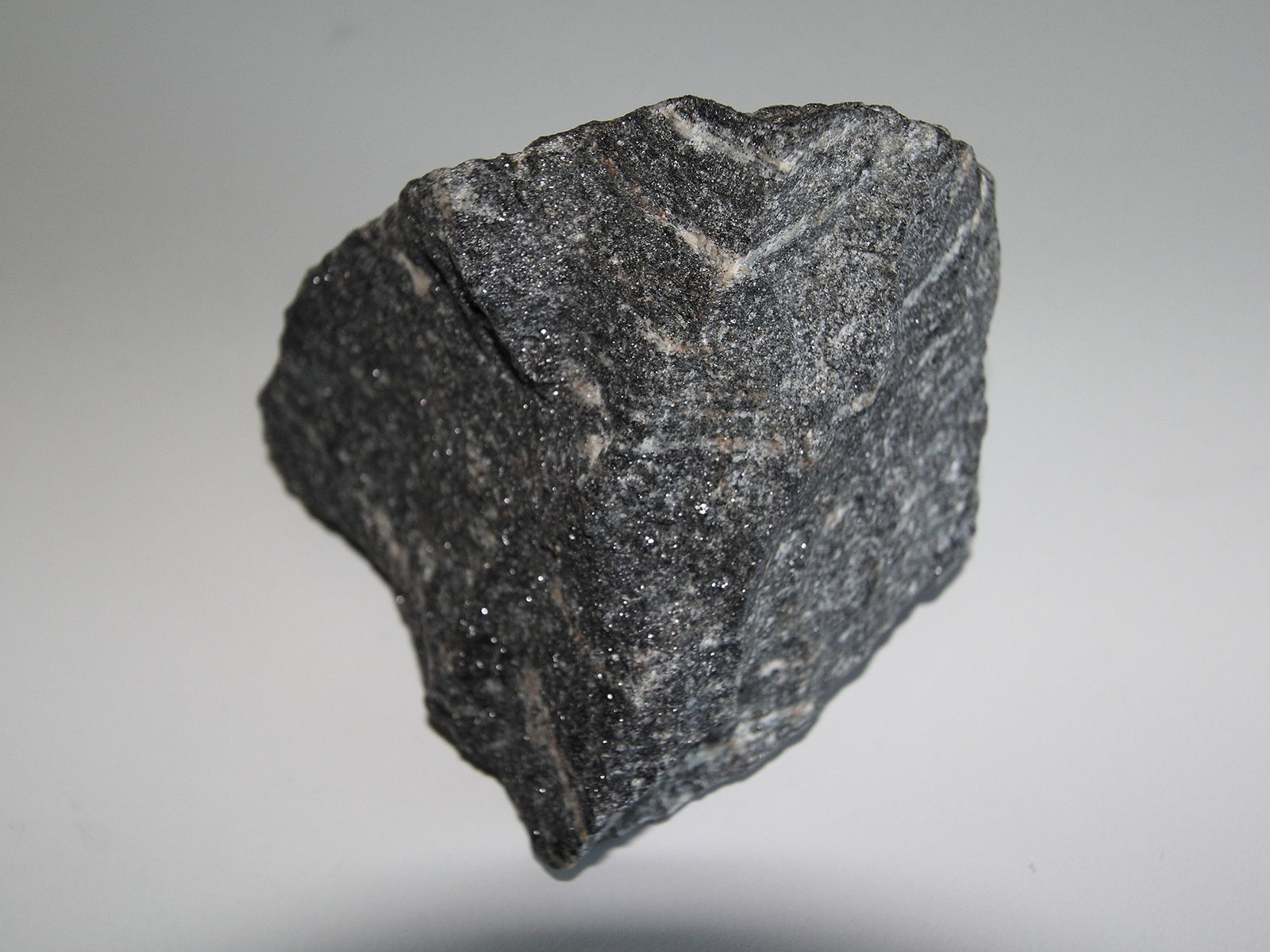
Acasta Gneiss fragment
Emmanuel Douzery, CC BY-SA 4.0, via Wikimedia Commons
As its ominous name suggests, the Hadean was assumed to have been hellish. No sooner had the global magma ocean started to congeal when a postulated wandering giant asteroid or dwarf planet supposedly slammed into the earth. A huge mass from the earth was ricocheted into space to supposedly form the earth’s moon. In the immediate aftermath of that postulated moon-forming impact, the surface of the magma ocean continued to slowly cool and solidify. This eon is often featured with volcanoes, lava flows, and meteorite impacts.
This story continues with the early Archean, the so-called Eo-Archean. It was supposedly worse due to what has been called the Late Heavy Bombardment. Between around 3.8 and 4 billion years ago, waves of meteoroids swept through the solar system. Earth took a battering, and thus, any life would have been obliterated. Only when the bombardment eased, supposedly 3.8 billion years ago, could life begin. In this scenario, life began in the 300 million years between the end of the Late Heavy Bombardment and the occurrence of the first fossils, conventionally dated at 3.5 billion years.
Ancient Stromatolites
The fossil record was extended to this earliest point at 3.5 billion years ago when, on April 3, 1980, a pair of papers was published describing newly found “ancient” fossils in Western Australia.4 They were stromatolites. These are mounds with alternating layers of fossilized microorganisms (cyanobacteria or blue-green algae) and sediments. In life today, these microbes often grow in mats over the sediment surface. These become covered in more sediments like sand swept over them by tides, and a new layer of cells grows on top, which then happens over and over again.5 Successive layers build up until mounds are formed. We find stromatolites today, such as those in Hamelin Pool and Shark Bay, which are on the coast of Western Australia.

Stromatolites in Hamelin Pool
Donald Hobern, CC BY 2.0, via Flickr
Fossilized stromatolites were already well-known in the rock record. However, these from the Pilbara region in Western Australia (only about 500 miles or 800 km inland to the northeast from today’s stromatolites in Shark Bay) were astonishingly “old.” One set was dated at 3.4 billion years old, while the other looked like it might be dated even older, as much as 3.5 billion years old.
Over the past 45 years, paleontologists have meticulously reanalyzed those Pilbara fossilized stromatolite remains to confirm that they are real.6 It is not a trivial problem. With rocks that “ancient,” strange distortions can form that look like fossilized microbes but are actually just deformed minerals in the rocks. So researchers have deployed an array of techniques, including searching for traces of organic matter. Thus, they are now as confident as they can be that the Pilbara fossilized stromatolites are really the remains of formerly living organisms.
That means, according to this story, life has existed for at least 3.5 billion years. This leaves a supposed billion-year time window after the formation of the earth at 4.57 billion years ago in which the first life could have formed.
Pushing Back Life’s Origin
However, the claimed evidence for life has now been pushed further back in conventional time. Until relatively recently, many researchers would have postulated that the time window for the origin of life should be distinctly narrower than the broad time window of one billion years. That’s because there were reasons to think, as mentioned above, that the earth was entirely uninhabitable for hundreds of millions of years after it formed.
The first apparent obstacle to life’s emergence, they claim, was the mechanism for the moon’s formation. This seems to have happened very soon after the earth coalesced and in the most dramatic way imaginable. According to the latest theory, another planetary body about the size of Mars collided with the earth. The impact released so much energy it vaporized the earth’s surface, blasting a huge volume of rocks and dust into orbit. For a little while afterward, the earth had a ring until all that material fused gradually to form the moon. This explosive scenario is the only one any conventional scientist has thought of so far that can explain why the moon’s rocks share similar isotopes with the earth’s rocks.
It seems clear in this scenario that, if there was any nascent life on the young earth, it would have been obliterated in the searing heat of that impact. Still, this supposedly happened around 4.5 billion years ago. What about the supposed billion years between that moon-forming impact and the Pilbara fossilized stromatolites?
As early as 1996, conventional geologist Stephen Mojzsis, then at the University of California, San Diego, and his colleagues reported that life was older than 3.8 billion years.7 They studied crystals of apatite in supposedly 3.8-billion-year-old rocks from the Isua supracrustal belt in West Greenland. Within the crystals were traces of carbon that proved to be rich in one isotope, 12C, and low in the heavier 13C. This is characteristic of living matter, as living organisms prefer to use 12C.
Nearly two decades later, the apparent record of life was extended even further back in time by Elizabeth Bell at the University of California, Los Angeles, and her colleagues. They studied thousands of tiny zircon crystals from the Jack Hills of Western Australia. Some of these crystals were supposedly Hadean in age. Since there are apparently no rocks from the Hadean, these minuscule shards appear to be almost all we have to go on. One zircon proved to be supposedly about 4.1 billion years old.8 Trapped within it was a tiny amount of carbon, with the same telltale isotope 12C/13C mixture that suggested the carbon was of biogenic origin.
Perhaps most dramatically, in 2017, Dominic Papineau at University College London and his colleagues described tubes and filaments resembling colonies of bacteria in rocks from the Nuvvuagittuq Belt in Quebec, Canada.9 The supposed age of these rocks is disputed. They are said to be at least 3.77 billion years old, and a recently published study found some of them are 4.16 to 4.20 billion years old.10 This conclusion would mean that life may have formed within 200 million years of the earth’s formation, early in the Hadean.
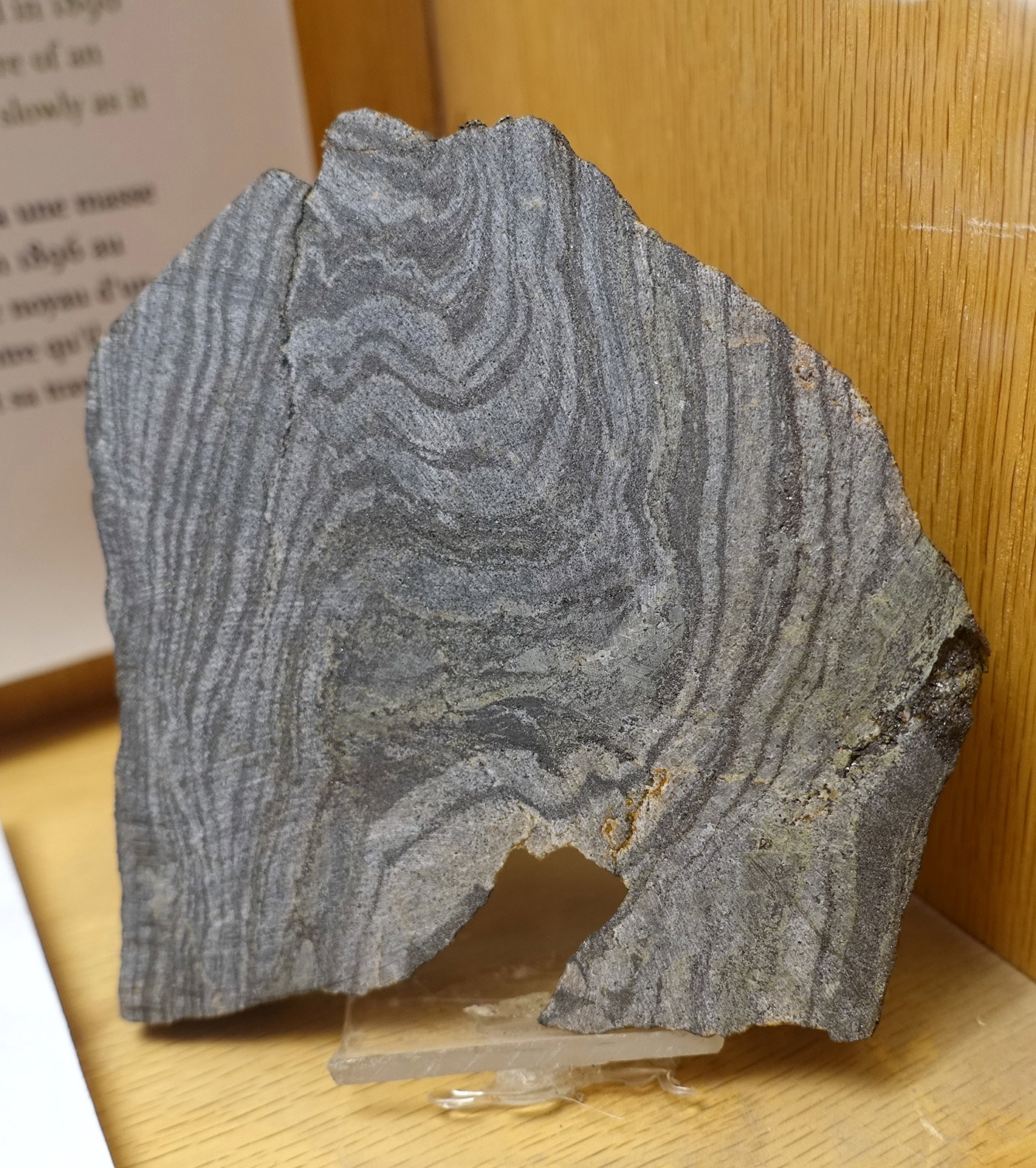
Banded iron formation from Quebec said to have metamorphosed 3.8 billion years ago
Daderot, CC0, via Wikimedia Commons
There are many more such studies.11 None of them are wholly convincing on their own, as they often rely on a single crystal or a rock formation that has been heated and crushed, and thus distorted.12 Each study has come in for strong criticism.13 This makes it difficult to assess the evidence because there are multiple proposed arguments.
Those who believe in the early origin of life highlight the sheer number of studies from different parts of the world and using different forms of evidence. However, a skeptic would counter that the scientific community should accept a fossil only if it is supported by multiple lines of evidence, as happened with the Pilbara fossilized stromatolites “dated” at 3.5 billion years old. In response, those who believe these very ancient dates would say the rock record from the early Archean is very sparse, and there are apparently no rocks from the Hadean at all. Thus, it is simply not possible to obtain multiple lines of evidence from such limited material, so the scientific community must make a judgment based on what we have. The evolutionary skeptic would then reply by saying that if we don’t have multiple lines of evidence, then we cannot know the answer.
Less Impact Cratering?
For many years, the skeptics carried the argument, but more recently, the tide may have turned. This is partly because the fossil evidence of early life has accumulated. But it is also because the evidence for the Late Heavy Bombardment sterilizing the planet between 3.8 and 4.0 billion years ago has apparently collapsed.
An early crack in the long-held story emerged when Mojzsis and Oleg Abramov at the University of Colorado simulated the Late Heavy Bombardment and concluded that it was not intense enough to sterilize the earth.14 Surface life might have been obliterated, but microbes could have supposedly survived underground in huge numbers.
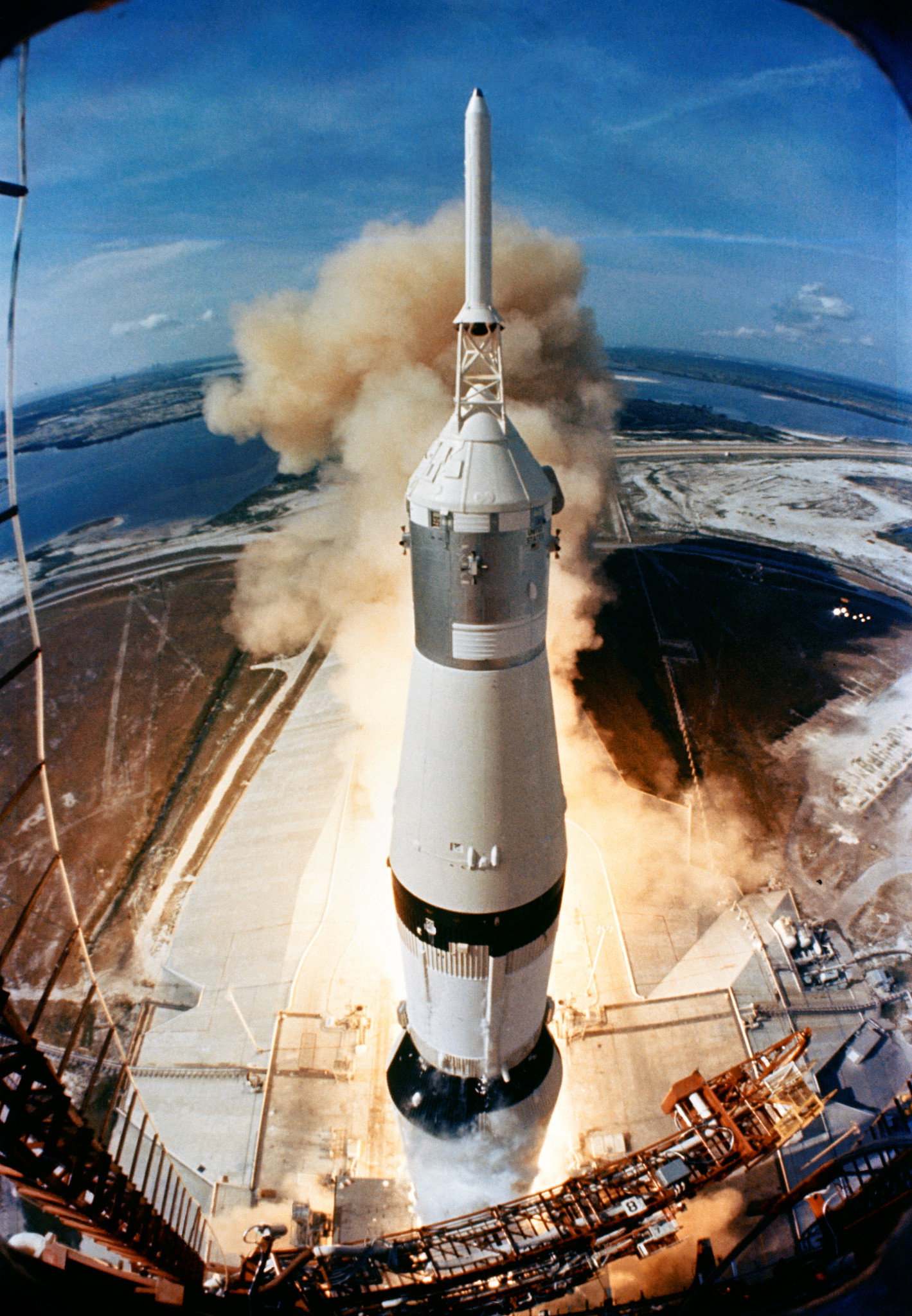
However, the bigger issue is that the Late Heavy Bombardment may not have happened at all. The evidence for that event rested on the argon isotopes in moon rocks collected by the Apollo missions in the late 1960s and early 1970s. A reanalysis found that those argon isotopes were prone to a specific kind of artifact in the radioisotope data, which had created the illusion of a sharp bombardment supposedly 3.9 billion years ago.15 What’s more, the Apollo missions all went to the same region of the moon, so the astronauts may have mostly collected rocks from the same big impact, which would all naturally be the same apparent age. Meanwhile, rocks on the earth preserve evidence of past impacts, and they apparently show a long slow decline until supposedly 3 billion years ago or later. Likewise, giant impacts on Mars appear to have apparently tailed off by 4.48 billion years ago. There is also no sign of a supposed Late Heavy Bombardment on the asteroid Vesta.
So if the Late Heavy Bombardment really didn’t happen, then now it seems reasonable to those conventional scientists to imagine that life began much earlier, perhaps even in the Hadean. The problem then is how to demonstrate it, when the fossil evidence is so immeasurably scant or absent entirely.
Reconstructing the Evolutionary History of Life
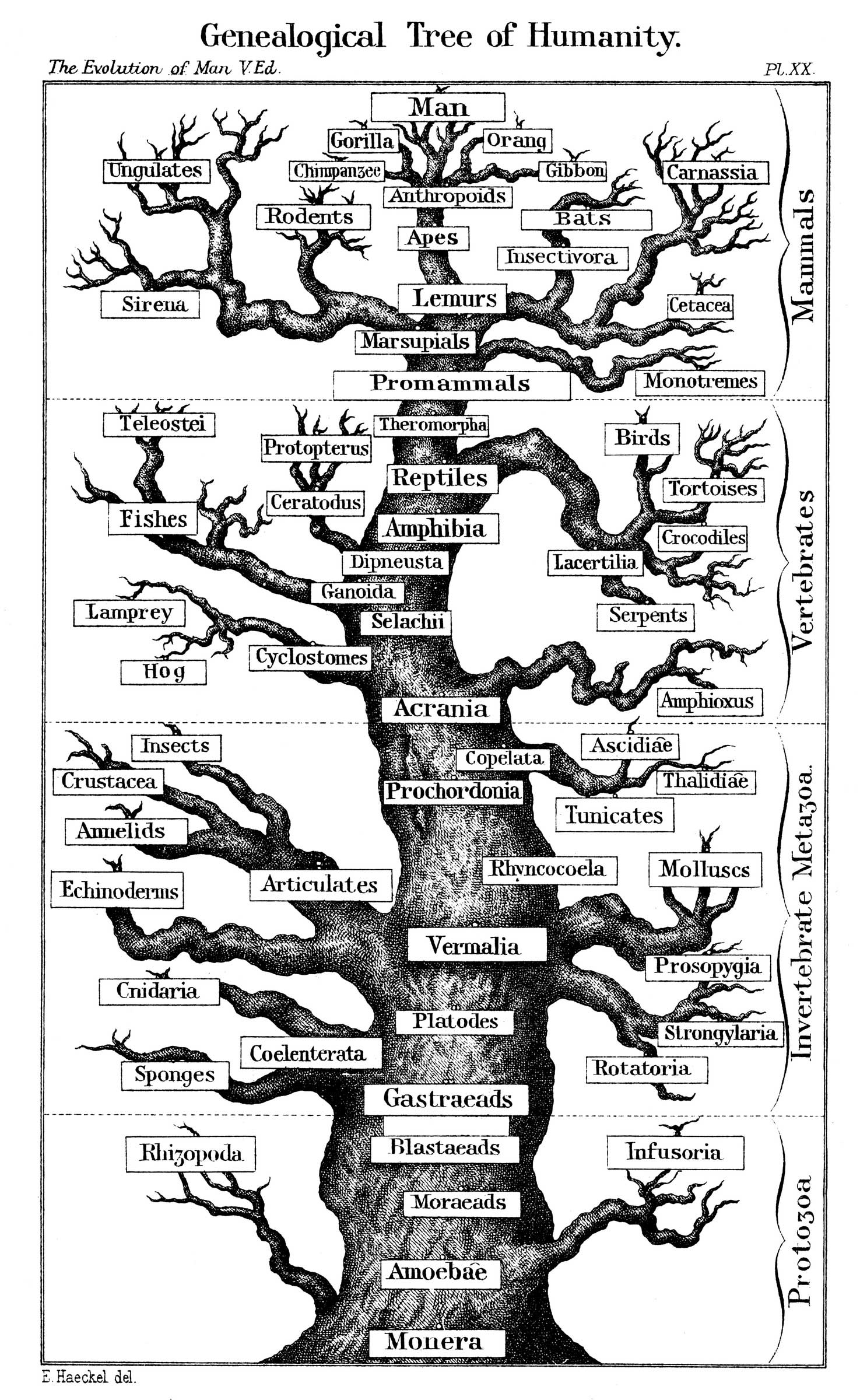
Ernst Haeckel’s evolutionary human tree
See page for author, Public domain, via Wikimedia Commons
This is where phylogenetics has been used to construct the story further. Phylogenetics involves creating evolutionary family trees of different organisms to show how they are “related” and when the various postulated evolutionary splits occurred. For example, phylogenetics tells us that humans, chimpanzees, and bonobos are descended from an imagined shared ancestor that lived about 7 million years ago.
By constructing evolutionary family trees of the supposed oldest and most divergent forms of life, phylogeneticists have tried to push back to the apparent last universal common ancestor (LUCA) of all life. This is supposed to be the most recent population of organisms from which every single living thing today is imagined to have descended via postulated evolutionary processes, from bacteria to mosses to scarlet macaws. Estimating the date of the LUCA is obviously fraught with uncertainties, not least because of the many unproven assumptions involved, but in the past decade, these phylogeneticists think they have started to narrow it down.
Estimating the date of the LUCA is obviously fraught with uncertainties, not least because of the many unproven assumptions involved.
One such attempt was published by a team led by Davide Pisani at the University of Bristol in the United Kingdom.16 They created a family tree of 102 species, focusing on microorganisms, as they believed those to be the oldest forms of life. They supposedly calibrated their evolutionary tree using 11 dates “known” from the fossil record. The headline finding was that the LUCA was at least 3.9 billion years old, an age also based on unproven assumptions.
In 2024, many of the same researchers returned with a more detailed analysis of the supposed LUCA based on more than 3,500 modern genomes.17 This analysis suggested the imagined LUCA lived between 4.09 and 4.33 billion years ago, with a best estimate of around 4.2 billion years ago.
What’s more, in their story, their reconstruction of the LUCA’s supposed genome suggested it was pretty complex, with a genome that encoded around 2,600 proteins. It also seemed to have lived in an imagined complex ecosystem. In particular, it appeared to have had a “primitive” immune system, which supposedly implies it had to defend itself from some of its microbial neighbors. That is quite an emperor’s-new-clothes story just from analyzing modern genomes based on unproven and unprovable assumptions, not least that life somehow evolved.
These details highlight a point that is not always obvious to these geneticists, nor to the public who have been dazzled by the “science” into thinking fallible scientists can somehow reconstruct the unobserved past: The LUCA does not represent the origin of life, that is, it does not explain how the supposed first life originated. It is just the postulated most recent ancestor supposedly shared by all modern organisms. In this story, it’s possible that life had existed long before the LUCA, beginning early in the Hadean.
This seems to fit with the recently gathered evidence that the Hadean was perhaps not so hellish after all. It is still claimed as true in the conventional story that the entire planetary surface was molten at the very start of the Hadean, but it seems to have solidified by 4.4 billion years ago.18 Evidence from zircons suggests there was abundant liquid water by at least 4.3 billion years ago and possibly 4.4 billion years ago.19 So by 4.2 billion years ago, there may have been oceans.20 These primordial seas are supposed to have been much deeper than they are today because the earth’s interior was hotter and could not hold as much water as it can today.21 So for a time, there may have been no exposed land, or at least, only small islands.
These conjectured strands of evidence amount to a complete rewriting of the supposed early evolutionary history of life on the earth. Instead of life beginning shortly after the Late Heavy Bombardment 3.8 billion years ago, it apparently may have arisen within 100 million years of the planet’s formation. However, this does not tell us about how it happened.
The Supposed Origin of Life
The most immediate implication for conventional scientists is that their ideas cannot rely on the power of chance at all! Of course, this implication is contrary to the major tenets of evolution, which claims all that was needed was time plus chance plus the laws of nature. There have been many hypotheses about the supposed origins of life that relied on a coincidence, a one-in-a-billion collision between two biological molecules in the postulated primordial soup. But if life really formed within a mere 100 million years of the planet’s birth, ideas like this become absolutely untenable. There just was not enough time!
For example, one of the leading hypotheses of life’s origins since the 1980s has been the “RNA World” hypothesis.22 This idea is that the first life did not contain the smorgasbord of organic chemicals that modern cells do. Instead, life was based entirely on RNA, a close cousin of the more familiar DNA, of which our genomes are made. RNA is appealing because like DNA it can carry genetic information, but it can also control the rates of chemical reactions—something that is more usually done by protein-based enzymes. This adaptability, the argument goes, makes RNA the ideal molecule to kick-start life.
However, a close examination of the RNA World scenario reveals gaping holes. An RNA molecule is essentially a chain, and there are huge numbers of possible RNAs, depending on the sequence of links in the chain. Only a fraction of these RNAs actually make proteins. It’s not obvious how those “good” RNAs are supposed to have formed. Why didn’t conditions on the young earth just create a random mix of RNAs? And we can’t rely on the power of chance and large numbers because it all apparently happened too quickly.
Instead, conventional researchers now largely agree that they must find processes that work quickly and efficiently to generate complexity and lifelike systems. But what does that mean in practice? There are various ideas. One prominent school of thought is that life formed in alkaline vents on the seafloor, where the flow of hot water and chemicals created a cradle that incubated life. Others have highlighted the potential of volcanic vents, meteorite impact craters, geothermal ponds, and tidal zones—that is, anywhere that had a flow of energy and chemicals.
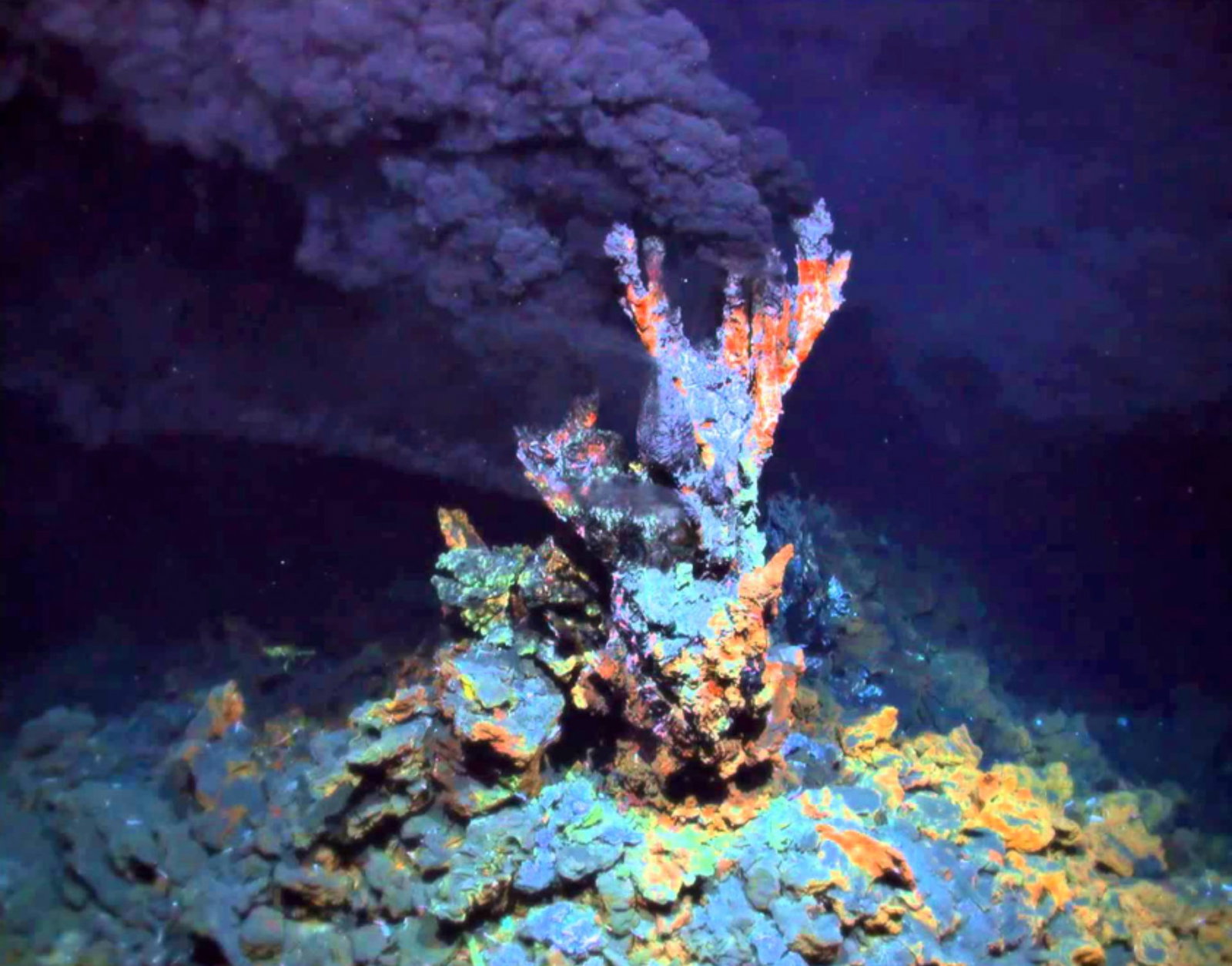
A hydrothermal vent
Oregon State University, CC BY-SA 2.0
The reality for evolutionary scientists is that they are dealing with a huge number of intersecting unanswerable questions about the unobserved past. What was the environment in which the first life emerged? What was that first life made of and how did it work? Was the first life a simplified version of something we can observe today, or was it something radically different either in composition or mechanism, or both, that was then supposedly supplanted by more familiar systems?
Modern evolutionary origin-of-life research is barely a century old. The first widely discussed hypotheses among conventional researchers were set out by Alexander Oparin and J. B. S. Haldane in the 1920s.23 Then the Miller-Urey experiment that kick-started practical research in the field was published in 1953.24 For those first few decades, origins research was on the fringes of science, with only a handful of researchers actively working on it.
Just as there was no direct evidence that the Hadean was a hellscape, there has been very little hard evidence for any of the competing scenarios for life’s origins. Researchers devised elaborate stories with multiple steps, found experimental evidence that supported one or two of those stages, and declared the problem solved.
A small group of people, a lack of hard evidence, and a great many intersecting questions were obviously a recipe for dogmatic ideas and angry disagreements. And that’s exactly what origins research has been like for decades, not surprisingly. On multiple occasions since the 2000s, researchers, including heads of labs, have used language that resembled the worst kind of internet trolling—abrasive, ugly, and pointless.
What origins research needed was open-mindedness (but not an open-mindedness about an evolutionary origin) and a willingness to disagree constructively. That culture shift has seemingly been driven by a generation of younger researchers, who have organized themselves into the Origin of Life Early-career Network (OoLEN). In 2020, a large group of OoLEN members and other researchers set out what they saw as the future of the field.25 They complained of “distressing divisions in OoL research.” For instance, supporters of the RNA World had tended to contemptuously dismiss those who argued that life began with metabolic processes, and vice versa. The OoLEN team argued that these “classical approaches” to the problem should not be seen as “mutually exclusive.” Instead, “they can and should feed integrating approaches.”
This is apparently what has been happening. Instead of focusing exclusively on RNA, many teams have now been exploring what happens when RNA or its constituent parts are combined with other biological molecules, such as lipids and peptides. They are deploying artificial intelligence to make sense of the huge numbers of molecules involved. And they are holding back from strong statements in favor of their own pet hypotheses and against other people’s hypotheses.
This may seem like a healthier way to work. But will it result in more insights into what may have happened on our planet when it was young and what the postulated first life might have looked like?
The Reality Check from God’s Word
The hellscape-earth scenario was always a just-so story. Because the data are so limited, conventional evolutionary scientists will never escape telling such stories about our planet’s infancy. But will they ever be able to tell some better ones? Absolutely not, because they are groping in the dark looking for answers in the wrong place. The reasoning of finite, fallible men in their desperate fruitless attempts to reconstruct the unobserved past will never find the true story of the earth’s early history and the origin of life.
The reasoning of finite, fallible men in their desperate fruitless attempts to reconstruct the unobserved past will never find the true story of the earth’s early history and the origin of life.
As Jesus said, “Let them alone; they are blind guides [of the blind]. And if the blind lead the blind, both will fall into a pit” (Matthew 15:14), and, “He also told them a parable: ‘Can a blind man lead a blind man? Will they not both fall into a pit?’” (Luke 6:39).
So why are conventional evolutionary scientists (and their multitudes of followers) blind? Because they ignore God and His Word. “The fool says in his heart, ‘There is no God’” (Psalm 14:1 and 53:1). That is why they are “always learning and never able to arrive at a knowledge of the truth” (2 Timothy 3:7). Instead, “The fear of the Lord is the beginning of knowledge; fools despise wisdom and instruction” (Proverbs 1:7), and, “The fear of the Lord is the beginning of wisdom, and the knowledge of the Holy One is insight” (Proverbs 9:10).
If these scientists (and their multitudes of followers) really want to find the truth about the earth’s early history and the origin of life, they need to start by acknowledging God, our Creator, and humbly submit to His inerrant Word to find the answers to their quest there. As the Apostle Paul has clearly stated under the guidance of God the Holy Spirit:
For the wrath of God is revealed from heaven against all ungodliness and unrighteousness of men, who by their unrighteousness suppress the truth. For what can be known about God is plain to them, because God has shown it to them. For his invisible attributes, namely, his eternal power and divine nature, have been clearly perceived, ever since the creation of the world, in the things that have been made. So they are without excuse. For although they knew God, they did not honor him as God or give thanks to him, but they became futile in their thinking, and their foolish hearts were darkened. Claiming to be wise, they became fools, and exchanged the glory of the immortal God for images resembling mortal man and birds and animals and creeping things. (Romans 1:18–23)
The irony is that these foolish origin-of-life researchers are trying to devise well-designed experiments to demonstrate that life must have evolved by non-designed, random, blind chance! And these early-earth history investigators use well-designed equipment in the present to micro-analyze tiny crystals and thereby elucidate futilely the unobserved and unobservable, undesigned early history of the earth after debris was randomly (by accident) flung out of the supposed solar nebula and coalesced to form our molten planet under gravity, one of the laws of nature. But where did those laws of nature come from?

To find the true history of the earth and origin of life, our authority must be God’s Word.
Photo by CHUTTERSNAP on Unsplash
To find the true history of the earth and the true origin of life our authority must be God’s Word, rather than the word of foolish, blind men however learned they may profess to be. God’s Word simply begins with:
In the beginning, God created the heavens and the earth. The earth was without form and void, and darkness was over the face of the deep. And the Spirit of God was hovering over the face of the waters. (Genesis 1:1–2)
To paraphrase, when time began, God created space and matter. There is no mention yet of the sun. There is just the earth in space. Furthermore, the earth was not a hot molten ball. It was cool because it was covered in water (“the deep”). That was on the first creation day.
But God didn’t create the sun until the fourth creation day:
And God made the two great lights—the greater light to rule the day and the lesser light to rule the night—and the stars. And God set them in the expanse of the heavens to give light on the earth.” (Genesis 1:16–17)
So the earth was not formed from coalescing debris flung out of the solar nebula, nor was the sun and our Milky Way galaxy a product of the big bang 13.7 billion years ago. In the beginning, God made the earth alone, hanging in space and covered in water. Furthermore, the moon was not created by some planetary body slamming into the earth. Instead, it was purposefully created by God, distinct from the earth and the sun (the greater light to rule the day).
What about the origin of the first life? We read that during the third creation day, before God made the sun:
And God said, “Let the waters under the heavens be gathered together into one place, and let the dry land appear.” And it was so. God called the dry land Earth, and the waters that were gathered together he called Seas. And God saw that it was good.
And God said, “Let the earth sprout vegetation, plants yielding seed, and fruit trees bearing fruit in which there is seed, each according to its kind, on the earth.” And it was so. The earth brought forth vegetation, plants yielding seed according to their own kinds, and trees bearing fruit in which there is seed, each according to its kind. And God saw that it was good. (Genesis 1:9–12)
Two lessons here are self-evident. First, these creation days had to be normal, approximately 24-hour days. As God wrote on the tablets of stone, His fourth commandment to work for six days and rest on the Sabbath is based on God doing His work of creation in six days (Exodus 20:11, 31:17–18). However, if instead these “days” were each long ages of millions of years, as many old-age and progressive creationists and theistic evolutionists maintain, then the plants created by God’s Word on the third creation day would have had to survive for millions of years without the sun and sunlight for photosynthesis. In God’s timetable, the plants survived well on the third creation day using God’s light for photosynthesis until He provided the sun the next day to take over the role of bringing daylight to the earth and its plants.
Second, the sprouting of the vegetation on the dry land after God had made it on this third creation day presupposes that God must have also made a soil covering the dry land for the vegetation to sprout in. And it must have been a very rich, “mature” soil for the vegetation to thrive in and produce seeds and fruits. Such a soil must also contain soil bacteria that help produce and cycle nutrients. Thus, God must also have created these bacteria on the third creation day, and therefore, the origin of the first life also predates God creating the sun and the moon on the fourth creation day. And that soil and bacteria God instantly created had no more “an appearance of age” than the wine Jesus created instantly from water at the marriage feast in Cana (John 2:1–11).
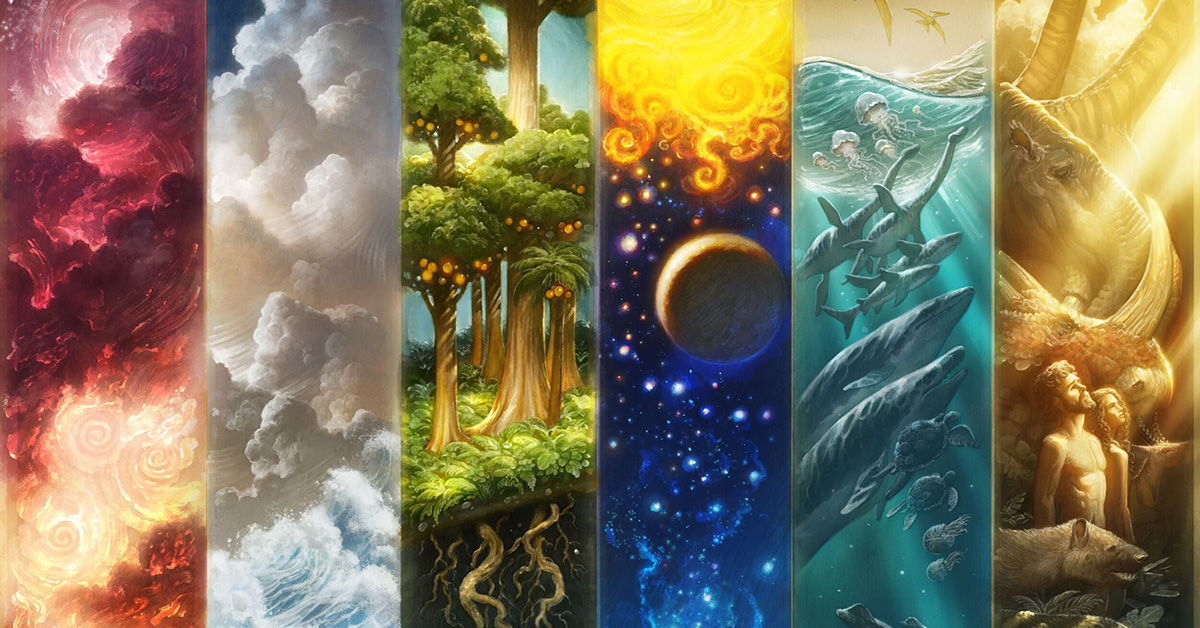
Days of creation
Furthermore, God’s work of creation was instant. The phrase “and it was so” is repeated throughout Genesis 1 and means “it happened just as God said.” After all, when Jesus performed His miracles, they were instant, such as feeding 5,000 men plus women and children by breaking five loaves and two fish and instantly creating more bread and fish in front of the watching disciples (Matthew 14:13–21). God is infinite, all-knowing, all-powerful, and totally sovereign. So He can choose to do whatever He chooses to do, however and wherever He chooses. And throughout His Word, God tells us what He did, even when He created all things before there was a man to witness the earth’s history. As repeated many times in Genesis 1, God said, and it was so!
Conclusion
Why was it necessary to narrate the long just-so story about the early molten earth, planetary and meteoroid bombardments, and the “appearance” of the first life? To illustrate the utter futility of all evolutionary and billions-of-years scenarios that leave God out of the “picture.” These just-so stories remind us that finite, fallible scientists are blind as they grope around in the dark “clutching at any straws” they can, all in an effort to somehow explain how the universe, earth, and life came into being by natural processes and the laws of nature only by random chance over lots of time. They are ever learning but never coming to the knowledge of the truth (2 Timothy 3:7).
So why do so many Christians who say they follow Jesus Christ and believe God’s Word is true also embrace those just-so evolutionary stories and also accept the billions of years that go with them? They try to add finite, fallible man’s word to God’s Word, and it simply does not work! Why do they keep trying? The fear of man. After all, they reason, how could the vast majority of scientists, including scientists who are Christians, be wrong? But how many people survived the global Genesis Flood cataclysm? Only eight! Millions of people made up the vast majority of pre-Flood world, and they were all wrong! God’s Word declares that the fear of the Lord is the beginning of knowledge and wisdom.
We must stand unwavering on the authority of God’s Word no matter what the majority’s just-so stories are.
Yes, life happened fast when God created it instantly only 6,000 or so years ago. God’s Word is clear. There was no big bang, the earth was created first covered in water, and the dry land and first life were created, all instantly by God’s supernatural fiat, and all before the sun and moon were created. And God’s entire work of creation took Him just six, normal 24-hour days. “Let God be true though every one were a liar” (Romans 3:4). We must stand unwavering on the authority of God’s Word no matter what the majority’s just-so stories are because God’s Word is true from the beginning (Psalm 119:160) and God never lies (Titus 1:2).
Answers in Depth
2026 Volume 21
Answers in Depth explores the biblical worldview in addressing modern scientific research, history, current events, popular media, theology, and much more.
Browse VolumeFootnotes
- Dalrymple, G. Brent, The Age of the Earth (Stanford, CA: Stanford University Press, 1991); G. Brent Dalrymple, Ancient Earth, Ancient Skies: The Age of the Earth and Its Cosmic Surroundings (Stanford, CA: Stanford University Press, 2004).
- Bauer, Ann M., Christopher M. Fisher, Jeffrey D. Vervoort, and Samuel A. Bowring, “Coupled Zircon Lu-Hf and U-Pb Isotopic Analyses of the Oldest Terrestrial Crust, the >4.03 Ga Acasta Gneiss Complex,” Earth and Planetary Science Letters 458 (2017): 37–48, https://doi.org/10.1016/j.epsl.2016.10.036.
- International Commission on Stratigraphy, International Chronostratigraphic Chart version 2024/12, ChronostratChart2024-12.
- Lowe, Donald R., “Stromatolites 3,400-Myr Old from the Archean of Western Australia,” Nature 284 (April 3, 1980): 441–443 https://doi.org/10.1038/284441a0; Malcolm R. Walter, R. Buick, and J. S. R. Dunlop, “Stromatolites 3,400–3,500 Myr Old from the North Pole area, Western Australia,” Nature 284 (April 3, 1980): 443–445, https://doi.org/10.1038/284443a0.
- Reid, R. P., P. T. Visscher, A. W. Decho, J. F. Stolz, B. M. Beboutk, C. Dupraz, et al., “The Role of Microbes in Accretion, Lamination and Early Lithification of Modern Marine Stromatolites,” Nature 406 (August 31, 2000): 989–992, https://doi.org/10.1038/35023158; Wladyslaw Altermann, “Accretion, Trapping and Binding of Sediment in Archean Stromatolites—Morphological Expression of the Antiquity of Life,” Space Science Reviews 135 (2008): 55–79, https://doi.org/10.1007/s11214-007-9292-1; M. A. Allen, F. Goh, B. P. Burns, and B. A. Neilan, “Bacterial, Archaeal and Eukaryotic Diversity of Smooth and Pustular Microbial Mat Communities in the Hypersaline Lagoon of Shark Bay,” Geobiology 7, no. 1 (2009): 82–96, https://doi.org/10.1111/j.1472-4669.2008.00187.x; Chloé Plet, Anais Pagès, Alex I. Holman, Robert H. C. Madden, and Kliti Grice, “From Supratidal to Subtidal, an Integrated Characterisation of Carbla Beach Shallow Microbial Mats (Hamelin Pool, Shark Bay, WA): Lipid Biomarkers, Stable Carbon Isotopes and Microfabrics,” Chemical Geology 493 (2018): 338–352, https://doi.org/10.1016/j.chemgeo.2018.06.010.
- Brasier, Martin D., Owen R. Green, John F. Lindsay, Nicola McLoughlin, Andrew Steele, and Cris Stoakes, “Critical Testing of Earth’s Oldest Putative Fossil Assemblage from the ∼3.5 Ga Apex Chert, Chinaman Creek, Western Australia,” Precambrian Research 140, nos. 1–2 (2005): 55–102, https://doi.org/10.1016/j.precamres.2005.06.008; J. William Schopf, Anatoliy B. Kudryavtsev, Andrew D. Czaja, and Abhishek B. Tripathi, “Evidence of Archean Life: Stromatolites and Microfossils,” Precambrian Research 158, nos. 3–4 (2007): 141–155, https://doi.org/10.1016/j.precamres.2007.04.009; Tara Djokic, Martin J. Van Kranendonk, Kathleen A. Campbell, Malcolm R. Walter, and Colin R. Ward, “Earliest Signs of Life on Land Preserved in ca. 3.5 Ga Hot Spring Deposits,” Nature Communications 8 (2017): 15263, https://doi.org/10.1038/ncomms15263; Raphael J. Baumgartner, Martin J. Van Kranendonk, David Wacey, Marco L. Fiorentini, Martin Saunders, Stefano Caruso, et al., “Nano−Porous Pyrite and Organic Matter in 3.5-Billion-Year-Old Stromatolites Record Primordial Life,” Geology 47, no. 11 (November 2019): 1039–1043, https://doi.org/10.1130/G46365.1.
- Mojzsis, Stephen J., G. Arrhenius, K. D. McKeegan, T. Mark Harrison, Allen P. Nutman, and Clark R. L. Friend, “Evidence for Life on Earth Before 3,800 Million Years Ago,” Nature 384 (November 7, 1996): 55–59, https://doi.org/10.1038/384055a0.
- Bell, Elizabeth A., Patrick Boehnke, T. Mark Harrison, and Wendy L. Mao, “Potentially Biogenic Carbon Preserved in a 4.1 Billion-Year-Old Zircon,” Proceedings of the National Academy of Sciences USA 112, no. 47 (November 24, 2015): 14518–14521, https://doi.org/10.1073/pnas.1517557112.
- Dodd, Matthew S., Dominic Papineau, Tor Grenne, John F. Slack, Martin Rittner, Franco Pirajno, et al., “Evidence for Early Life in Earth’s Oldest Hydrothermal Vent Precipitates,” Nature 543 (March 2, 2017): 60–64, https://doi.org/10.1038/nature21377.
- Sole, C., J. O’Neil, H. Rizo, J.-L. Paquette, D. Benn, and J. Plakholm, “Evidence for Hadean Mafic Intrusions in the Nuvvuagittuq Greenstone Belt, Canada,” Science 388, no.6754 (June 26, 2025): 1431–1435, https://doi.org/10.1126/science.ads8461.
- Tashiro, Takayuki, Akizumi Ishida, Masako Hori, Motoko Igisu, Mizuho Koike, Pauline Méjean, et al., “Early Trace of Life from 3.95 Ga Sedimentary Rocks in Labrador, Canada,” Nature 549 (September 28, 2017): 516–518, https://doi.org/10.1038/nature24019.
- Nutman, Allen P., Vickie C. Bennett, Clark R. L. Friend, Martin J. Van Kranendonk, and Allan R. Chivas, “Rapid Emergence of Life Shown by Discovery of 3,700-Million-Year-Old Microbial Structures,” Nature 537 (September 22, 2016): 535–538, https://doi.org/10.1038/nature19355.
- Allwood, Abigail C., Minik T. Rosing, David T. Flannery, Joel A. Hurowitz, and Christopher M. Heirwegh, “Reassessing Evidence of Life in 3,700-Million-Year-Old Rocks in Greenland,” Nature 563 (November 8, 2018): 241–244, https://doi.org/10.1038/s41586-018-0610-4.
- Abramov, Oleg, and Stephen J. Mojzsis, “Microbial Habitability of the Hadean Earth During the Late Heavy Bombardment,” Nature 459 (May 21, 2009): 419–422, https://doi.org/10.1038/nature08015.
- Boehnkea, Patrick, and T. Mark Harrison, “Illusory Late Heavy Bombardments,” Proceedings of the National Academy of Sciences USA 113 (September 27, 2016): 10802–10806, https://doi.org/10.1073/pnas.1611535113
- Betts, Holly C., Mark N. Puttick, James W. Clark, Tom A. Williams, Philip C. J. Donoghue, and Davide Pisani, “Integrated Genomic and Fossil Evidence Illuminates Life’s Early Evolution and Eukaryote Origin,” Nature Ecology & Evolution 2 (October 2018): 1556–1562, https://doi.org/10.1038/s41559-018-0644-x.
- Moody, Edmund R. R., Sandra Álvarez-Carretero, Tara A. Mahendrarajah, James W. Clark, Holly C. Betts, Nina Dombrowski, et al., “The Nature of the Last Universal Common Ancestor and Its Impact on the Early Earth System,” Nature Ecology & Evolution 8 (September 2024): 1654–1666, https://doi.org/10.1038/s41559-024-02461-1.
- Valley, John W., Aaron J. Cavosie, Takayuki Ushikubo, David A. Reinhard, Daniel F. Lawrence, David J. Larson, et al., “Hadean Age for a Post-Magma-Ocean Zircon Confirmed by Atom-Probe Tomography,” Nature Geoscience 7 (March 2014): 219–223, http://www.nature.com/doifinder/10.1038/ngeo2075.
- Wilde, Simon A., John W. Valley, William H. Peck, and Colin M. Graham, “Evidence from Detrital Zircons for the Existence of Continental Crust and Oceans on the Earth 4.4 Gyr Ago,” Nature 409 (January 11, 2001): 175–178, https://doi.org/10.1038/35051550; Stephen J. Mojzsis, T. Mark Harrison, and Robert T. Pidgeon, “Oxygen-Isotope Evidence from Ancient Zircons for Liquid Water at the Earth’s Surface 4,300 Myr Ago,” Nature 409 (January 11, 2001): 178–181, https://doi.org/10.1038/35051557.
- Cavosie, Aaron J., John W. Valley, and Simon A. Wilde, “Magmatic δ18O in 4400–3900 Ma Detrital Zircons: A Record of the Alteration and Recycling of Crust in the Early Archean,” Earth and Planetary Science Letters 235 (July 15, 2005): 663–681, https://doi.org/10.1016/j.epsl.2005.04.028.
- Dong, Junjie, Rebecca A. Fischer, Lars P. Stixrude, and Carolina R. Lithgow-Bertelloni, “Constraining the Volume of Earth’s Early Oceans with a Temperature-Dependent Mantle Water Storage Capacity Model,” AGU Advances 2: e2020AV000323, https://doi.org/10.1029/2020AV000323.
- Gilbert, Walter, “Origins of Life: The RNA World,” Nature 319 (February 20, 1986): 618, https://doi.org/10.1038/319618a0.
- Schopf, J. William, “Pioneers of Origin of Life Studies—Darwin, Oparin, Haldane, Miller, Oró—And the Oldest Known Records of Life.” Life 14 (2024): 1345, https://doi.org/10.3390/life14101345.
- Miller, Stanley L., “A Production of Amino Acids Under Possible Primitive Earth Conditions,” Science 117, no. 3046 (May 15, 1953): 528–529, https://doi.org/10.1126/science.117.3046.528.
- Preiner, Martina, Silke Asche, Sidney Becker, Holly C. Betts, Adrien Boniface, et al., “The Future of Origin of Life Research: Bridging Decades-Old Divisions,” Life 10, no. 3 (2020): 20, https://doi.org/10.3390/life10030020.

_banded_iron_formation,_northern_Quebec,_metamorphosed_3.8_billion_years_ago,_magnetite_and_quartz_-_Redpath_Museum_-_McGill_University_-_Montreal,_Canada_-_DSC07889.jpg)

Support the creation/gospel message by donating or getting involved!

Answers in Genesis is an apologetics ministry, dedicated to helping Christians defend their faith and proclaim the good news of Jesus Christ.
- Customer Service 800.778.3390
- Available Monday–Friday | 9 AM–5 PM ET
- © 2026 Answers in Genesis