


Morality
Man Basically Good?
The question of whether man is inherently “good” or “evil” has inspired many poets and philosophers to produce a plethora of theater plays, poems, and tales. Human nature is by no means described by the Bible as good.
Good Without God?
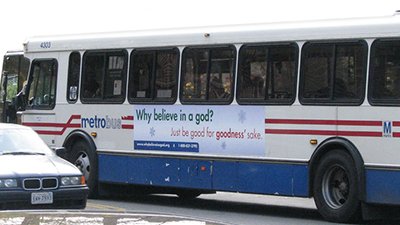
Atheists tell us that we should be good for goodness sake, that people can be good without God. But they don’t tell us how they know or how they measure what is “good.”
Evolution and Morality
Many evolutionists are quite clear that evolution does not provide a basis for morality. If evolution is true, then there can be no universal moral code that all people should adhere to.
God’s Unchanging Standard of Morality
God’s moral standard flows from His unchanging nature. Because God’s nature is perfect and holy, He cannot sin, so His standard is objective. It is impossible for God to contradict Himself or act inconsistently with His own nature.
Articles About Morality
-
Magazine Department ArticleAn Agony to ReadJuly 1, 2010 from Answers Magazine
Biblical Christianity and Darwinian evolution are incompatible both scientifically and morally.
-
Feedback ArticleDo We Want to “Eliminate” Other Beliefs?June 18, 2010 from Feedback
One disgruntled reader accuses Answers in Genesis of seeking to squelch other beliefs to force our morality on people, but as Mark Looy, AiG–U.S., shows, our goal is for others to find true freedom.
-
Human Morality a Product of Evolution?May 22, 2010
Is human morality a product of evolution? It seems that priest-turned-evolutionary scientist Francisco Ayala presumes the answer is “yes.”
-
Magnets Scramble Ability to Make Moral JudgementsApril 3, 2010 from News to Know
If a magnet can scramble one’s ability to make sound moral judgments, does that imply morality is all in our minds?
-
New Advice Column is Based on EvolutionismJan. 5, 2010
If any newspaper was to take a lead in propagating the godless morality of naturalistic evolution, in all its fullness, it would have to be The Guardian.
-
Magazine Department ArticleFallible ResearchOct. 1, 2009 from Answers Magazine
While scientists are fallible like anyone else, research would improve if it were built on biblical ethics and the truth of God's Word.
-
April 1, 2009 from Answers Magazine
Only God’s Word, the Bible, establishes the rock-solid basis for goodness.
-
Feedback ArticleMorality ParadoxJan. 16, 2009 from Feedback
Countries where evolution is generally accepted often show great acts of charity. Does this mean that morality doesn’t require God?
-
Religion Evolved for Self-ControlJan. 10, 2009 from News to Know
How is one psychologist answering the loaded question “why did religion evolve?”
-
Altruism Doesn't Just Stem From ReligionNov. 1, 2008
It’s not our inner, inherent goodness that leads to morality and good deeds.
-
Why Would an Evolutionist Become a Doctor?July 21, 2008
Many evolutionists have claimed that no one can deny evolution and be a good doctor. Tommy Mitchell, MD, wonders why a consistent evolutionist would even want to practice medicine.
-
July 4, 2008 from Answers Magazine
To most of America’s founding fathers, the Bible was true from beginning to end, and it was the only source upon which to establish the new, independent nation.
-
Evolution and the Challenge of MoralityApril 14, 2008
Morality is a very difficult problem for the evolutionary worldview. The problem is that evolutionists have no logical reason to believe in right and wrong within their own worldview.
-
The Power of IdeasFeb. 11, 2008
What does a math test tell us about the power of materialistic beliefs to impact behavior? Quite a bit, as it turns out.
-
Taking Stock of BondsAug. 8, 2007
What can the story of Barry Bonds tell us about the creation/evolution controversy?
-
Feedback ArticleReligion has Zero Effect on a Person's Integrity?March 23, 2007 from Feedback
"A more logical argument would be that a religious position, which by definition transcends logic, absolves the holder from ANY rational restriction on their actions..."
-
Feedback ArticleFocus on MoralityJan. 5, 2007 from Feedback
"I wish you people would focus on the important matter of maintaining an independent moral authority..."
-
Feedback ArticleAre people free to do what they want as long as they don’t hurt anybody?Dec. 11, 2006 from Feedback
I heard someone say recently that people should be free to do whatever they want to do as long as they don’t hurt anybody.
-
What Basis, Morality?May 11, 2004
The April 2004 cover of Discover magazine poses the question, 'Are Right and Wrong Wired Into Our Brains?'
-
Magazine ArticleLiving in a BubbleJune 1, 2003, pp. 32–35
Turn on Christian radio or TV or attend church in the Western world and you will no doubt hear pastors lamenting the decline of Christian morality in society.
-
August 1999 NewsletterAug. 5, 1999
People are asking: “why?” Why do some teenagers have such a low view of human life that would lead them to shoot and kill their fellow students and attempt to kill and destroy them with bombs
-
June 1999 NewsletterJune 5, 1999
After almost three years of battles in Boone County, the Fiscal Court overruled the planning commission and approved an ordinance to rezone 47 acres to enable AiG to build its Creation Museum.
-
Magazine ArticleHow to Win a Debate on EthicsJune 1, 1996, pp. 50–51
When Christians get into debates with unbelievers, they sometimes tend to play by the same rules they see their opponents playing by.
-
Magazine ArticleWhy ‘Bad’ Seems ‘OK’ to SomeSept. 1, 1995, pp. 4–5
The over-publicized news of actor Hugh Grant’s being caught recently with a Hollywood harlot came at a curious time.

Support the creation/gospel message by donating or getting involved!

Answers in Genesis is an apologetics ministry, dedicated to helping Christians defend their faith and proclaim the good news of Jesus Christ.
- Customer Service 800.778.3390
- Available Monday–Friday | 9 AM–5 PM ET
- © 2026 Answers in Genesis