
Does the Bible Forbid Animal Hybridization?
Why do the Levitical laws condemn crossbreeding?
Some people have claimed that the Bible condemns hybridization, presumably thinking of Leviticus 19:19: “You shall keep my statutes. You shall not let your cattle breed with a different kind. You shall not sow your field with two kinds of seed, nor shall you wear a garment of cloth made of two kinds of material.” However, note that the Hebrew word here for “kinds” (kil’ayîm) is not the same as that used in Genesis 1 for a created “kind” (mîn). Instructing the Israelites to refrain from breeding these varieties implies that it was possible to breed them.
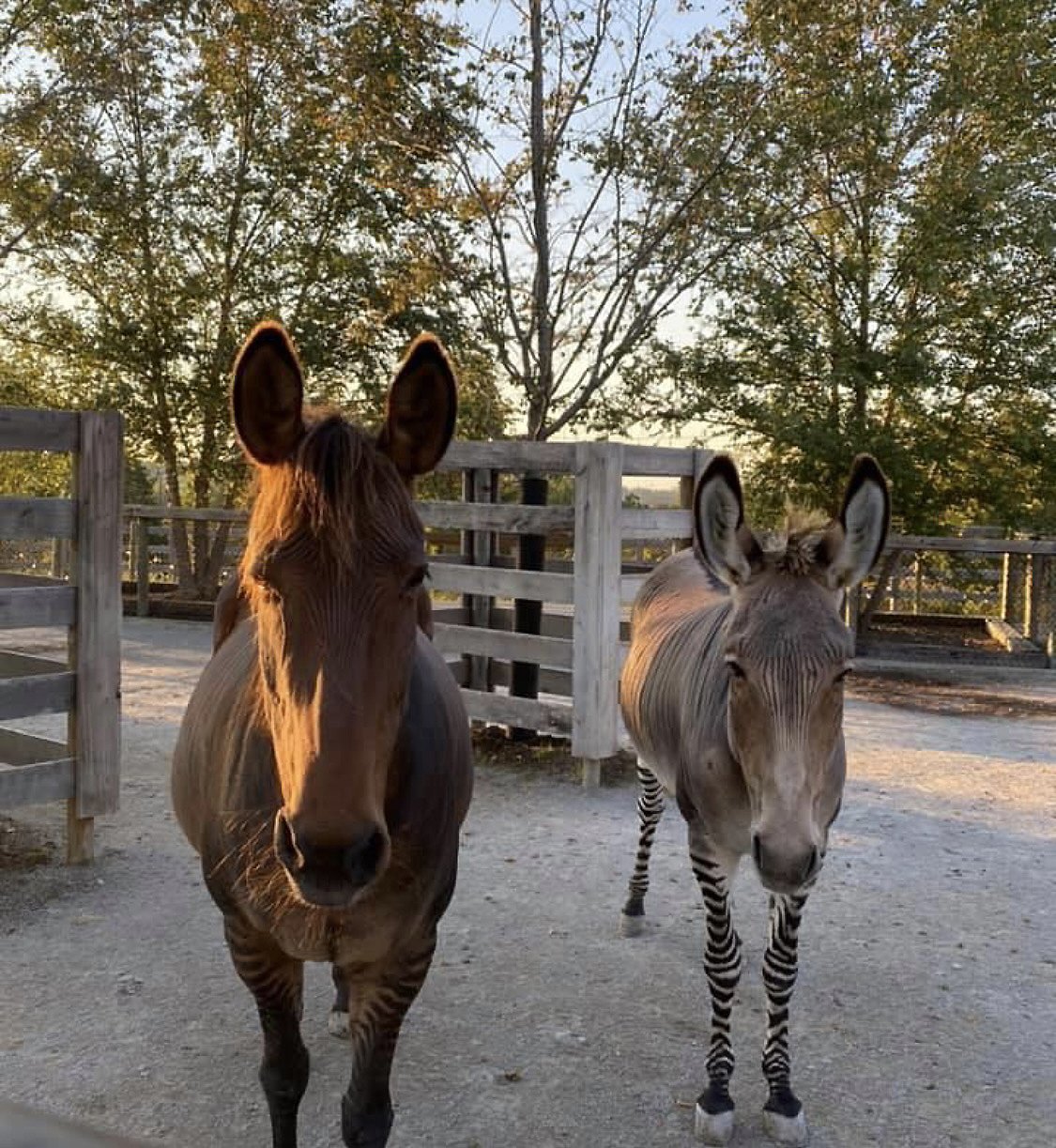
At the Ark Encounter, you can see a zorse and zonkey.
A Horse Kind Is a Horse Kind, Of Course
Thus it is implied by those holding this position (that the Bible prohibits hybridization), that this passage is not stating that the Israelites were not meant to try to produce breeds by mixing baramins (created kinds) because they could not produce offspring even if they tried. The claim is that God was forbidding hybridization within a baramin, but of different species (or even genera or family). The claim then alleges that crossing horses with donkeys or zebras, or cattle with bison, or sheep with goats was (and is) forbidden by Scripture.
However, if two animals can hybridize then they must belong to the same original created kind. If the hybridizing species are from different genera in a family, it suggests that the whole family might have come from the one created kind. Many hybrids occur in nature (or in captivity, without being deliberately bred) like the zorse, zonkey, liger, tigon, pizzly bear, and wholphin, as well as moose-deer, moose-elk and elk-deer hybrids. Others have occurred in the wild but are more common as deliberately bred animals, like beefalo (cattle and bison) and geep (goat-sheep).
Since God created animals according to their kinds (Genesis 1), it makes sense that they may hybridize within their kinds. Why wouldn’t they? They share the same ancestors created 6,000 years ago. While Leviticus 19:19 could be prohibiting the Israelites from deliberately hybridizing animals within a kind, we must keep in mind the context of rest of the verse. God goes on to forbid the mixing of two (or more) types of cloth for garments and the mixing of different seeds in the field for sowing.
What’s The Difference?
It’s likely God gave these commands to Israel to keep them distinct (and obviously visually distinct) from the surrounding peoples.
It’s likely God gave these commands to Israel to keep them distinct (and obviously visually distinct) from the surrounding peoples. This would naturally cause non-Israelites to ask them why they farmed, ate, dressed and practiced husbandry differently than they did. Even the hair and beards of Israelite men were regulated (Leviticus 19:27). This could then lead to discussions of the laws given to Israel by the one true God.
Note that there is not a command in Scripture to eradicate naturally occurring hybrids, which one might expect to be the case if God prohibited their existence. Neither does God ever give such a command to pre-Israelite people like Noah or Shem. That this non-hybridization law was given only to Israel is clearly spelled out in Leviticus 19:2 through the rest of the chapter.
Finally, the ceremonial and civic OT laws no longer apply today. They were given to a specific people and nation (Israel) governed by a theocracy, not to people of different ethnicities which comprise the local and universal church today and which are governed by national laws (Romans 13:1–7; Titus 3:1; 1 Peter 2:13–17). Through his death, burial, and resurrection, Jesus Christ fulfilled the Old Covenant, and the ceremonial and civic laws are now non-binding. Therefore, the hybridization of animals within a created kind is no longer forbidden. In fact, animal hybrids support a biblical worldview!
Genesis tells us animals were created according to their kinds and were frontloaded with great genetic diversity so that they could reproduce and thrive (even in a post-fall and post-flood world). So why wouldn’t we expect animals to reproduce within their kinds? Hybrids fit well into the biblical history of our world, and they glorify the design of our amazing Creator!
Editor’s note: Modified slightly from original publication.

Support the creation/gospel message by donating or getting involved!

Answers in Genesis is an apologetics ministry, dedicated to helping Christians defend their faith and proclaim the good news of Jesus Christ.
- Customer Service 800.778.3390
- Available Monday–Friday | 9 AM–5 PM ET
- © 2026 Answers in Genesis