

Ice Age Animals
Ice Age Mammals
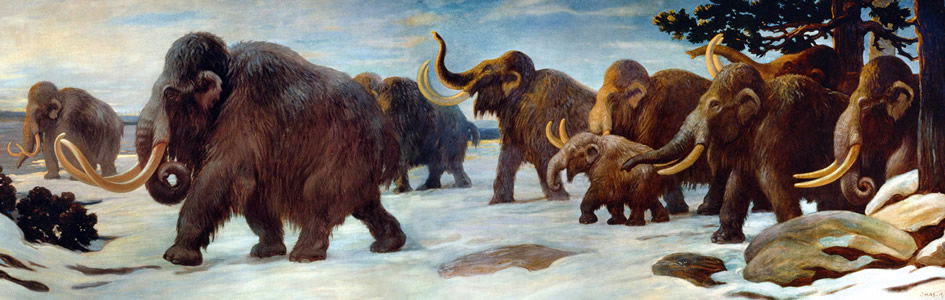
Mammoths, saber-toothed cats, and other giant mammals show up everywhere in popular culture. Many familiar animals possessed unusual traits during the Ice Age (hair on elephants?) or lived in unusual places (giant armadillos in Texas?). The main interest is that they were big. An eight-foot-long beaver—that’s impressive!
Woolly Mammoth Mystery
Why would the woolly mammoth and many other mammals even want to live in northern Siberia? What would they eat in the snowy tundra? As if the mystery isn’t deep enough, it appears that although they lived well for a time, they suddenly went extinct along with dozens of other large mammals and birds.
Megalonyx
One of the most common giant sloths known from North America is Megalonyx jeffersonii. Fossils of this extinct animal are found all over the continent in sedimentary deposits formed just prior to and during the Ice Age that occurred after Noah’s Flood.
Articles About Ice Age Animals
-
“Mr. Ice Age” Solves Woolly Mammoth MysteryNov. 11, 2000
The woolly mammoths have puzzled scientists for hundreds of years, but Ice Age researcher, Mike Oard, has proposed a radical solution in the latest issue of TJ.
-
Magazine ArticleMammoth Among the Pharaohs?Sept. 1, 1997, pp. 6–7
A mammoth in an Egyptian painting? Surely not—haven’t we been told in textbooks that mammoths definitely died out some 9,500 years ago?
-
Magazine ArticleMessages on StoneMarch 1, 1997, pp. 20–23
It was once held that mammoths and mastodons became extinct 30,000 to 40,000 years ago.
-
Magazine ArticleAre Mammoths Still Alive?Sept. 1, 1993, pp. 23–24
Two Russian scientists have found the remains of a group of woolly mammoths, on an island off northeastern Siberia, which give radiocarbon ages of less than 4,000 years.


Support the creation/gospel message by donating or getting involved!

Answers in Genesis is an apologetics ministry, dedicated to helping Christians defend their faith and proclaim the good news of Jesus Christ.
- Customer Service 800.778.3390
- Available Monday–Friday | 9 AM–5 PM ET
- © 2026 Answers in Genesis