

Ice Age
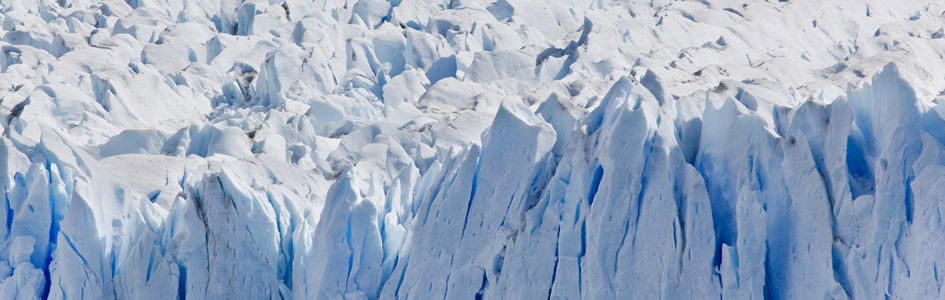
The Ice Age was a period of several hundred years that began within a short time following the global Flood of Noah’s Day. During this time, global temperatures cooled and glaciers covered one-third of Earth’s surface. The Flood’s after-effects, such as warmer oceans and cooler air temperatures, created the necessary conditions.
When Was The Ice Age?
The Bible gives us the big picture of human history—as well as some critical details—which helps us narrow down when the ice built up and then melted away. After two centuries of research, we now have enough information to begin recreating scenes from the rise and fall of the Ice Age.
What Started the Ice Age?
Two particular aspects of the Flood were instrumental in causing the Ice Age: (1) extensive volcanic activity during and after the Flood, and (2) the warm oceans following the Flood. We know the extent of the Ice Age because the glaciers left features on the landscape similar to features we observe around glaciers today.
Woolly Mammoth Mystery
Woolly mammoths probably died after the Flood because there are thousands of carcasses scattered across Alaska and Siberia resting above Flood deposits. There must have been sufficient time for the mammoths to have repopulated these regions after the Flood. The post-Flood Ice Age provides an explanation for the mystery of the woolly mammoths.
Gene Study Suggests Native Americans Came from Siberia
As people groups spread out across Asia and into Africa and Europe, a population traversed a landbridge connecting Siberia to North America (a landbridge since submerged in the Bering Strait). From there, the group populated the continent and diversified both genetically and culturally.
Articles About Ice Age
-
Book ChapterOnly One Ice AgeOct. 1, 2004 from Frozen in Time
We often hear glacial geologists speak of numerous ice ages, as if it is certain. They hypothesize up to 30 different ones, each separated by interglacials, during the past 2.5 million years.
-
Book ChapterCatastrophic MeltingOct. 1, 2004 from Frozen in Time
Accelerated melting would mark the end of the Ice Age.
-
Book ChapterThe Peak of the Ice AgeOct. 1, 2004 from Frozen in Time
After the Flood drained off the land, the world’s ocean and land temperatures were constantly changing as they strove toward the relative equilibrium we experience today.
-
Book ChapterThe SnowblitzOct. 1, 2004 from Frozen in Time
The Genesis Flood provides the two ingredients necessary for an Ice Age. From this point on, we can use basic meteorology to estimate the storm patterns and where ice sheets would develop.
-
Technical Research PaperIce Cores vs the FloodAug. 1, 2004, pp. 58–61
Show that ice core dating methods are not independent and open to significant reinterpretation. The root of the problem is the uncritical acceptance of the uniformitarian paradigm.
-
Research Paper'Snowball Earth'—A Problem for the Supposed Origin of Multicellular AnimalsApril 1, 2002, pp. 6–9
For creationists, the rocks and their associated ‘glacial diagnostic features’ can be explained very easily. They are the result of gigantic submarine landslides in a warm ocean in the Genesis Flood.
-
Technical Research PaperWild Ice-Core Interpretations by Uniformitarian ScientistsApril 1, 2002, pp. 45–47
Uniformitarian scientists derive many more ‘annual layers’ in the Greenland ice cores than creationists because of their assumed old age time scale.
-
Lots of Ice, Too Much AgeMarch 19, 2002
Twentieth Century Fox has turned the period of Earth history known as the Ice Age into an animated movie for children called Ice Age.
-
Technical Research PaperDo Greenland Ice Cores Show over One Hundred Thousand Years of Annual Layers?Dec. 1, 2001, pp. 39–42
It is the Greenland Ice Sheet that exhibits annual cycles of one or more of the variables down an ice core.
-
Technical Research PaperThe Extinction of the Woolly Mammoth: Was It a Quick Freeze?Dec. 1, 2000, pp. 24–34
Mammoth remains have puzzled scientists and laymen for hundreds of years.
-
More on the Ice AgeNov. 5, 1999
This article discusses the weather after the global flood and the conditions needed to create an ice age.
-
Was There an Ice Age?Dec. 29, 1997
This article discusses the possiblity of there having been a global ice age following the global flood.
-
Technical Research PaperRapid Changes in Oxygen Isotope Content of Ice CoresApril 1, 1997, pp. 52–60
Oxygen isotopes in ice cores extracted from polar regions exhibit a decreasing trend in the ratio of the heavy to light isotopes from the beginning of the Ice Age to its end.
-
Magazine ArticleHotting Up For an Ice AgeJune 1, 1994, pp. 22–23
Ask just about anyone, ‘Was the Ice Age caused by things getting colder or warmer?’ They will almost certainly say, ‘That’s obvious. Colder, of course!’
-
Magazine ArticleThe Ice AgeMarch 1, 1989, pp. 10–12
What do you know about the Ice Age? How does it fit into world history?
Support the creation/gospel message by donating or getting involved!

Answers in Genesis is an apologetics ministry, dedicated to helping Christians defend their faith and proclaim the good news of Jesus Christ.
- Customer Service 800.778.3390
- Available Monday–Friday | 9 AM–5 PM ET
- © 2026 Answers in Genesis