


Creation vs. Evolution
Creation vs. evolution is not a battle of science vs. the Bible or science vs. faith. It’s a battle between two starting points; God’s Word and man’s word. Which starting point you chose will determine how you interpret the evidence.
Creation vs. Evolution Terms
In the creation/evolution controversy and battle over biblical authority, much of the dispute may become clearer if writers would carefully provide readers with precise definitions of terminology. These definitions may help clear up confusion.
Hypothesis or Fact?
Why is it that evolutionists are unwilling to allow for competing models, i.e., creation or even intelligent design? The hypothesis of evolution changes every year; if one theory is said to be fact, but then a year later is shown to be wrong, then how can it be fact in the first place? A true fact is something that never changes.
Creation Vs. Evolution? Or Creation Vs. Science?
Can science and religion get along? Some secular scientists do seem to be making an effort to reach out; the problem is that they are only reaching out to religious individuals who won’t let their faith “get in the way” of science.
Creation Undermining Science?
Russell Garwood in his article “Reach out to defend evolution,” complains that creationists present “perceived gaps in scientific knowledge as evidence in support of theistic world views.” Taking a biblical stand does not undermine science; it illuminates science, just like reliable eyewitness testimony enables a detective to correctly interpret the circumstantial evidence at the scene of a crime.
Articles About Creation vs. Evolution
-
Aug. 9, 2026 from Answers Magazine
It is often claimed that it takes more faith to believe in evolution than creation.
-
July 1, 2025 from Answers Magazine
Understanding the history of creationism better equips us to defend the authority of God’s Word.
-
Jan. 1, 2025 from Answers Magazine
For the past 200 years, Christian scholars have reinterpreted the Genesis creation account in various ways. However, there are only two overarching viewpoints among the range of interpretations.
-
Sept. 1, 2024 from Answers Magazine
Like a TV courtroom drama, evolutionists present their case as though it’s open and shut. But we know something is missing.
-
Jan. 11, 2024 from Ken Ham Blog
We aren’t surprised that creation is considered a minority position in a study from seven different countries regarding what they believe about evolution.
-
Nov. 29, 2019 from The New Answers Book 4
The ten best evidences for a young earth and creation including sea floor sediment, soft tissue in fossils, carbon-14, short-lived comets, and more.
-
Nov. 23, 2019 from The New Answers Book 4
There is much debate about the nature of science and religion. Some argue the two areas give us understanding in distinct ways. But should there be a battle?
-
Feb. 4, 2019 from Ken Ham Blog
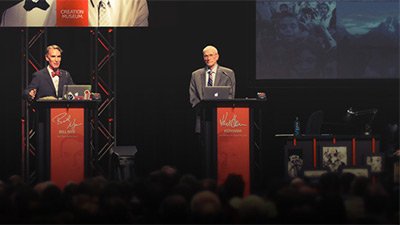
It’s hard to believe it’s already been five years since my debate with iconic TV personality and ardent atheist and evolutionist, Bill Nye, “the Science Guy.”
-
Sept. 2, 2018 from Answers Magazine
If creationists are unwilling to change their basic beliefs, does that mean they’re not true scientists?
-
Oct. 8, 2017 from Answers Magazine
One of the big dangers in sharing our faith is to get sidetracked. It helps to acknowledge areas of agreement before getting into the deeper issues.
-
Aug. 8, 2015 from Answers in Depth
A recent two-part piece on The BioLogos Forum admits that meshing evolution and the image of God that all humans possess is a “challenging issue.”
-
Magazine Department ArticleWar on BeliefJuly 1, 2015 from Answers Magazine
Being featured in a two-page spread in National Geographic is not always a compliment for Christians.
-
June 14, 2015 from Answers Magazine
An old French essay “On Liars” contains a little gem that may help you greatly in any debate about evolution and creation.
-
Bill Nye’s Gift to Ken HamJan. 12, 2015
The debate with Bill Nye really illustrated the clash of two worldviews—choosing to decide truth for ourselves instead of trusting God’s Word.
-
Magazine Department ArticleCreation Never Left Behind—Interview with Dr. Tim LaHayeJan. 1, 2015 from Answers Magazine
Dr. Tim LaHaye shares his perspective on the Bible teachings of the Creation and the Bible teachings of the end times.
-
Magazine Department ArticleNobody Knows the Rubble I’ve SeenJan. 1, 2015 from Answers Magazine
Since 1995, Associates for Biblical Research has been digging a few miles north of Jerusalem at Khirbet el-Maqatir, the probable city of Ai.
-
Magazine Department ArticleFamily-Friendly WickednessJan. 1, 2015 from Answers Magazine
Depicting the pre-Flood world at the Ark Encounter in northern Kentucky presents a challenge for designers.

















Support the creation/gospel message by donating or getting involved!

Answers in Genesis is an apologetics ministry, dedicated to helping Christians defend their faith and proclaim the good news of Jesus Christ.
- Customer Service 800.778.3390
- Available Monday–Friday | 9 AM–5 PM ET
- © 2026 Answers in Genesis