


Hidden Evolutionary Bias: A Dangerous Spiderweb
I fell in love with dinosaurs at age five. Prehistoric was the first word I looked up in a dictionary, and I could recite all the geologic epoch names when I was seven. At the same time, I was growing up in a Christian home, and I went to a Bible-believing church. But I heard no teaching about creation or Noah’s flood.
That is, I heard no teaching about creation or Noah’s flood until I was 14, in 1969. Dr. Henry Morris came to speak at my church because he was invited by an influential member. Then my dad got me a copy of Dr. Morris’ 1962 book The Genesis Flood, coauthored by Dr. John Whitcomb. This groundbreaking book launched the modern young-earth creation movement. It impressed me with its reverence of Scripture, logic, and superior explanation of geologic features like fossil mass graveyards and out-of-place rock layers. It also helped me feel I didn’t need to be embarrassed before my evolution-pushing atheist classmates.
Fast-Forward to College
The year was 1975, half a century ago. I was 19 at a conservative midwestern Christian college in a philosophy of science course. Mid-course, I gave the professor my copy of The Genesis Flood for consideration because I thought it deserved some comment. Boy, did I ever get the comment.
“I see I will have to devote a whole lecture to Dr. Morris. It’s been a long time since I read such a thoroughly bad book.”
So began a lecture by a learned, erudite, and well-respected Christian philosophy professor. As he spoke, his manner was fatherly, as though he was warning us of a dangerous pitfall. I wish I had known that he himself was leading me into a pitfall.
The professor didn’t mention the real evidence Morris gave, like thick mass fossil graveyards. Instead, he focused intensely on what he considered a grave procedural violation. He argued that creation science was tainted because Dr. Morris and other creationists were biased from the start. “Their minds are made up before they look at the evidence,” he said. He declared that, by contrast, the guys who gave us evolution and long ages were strictly objective scientists following the accumulating data where it led.
At the end, I was deflated and disappointed, but it was hard to argue. After all, the guys who wrote the books and technical articles about evolution seemed purely scientific. Unlike Drs. Whitcomb and Morris, they never said anything about religion or seemed to mix religious overtones into their writing. I was fooled. I soon gave in to being an “origins agnostic”—as long as God did it, that was all that mattered. I didn’t realize I was caught in an invisible spider’s web.
The Spreading Spider Poison
And just as if I were injected with a spider’s poison, something began to happen to me. The meaning of early Genesis became blurry in my mind. And through encountering the “documentary hypothesis” as I researched for my Bible classes, the blurriness began to creep through the rest of the Bible. Sadly, my escalating Bible questions remained unanswered as I was swept along in the rapid current of life, trying to master a medical career and raise a family.
Slowly, imperceptibly, as I was assaulted by the problems and pains of life, the blurriness about the truth of the Bible kept growing until I doubted the Bible was the Word of God. I wasn’t just an origins agnostic—now I was a whole Bible agnostic. I quit reading the Bible and going to church. Life’s raging rapids got worse, and as I went under, I struggled for whatever peace and strength I could grab. I even dabbled in Eastern religions like Taoism.
A Long Road Toward Truth
After vainly searching for peace and strength everywhere else, I slowly came back to the true God. (He won me back by kindness, but that’s another story.) However, I remained an origins agnostic for a while. Evolutionism was still for me, if I may mix metaphors, the Dark Tower that was always the elephant in the room. I always knew that creationists had some good arguments, but they were so outnumbered, outshouted, and outflanked that I couldn’t get a clear picture. For every good point they made, Bible critics came up with several rapid-fire stories to oppose it, often delivered with snobbish scorn. This made it very hard for me to build a consistent Christian worldview.
I had several major milestones in coming back to firm faith in God’s Word.
One was my wife encountering Alpha Omega Institute, a creation apologetics ministry, at a homeschool seminar. She persuaded me to read Evolution: A Theory in Crisis by agnostic molecular biologist Dr. Michael Denton. To my surprise, he completely demolished the Dark Tower using only sound evidence and logic. He had a comprehensive and systematic approach to all his main arguments that could not be outflanked. Very importantly for me, he could not be accused of religious bias in any way.
Also, I came to a friendly and accepting church where the pastor was not ashamed to preach biblical creation. This may seem trivial, but it was encouraging to me to hear six-day creation honored from the pulpit. It emphasizes that young-earth creation should be a big part of the church message, not just found in para-church organizations. (The opposite is also true—it can be very discouraging to hear six-day creation put down from the church pulpit.)
Later, reading The Long War Against God (another classic by Dr. Henry Morris) helped me see the sinister depths of the evolutionary assault against the Bible. In its chapter, “The Dark Nursery of Darwinism,” he shows how Darwin and his associates had evil, anti-Bible assumptions and motives and thus had their own hidden, strong bias. In “The Conflict of the Ages,” he traces the anti-God religion of evolutionism past the Darwinian agnostics to ancient Greek philosophers, Hindu mystics, all the way to the garden of Eden and beyond—even back to Satan’s own initial rebellion. And in “The Everlasting Gospel,” he shows how worshipping “him who made heaven and earth, the sea and the springs of water” (Revelation 14:7) is the foundation of the gospel of Christ throughout time and eternity.
Finally, teaching by Ken Ham helped me get past fuzziness in my thinking about another big root of the creation/evolution problem. He exposed the issue of authority: Ultimately, is God’s Word our final authority, or is it man’s word? Do we trust the infallible Word of the infinite God who cannot lie, or do we trust the word of fallible men whose knowledge is infinitely small, and whose hearts rebel against God? The answer should be obvious to all Christians. Sadly, it’s not. Until it is, AiG will have plenty of work to do. It is past time to zero in on this two-century-old error in the church and kick it all the way out.
Reclaiming Genesis gave me a rock-solid foundation for a rebuilt Christian worldview. Just as my trust in the Bible had fallen book-by-book, now it came back, starting with Genesis, proceeding book-by-book to Revelation.
If I Could Go Back
So, many hard years later, I realized my philosophy of science professor was doing just what he accused creationists of doing—teaching a wrong history and philosophy of science, as well as undeserved slander against fellow Christians like Morris. If I could, I would go back and ask my professor this question: Where is the hard evidence that scientists “came to their evolutionary conclusions from simply deducing the unbiased facts”? I’ve learned those scientists were actually extremely biased. They just hid their motives, mistakes, and biases very well—just like a spider’s web. Their public relations campaign was amazing, far better than their science was. Sadly, they deceived many in the church.
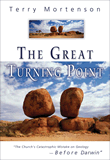
AiG’s Dr. Terry Mortenson has done us immeasurable service in shining a light on this dark chapter in the history of both science and the church. His PhD research extended Dr. Morris’ work of exposing the myth of unbiased evolutionary scientists. In his book The Great Turning Point, he exposes how church leaders compromised with deistic/atheistic old-earth geologists in the early 1800s. In his DVD presentation The Origin of Old-Earth Geology & Christian Compromise in the Early 19th Century, he reveals the names and philosophical biases of the men most influential in turning the church from young earth to old earth. Nearly all were deists or atheists, some with clear anti-Bible agendas. Two of them were clergy leaders of the Church of England and also professors of geology at Oxford and Cambridge—both learned men but sadly swept away on the tide of philosophical naturalism that was inundating Europe. Naturalism drove premature and just plain wrong data interpretation—the very opposite of the narrative I was taught at a Christian college. And those few clear-sighted theologians and competent “scriptural” geologists who refused to compromise and voiced valid objections? They were scoffed at and politically outmaneuvered by the secular, and even Christian, old-earth leaders.
To this day, there is a strong presumption—even in the church—that evolutionists are unbiased scientists and creationists are not. What a tragedy this has been for the church.
Thus, the charge of bias against young-earth creationists is profoundly hypocritical. The old-earthers accused (and still accuse) the young-earthers of being just what they themselves are. To this day, there is a strong presumption—even in the church—that evolutionists are unbiased scientists and creationists are not. What a tragedy this has been for the church, which has thus failed to fulfill its God-appointed role as “a pillar and buttress of the truth” (1 Timothy 3:15).
Final Encouragement
It took me decades to realize that the religious overtones were very much present in evolutionists’ conclusions but artfully concealed—just like a spider’s web ready to trap the inexperienced. Thankfully, I did come back to the true God and his Word, but my heart grieves for the many who take the path away and don’t come back. Sadly, I lost some of the best years of my youth for joyfully serving God. That’s why in later years, as I taught Awana kids at church, I encouraged them to stay true to the Lord all their lives—because, as I told them, if Satan can’t have your soul forever, he will gladly use doubt to steal as many of your good years as he can.
There has been great growth in Answers in Genesis and other Bible-affirming creation organizations in recent decades—a cause for encouragement and rejoicing. Still, much remains to be done, not only in science but also in rebuilding a true view of God and his Word. We need creation-minded young historians to join Drs. Mortenson and Morris in telling the real story of how the world and then the church went wrong, first about earth’s past and then life’s past, thus helping everyone avoid evolutionism’s deadly spiderweb.



Support the creation/gospel message by donating or getting involved!

Answers in Genesis is an apologetics ministry, dedicated to helping Christians defend their faith and proclaim the good news of Jesus Christ.
- Customer Service 800.778.3390
- Available Monday–Friday | 9 AM–5 PM ET
- © 2026 Answers in Genesis