


How Can I Become a Creation Scientist?
I’ve been asked this question many times in my career at Answers in Genesis, and it always thrills me when young people ask. None of us are getting any younger, and I’m consistently thinking about the next generation of creation scientists that will one day hold my job and that of my colleagues!
First, what is a creation scientist? Broadly, it could be any scientist who is also a biblical creationist. This would apply to medical doctors and others whose work and research may not directly focus on answering questions relevant to the creation/evolution debate. For this article, I’m going to define it narrowly as a scientist who wants to research and develop models that answer questions directly related to biblical creation. This is true of me and other scientists like Dr. Nathaniel Jeason, Dr. Andrew Snelling, and many others.
Most of us didn’t start with the goal of being a creation scientist, and the path to becoming one may not be linear.1 However, it’s exciting to see creation research labs and monetary support growing such that future creation scientists may have a more direct path. So where do you start, and how do you get there?2
High School
- Read the Bible and creation apologetics books. You MUST know the Bible well. What does it say (and not say) about creation, the Fall, the Flood, and more. With an interest in science, you’ll want to read books like Glass House, The New Answers Books, Quick Answers to Tough Questions, A Flood of Evidence, Taking Back Astronomy, and The Young Earth. These will help you get a comprehensive view of creation science at a level that is age appropriate.
- Study hard and do well in your science and math classes. Take special note of where you excel (and don’t excel!). For example, I struggle with math, so chemistry or physics would not have been a good field for me. You will need to get a terminal degree in your field (usually a PhD), so plan on four years of college and five to six years of graduate school. If you want to learn science from a biblical worldview, check out our year-round high school science labs or summer lab intensives offered at the Creation Museum.
- Explore the modern creation scientist list. This is a great way to see the different fields that creation scientists are pursuing, and you can read more in-depth about some of the scientists.
- Visit the Creation Museum and Ark Encounter with your family. This a great way to build your biblical worldview. Presentations are given regularly at both attractions by AiG scientists and speakers. Look at the website schedule and plan to attend and speak with us afterward at the meet and greet. If a visit is not possible, check out the many presentations by our team on Answers TV.
- Hone your writing and presenting skills. You will do a lot of both as a creation scientist. Research needs to be disseminated to fellow creation scientists but also laypeople. Start cultivating the ability to make complex scientific topics understandable to people with little scientific background.
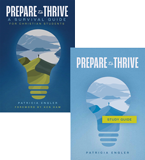
- Get ready for college. Whether you’re attending a secular or Christian college,3 you need to have a good foundation in what you believe and why. Even many Christian colleges are compromised on Genesis and don’t teach it as literal history.4 I highly recommend reading Prepare to Thrive. This book will help you learn how to think critically and gives lots of practical advice for navigating ideas in college and the workplace that are contrary to a biblical worldview. If you want to attend a college that stands with AiG on the truth of God’s Word beginning in Genesis, I recommend attending our yearly Creation College Expo.
College
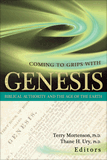
- Continue to read creation apologetics books and the Bible. You can handle higher-level science and theology now, so check out Replacing Darwin, Traced, The Genesis Flood Revisited, The Expanse of Heaven, The Created Cosmos, Coming to Grips with Genesis, and The Ultimate Proof of Creation. Dr. Jeanson’s book A New Way to Win will encourage you to see “how creation science is turning the tide in the origins debate.”
- Join the Creation Research Society (CRS) and any local creation organization. CRS is a professional society for creation scientists. Students (known as “future leaders”) can get a free membership! This gives you a subscription to Creation Research Science Quarterly (CRSQ, an interdisciplinary scientific journal), discounts for the bookstore and yearly conference, and access to the CRSnet discussion group.
- Attend creation science conferences. Many of these occur in the summer months when you’re on break. I highly recommend the annual CRS meeting. This will give you the opportunity to connect and build relationships with creation scientists. Many of us enjoy talking with students and mentoring them. The International Conference on Creationism is held every four years and attracts creation scientists from around the world. The conference produces a proceedings of accepted papers that are the very latest in multiple fields of creation science.
- Discover the biggest questions in creation science and what fields need creation scientists the most. Reading creation science literature, networking at conferences, and attending creation science lectures are great ways to do this. This will help you home in on what graduate degree you should pursue and what area to research. Make sure you have a passion for the field you choose. Graduate school is hard, and if you don’t love what you’re doing, you likely won’t succeed.
- Be careful what you share on social media and with others about your biblical creation beliefs. Much of higher education is antagonistic toward Christian students in general but especially those who are biblical creationists in science fields. Today, it’s easy to find out a lot about a person using a Google search and even AI. You will need research experience and references from your professors, so be wise. Jesus told His disciples, “Behold, I send you out as sheep in the midst of wolves; so be shrewd as serpents and innocent as doves” (Matthew 10:16). There were times when Jesus told people (and even demons!) not to tell others who He was or what He had done (e.g., Mark 1:34, 44). He was not ashamed or trying to hide, rather it was not the time or place because He needed to accomplish the plan God had for Him. The same is true when you’re in college and graduate school. It’s best to keep your mouth shut and get the education and training you need, and when the time is right, you can open it!
- Find a good church. This should be a high priority especially if you attend a secular college. You will need the encouragement and support of a local church body as you navigate your studies and college life.
Graduate School
- Continue reading creation apologetics books and the Bible. Read the technical scientific literature offered in Answers Research Journal, CRSQ, and others, especially those that relate to your field of interest. You’ll be doing a ton of reading in graduate school, but this is well worth the effort to help you identify and know the counterpoints to the evolutionary ideas in the secular scientific literature.
- Choose your graduate program and PhD advisor wisely. It’s best to focus on fields that are not heavily influenced by the creation/evolution debate. This may seem counterintuitive, but you’re there to learn how to do science and think critically, and you can do that in just about any good research program and lab. If you’re constantly being bombarded by ideas that are counter to God’s Word, it will be hard not to compromise. For example, I would not recommend getting a degree in evolutionary biology. There’s a very real chance that you would be an author on a paper that espouses evolutionary ideas as truth.
- Find a creation scientist to mentor you. I have done this for several students over the years. We meet via Zoom and discuss life in the lab and outside of it. I find it’s not only encouraging to the student but to me as well. Again, you can find those mentors by attending creation science conferences or in the CRSnet discussion forum.
- Work hard and be ethical. A major problem in science is the fabrication of results and inappropriate use of AI to get publications and research money. You can distinguish yourself with a good work ethic that honors the Lord and may open doors to witness to those around you.
- Find a good church. Again, this should be a priority. Many graduate students turn to alcohol and drugs to relieve stress. I witnessed the tragic effects of this many times in graduate school. Solid Christian friends and church members can help you navigate the sometimes-treacherous road of grad school and life in your 20s.
- Celebrate when you receive your terminal degree and thank the Lord for bringing you through! It’s a very long and hard road at times but don’t lose sight of your end goal.
Professional Career
There are many options now open to you. If you’re interested in pursuing research in a lab, you will likely need to complete a postdoctoral fellowship (typically 1–3 years). From there, you may join a lab at a university or in industry as a research scientist with the goal of one day leading your own lab. You may decide you’d like to teach at the college or grad school level. Many professors at large universities do both teaching and research, or you may choose a smaller college where teaching is the focus.
As you choose where to work and what to work on, think about how the research relates to developing creation science models. You may or may not be able to be open about this. Consider writing articles for ARJ, CRSQ, etc. that apply your research to creation models. If necessary, you can write under a pseudonym. Some science fields (like biology) are more hostile to creation science than others, so you’ll need to use wisdom as you navigate a professional career in secular settings.
Your expertise in science shows people that Christians have a reasoned faith and not a blind one.
Creation science research facilities are growing, and you may be able to work at one of these. You could also work at a Christian college or at a Christian organization that focuses on biblical authority and creation like AiG. I have done the latter two since receiving my PhD, and it has been a blessing. However, there is a price to pay. I will likely never be able to work in a secular university setting, publish papers in secular scientific journals, or receive research money from secular institutions. Be sure to count the cost, but if it is God’s call on your life, you will find it’s a price worth paying. Your expertise in science shows people that Christians have a reasoned faith and not a blind one. They can trust God’s inerrant Word because God authored it and science confirms it.



Footnotes
- Read this article about the path several creation scientists have taken, Melissa Web, “Creation Scientists—The Next Generation,” Answers in Genesis, September 1, 2018, https://answersingenesis.org/creation-scientists/creation-scientists-next-generation.
- Read this article with advice from many AiG apologists, Ken Ham, “I Want to Be a Creation Apologist,” Answers in Genesis, March 25, 2025, https://answersingenesis.org/education/want-to-be-creation-apologist/.
- Georgia Purdom, “Should I Only Attend a College That Teaches Biblical Creation,” Answers in Genesis, April 1, 2016, https://answersingenesis.org/public-school/education-in-america/should-i-only-attend-college-teaches-biblical-creation.
- Ken Ham, “Concern for the Curriculum,” in Already Compromised, Ken Ham and Greg Hall (Master Books, 2011), https://answersingenesis.org/college/concern-for-the-curriculum.

Support the creation/gospel message by donating or getting involved!

Answers in Genesis is an apologetics ministry, dedicated to helping Christians defend their faith and proclaim the good news of Jesus Christ.
- Customer Service 800.778.3390
- Available Monday–Friday | 9 AM–5 PM ET
- © 2026 Answers in Genesis