

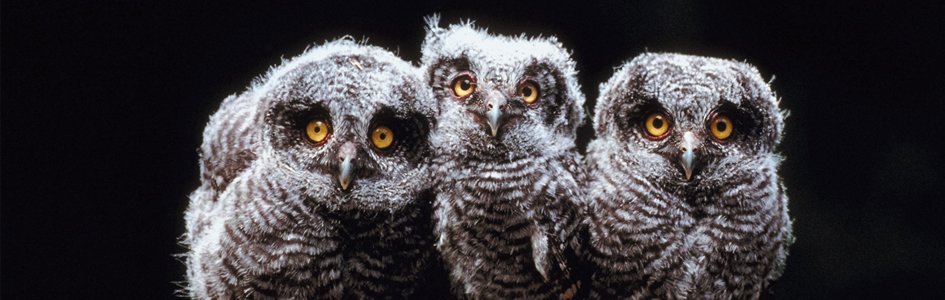
Birds
Articles About Birds
-
A Head Full of MagnetsNov. 21, 2009 from News to Know
Turtles, birds, and butterflies had GPS long before humans invented the device. These creatures migrate thousands of miles each year to find food, to find breeding grounds, and to escape harsher seasons. Now scientists may be one step closer to uncovering how this animal navigation system works.
-
Bird and Baby PhysicsOct. 17, 2009 from News to Know
Yet another experimental study teaches us more about the sophisticated (and, perhaps, surprising) intelligence of crows.
-
National Geographic News: “Giant Toucan Bills Help Birds Keep Their Cool”Aug. 1, 2009 from News to Know
The brilliantly colored bills of toucans aren’t just eye candy. Rather, they play an essential role in helping the birds control their temperature, scientists report.
-
Bird Origin ProblemsApril 11, 2009 from News to Know
Can evolutionists rescue their own model of bird origins?
-
Bird Sets Nonstop Flight Record at 7,257 milesOct. 25, 2008 from News to Know
Boeings and Airbuses of the world, step aside: there’s a newly recognized king (or, in this case, queen) of the long-haul flight.
-
New Study Has Completely Redrawn Tree of Avian LifeJuly 5, 2008
New science has “completely redrawn” the avian tree of life, undoing the previous view of bird relationships.
-
Birds Able to Cooperate and Solve ProblemsApril 5, 2008 from News to Know
A team at the University of Cambridge has found that pairs of birds can solve a problem “as well as” pairs of chimps, reports BBC News.
-
Modern Birds Existed Before Extinction of DinosaursFeb. 16, 2008
Birds were around long before the downfall of the dinos, according to new research that studies “discrepancies between results from fossils and genetic analyses” of birds.
-
Dec. 5, 2007 from Answers Magazine
So where did penguins come from? The Bible tells us in Genesis 1:20–22 that God created all sea creatures and birds on Day 5 of the Creation Week.
-
Songbird, Sing Me a SongOct. 20, 2007
A press release from Penn State University this week draws attention to the incredible mental capabilities of “ordinary” songbirds.
-
Birds: Better Than the CompassSept. 29, 2007
According to a new study published in PLoS ONE, the ability to see the earth’s magnetic field may be more than fantasy for birds.
-
Evolutionists Won't Hear This Bird's ArgumentSept. 22, 2007
An obituary for a grey parrot named Alex reminds us that evolutionists’ ideas about human origins don’t always—or should we say don’t often?—line up with reality.
-
Birds Make Nest EggsFeb. 24, 2007
A new discovery highlighting bird intelligence, reported in Nature this week, further upsets evolutionary implications that elevate the intelligence of chimps and other primates.
-
Bird-Brained ToolmakersNov. 4, 2006 from News to Know
Scientists have determined experimentally that crows can learn to use tools to some extent.
-
The Bird That Fishes, But Doesn’t FlyMay 24, 2005
How did cormorants first arrive on the Galápagos Islands?
-
Magazine ArticleAir AttackDec. 1, 2004, pp. 28–32
This sounds like something out of a horror movie: an extraordinarily intelligent, playful parrot adapts its diet from seeds and insects to red meat.
-
Technical Research PaperThe Evolution of Feathers: A Major Problem for DarwinismApril 1, 2003, pp. 33–41
One of the most difficult issues related to bird evolution is the evolution of feathers. Feathers are complex, designed structures required for flight, and are today found only on birds.
-
Magazine ArticleClaws on WingsOct. 1, 1982, pp. 24–25
Did you know that there are three living birds with claws on their wings?
-
Magazine Department ArticleBirds in a Family TreeOct. 1, 2015 from Answers Magazine
A consortium of two hundred evolutionary scientists representing twenty countries wants to answer the question of how birds became so diverse.

Support the creation/gospel message by donating or getting involved!

Answers in Genesis is an apologetics ministry, dedicated to helping Christians defend their faith and proclaim the good news of Jesus Christ.
- Customer Service 800.778.3390
- Available Monday–Friday | 9 AM–5 PM ET
- © 2026 Answers in Genesis