

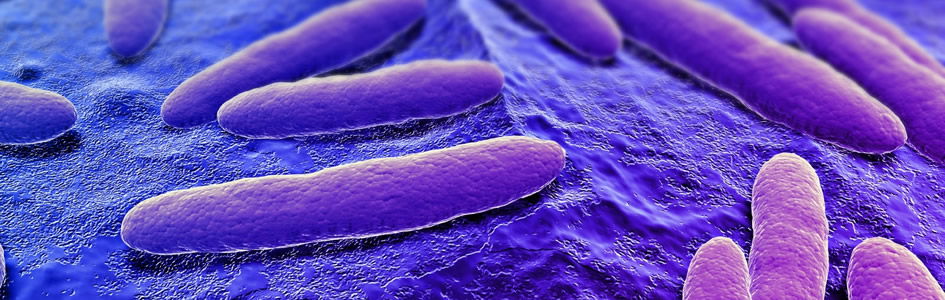
Microbiology
Life’s Support System
The Creator filled the earth with all the chemicals that living things could ever need. But special “go-betweens” were necessary to move these treasures from their safe hiding places and convert them into forms we can use. That’s where bacteria come in.
The Origin of Microorganisms
Evolutionists must explain how cells, once they emerged from lifeless matter, diversified into the many life forms we see today. It is supposed that some extinct ancestor of the archaebacteria and eubacteria developed the necessary biologic machinery to survive.
Microorganism Helps Develop Site-specific Drug Delivery
Who knew that a well-known parasite might lead to the next major breakthrough in medical treatment? Scientists are leading the way to understand how microscopic creatures (primarily Giardia lamblia) move through the bloodstream. The goal? Construct micro-robots that can navigate the dangerous twists and turns of the bloodstream.
Indestructible Microscopic Wonder
Scientists discovered that water bears can survive pressure up to six times the deepest ocean trench’s pressure. When subjected to the complete vacuum of space and direct radiation from the sun, they lived. Water bears can even survive for almost ten years totally dehydrated. To resurrect them, all you have to do is add water.
Articles About Microbiology
-
Nov. 28, 2018 from Answers in Depth
References to Noah’s Ark abound in the culture and even have been used to describe recent efforts to store strains of microbes (instead of animals).
-
Nov. 1, 2018 from Answers Magazine
The cells in your body don’t use just simple boxes to build things. Some appear to employ a surprisingly complex geometric shape.
-
Oct. 3, 2018 from Answers in Depth
Even though some intestinal bacteria strains are pathogenic and deadly, most coliforms strains still show evidence of being one of God’s “very good” creations.
-
June 19, 2018 from Answers in Depth
This article explains the mysterious origin of a new strain of Serratia marcescens that produces prodigiosin up to 40°C without any enrichment to media.
-
Jan. 28, 2018 from Answers Magazine
Scientists are now discovering that our DNA really does have hidden codes that have a practical function and purpose in our cells. Hidden codes pose a real problem for evolution.
-
Jan. 4, 2018 from Answers in Depth
With the correct biblical worldview in mind, Richard Lenski’s E. coli demonstrate an amazingly complex showcase for design by an all-knowing Creator.
-
Oct. 3, 2017 from Answers in Depth
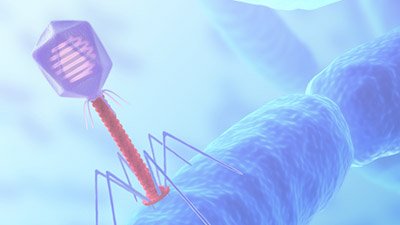
Viruses are amazingly complex and beautiful machines. They exhibit all the hallmarks of being designed, though we often fail to recognize them as such.
-
Sept. 15, 2017 from Answers in Depth
A group of scientists at Tel Aviv University propose that bacteria in our intestines may be responsible for human altruism.
-
July 19, 2017 from Answers in Depth
We read in Genesis 1:31 that God made everything “very good.” If everything that God made was good, where did Giardia come from?
-
May 7, 2017 from Answers Magazine
Bacteria depend on tail-like structures called flagella to get around. But they’re not alone.
-
March 15, 2017 from Answers in Depth
While it’s often swept under the rug, we shouldn’t dismiss the amazing design found in soil particulates.
-
Jan. 25, 2017 from Answers in Depth
The emphasis of this article is to explain some of the “very good” design and purpose of Staphylococci and other good, beneficial bacteria of the nose.
-
Dec. 5, 2016 from Answers in Depth
Even though there are mostly good germs, many tend to focus on only the bad germs. So skeptics question whether pathogens were present on the Ark.
-
In-Depth ArticleEukaryote Without Mitochondria Is Not a Product of EvolutionJune 2, 2016 from Answers in Depth
Named Monocercomonoides, this eukaryotic microorganism doesn’t have the slightest trace of mitochondria. How does it survive?
-
May 12, 2016 from Answers in Depth
The list of beneficial functions for Endogenous Retroviruses continues to grow. ERVs also promote healthy immune responses—another creationist confirmation.
-
How Bacteria Affect Your Everyday LifeApril 13, 2016
We need to balance our understanding of the microscopic world because it is an essential part of and critically affects our everyday life.
-
TechnicalDo Endogenous Retroviruses (ERVs) Support Common Ancestry?Dec. 10, 2015
ERVs are found in the same location in the genome across species, so evolutionists apply their ideas of common ancestry and say ERVs demonstrate evolution.
-
Book ChapterIs Antibiotic Resistance Proof of Evolution?July 3, 2015 from The Genesis of Germs
Antibiotic resistance is one of the most important topics that a beginning biology student going into medicine should learn and understand.
-
July 1, 2015 from Answers Magazine
Evolution would require an enormous amount of change. Modern laboratory experiments have tested bacteria’s ability to change. Is this ability truly unlimited?
-
Book ChapterMicrobes by Design, Example 2, Serratia marcescensJune 26, 2015 from The Genesis of Germs
Another example of design which can be seen in the microbial world is the production of a blood-red pigment made by Serratia marcescens.
-
Book ChapterBacterial Flagella—Icon of the Intelligent Design MovementJune 19, 2015 from The Genesis of Germs
There are many extraordinary examples of design in the microbial world. In this chapter, two examples are given.
-
Book ChapterMicrobes by DesignMay 29, 2015 from The Genesis of Germs
This book will describe designed structures and purposeful functions in microorganisms, explain the origin of disease, and showcase Bible-believing scientists.
-
Book ChapterWhat About Bacteria?Jan. 23, 2015 from The New Answers Book 3
If God finished creation in six days and declared it “very good,” where did disease-causing designs come from?



Support the creation/gospel message by donating or getting involved!

Answers in Genesis is an apologetics ministry, dedicated to helping Christians defend their faith and proclaim the good news of Jesus Christ.
- Customer Service 800.778.3390
- Available Monday–Friday | 9 AM–5 PM ET
- © 2026 Answers in Genesis