

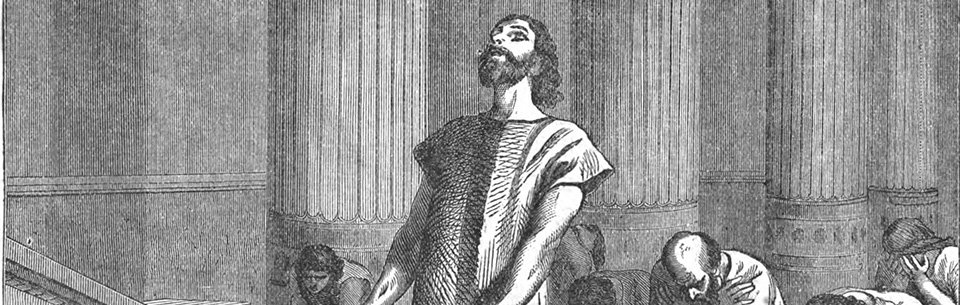
Public domain, via Wikimedia Commons
Does Archaeology Show King Hezekiah's Destruction of Idolatry?
Religious Development in Judah During the Divided Kingdom
In 2 Kings 18:1–3, 22 and 2 Chronicles 31:1, we read about the religious reforms of Hezekiah (from the writers of those books and even the hostile witnesses from Assyria), who is described as doing “what was good and right and faithful before the Lord his God. And every work that he undertook in the service of the house of God and in accordance with the law and the commandments, seeking his God, he did with all his heart, and prospered” (2 Chronicles 31:20–21 ESV). Second Kings 18:5–6 (ESV) describes Hezekiah in this way: “He trusted in the Lord, the God of Israel, so that there was none like him among all the kings of Judah after him, nor among those who were before him. For he held fast to the Lord. He did not depart from following him, but kept the commandments that the Lord commanded Moses.” Second Chronicles 33:1–4 also confirms this by mentioning that his son, Manasseh, reinstated idolatry in the land by rebuilding the high places that his father had destroyed and erecting altars to Baal and Asheroth.
The Earlier Archaeological Data
Biblical archaeologists have had trouble finding evidence of Hezekiah’s reforms in the archaeological record primarily because this occurred shortly before Assyria invaded Judah and captured several fortified cities (most prominently, Lachish). The prevailing thoughts on the historicity of Hezekiah’s reforms (bringing Judah back to the worship of Yahweh and destroying high places, groves, and images of false gods) is in one of three camps:
- The events are just as described in Scripture.
- The events were the consequences of the Assyrian invasion (not reforms by Hezekiah).
- Hezekiah started these reforms, but the average Judahite only carried out Hezekiah’s orders grudgingly and many religious shrines were merely buried and not destroyed (desecrated).
Unsurprisingly, many biblical archaeologists refuse to believe option one. Some claim that because of the lack of field evidence, they cannot fully accept that hypothesis even though Scripture repeatedly states it. Others claim that certain shrines show no evidence of being desecrated or that the cultic centers reopened again after Hezekiah’s death, proving that there was no real reformation.
Some think the reforms were carried out by Hezekiah, but some people did so grudgingly, and once the pressure was off, they reverted to idolatry. When you stop to think about it, isn’t that the entire history of the period of the Judges? Basically “trust in your own counsel until God punishes the nation, then trust in God (until the threat goes away).” This is aptly summed up in Judges 2:
Whenever the Lord raised up judges for them, the Lord was with the judge, and he saved them from the hand of their enemies all the days of the judge. For the Lord was moved to pity by their groaning because of those who afflicted and oppressed them. But whenever the judge died, they turned back and were more corrupt than their fathers, going after other gods, serving them and bowing down to them. (Judges 2:18–19 ESV)
If one were to replace “judge” here with “king,” this would be applicable to the kings of Judah, many of whom were evil and idolatrous, although several were “good.” For example, Hezekiah is described as a good king who “did what was right in the sight of the Lord, according to all that his father David had done” (2 Kings 18:3 NKJV) and also as trusting “in the Lord God of Israel, so that after him was none like him among all the kings of Judah, nor who were before him. For he held fast to the Lord; he did not depart from following Him, but kept His commandments, which the Lord had commanded Moses” (2 Kings 18:5–6 NKJV).
Yet Hezekiah’s son Manasseh is described as rejecting his father’s worship of God:
He did evil in the sight of the Lord, according to the abominations of the nations whom the Lord had cast out before the children of Israel. For he rebuilt the high places which Hezekiah his father had destroyed; he raised up altars for Baal, and made a wooden image, as Ahab king of Israel had done; and he worshiped all the host of heaven and served them. He also built altars in the house of the Lord, of which the Lord had said, “In Jerusalem I will put My name.” And he built altars for all the host of heaven in the two courts of the house of the Lord. (2 Kings 21:2–5 NKJV)
Hezekiah’s Positive Reforms
In the books of 2 Kings and 2 Chronicles, the biblical account goes into much greater detail than what is taught in Judges. We aren’t just told about the destruction of cultic shrines, we are also told about Hezekiah’s positive reforms such as cleaning and repairing the temple, reestablishing sacrifices to God, breaking in pieces the bronze serpent that Moses had made (because the children of Israel burned incense to it), and ordering the Levites and priests to consecrate themselves (2 Chronicles 29). He even reinstated the Passover, which had been neglected. But he then went further and invited the displaced survivors of Israel, which Assyria had conquered, to come worship the true God at Passover (2 Chronicles 30). Scripture records that some men of Asher, of Manasseh, and of Zebulun humbled themselves and came to Jerusalem to observe Passover (2 Chronicles 30:11).
Hezekiah was also involved with defensive fortifications, most notably having the Gihon spring plugged up and rerouting it through a tunnel (aptly named Hezekiah’s tunnel) directly into Jerusalem (2 Chronicles 32:30); shoring up the defenses of Jerusalem; and providing garrisons to other cities to make them stronger and more protected from invasion and sieges (2 Chronicles 32:5–6).
Why Is There a Debate, When the Bible Clearly Teaches These Things?
Many of the more liberal scholars doubt the historicity of Scripture, unless it can be “proven” beyond a shadow of doubt.
Part of the reason is that many of the more liberal scholars doubt the historicity of Scripture, unless it can be “proven” beyond a shadow of doubt. In other words, Scripture is historically “guilty” unless proven “innocent.” Other reasons include overreliance on radiometric and radiocarbon dating methods (uncritically accepting those dates as absolute) and overreliance on the standard Egyptian and Assyrian chronologies. Another reason is the propensity of many biblical scholars to cling to late dates for the composition of biblical events during and after the exile, regardless of overwhelming evidence recorded by biblical writers of events that occurred during their lifetime because they knew the names and titles of foreign dignitaries, accurately recorded the names of ancient cities, and even some customs of the time. Furthermore, much like the discredited JEDP, many biblical historians believe that the books of Kings and Chronicles were heavily redacted and edited by later scholars, much like they erroneously believe that the Pentateuch was. A perfect example of this is found in the quotation below:
When comparing the law of Deuteronomy with the text describing Hezekiah’s reform, it is clear that the latter fulfilled the law in every detail. Bāmāh is the Deuteronomistic (henceforth Dtr.) appellation for forbidden open cult place, and bêt bāmôt is the designation for a forbidden temple. These negative appellations and their referents are counterposed in Dtr. literature to the temple of Jerusalem, the sole legitimate place of worship, which is referred to by “positive” appellations such as miqedāš, hêkāl, bêt YHWH and bêt ’elohîm (Haran 1978:13–25). The interchange of cult places [high places] (bāmôt) and altars (mizbeḥôt) in similar contexts in the Deuteronomic and Dtr. literature is because the altar was the major element in all [non-temple] cult places.
The bronze serpent occupies exactly the same place in 2 Kigs. 18:4 as the graven image (pesel) in the passages of Deuteronomy cited above. . . .
Some scholars have suggested that only the record of the destruction of the Nehushtan [bronze serpent] is original and that v. 4a is an editorial expansion that was borrowed from the description of Josiah’s reform.1
To paraphrase the above statement in light of the assumptions built into it, there seems to be a “too good to be true” mentality here. Basically, the text of 2 Kings 18 and 2 Chronicles 29–32 fits too closely to the curses and proscriptions listed in Deuteronomy 7:5 and 12:2–4. Therefore, the recording of Hezekiah’s reforms must have been concocted by a priestly line who wanted to show Yahweh’s superiority over the other nations’ gods. There is also the claim that the priests must have or may have conflated Josiah’s reforms with Hezekiah’s. This is essentially a catch-22. If the 2 Kings and 2 Chronicles text don’t match those verses, then we have an issue of doubt being cast on biblical inerrancy, but if the text does, then it must have been written into the text by overzealous priests and scribes.
Is There Any Recent Evidence That Supports Hezekiah’s Reforms?
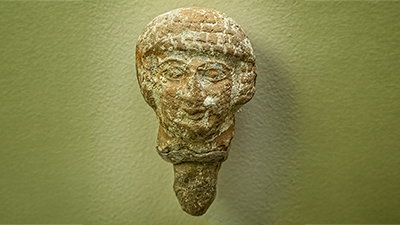
The above-quoted article was written in 1995, and there have been lots of archaeological finds in Israel in the past 30 years. Has anything else come to light to corroborate Hezekiah’s reforms? Yes, and ironically, many of the naysayers of there being evidence of Hezekiah’s reforms have now switched sides, claiming that there is sufficient archaeological evidence. In regard to Tel ‘Eton, there seems to have been a cancellation and burial of a domestic cultic standing stone or massebah, measuring approximately 4.6 feet in height and weighing about 1,650 pounds.
Indeed, we have seen that despite the doubts, most scholars insist that the archaeological evidence supports the historicity of the reform. As Herzog (2010: 196) noted, “The detailed discussion about the abolishment of cult at Arad and Tel Beer-sheba shows that one cannot doubt the fact that these cult centers were intentionally abolished,” concluding that the evidence “justifies the conclusion that the acts of abolishment of cult . . . are a result of Hezekiah’s cultic reform.” . . .
. . . Still, it is likely that the desecration in Lachish, like the dismantling operations at Arad, Beersheba, and Tel ‘Eton, was intentional and, therefore, hints at a coordinating hand. Thus, insofar as the cancellations were intentional and implemented some time before the Assyrian campaign, it seems that Hezekiah’s reform provides a plausible and suitable historical context.2
Besides Tel ‘Eton, there is a more directly associated cultic desecration, now acknowledged to be part of Hezekiah’s reforms in Lachish.
Most surprising of all was that in one corner of the room, the archaeologists discovered a seat carved of stone with a hole in the center—what Ganor and Kreimerman believe to be a toilet. This latrine, Ganor and Kreimerman say, was unquestionably a form of desecration of this shrine room—a practice described in the Hebrew Bible [ironically by King Jehu of Israel, who is not described as a good king, since none of the kings of Israel were]: “Then they demolished the pillar of Baal, and destroyed the temple of Baal, and made it a latrine to this day” (2 Kings 10:27).3
Additionally, there is also a site in Arad that is considered to be part of Hezekiah’s reforms.
Arad is another case in point. Its large sacrificial altar and the small incense altars were cancelled by careful construction (e.g., Aharoni 1968) that was cautious not to harm the objects themselves (this is so regardless of the hot debate concerning the date of these events).4
Faust in his Tel ‘Eton article explains the difference between desecration, destruction, and cancellation.
While the distinction between destruction and burial of religious (and, in some contexts, also non-religious, symbolic) objects is important, in the following, I would like to elaborate on a third, intermediate option. Such third-option events occur when there are religious changes, and the intent of the reformers is indeed to desecrate preexisting symbols and practices, but the people who carry out these operations still respect and even revere the old objects. They thus follow the orders of the new regime and cancel these objects (or buildings), but they do so with care and (if possible) avoid defiling them. Thus, there is a distinction between the reformers’ intents and those of their agents.5
The situation at Tel ‘Eton suggests something similar. While the standing stone was cancelled, it was not removed, and there are no signs of intentional defilement (the stone could have been broken into small pieces and thrown away). Although it was not standing anymore, the inhabitants of the house built a platform around it, concealing it and perhaps even preventing people from unintentionally walking on it. If there was an act of desecration, it was minimal, and nothing like the one suggested for the Lachish gate shrine. It appears that the inhabitants of Building 101 abided by the new religious norms but were not happy to desecrate an element that was the focus of their household worship for so long. They, therefore, dismantled the massebah and incorporated it into the new platform.6
It should be stated that the cult places in Arad and Beer-Sheba had been destroyed before the Assyrian invasion of 701 by their inhabitants themselves. This indicated changes in religion as well. Since in the case of Arad we have to do with a frontier royal fortress, it is hard to suppose that desecration of the temple in such a place could have taken place without the king’s consent. In the period that is of interest to us, that is in the second half of the 8th c., the Bible mentions only one religious reform accomplished by the king; therefore, it seems logical to associate the findings from Arad and Beer-Sheba with Hezekiah’s activity.7
Conclusion
Even many skeptical biblical archaeologists have conceded that there appears to be sufficient evidence “on the ground” supporting the Bible’s accounts in 2 Kings and 2 Chronicles of Hezekiah’s religious reforms. While it is true that there are still some holdout naysayers, the pendulum appears to have swung in favor or archaeology corroborating what is written in Scripture.
We have to keep in mind that archaeological findings cannot “prove” the biblical accounts because the Bible is the authority in everything it reveals, including both historical and theological truth. But we see that some biblical archaeologists (in this instance, specifically Nadav Na’aman) cast doubt on the divine inspiration of Scripture and have claimed, “The Chronicler had no source other than Kings for his account of Hezekiah’s reform, and that the description in 2 Chr. 29–31 is not historically reliable. His description would best be omitted from the historical discussion.”8
The ideas that there is error, added information, and “Deuteronomistic redacting” of preexilic texts in Scripture is incompatible with inerrancy.
Do we even want to allow for the possibility that the Holy Spirit either failed to inspire the Chronicler(s) or that He allowed them to put erroneous information into their texts? Obviously, the answer is no! Wrestling with the interpretation of some parts of Scripture is not of itself a bad thing, especially if your goal is to better understand the passage and you accept the authority of Scripture. The ideas that there is error, added information, and “Deuteronomistic redacting” of preexilic texts in Scripture is incompatible with inerrancy.


Footnotes
- Nadav Na’aman, “The Debated Historicity of Hezekiah’s Reform in the Light of Historical and Archaeological Research,” Department of Jewish History, Tel Aviv University (1995): 181–182.
- Avraham Faust, “Hezekiah’s Reform? A View from Tel ‘Eton on the Religious Development in Judah,” Jerusalem Journal of Archaeology 9 (2026): 50, https://doi.org/10.52486/01.00009.3.
- Robin Ngo, “Ancient Latrine: A Peek into King Hezekiah’s Reforms in the Bible?,” Bible History Daily, Biblical Archaeology Society, June 27, 2019, https://www.biblicalarchaeology.org/daily/news/ancient-latrine-king-hezekiahs-reforms/.
- Faust, “Hezekiah’s Reform?,” 44.
- Faust, “Hezekiah’s Reform?,” 43.
- Faust, “Hezekiah’s Reform?,” 43.
- Maciej M. Münnich, “Hezekiah and Archeology: The Answer for Nadav Na’aman,” Ugarit-Forschungen 36 (2004): 11, https://www.academia.edu/1797701/Hezekiah_and_Archeology_The_Answer_for_Nadav_Na_aman.
- Na’aman, “Debated Historicity of Hezekiah’s Reform,” (1995): 181.

Support the creation/gospel message by donating or getting involved!

Answers in Genesis is an apologetics ministry, dedicated to helping Christians defend their faith and proclaim the good news of Jesus Christ.
- Customer Service 800.778.3390
- Available Monday–Friday | 9 AM–5 PM ET
- © 2026 Answers in Genesis