


This and That
How Delightful!
“Great are the works of the Lord,” the psalmist said, “studied by all who delight in them” (Psalm 111:2). For the last 20 years, the Answers team has delighted in studying God’s works in his world. As we research and write, edit and design, we often find ourselves in awe over tardigrades and tenrecs, the Grand Canyon and cilia, poison dart frogs and puffins, and everything in between.
We’re so blessed to have you studying and delighting with us. To celebrate our twentieth year, check out these 20 updated facts from the first 20 volumes of Answers magazine.
- More than 600,000 gallons (2,271 kl) of water thunder over Niagara Falls per second at its greatest flow.
ISSUE 1.1, “Creation Road Trip,” 2006
- Some sea turtles dive to depths that would cause their air-filled lungs to collapse. To avoid this catastrophe, they expel air from their lungs and rely on the oxygen in their blood and muscles.
ISSUE 2.3, “Sea Turtles—One of Today’s ‘Living Fossils,’” 2007
- Any two humans are over 99% identical at the genetic level. A mere .4% makes up the many differences we see among people throughout the world.
ISSUE 3.3, “DNA: The Language of Life,” 2008
- The heart must beat 100,000 times a day to push blood through at least 60,000 miles (96560.64 km) of blood vessels, some as narrow as one red blood cell.
ISSUE 4.4, “Heart—Constantly Beating Death,” 2009
- The microscopic water bear (tardigrade) can survive in almost any environment, including outer space!
ISSUE 5.3, “Water Bear Wonders,” 2010
- The ocean waters contain an estimated 10 billion tons of gold.
- Our feet are designed with four arches to hold the weight of our bodies as we move.
ISSUE 7.3, “The Barefoot Professor,” 2012
- Spiders have a special sixth sense that lets them identify the size of insects that land on their webs.
ISSUE 8.1, “Sixth Senses in Animals,” 2013
- Icefish have a special protein in their blood that acts like antifreeze.
- Human ears can sense vibration frequencies between 20 and 20,000 cycles per second (hertz). High-pitched tones cause the eardrum to vibrate 20,000 times each second, or more than one million times in 50 seconds, without bursting.
ISSUE 10.4, “Selective Hearing,” 2015
- Cuttlefish can’t move their eyes around in their sockets. Instead, they reshape their entire eyeball to focus on the world around them.
ISSUE 11.2, “Masters of Disguise,” 2016
- In summer, a caribou’s footpads grow large and sponge-like to navigate the slippery ground. In winter, the pads shrink so their sharp hooves can grip the ice.
ISSUE 12.5, “Journey Home,” 2017
- Wounds heal twice as fast during the day because skin cells for healing (fibroblasts) turn off at night.
ISSUE 13.5, “A Time for Everything,” 2018
- Babies are born with twice as many tastebuds as adults.
ISSUE 14.4, “Playing by Different Rules,” 2019
- About 90% of matter in the universe is invisible dark matter.
ISSUE 15.3, “Dark Matter—What’s the Matter?,” 2020
- A flea can jump 150 times its body height—the equivalent of a human clearing a 60-story building.
ISSUE 16.3, “Animal Olympics,” 2021
- A shark grows over 30,000–50,000 teeth in its lifetime. When it loses one, a new tooth is ready to move in.
- The grumbling contractions you feel when you’re hungry are fluid and gas moving in your intestines. This sensation is called borborygmus.
ISSUE 18.1, “Time to Eat,” 2023
- Each colony of naked mole rats has its own dialect of chirp.
ISSUE 19.1, “Speak!,” 2024
- The US alone used over 1 billion tons of sand in 2023. That much sand could cover the entire state of Alaska in a layer almost seven feet (2 m) thick!
ISSUE 20.1, “Sand—It Gets Everywhere,” 2025

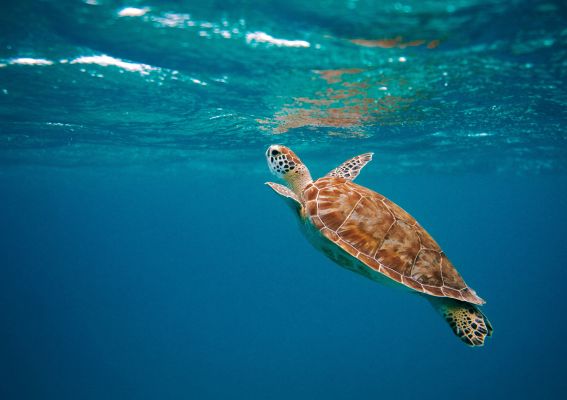
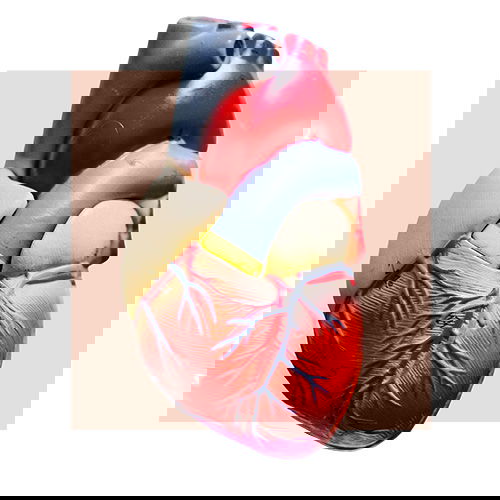

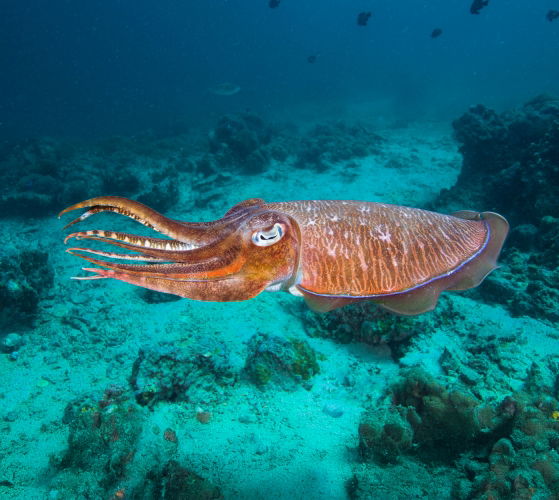

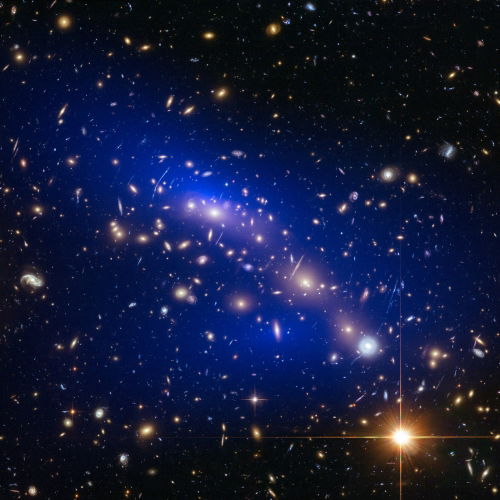
Photo by NASA, ESA (CC BY 4.0)

Answers Magazine
July–September 2025

This anniversary issue celebrates a legacy of unwavering commitment to a biblical worldview and the ongoing impact of creation-based apologetics.
Browse Issue
Support the creation/gospel message by donating or getting involved!

Answers in Genesis is an apologetics ministry, dedicated to helping Christians defend their faith and proclaim the good news of Jesus Christ.
- Customer Service 800.778.3390
- Available Monday–Friday | 9 AM–5 PM ET
- © 2026 Answers in Genesis