
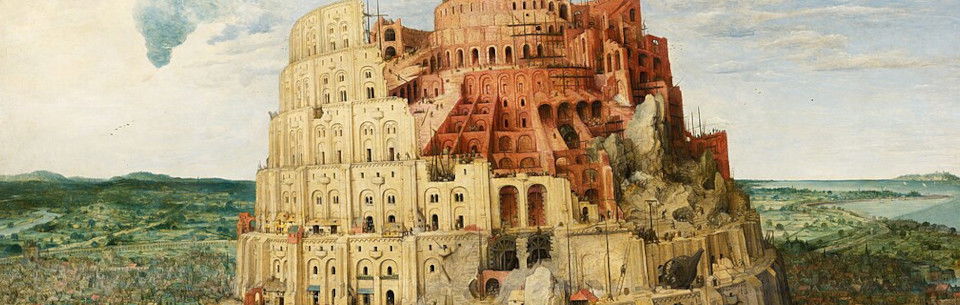
Pieter Brueghel the Elder, Public domain, via Wikimedia Commons
Did Humanity Really Disperse from Babel?
Historical and biblical evidence for Babel
Critics of the Bible frequently dismiss the historicity of important events recorded in its pages. This is particularly true with the first 11 chapters of Genesis. We are told that the creation account contradicts settled scientific research, that man came from apelike ancestors instead of being created by God from the dust of the ground, and that there is no evidence that a worldwide flood ever occurred on the earth. Another key incident in those chapters dismissed by these critics is the Babel event recorded in Genesis 11:1–9.
Not Just a Tower
When speaking of Babel, Christians often focus on the “tower of Babel,” but the sin of the people there was not limited to the construction of this infamous edifice.
When speaking of Babel, Christians often focus on the “tower of Babel,” but the sin of the people there was not limited to the construction of this infamous edifice. God had instructed Noah’s descendants to “be fruitful and multiply, increase greatly on the earth and multiply in it” (Genesis 9:7). Implied in this command is that humanity would spread throughout the world, but even though the generations that followed did multiply, they refused to spread around the globe. Instead, they settled in “a plain in the land of Shinar” and said, “Come, let us build ourselves a city and a tower with its top in the heavens, and let us make a name for ourselves, lest we be dispersed over the face of the whole earth” (Genesis 11:2, 4).
The building of the tower and the city were in defiance of God’s command to fill the earth. The people reference their defiant ways when they stated their purposes—they wanted to make a name for themselves and avoid being dispersed over the face of the whole earth. They knew they were supposed to fill the earth, but they refused. These arrogant rebels were subsequently judged for their prideful actions.
Consider the contrast with the next narrative in Scripture. In Genesis 12:1–3, God called Abram (later Abraham) out of his own country to move to an unfamiliar land, and in doing so, God would bless him, make a great nation from him, and make Abram’s name great. All the world would be blessed through Abram. So Abram humbled himself and obeyed God, and God made his name great while the rebels at Babel exalted themselves and were brought low by God. The words of Jesus in Matthew 23:12 describe these situations well: “Whoever exalts himself will be humbled, and whoever humbles himself will be exalted” (cf. James 4:6; Psalm 138:6; Proverbs 3:34).
We can learn this important spiritual lesson from the Babel account, but the question remains: Did the events and Babel ever take place or are they part of some primeval mythology, as proposed by many liberal theologians and skeptics?
The Bible Tells Me So
The Bible is the inspired, inerrant, and authoritative Word of God. As such, since it tells us that Babel was a real place that featured a rebellion and subsequent judgment, then Christians can be confident in the reality of the Babel event.
Genesis 11:1–9 is not the only passage in Scripture that mentions or alludes to Babel. Although it is placed prior to the Babel pericope in the text, Genesis 10 details 70 family groups descended from Japheth, Ham, and Shem, respectively, and in many cases, this chapter reveals the location where these peoples ended up after the dispersion. Babel itself is specifically mentioned in Genesis 10:10 where we are told that it was the beginning of Nimrod’s kingdom, which has led to the tradition that Nimrod was instrumental in the rebellion.1
The True God vs. False Gods
These two chapters are not the only time that Moses alluded to Babel. Shortly before his death and the Israelites’ entrance into the promised land, Moses delivered a farewell address to the people, known as the song of Moses (Deuteronomy 31:30–32:43). In Deuteronomy 32:7–9, we read the following words:
Remember the days of old; consider the years of many generations; ask your father, and he will show you, your elders, and they will tell you.
When the Most High gave to the nations their inheritance, when he divided mankind, he fixed the borders of the peoples according to the number of the sons of God.
But the Lord’s portion is his people, Jacob his allotted heritage.
The division of people and fixing of borders refers to the scattering of humanity from Babel.
Moses spoke of the time when God divided mankind and “fixed the borders of the people according to the number of the sons of God” (Deuteronomy 32:8).2 The division of people and fixing of borders refers to the scattering of humanity from Babel.
The New Testament also refers to this event. In his famous message to the Athenians, Paul explained that God had “made from one man every nation of mankind to live on all the face of the earth, having determined allotted periods and the boundaries of their dwelling place” (Acts 17:26). Once again, we see that God caused the people to spread over the face of the earth to their allotted boundaries. This description matches God’s purpose in Genesis 11 to scatter the people when they refused to be scattered, and it matches the description in Deuteronomy 32 that when God divided mankind, he fixed the borders of the people.
Paul adds one more insight here—one of God’s purposes for this judgment. Paul told the Athenians that God did this so that people “should seek God, and perhaps feel their way toward him and find him” (Acts 17:27). In Genesis 11:6, God stated that he would prevent the people from finishing their task of building the city and tower as a way of curbing the extent of their rebellion (“nothing that they propose to do now will now be impossible for them”). Paul expressed the hope that people under God’s judgment would “seek God . . . and find him.”
Pentecost: The Anti-Babel
A major New Testament event also builds from the rebellion at Babel. At Babel, the people rebelled against God, and he confused their language and scattered them across the face of the earth. And as we saw, in the very next passage, God called Abram and revealed part of his redemptive plan to save the world, the formation of a nation that would be given the privileges and responsibilities of bringing God’s Word to the world (Romans 3:2) and being the people from whom the Savior, the Lord Jesus Christ, would come. This is primarily how God would fulfill his promise to Abram that through him “all the families of the earth shall be blessed” (Genesis 12:3).
In Acts 2, we read about the Pentecost festival celebrated in Jerusalem shortly after Jesus ascended into heaven. The disciples were filled with the Holy Spirit and began to speak in other languages. People from “every nation” were gathered in Jerusalem for the occasion (Acts 2:5). Then Peter addressed the crowd and told them of the gospel of Jesus’ crucifixion and resurrection. Verse 41 states that 3,000 people were saved that day. Many of these individuals would return to their nations and spread the gospel. Here, we see an initial fulfillment of Jesus’ promise to the disciples: “But you will receive power when the Holy Spirit has come upon you, and you will be my witnesses in Jerusalem and in all Judea and Samaria, and to the end of the earth” (Acts 1:8). We also see something like a thematic reversal of Babel. At Babel, God made the nations by scattering the people through a miracle of language, but at Pentecost, he used a miracle of language (among other things) to call people back to him who would then go out to the nations so that the people of those nations could be saved.
As we have seen so far, the historicity of the Babel event does not only impact Genesis 10 and 11. This ancient rebellion plays a major role in the biblical narrative and is part of God’s redemptive plan to reconcile the world to himself (2 Corinthians 5:19). But is there any extrabiblical support that this rebellion ever occurred? The remainder of this article will focus on this question.
Babel in History
Archaeological excavations have silenced many skeptical claims about the historicity of certain peoples, places, and events described in Scripture. Unfortunately, our archaeological knowledge of this period of human history is woefully lacking. Given the biblical narrative of events after the flood, this should be expected since humanity did not really settle anywhere until Babel.
Have We Found the Tower?
Many Christians believe that the location has already been discovered at the site of Nebuchadnezzar’s Babylon. They point out that the Hebrew word (בָּבֶל, pronounced bah-vehl) is the same for both Babel and Babylon. This is true, but it does not necessarily mean that they are describing the same location since there are many places in Scripture that share a name with other sites (e.g., Bethlehem, Mizpah, Caesarea, Antioch, etc.).
Additionally, those who believe the two cities were at the same site often point to the remains of a square foundation measuring approximately 300 feet per side as being evidence for the infamous tower. An image of that tower, known as Etemenanki, can be seen on a famous artifact called the Tower of Babel Stele. While this might seem like solid evidence for the biblical account, there are reasons to remain skeptical about connecting these remains with Babel’s tower. First, according to the text on the stele, the tower depicted on it is a tower constructed by Nebuchadnezzar.3 That means that the stele shows a neo-Babylonian tower that was built more than 1,500 years after the original tower at Babel, so they are almost certainly not the same tower. There are traditions that say Nebuchadnezzar’s tower was built on an older structure, which some believe to be the tower of Babel, but these claims have not been verified. Second, many liberal scholars believe that Genesis 1–11 was composed while the Jews were exiled in Babylon, so they argue that the Babel account is a myth based on a tower they saw in Nebuchadnezzar’s Babylon.4 By equating the tower described in Genesis 11 with Nebuchadnezzar’s tower constructed well over a millennia later, Bible-believing Christians may be unwittingly promoting a position developed by liberal critics on unbiblical assumptions.
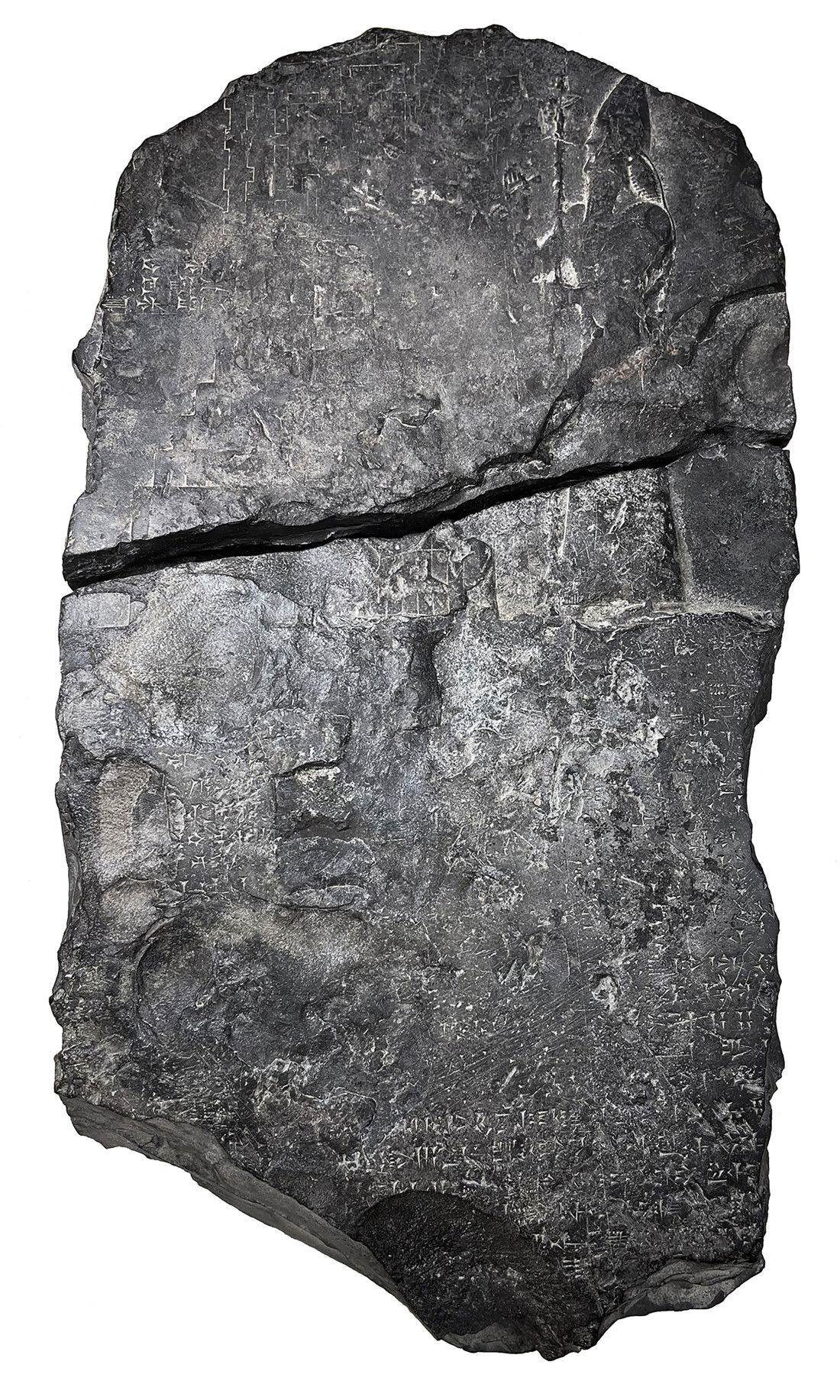
The so-called Tower of Babel Stele depicts Nebuchadnezzar and a ziggurat from the Neo-Babylonian Empire, which existed more than 1,500 years after the original Babel.5
(Photo credit: Olof Pedersén, “The Tower of Babylon Stele Found in Babylon,” Cambridge University Press, February 20, 2024, https://www.cambridge.org/core/journals/iraq/article/tower-of-babylon-stele-found-in-babylon/A712F186B2FA1965854911081620467B, Open Access.)
Keep in mind that practically every human artifact we have discovered would have originated after the Babel judgment.
Keep in mind that practically every human artifact we have discovered would have originated after the Babel judgment. If we do find (or have found) the site of Babel, then ongoing investigations may yield more clues regarding the size of the city, its architecture, and even details about its tower.6 Given the high degree of uncertainty on this matter, we must look to other sources to demonstrate the extrabiblical historical support for this infamous place and the rebellion that took place there. A few lines of evidence will be considered, and it will be argued that Genesis 11 provides the best explanation for this data.
Variety of Languages
The Babel event is perhaps best known as being the biblical explanation for the origin of the world’s diverse languages. Genesis 10 mentions 70 people groups descended from Shem, Ham, and Japheth, so it seems as if there were probably around 70 languages that resulted from Babel, although this is not explicitly stated in the text. While there are more than 7,000 recognized languages in the world today, we know that many of these have branched off from other languages, so the original number would have been much lower. Linguists and other researchers have attempted to categorize the original language families, but the data will always be incomplete because certain languages have disappeared when the people who spoke that language were wiped out or assimilated by other cultures. Many modern researchers believe there are a little over 100 language families today.7 Further research may reduce that number to get closer to a figure that would match Genesis 10, but given the reality that some data is lost to history, we should not expect the figures to match perfectly. That being said, the evolutionary worldview struggles to even account for one language, let alone dozens of distinct tongues.
Knowledge of the Flood
Perhaps the best way to begin looking for evidence of the Babel event would be to consider what we should expect to find in light of the biblical narrative. The Bible reveals that Noah’s descendants “had one language and the same words” when they decided to settle in the land of Shinar (Genesis 11:1–2). These people were within the first several generations from Noah, and they had a shared history, so we would expect them to be fully aware of the worldwide flood. The impact of the deluge could hardly be overstated—it was a major catastrophe that destroyed the world and reduced the human population to eight. According to most creation/flood models, the aftereffects of the flood, such as increased earthquakes and volcanism (and eventually the ice age), were felt for generations, so we have every reason to believe that knowledge of the flood was commonplace at the time of Babel.
If these assumptions about the knowledge of the flood are correct and if the Babel event occurred as Scripture teaches (and it did), then what would we expect to find? We should expect that ancient cultures around the globe would have flood legends that share multiple similarities to the biblical account. We would also expect that these legends would contain distortions of the biblical record to some degree since they would be based on oral traditions handed down generation after generation. Well, this is precisely what we find. Hundreds of flood legends from ancient cultures have been documented by anthropologists. Oftentimes, these legends bear striking resemblances to the biblical record (one righteous man given instructions by God/gods to build a vessel that would save the family and animals from a global flood). Some legends mention animals being used to see if the ground had dried up, while others mention a rainbow at the end, and others describe the shipbuilder offering a sacrifice after the flood. The fact that there are significant differences among these legends reveal that they are not the result of missionary activity among the various people groups. For example, the name of the shipbuilder is always different, and the place where his vessel landed is also changed. We can be sure these distortions are not due to missionary work. Missionaries do not spend years risking life and limb to reach people with a distorted version of the flood account in Genesis. Instead, they make these sacrifices to reach people with the gospel.
Knowledge of Genesis 1–11
What do all these flood legends have to do with historical evidence for the Babel event? As pointed out before, we would expect to find legends of the global flood in the various ancient cultures, and that’s precisely what we find. However, flood legends are not the only details from Genesis 1–11 that these ancient peoples know about. There is considerable evidence that they knew about the creation of man from the ground, man’s fall into sin, and the Babel event itself. Apparently, these major events from the Bible’s earliest chapters were also passed down among some of the people groups who departed from Babel.
This article will not detail every legend that seems to describe each of these events, but I will list a few examples of each. Readers looking for more information can check out my chapter titled “Humanity’s Shared History Reflecting the Truth of Genesis 1–11” in Terry Mortenson’s Searching for Adam book.8 Echoing Genesis 2, the Maori of New Zealand, Comanche of the United States, and certain tribes among the Australian Aborigines describe the first humans being made from clay or the dust of the ground. When accounting for the reason why humans became wicked or why they die, dozens of cultures have legends that feature a tree and/or a serpent as being instrumental in man’s fall. Of course, these details align well with Genesis 3. Genesis 6:4 mentions that there were giants (Nephilim) on the earth before the flood.9 Several groups also speak of giants existing before a catastrophic flood wiped them out. Anthropologists have also discovered nearly two dozen legends that bear striking resemblances to the Babel event, complete with mentions of a tower and confusion of languages.
One final point on these matters must be made here, and it confirms that these ancient legends are also not the result of missionary influence. While so many of these cultures seem to possess distorted legends of key events in Genesis 1–11, their knowledge of biblical history ends there. That is, they know nothing of Genesis 12 and following. They do not have legends that align with Abraham, Isaac, and Jacob. Their knowledge of these things seems to stop at Genesis 11. And this is precisely what we should expect given the biblical account. Mankind had a shared history after the flood until the judgment at Babel. From that point on, the peoples went their separate ways, and they no longer had a shared history. So what we find among these ancient people groups is precisely what we would expect to find if the Babel event truly took place.10
Conclusion
Christians can be confident that the rebellion at Babel and the divine judgment at that site truly took place because God’s Word informs us that they did.
Christians can be confident that the rebellion at Babel and the divine judgment at that site truly took place because God’s Word informs us that they did. And while there are some Christians who propose that Genesis 1–11 should be understood as a sort of nonhistorical myth, the evidence from languages and legends can best be explained when we read the Babel narrative as literal history. This is how Moses and Paul understood the event, and their biblical writings were inspired by the Holy Spirit. Therefore, Christians should also treat Babel and the rest of Genesis 1–11 as literal history. We would do well to remember that God judges sin and humbles the proud, but he lifts up those who honor him and humbly cry out to him for salvation.
Answers in Depth
2025 Volume 20
Answers in Depth explores the biblical worldview in addressing modern scientific research, history, current events, popular media, theology, and much more.
Browse VolumeFootnotes
- For example, Ross stated, “It was at Babel—that city founded by Nimrod, a descendant of Ham through Cush; that city known for its pride and vanity; that seat of rebellion toward the true God and pagan worship of the false gods—that the Lord turned ingenuity and ambition into chaos and confusion.” Allen P. Ross, Creation and Blessing: A Guide to the Study and Exposition of Genesis (Grand Rapids, MI: Baker Books, 1998), 243.
- Many English Bibles have “the sons of Israel” instead of “the sons of God” at the end of this verse. Two ancient scrolls discovered at Qumran (Dead Sea Scrolls) as well as the Septuagint and other text critical considerations argue strongly in favor of the ESV’s wording of “the sons of God.” The passage refers to the time of Babel, a time when “the sons of Israel” did not even exist. Many biblical scholars believe this verse refers to an additional judgment at Babel, not mentioned in Genesis 11—that God essentially disinherited the nations and gave them over to their false gods (i.e., certain rebellious angels). In a sense, he was giving them what they thought they wanted. They wanted to rebel against God, so he gave them over to their foolish idolatry. In addition, God soon revealed that he would make a nation from one man, Abram (Genesis 12:1–3), and the promised people that came from Abram (Jacob, i.e., Israel) would be “the Lord’s portion” and “his allotted heritage.” The further development of this topic goes beyond the scope of this article, but the contrast between the rebellious nations and God’s heritage (Jacob) in Deuteronomy 32:8–9 aligns with the contrast between the rebellious nations in Genesis 10–11 and the calling of Abram in Genesis 12.
- The stele is part of the Schøyen Collection. For a translation of the script where Nebuchadnezzar describes the construction of this tower, see https://www.schoyencollection.com/history-collection-introduction/babylonian-history-collection/tower-babel-stele-ms-2063.
- Although he promoted a slightly different view in his commentary, Westermann stated, “Most scholars therefore have no doubt that the narrative originated in Babylon.” Claus Westermann, A Continental Commentary: Genesis 1–11 (Minneapolis: Fortress Press, 1994), 540. Spina wrote, “Some believe that the inspiration for the Babel story was provided by actual temple ruins in Mesopotamia. According to this view, the tower refers to the famous ziggurat architectural form (a kind of pyramid structure in which each successively higher layer is smaller than the one below it) and possibly to the Entemenanki, the great ziggurat temple of Babylon. . . . Logic would locate such an Israelite composition sometime during the Babylonian exile.” Frank Anthony Spina, “Babel (Place),” in in David Noel Freedman, ed., The Anchor Yale Bible Dictionary (New York: Doubleday, 1992), 561.
- The Hebrew term translated as “tower” in Genesis 11 is migdal. Some researchers have argued that the word implies that the structure was a pyramid or ziggurat, but this is too strong of a statement. The word appears many times in the Old Testament in reference to a city’s defensive tower or to a vineyard’s watchtower. Neither of these structures resemble pyramids or ziggurats. One famous narrative refers to a tower that could not have been like these structures. In Judges 9:51–53, we read that a woman threw an upper millstone from the roof of the city’s strong migdal, and it crushed the head of Abimelech. Obviously, the woman did not hurl such a heavy object dozens of feet outward from the tower; instead, she dropped it on his head. Thus, Abimelech was able to stand below the top of the tower, implying that the tower’s walls were vertical or nearly vertical. It would be more accurate to assert that while there are no clear examples in Scripture where migdal refers to a pyramid or ziggurat, the word was likely flexible enough in meaning that it could be used to describe these structures.
- For additional arguments about the potential distinctions between Babel and Babylon and why the infamous place of confusion may not have been located at the location of Nebuchadnezzar’s Babylon, see Anne Habermehl, “Where in the World Is the Tower of Babel?” Answers Research Journal 4 (2011): 25–53. Habermehl details some potential problems with linking Babel and Babylon. She also argues that Shinar was not in southern Mesopotamia, as most researchers assume, but was instead in northern Mesopotamia. While I am not convinced that her conclusion is correct, she raises multiple points that researchers must consider concerning the location of the ancient city and tower.
- The World Atlas website states that linguists have identified 135 living language families. Amber Pariona, “Language Families of the World,” World Atlas, July 9, 2018, https://www.worldatlas.com/articles/language-families-with-the-highest-number-of-speakers.html.
- Mortenson, Terry, Searching for Adam: Genesis & the Truth about Man’s Origin (Green Forest, AR: Master Books, 2016).
- Contrary to a popular claim, the word Nephilim does not mean “fallen ones,” as though the term is giving insight into the moral character (or lack thereof) of these individuals. Instead, the term is an Aramaic loan word, and it simply means “giants,” as pointed out in our leading Hebrew-English lexicons.
- Some Christians have focused on another line of argumentation that supposedly demonstrates the historicity of Babel. In his popular work, The Two Babylons, Alexander Hislop argued that Roman Catholicism and the pagan religions of the world give evidence that they shared a common source at Babel. Regardless of what one thinks of Hislop’s thesis, his book is filled with unprovable assumptions about Babel and logical fallacies. He claims that the wife of Nimrod was Semiramis, but nothing in the historical record reveals her name or activities. The real-life Semiramis was an Assyrian queen from ninth century BC Assyria. Furthermore, nothing is known about the religious practices at Babel, yet Hislop asserted that they worshipped the mother/son cult and that a host of pagan religions throughout the ancient world copied these practices. Hislop engaged in so much sheer speculation and flawed argumentation that it seems best to avoid using an argument like this to demonstrate the historicity of the Babel event.


Support the creation/gospel message by donating or getting involved!

Answers in Genesis is an apologetics ministry, dedicated to helping Christians defend their faith and proclaim the good news of Jesus Christ.
- Customer Service 800.778.3390
- Available Monday–Friday | 9 AM–5 PM ET
- © 2026 Answers in Genesis