
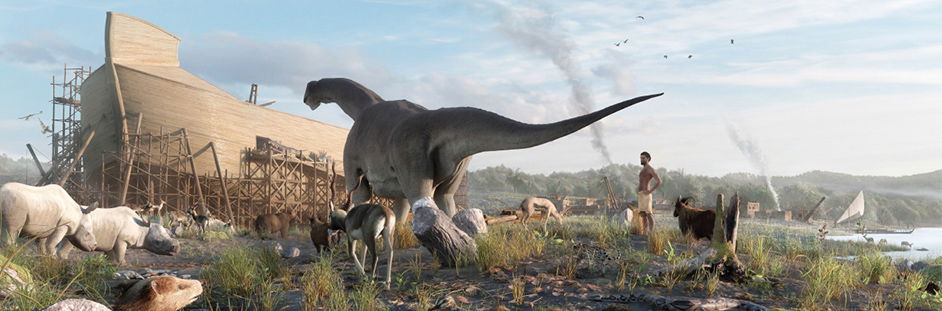
How Did Animals Get TO the Ark?
Critics of the Bible often ask how animals from around the world could have reached Noah’s ark. How could creatures like the slow-moving sloth, the flightless ostrich, or the giant tortoise have traveled such vast distances or across large bodies of water? These questions are based on mistaken assumptions and/or ignorance about the biblical account.
1. God, not Noah, brought the animals.
Genesis 6:20 states that the animals “shall come in to you to keep them alive.” Noah didn’t need to know which animals were male and female or search for or round up the animals—God providentially directed them in biological pairs to the ark himself. Noah did not have to be an animal wrangler.
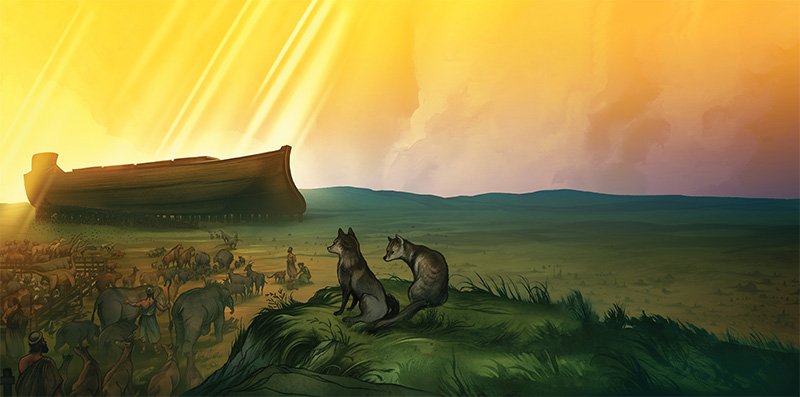
2. The animals represented kinds, not modern species.
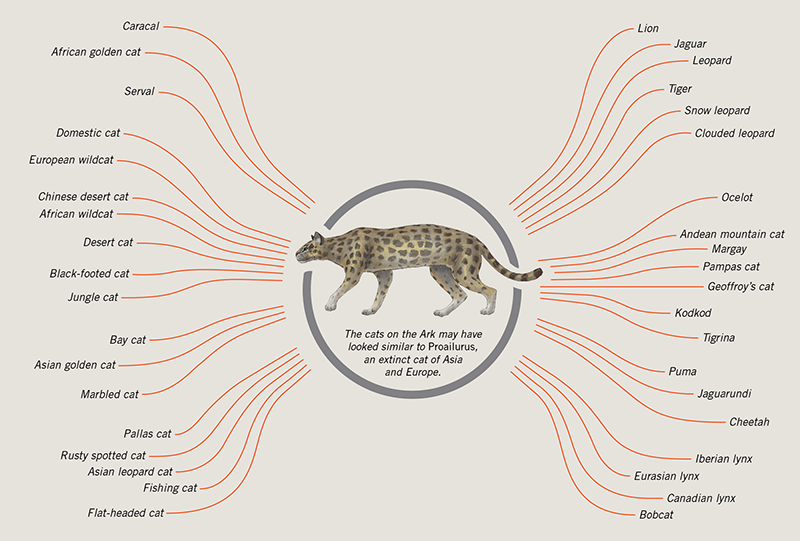
The Bible says God brought pairs of every air-breathing, land-dwelling animal and bird kind: one pair of each unclean animal kind and seven of each clean kind (Genesis 6:19–20, 7:2–3). A “kind” is broader than a species and usually aligns with a modern taxonomic family (and in a few cases perhaps as low as genus or as high as order). Noah didn’t need to squeeze every modern species into the ark—he only needed room for pairs of each kind.
When God originally created the animal kinds, he front-loaded them with genetic differences—with the potential to form all sorts of new species and varieties. For example, instead of bringing every feline species, God brought a single “kind” of cat, likely a medium-sized feline. A medium-sized created kind is vitally important to later feline species because we need to be able to have the genetic potential for large cats like tigers and lions as well as bobcats, sand cats, and lynx. Their descendants later diversified into the species we see today.
The same principle applies to other animals; the species known today didn’t necessarily exist in Noah’s time. So while some question how the slow animals could get to Noah’s ark, it’s possible that today’s slowest animals (such as sloths and tortoises) were not as slow before they generated and speciated out.
3. The preflood world was one single supercontinent.
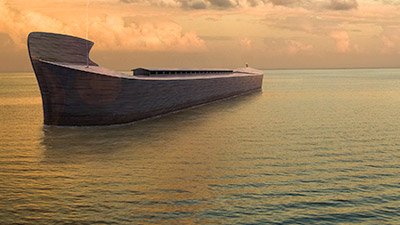
Before the flood, there were no separate continents or oceans (Genesis 1:9–10; 2 Peter 3:6). The world consisted of a single “supercontinent.” When “the fountains of the great deep burst forth” (Genesis 7:11), the earth’s surface broke apart. It wasn’t until toward the end of the flood and after the flood ended that the modern continents and ocean basins were formed.
This means that the preflood animals didn’t have to cross oceans to reach the ark—they simply walked or flew across the continent. Nor do we need to postulate extremely long treks across this supercontinent to get to the ark. Based on Genesis 2:25, most YEC theologians believe that this continent had a tropical/semitropical climate, and it is also thought that this was the only climate at the time. If true, animals wouldn’t have been divided into different climate regions like they are today. Members of the cat kind, for example, could have lived throughout the supercontinent, so God may have sent the most local cat-kind members to the ark. With this postulation, it is quite possible that many of the kinds lived within a day or two of the ark.

The Bottom Line
God’s divine direction made it possible, reminding us to rely on Scripture rather than human assumptions.
When we understand that (1) God gathered the animals and “divinely programmed” them to go to Noah, and (2) Noah brought kinds onto the ark rather than today’s species, and (3) the preflood earth was a single landmass, the question of how (and how many) animals had to travel to and reach the ark becomes clear. God’s divine direction made it possible, reminding us to rely on Scripture rather than human assumptions (Colossians 2:8).
We have to recall that God’s stated purpose for the ark was to preserve human and terrestrial animal life (Genesis 6:19). God also wanted the post-flood animals, as well as Noah and his family, to be fruitful and multiply on the earth (Genesis 8:17; Genesis 9:1, 7).


Support the creation/gospel message by donating or getting involved!

Answers in Genesis is an apologetics ministry, dedicated to helping Christians defend their faith and proclaim the good news of Jesus Christ.
- Customer Service 800.778.3390
- Available Monday–Friday | 9 AM–5 PM ET
- © 2026 Answers in Genesis