

Humans: Intelligent from the Very Beginning
Astonishing evidence of ancient humans’ ingenuity
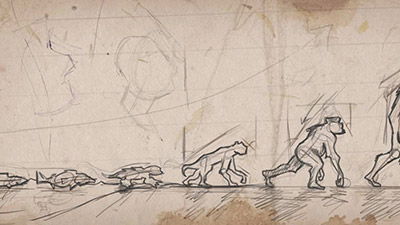
Have humans been evolving with increasing intelligence for the last six million to 300,000 years since their supposed evolution began? On the contrary, we see strong evidence of ancient man possessing high intelligence right from the beginning, and this intelligence appears to be decreasing rather than increasing. That might sound like a strange claim given our modern technological advancements, but there is a significant difference between knowledge and intelligence. The combination of man’s ancient intelligence and genetic entropy points to creation and the fall just thousands of years ago, rather than supposed human evolutionary progress over hundreds of thousands to millions of years.
According to one of National Geographic’s online educational resources, “The development of agriculture about 12,000 years ago changed the way humans lived. They switched from nomadic hunter-gatherer lifestyles to permanent settlements and farming.”1
Likewise, Khan Academy says the following regarding the earliest written records:
The first written records date back a little more than 5,000 years in Egypt and ancient Sumer. The earliest Sumerian records were made using reeds cut at an angle to make wedge-shaped (cuneiform) marks on clay, which was then baked hard. Many of these clay tablets survive today, and scholars can still read them.2
Now, as creationists, we would say that agriculture started at the beginning of creation when Adam tended the garden (Genesis 2:15), and many of the dates in anthropology are inflated due to false assumptions in radiometric dating, radiocarbon dating, and the timing of the ice age. Also, creationists would say that the oldest written records are immediate post-flood and post-Babel, so not quite 5,000 years old but perhaps slightly more than 4,000 years old when we apply correct chronologies. With that said, the evolutionary dates imply a massive gap of roughly 290,000 years from the supposed evolution of modern man until humans learned to farm and develop written language, implying a very lengthy and stagnant “stone age.” According to many evolutionists, the relatively recent advancements are evidence of mankind’s continual evolution. Yet does the circumstantial evidence necessitate such a conclusion?
Knowledge vs. Intelligence
Creationists and evolutionists can examine the same circumstantial evidence but come to differing interpretations based on different starting assumptions, or presuppositions. Before considering some circumstantial evidence, let’s expand on the distinction between knowledge and intelligence.
Knowledge: acquaintance with facts, truths, or principles, as from study or investigation; general erudition.3
Intelligence: the capacity, especially of a particular person or animal, for learning, reasoning, understanding, and similar forms of mental activity; relative aptitude in grasping truths, relationships, meanings, etc.4
Both creationists and evolutionists can agree that humans now possess more knowledge than ever before. There are varying estimates regarding the rate of knowledge doubling, but one such estimate notes the following:5
- Up until 1900, human knowledge doubled approximately every century.
- By the end of World War II, knowledge was doubling every 25 years.
- Human knowledge is now doubling every 13 months.
Some say that human knowledge now doubles every 12 hours.6 Both creationists and evolutionists generally agree that knowledge has dramatically increased over the last several hundred years for multiple reasons. The Scientific Revolution opened the door for humans to discover how the universe operates, leading to new pursuits of knowledge. New pursuits of knowledge enabled the Industrial Revolution, which transformed societies and economies, enabling massive population growth leading to more knowledge, since more people enables more knowledge. Educational systems enabled such knowledge to pass on from one generation to the next. As knowledge grows with each generation, technology improves, and now this technology (e.g., computers, artificial intelligence, etc.) can be used to store and apply knowledge. Language barriers are broken down with numerous technological advancements enabling international collaboration. Perhaps this is one reason why God said the following right before judging humanity at Babel: “Behold, they are one people, and they have all one language, and this is only the beginning of what they will do. And nothing that they propose to do will now be impossible for them” (Genesis 11:6).
Humans have been able to achieve incredible feats when a multitude of people are involved. NASA estimates that about 400,000 people were involved in the Apollo program.7 As an aeronautical engineer, I understand the experience of collaborative knowledge firsthand. While I have knowledge and expertise within aspects of specific systems and engineering processes, that does not mean that I can build a full-size airplane from scratch if I’m stuck on a deserted island. The avionics programs that I’ve worked on involved hundreds of people with varying resources and skill sets. The production of a single aircraft can easily involve thousands of people when considering the suppliers and mining of raw materials.
Is Human Intelligence Increasing?
While knowledge continues to grow at a seemingly exponential pace, does that imply that human intelligence is increasing as well? No, and the topic of intelligence is where creationists and evolutionists often diverge with different understandings. The evolutionary worldview inherently requires increasing intelligence within supposed human evolution, given the intelligence differences between apes and humans. However, creationists believe that humans were created with intelligence right from the beginning. Here are just a few concepts from Scripture that have significant implications regarding the topic of human intelligence:
- Man was made in God’s image as male and female right from the beginning (Genesis 1:26–27, 2:7) about 6,000 years ago.
- Adam tended a garden (Genesis 2:15).
- Adam spoke and understood language, even with creativity (Genesis 2:16–17, 19–20, 23).
- Mankind is subject to the effects of rebelling against God (Genesis 3:1–19).
- Ancient man built cities (Genesis 4:17, 11:5).
- Ancient man invented musical instruments (Genesis 4:21).
- Ancient man invented tools of bronze and iron (Genesis 4:22).
- Ancient man had significantly longer lifespans that drastically decreased over time (Genesis 5, 11).
- Ancient man built large structures (Genesis 6:14–15, 11:4).
Evidence of Ancient Man’s Intelligence
Since the Bible clearly demonstrates intellectual capability of ancient man, do we see circumstantial evidence that fits this understanding? Yes, and much of this is documented in an excellent resource called The Genius of Ancient Man. Here are just a few of many examples of ancient engineering that still mystifies researchers and engineers to this day:8
- Construction of the Egyptian pyramids at Giza
- The Great Pyramid along with the other two pyramids are aligned with the constellation Orion.
- The Great Pyramid is aligned with true north to within 3/60th of a degree.
- The Great Pyramid’s base is only less than one inch out of level.
- The mortar used is stronger than rock and yet only 1/50th of an inch thick between the stones.
- Khafre’s Valley Temple, Egypt
- The temple was built from massive blocks of granite that were presumably transported 450 miles down the Nile River.
- The blocks contain fine drill marks, saw marks, polished surfaces, and 3D contouring.
- Some researchers say that diamonds might have been needed for some of the cutting, but otherwise, the tools and machinery used is still a mystery.
- The Antikythera Mechanism
- The mechanism was found in 1900 in the wreckage from a second century BC Roman merchant ship.
- The mechanism is a mechanical computing device that had the ability to predict the movements of the sun, moon, the 12 signs of the zodiac, and possibly the five planets known to the Greeks.
- It is arguably the most scientifically advanced artifact of the ancient world.
Clearly, ancient man possessed great intelligence, even if we may possess a greater quantity of knowledge today.
Clearly, ancient man possessed great intelligence, even if we may possess a greater quantity of knowledge today. The examples noted above and in chapter 6 of The Genius of Ancient Man demonstrate remarkable intelligence after the flood and tower of Babel events. We can only speculate how much knowledge ancient man had prior to the flood, other than what is directly stated in Scripture. Yet it’s reasonable to consider the possibility that much knowledge might have been lost through the bottleneck of the flood. With the population being reduced to just eight people, much knowledge may have perished with those who died in that judgment. Furthermore, the scattering of people and confusion of languages at the tower of Babel greatly limited mankind’s ability to share knowledge. However, even with much of that pre-flood knowledge lost, we can see that post-flood ancient man possessed amazing intelligence.
Is Intelligence Increasing or Decreasing?
Could it be that ancient man possessed great intelligence, but that our intelligence is even greater? This is a challenging topic to study, given the inability to quantitatively evaluate the intelligence of previous generations who have passed on. That being said, there is one interesting study that demonstrates a decrease in intelligence over time, as summarized in an Answers magazine article.
A recent study published in the online journal Intelligence in May indicates that human intelligence may actually be declining. Researchers Michael A. Woodley, Jan te Nijenhuis, and Raegan Murphy analyzed the results of 14 studies of visual reaction time conducted between 1889 and 2004. According to the researchers, visual reaction time correlates strongly with general intelligence. They concluded that human IQ has declined at a rate of 1.16 points per decade, or 13.35 points since the first studies were done in Victorian times.9
Why would human intelligence decrease over time? The biblical worldview provides the foundation for answering this question. When God saw all that he had made at the conclusion of day six, he declared that everything was “very good” (Genesis 1:31). Sin, suffering, and death entered the world with Adam and Eve’s sin. Some of this suffering is caused by mutations, which facilitate a downward process rather than evolution.
Dr. J. C. Sanford authored a book called Genetic Entropy that documents and analyzes multiple secular studies that demonstrate the growing number of human genome mutations within each generation. Mutations are deleterious in nature, and most mutations fall within the “no selection zone,” where the mutational effect is not strong enough to be eliminated through natural selection. Yet the mutations are still deleterious and accumulate with each generation. The mutation count per person per generation is at least 100.10 Dr. Sanford explains the devastating effect of these accumulating mutations:
Since there are well over six billion people in the world, and each person has added an average of 100 new mutations to the global population, our generation alone has added roughly 600 billion new mutations to the human race. . . . There is no selection scheme that can reverse the damage that has been done during our own generation, even if further mutations could be stopped.11
That estimate is conservative given that there are about eight billion people in the world today at the time of this writing. Given the accumulation of deleterious mutations, this can easily impact intellectual capability. Although many secular researchers disagree, geneticist Dr. Gerald Crabtree believes that genetic mutations are harming mankind’s intelligence:
I would wager that if an average citizen from Athens of 1000 BC were to appear suddenly among us, he or she would be among the brightest and most intellectually alive of our colleagues and companions, with a good memory, a broad range of ideas, and a clear-sighted view of important issues. Furthermore, I would guess that he or she would be among the most emotionally stable of our friends and colleagues.12
While mankind has certainly increased in knowledge, mankind appears to be decreasing in intelligence while increasing in genetic mutations. This is difficult to reconcile with any kind of “old earth” view in which modern man supposedly existed for more than 300,000 years, with a net increase in intelligence compared to our supposed apelike ancestors. Even within the evolutionary perspective, mankind’s use of agriculture, written language, and recorded history was relatively recent. Yet mankind was supposedly dormant and silent in these areas for roughly 290,000 years. On the other hand, the biblical worldview paints a much different picture. Ancient man possessed impressive intelligence right from the beginning, so a 290,000-year gap is neither necessary nor warranted.
These observations do not fit well with an evolutionary, old-earth worldview. Yet such observations fit very well with the young-earth view of history that starts in Genesis.
As Lee from Virginia wrote to us recently,
The secularists tell us that Homo sapiens appeared 300,000 years ago. . . . However, for 294,000 years, the best they could do was some flint knives, spears, and animal skin clothing? For 294,000 years, NOBODY had any ideas? NOBODY thought of the wheel or corralling a bison and domesticating them? No adventurous man saw a horse, and said, “I am going to ride that thing”? 294,000 years of nothing. Humans walked around in an ignorant stupor. BUT. . . . somehow, just a few thousand years ago, we started “subduing the Earth. . . . I don’t buy it.
I agree, Lee. I don’t buy it either. The ~290,000-year gap does not make any sense. No gap is needed when we start with God’s Word.
Mankind may be advancing in knowledge, but such knowledge does not equate intelligence, nor does it mean that mankind is necessarily advancing in righteousness.
But understand this, that in the last days there will come times of difficulty. For people will be lovers of self, lovers of money, proud, arrogant, abusive, disobedient to their parents, ungrateful, unholy, heartless, unappeasable, slanderous, without self-control, brutal, not loving good, treacherous, reckless, swollen with conceit, lovers of pleasure rather than lovers of God, having the appearance of godliness, but denying its power. Avoid such people. (2 Timothy 3:1–5)
While mankind’s knowledge is doubling at an increasingly rapid rate, sin still abounds, so let us remember to look to Christ, “in whom are hidden all the treasures of wisdom and knowledge” (Colossians 2:3).


Footnotes
- National Geographic, “The Development of Agriculture,” accessed May 22, 2025, https://education.nationalgeographic.org/resource/development-agriculture/.
- David Christian, “How We Chronicle the Past,” Khan Academy, accessed May 22, 2025, https://www.khanacademy.org/humanities/big-history-project/agriculture-civilization/first-cities-appear/a/recordkeeping-and-history.
- Dictionary.com, Definition of “knowledge,” accessed May 22 , 2025, https://www.dictionary.com/browse/knowledge.
- Dictionary.com, Definition of “intelligence,” accessed May 22, 2025, https://www.dictionary.com/browse/Intelligence.
- Dr. John W. Mitchell, “The Future of the Human Workforce,” Forbes, June 30, 2023, https://www.forbes.com/sites/forbesbooksauthors/2023/06/30/the-future-of-the-human-workforce/.
- Paul Chamberlain, “Knowledge Is Not Everything,” Design for Health 4, no. 1 (February 2020): 1–3, https://www.tandfonline.com/doi/full/10.1080/24735132.2020.1731203.
- NASA, “The First Step: Langley’s Contributions to Apollo,” March 29, 2019, https://www.nasa.gov/history/the-first-step-langleys-contributions-to-apollo/.
- Don Landis, ed., The Genius of Ancient Man (Green Forest, AR: Master Books, 2012).
- “Rise and Fall of Human Intelligence,” Answers Magazine 8, no. 4 (October–December 2013), https://answersingenesis.org/human-body/brain/rise-and-fall-of-human-intelligence/.
- J. C. Sanford, Genetic Entropy, 4th ed. (Lansing, NY: FMS Publications, 2014), 40.
- Sanford, Genetic Entropy, 44.
- Ken Ham, “Human Intelligence Is Declining!” Answers in Genesis, April 15, 2013, https://answersingenesis.org/blogs/ken-ham/2013/04/15/human-intelligence-is-declining/.


Support the creation/gospel message by donating or getting involved!

Answers in Genesis is an apologetics ministry, dedicated to helping Christians defend their faith and proclaim the good news of Jesus Christ.
- Customer Service 800.778.3390
- Available Monday–Friday | 9 AM–5 PM ET
- © 2026 Answers in Genesis