


Genesis
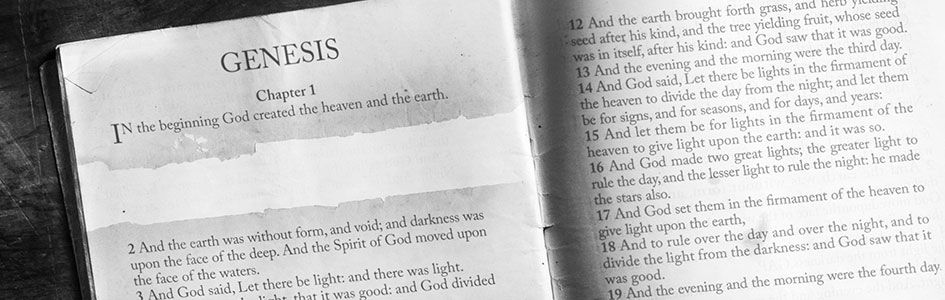
The Book of Genesis, meaning "creation" or "generation," is the first book of the Bible. The book of Genesis was named by the Septuagint (LXX) translators because it gives an account of the origin of all things. Genesis tells us what God wants us to know about his creation.
Watch Answers in Genesis founder Ken Ham explain the relevance of the book of Genesis in today's culture
The Book of Genesis: Overview
The book of Genesis covers the history of earth from creation until the time of Joseph and his brothers in Egypt. The first eleven chapters contain foundational doctrines including the origin of marriage, sin, death, the beginning of God’s plan of redemption, the flood which accounts for most of the fossil record, the origin of languages and ethnic groups, and the historical background of nations.
Contents
- Introduction: Genesis Is Foundational
- Who Wrote Genesis & When Was It Written?
- Structure of Genesis
- Key Themes in Genesis
- Issue: Is the Genesis Account Another Creation Myth?
- Issue: Does Genesis Support a “Gap Theory”?
- Issue: What Are the “Days” in Genesis 1?
- Issue: Genealogies in Genesis
- Conclusion: Genesis to the Gospel
Introduction: Genesis Is Foundational
Genesis is foundational to our understanding of reality. Genesis explains how we got here, where stars, oceans, animals, and trees come from. It tells us why there is sin and death in the world, why there are immense fossil beds, and why there are different languages and people groups with different characteristics. Genesis also establishes the basic parameters of living on God’s earth according to the precepts in his Word. It sets forth the Creator’s design and instruction for all that is, including humanity.
All major biblical doctrines are founded in Genesis. The first 11 chapters are foundational to the Christian worldview—including the saving gospel (Genesis 3:15). Here is a partial list of doctrines initially grounded in the book of Genesis:
- The doctrine of sin is founded in Genesis where the first man and first woman rebelled against God and ate from the forbidden tree.
- Genesis records God’s plan for gender. God made humans male and female from the beginning, as recorded in the Bible’s first book. God, not a politician or a panel of social engineers, laid the foundation for a correct approach to gender and sexuality.
- The doctrine of marriage, defined as one man for one woman, is founded in Genesis. God, not a panel of judges, invented and defines marriage.
- The gospel is founded in Genesis. We need a Savior because Adam (the father/head of the human race) sinned and brought literal death into creation (Genesis 3). That’s why Jesus had to come and literally die a physical death to take our place.

Who Wrote Genesis & When Was It Written?
One of the major attacks on the Bible in the past 300 years has been directed against Moses and his authorship of the Pentateuch, the first five books of the Old Testament (Genesis–Deuteronomy). Such attacks on these foundational books of the rest of the Bible come both from non-Christians as well as professing Christians.
There is abundant biblical and extra-biblical evidence that Moses wrote the Pentateuch during the wilderness wanderings after the Jews left their slavery in Egypt and before they entered the Promised Land (about 1450 BC). Contrary to liberal theologians and other skeptics, Genesis was not written after the Jews returned from exile in Babylon (ca. 500 BC). Christians who believe Moses wrote the Pentateuch do not need to feel intellectually intimidated. It is the enemies of the truth of God that are failing to think carefully and face the facts honestly.
Structure of Genesis
The book of Genesis can be naturally divided into sections. The English Standard Version (ESV) of the Bible translates the Hebrew אֵ֣לֶּה תוֹלְד֧וֹת as "These are the generations of." This phrase occurs in ten places throughout the text and forms a natural outline for the book. Biblical scholars call the divisions toledoth meaning "generations.” Here are the natural divisions in Genesis:
- Genesis 2:4
“These are the generations of the heavens and the earth when they were created, in the day that the LORD God made the earth and the heavens. - Genesis 5:1
“This is the book of the generations of Adam. When God created man, he made him in the likeness of God.” - Genesis 6:9
“These are the generations of Noah. Noah was a righteous man, blameless in his generation. Noah walked with God.” - Genesis 10:1
“These are the generations of the sons of Noah, Shem, Ham, and Japheth. Sons were born to them after the flood.” - Genesis 11:10
“These are the generations of Shem. When Shem was 100 years old, he fathered Arpachshad two years after the flood.” - Genesis 11:27
“Now these are the generations of Terah. Terah fathered Abram, Nahor, and Haran; and Haran fathered Lot.” - Genesis 25:12
“These are the generations of Ishmael, Abraham's son, whom Hagar the Egyptian, Sarah's servant, bore to Abraham.” - Genesis 25:19
“These are the generations of Isaac, Abraham's son: Abraham fathered Isaac,” - Genesis 36:1
“These are the generations of Esau (that is, Edom).” - Genesis 37:2
“These are the generations of Jacob. Joseph, being seventeen years old, was pasturing the flock with his brothers. He was a boy with the sons of Bilhah and Zilpah, his father's wives. And Joseph brought a bad report of them to their father.”

Key Themes in Genesis
- Creation
“In the beginning, God created the heavens and the earth.” (Genesis 1:1). - Corruption
“but of the tree of the knowledge of good and evil you shall not eat, for in the day that you eat of it you shall surely die.” (Genesis 2:17). - Catastrophe
“He blotted out every living thing that was on the face of the ground, man and animals and creeping things and birds of the heavens. They were blotted out from the earth. Only Noah was left, and those who were with him in the ark.” (Genesis 7:23). - Confusion
“Come, let us go down and there confuse their language, so that they may not understand one another's speech.” 8 So the Lord dispersed them from there over the face of all the earth, and they left off building the city.” (Genesis 11:7–8). - Abraham’s Family
“Now the Lord said to Abram, ‘Go from your country and your kindred and your father's house to the land that I will show you. And I will make of you a great nation, and I will bless you and make your name great, so that you will be a blessing. I will bless those who bless you, and him who dishonors you I will curse, and in you all the families of the earth shall be blessed.’” (Genesis 12:1-3)
Issue: Is the Genesis Account Another Creation Myth?
The first two chapters of Genesis tell a straightforward account of the creation of the earth, the universe, and everything in them. There are no legends or folklore in the historical narrative account of Genesis, which are hallmarks of other cultures’ creation sagas. The existence of other creation myths actually lends strength to the Christian case rather than weakening it. It shows that other cultures knew the truth of creation, but their stories have been altered from the correct biblical version over the centuries.
Issue: Does Genesis Support a “Gap Theory”?
Proponents of the gap theory have reinterpreted Scripture to try to make it fit the idea of millions of years. But adding a gap between Genesis 1:1 and 1:2, or any other place in Genesis, is unwarranted. It also adds death and suffering before sin and requires a recreation or restoration of the earth before Adam was created, an idea you can’t find in the text. The gap theory does not rest upon the impregnable rock of Holy Scripture; it is founded upon the shifting sands of the ideas of those who want to believe the evolutionary teaching of billions of years as the age of the universe and earth.
Issue: What Are the “Days” in Genesis 1?
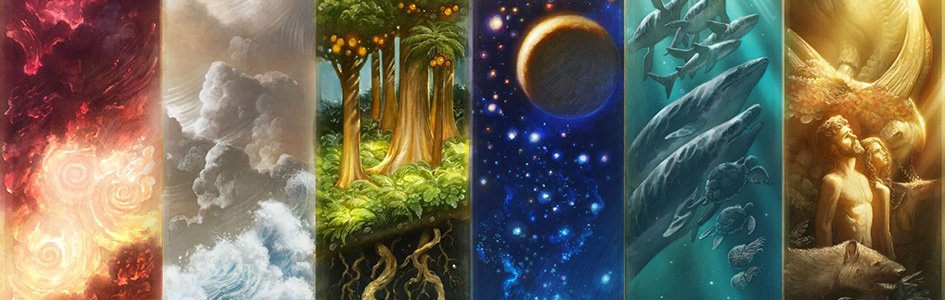
When we look carefully at Genesis 1, in Hebrew or even in English, it is clear that God created everything in six literal (24-hour) days. First, we are told that he created the earth in darkness and then created light. Then he called the light “day” and he called the darkness “night.” And then we read (in the original Hebrew) “and [there] was evening and [there] was morning, one day.” The same statement is repeated at the end of the second day through the sixth day.
Issue: Genealogies in Genesis
A common argument against young-earth creationism is that gaps exist in the genealogies listed in the fifth and tenth chapters of Genesis. The old-earth proponent assumes that if gaps exist, then one cannot claim to know an approximate age of the earth based on biblical data. But the Genesis 5 text does not allow for any gaps, since it contains the father’s age when his son was born, and then his lifespan. Additionally, other scriptures bear out the truth of the genealogies. Jude 1:14 tells us that Enoch was the seventh from Adam, just as Genesis 5 states. The genealogies in Genesis 10 do not give us father/son ages, but we know from Genesis 5-8 when Noah was born and when the flood occurred, and we know that Abraham was born c. 2000 BC, meaning that about 350 years passed between the flood and the generations listed in Genesis 10—therefore there can be no gaps in the Genesis 10 genealogies.

Conclusion: Genesis to the Gospel
The temptation of Eve by Satan, the fall of mankind, the entrance of sin, and the curse on the entire creation all originated in Genesis 3. So too did the beginning of the plan of redemption. While Adam and Eve hid, God sought them out. When they tried and failed to cover their nakedness, God initiated the first blood sacrifice and clothed them with animal skins. While cursing the Serpent, God promised a future “seed of woman” who would crush Satan. This promise was fulfilled in the coming of the Lord Jesus Christ.
Articles About Genesis
-
Magazine ArticleThe Orthodox Jew and EvolutionOct. 1, 1979, pp. 11–12
The worn-out cliché that Genesis is disproved by evolution is, surprisingly enough, still current among many otherwise sophisticated Jewish students.
-
Magazine ArticleProblems in Interpreting Genesis Part 2Oct. 1, 1979, pp. 22–23
Is there any explicit teaching within the Bible itself that suggests its details are not to be pressed in matters of the physical creation?
-
Magazine ArticleProblems in Interpreting Genesis Part 1July 1, 1979, pp. 27–28
Like any discipline, interpretation methods (hermeneutics) can suffer from being used to solve problems which lie outside its sphere.
Support the creation/gospel message by donating or getting involved!

Answers in Genesis is an apologetics ministry, dedicated to helping Christians defend their faith and proclaim the good news of Jesus Christ.
- Customer Service 800.778.3390
- Available Monday–Friday | 9 AM–5 PM ET
- © 2026 Answers in Genesis