

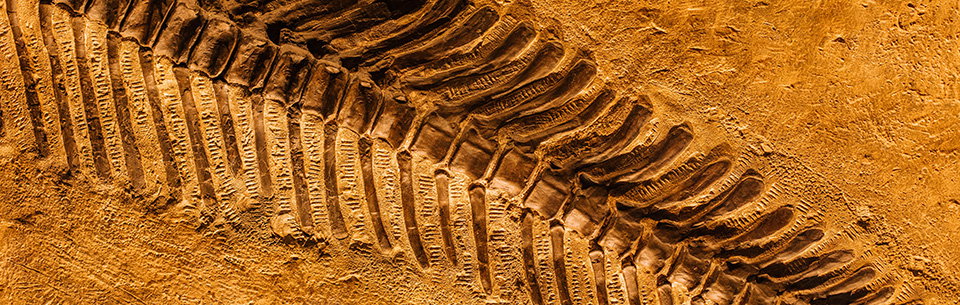
Photo by Kvnga on Unsplash
Scientists Found Soft Tissues and Biochemicals in “Ancient” Fossils!
Part 4—Dinosaur Blood and the Age of the Earth: A Futile, Deceitful Attempt to Critique Valid, Powerful Young-Earth Evidence
Old-earth creationist Dr. Fazale Rana’s book Dinosaur Book and the Age of the Earth has many problems. He seriously mishandles Scripture to advocate for millions of years and puts unwarranted faith in radiometric dating and, specifically, radiocarbon dating, as discussed in Parts 1, 2, and 3 of this response series.
But at least there is one thing we can agree on with Dr. Rana: The soft tissues and biochemicals found in fossils as reported in the literature are genuine soft tissues and biochemicals. Thus, the details of what Dr. Rana reports and describes in his book on pages 15–27 are generally accurate and fair, as we will recount below.
Starting with the Egg
Dr. Rana begins with the discovery by German scientists (in 2015). The fossilized blue-green eggs they studied had been found in China. They claimed the eggs are supposedly 66 million years old and were laid by dinosaurs.1 They detected the biochemicals protoporphyrin and biliverdin in three separate sets of these claimed dinosaur eggs. They found that the relative proportion of these two biochemicals in those fossilized eggs is similar to that found in the blue-green eggs of emus. So these scientists supposed these claimed dinosaur eggs were probably blue green.
Dr. Rana comments:
This remarkable insight is possible because organic molecules survived in the fossilized eggshells—for 66 million years! A few years ago, no one would have thought that organic molecules could survive long enough to be recovered from fossilized eggs. No one in their right mind would have been willing to spend time, effort, and money to try to detect organics in fossilized specimens as the German scientists had done in 2015. Yet, that unwillingness changed in 2005 after a team of researchers, headed by paleontologist Mary Schweitzer, detected organic materials for the first time in fossilized eggshells.2 That pioneering work was a scientific tour de force.3
T. Rex Blood and Bone
Dr. Rana recounts on pages 16–20 some of the background history leading up to Dr. Schweitzer’s announced discovery in 2005 of red blood cells and blood vessels in a Tyrannosaurus rex femur.4 Two papers by Dr. Schweitzer and her colleagues were published in 1997. In them, they reported their efforts to demonstrate that what had been found in that T. rex bone were not the remains of red blood cells.5 Those efforts failed because their results only confirmed what they initial suspected. Dr. Schweitzer and her colleagues had only found a mixture of the L- and D- (left- and right-handed) varieties of amino acids in the fossilized T. rex bone. This was consistent with the amino acids not being due to contamination because they had been in the bone for enough time for racemization (mixing) to have occurred. These collagen fragments also meant that the ruby-colored microstructures in the bone were actually red blood cell remnants. So using two different spectroscopic techniques, Schweitzer and her colleagues then used two different analytical techniques to try and detect traces of heme (the section of the hemoglobin molecule that binds oxygen) in what they had extracted from the fossilized bone, which would only be possible if the red microstructures were definitely remnants of red blood cells. But because of the tentative reporting in those papers, the work got little attention.
However, that soon all changed. In 2003 during transport of a massive T. rex specimen from the Hell Creek Formation in Montana, dated at 68 million years old, small fragments broke off one of the femurs. Schweitzer and her colleagues took those pristine fossil bone fragments and dissolved the bone matrix. They were amazed to find structures that looked like the remains of blood vessels, being flexible, transparent, and hollow.6 Inside these apparent remains of blood vessels were tiny, red, round structures that had a shape like cells when they were flushed in solution out of the interiors of these structures. These tiny structures were also flexible, resilient, and fibrous-like. Left behind after the bone matrix was dissolved away, these tiny structures were found to contain collagen fragments, which was confirmed by analyzing their amino acid sequences.7 The team even found cell-like structures that looked like osteocytes (with hairlike appendages called filopodia), which produce collagen and other biomaterials that constitute the organic portion of bone. To satisfy themselves that these were remnants of osteocytes, Schweitzer and her colleagues demonstrated that fragments of proteins found with osteocytes in extant organisms were also associated with the osteocyte-like structures recovered from pieces of T. rex bone.8 They even claimed they observed antibodies that were attached to the DNA, which was bound to the osteocyte-like structures, suggesting to them that pieces of dinosaur DNA may have survived for 68 million years in the T. rex femur!
To investigate how prevalent soft tissue remnants in dinosaur fossils might be, Schweitzer and her colleagues analyzed samples of fossilized bone from another Montana dinosaur, an apparently well-preserved hadrosaur Brachylophosaurus canadensis specimen dated at 80 million years old.9 Like the T. rex specimen, these bone samples yielded flexible, transparent, hollow structures that looked like leftovers of blood vessels. They also contained tiny red structures and a fibrous, flexible matrix with what looked like osteocytes. Amino acids that are abundant in collagen were detected.
In 2013, inspired by Schweitzer’s success, an international team of investigators discovered protein vestiges within bones of dinosaur embryos that had been found in place in an early Jurassic fossilized bone bed near Kunming, China.10 They used a Fourier-Transform Infrared Microspectrometer, employing synchrotron radiation, to obtain spectra that matched microscopic images of tiny bone structures. They also detected signals of likely protein decay products in the fast-growing areas of the fossilized embryo bones and in the bone structures that surrounded the blood vessels. Meanwhile, a survey of dinosaur fossils demonstrated that soft tissue remains could be common in dinosaur fossils.11 Extracts were analyzed from the fossilized bones of nine different dinosaur fossils, supposedly 67 to 100 million years old, indicating that remnants of blood vessels, fibrous matrices, and remnants of osteocytes and red blood cells are common. Furthermore, whereas the fossilized bones analyzed by Schweitzer and her team were well-preserved, in 2015, a UK study of eight fossilized bone fragments from various dinosaur specimens in the Natural History Museum in London indicated that remains of soft tissues may also be common in poorly preserved dinosaur bones.12
Keratin and Coprolite
At least Dr. Rana acknowledges that young-earth creationists have also been successful in finding soft tissues in dinosaur fossils when he mentions Armitage and Anderson’s discovery of soft tissue remnants in a fossilized Triceratops horridus horn from Montana’s Hell Creek Formation.13 They soaked pieces of the horn for a month in a mild acid bath, and what remained were soft, flexible brown sheets about 8 inches by 4 inches in size. Detailed microscopic analysis of those sheets revealed osteocyte-like structures with delicate filipodia and nuclear-like structures within the cells.
Dr. Rana’s helpful summary of soft-tissue discoveries in fossils also reports that Schweitzer and her team discovered evidence of beta-keratin in the fibrous-looking material associated with fossilized feather-like structures on a well-preserved specimen of the so-called “dino bird” Shuvuuia deserti.14 The same group also found possible keratin fragments in the fossilized claw structures of the fossilized bird Rahonavis ostromi.15 Meanwhile, other researchers detected possible subcellular structures called melanosomes containing the pigment melanin in the fossilized feathers of a supposedly 150-million-year-old specimen of the “dinosaur-like” bird, Anchiornis huxleyi recovered in China.16 And most fascinating was the discovery of apparently undigested muscle tissue in supposedly 70- to 80-million-year-old coprolites (fossilized dung) “deposited” by a T. rex.17
Moreover, a survey of other investigations demonstrates how common remnants of soft tissue remains are throughout the fossil record.
Moreover, a survey of other investigations demonstrates how common remnants of soft tissue remains are throughout the fossil record. For example, thin flexible protein sheets were recovered from reddish-brown fossilized shells of the gastropod Ecphora found in the Calvert Cliffs of Maryland dated at supposedly between 8 and 18 million years in age.18 The investigators analyzed these sheets and found they consisted of intact proteins with amino acids identical to the shell-binding proteins in today’s mollusks. Other investigators found traces of heme, the oxygen-binding portion of hemoglobin, in a supposedly 46-million-year-old, fossilized mosquito discovered in Montana.19 Yet another research team generated a detailed spectral map of fossilized reptile skin (supposedly 50 million years old) unearthed from the Green River Formation in Utah and thus found evidence of surviving remnants of the skin protein keratin.20
Pigment and Chitin
An astounding discovery was that of large, black ink sacs preserved within specimens of fossilized cephalopods (squid-like marine animals that squirt ink) recovered from a rock formation in England supposedly about 160 million years old. Surprisingly, careful examination of the ink sac contents revealed what appeared to be ink consisting of granules similar in size and shape to those that are in the ink of modern cephalopods, which additional analyses demonstrated had chemical properties that included melanin, the pigment found in the ink of modern cephalopods.21 As Dr. Rana himself commented on page 23 of his book, finding “a chemically intact form [of preserved melanin] for at least 160 million years is nothing short of remarkable.”
Equally remarkable is the reported discovery of quinones (organic compounds) from fossilized sea lilies (crinoids) that are supposedly 340 million years old.22 And then there is also the recovery of chitin (the hard, durable biomaterial in the exoskeletons of arthropods and the hard structures of mollusks) from the fossilized remains of several different organisms. First was the remnants of chitin found in supposedly 25-million-year-old fossilized insects recovered in Germany, which had a chemical fingerprint matching chitin in modern insects.23 Second was the discovery of remnants of chitin in supposedly 35-million-year-old cuttlefish fossils found in Mississippi.24 Third, yet another research team discovered a protein-chitin complex in the cuticles of fossilized scorpions supposedly 310 million years old and in fossilized sea scorpions supposedly 417 million years old, found in Illinois and Ontario, Canada, respectively.25 And fourth, the current oldest remains of chitin were discovered in sponge fossils supposedly 505 million years old in the Burgess Shale of the Canadian Rockies, supposedly some of the first animals on Earth!26
Not So “Odd”
As Dr. Rana says, when Mary Schweitzer first published her finding of soft tissue remnants from dinosaur fossils, they were thought by many to be a “scientific oddity.” However, more paleontologists subsequently recovered remnants of biomolecules, cells, and soft tissues from a wide range of fossils. This upended conventional thinking in paleontology, as paleontologists had expected the details of soft tissue anatomy and the physiology of ancient organisms had been destroyed during fossilization, except for rare occurrences where the soft tissues had left behind imprints. Thus, according to Schweitzer:
For more than 300 years, paleontologists have operated under the assumption that the information contained in fossilized bones lies strictly in the size and shape of the bones themselves. The conventional wisdom holds that when an animal dies under conditions suitable for fossilization, inert minerals from the surrounding environment eventually replace all of the organic molecules—such as those that make up cells, tissues, pigments and proteins—leaving behind bones composed entirely of mineral.27
However, Dr. Rana claims that the work of Schweitzer and other paleontologists challenges that paradigm. As Schweitzer says, “Our findings challenged everything scientists thought they knew about the breakdown of cells and molecules.” So Drs. Schweitzer and Rana are claiming that these soft tissues have indeed survived for millions of years because they assume and believe the millions of years are absolute. Thus, even though we know from scientific observations and experiments that soft tissues break down rapidly today, they nevertheless believe that in the unobserved past there must have been mechanisms to preserve the soft tissues. So they conclude that the way paleontologists think fossilization takes place must be wrong because they all “know” the claimed millions of years are an unassailable “fact”!
Therefore, it is precisely because we know from observations and experiments that soft tissues break down rapidly today that in spite of the impressive amount of data generated through careful, painstaking investigative work, many paleontologists remain unconvinced that soft tissue leftovers have persisted in the fossilized remains of ancient organisms. Of course, some scientists find the soft-tissue evidence compelling, but they are skeptical. Others have proposed alternative explanations for the soft tissues because they cannot believe soft tissues survive for millions of years.
Claimed Contamination
One claim is that the so-called blood vessels recovered from the T. rex bones were instead bacterial biofilms.28 But that claim is not consistent with such blood vessels being recovered from dinosaurs fossilized under a variety of different environmental conditions that would have affected biofilm growth. Nor does it explain why the claimed bacterial films are hollow and contain tiny structures that appear to be osteocytes, complete with filopodia.
Another research team confirmed the existence of the collagen and hemoglobin appeared to be ancient, but they argued that these detected proteins resulted from contamination by soil bacteria and birds and thus was not from T. rex.29 While contamination is usually a possibility, it mostly occurs at trace levels, and its origin is always conjectural and unproven. In any case, in their research protocols, Schweitzer and her collaborators took great care with repeat samplings and analyses to ensure the soft tissues and biomolecules they recovered were not due to contamination.
At least Dr. Rana does a good job of defending the work of Schweitzer and the research teams because they painstakingly did their careful analyses to ensure their results were robust and could stand up to the inevitable criticisms. However, the sticking point, even for many conventional uniformitarian paleontologists has been the claimed survival of these soft tissues and biomolecules for the claimed tens to hundreds of millions of years. Thus, as Dr. Rana says, “no amount of evidence will convince them that soft tissue remnants exist in fossil remains.”30 Indeed, Schweitzer recalled comments made by an anonymous scientist during the peer review process for her paper. The reviewer had written that “this type of preservation was not possible” and that he or she could not be convinced in spite of the data in her paper.31 Such skepticism is obviously due to the well-known fact that we know from observations and experiments that these soft tissues and biomolecules break down rapidly today.
Dr. Rana and all his colleagues at Reasons to Believe struggle to reconcile this observable reality with their millions of years beliefs, we young-earth creationists have understandably embraced these discoveries of soft tissues and biomolecules in these ancient fossils.
So while conventional uniformitarian scientists and Dr. Rana and all his colleagues at Reasons to Believe struggle to reconcile this observable reality with their millions of years beliefs, we young-earth creationists have understandably embraced these discoveries of soft tissues and biomolecules in these ancient fossils. That’s because our timescale for earth history with the Flood cataclysm only about 4,350 years ago predicts such soft tissues and biomolecules would be found in fossils. They would have survived those few thousand years based on the known observations and experiments of their rapid decay today. Thus, Dr. Rana must next take issue with the young-earth creationist case that these discoveries directly challenge the conventional scientific consensus on the earth’s age and the antiquity of life on earth. He cannot allow their case to succeed in convincing fellow Christians this soft-tissues-in-fossils evidence confirms the Bible’s teaching about a young earth and the global Flood cataclysm.
Answers in Depth
2026 Volume 21

Answers in Depth explores the biblical worldview in addressing modern scientific research, history, current events, popular media, theology, and much more.
Browse VolumeFootnotes
- Hecht, Jeff, “First Evidence That Dinosaurs Laid Colorful Blue-Green Eggs,” New Scientist, May 21, 2015, https://www.newscientist.com/article/2023121-first-evidence-that-dinosaurs-laid-colourful-blue-green-eggs/; Jasmina Wiemann et al., “Dinosaur Origin of Egg Color: Oviraptors Laid Blue-Green Eggs,” PeerJ 5 (2017): e3706, http://dx.doi.org/10.7717/peerj.3706.
- Schweitzer, Mary H., L. Chiappe, A. C. Garrido, J. Lowenstein, and S. H. Pincus, “Molecular Preservation in Late Cretaceous Sauropod Dinosaur Eggshells,” Proceedings of the Royal Society B 272 (April 2005): 775–784, https://royalsocietypublishing.org/rspb/article-abstract/272/1565/775/75798/Molecular-preservation-in-Late-Cretaceous-sauropod?redirectedFrom=fulltext.
- Rana, Fazale, Dinosaur Blood and the Age of the Earth (Covina, CA: RTB Press, 2016), 16.
- Schweitzer, Mary H., Zhiyong Suo, Recep Avci, John M. Asara, Mark A. Allen, Fernando Teran Arce et al., “Soft-Tissue Vessels and Cellular Preservation in Tyrannosaurus rex,” Science 307, no. 5717 (March 2005): 1952–1955, https://www.science.org/doi/10.1126/science.1108397.
- Schweitzer, Mary H., et al., “Preservation of Biomolecules in Cancellous Bone of Tyrannosaurus rex,” Journal of Vertebrate Paleontology 17, no. 2 (June 1997): 349–359, https://doi.org/10.1080/02724634.1997.10010979; Mary H. Schweitzer et al., “Heme Compounds in Dinosaur Trabecular Bone,” Proceedings of the National Academy of Sciences, USA 94 (June 1997): 6291–6296.
- Schweitzer, “Soft-Tissue Vessels and Cellular Preservation in Tyrannosaurus rex,” 1952–1955.
- Schweitzer, Mary H., et al., “Analyses of Soft Tissue from Tyrannosaurus rex Suggest the Presence of Protein,” Science 316, no. 5822 (April 2007): 277–280, https://www.science.org/doi/10.1126/science.1138709; John M. Asara et al., “Protein Sequences from Mastodon and Tyrannosaurus rex Revealed by Mass Spectrometry,” Science 316, no. 5822 (April 2007): 280–85, http://doi.org/10.1126/science.1137614; Chris L. Organ et al., “Molecular Phylogenetics of Mastodon and Tyrannosaurus rex,” Science 320, no. 5875 (April 2008): 499, http://doi.org/10.1126/science.1154284.
- Schweitzer, Mary H., et al., “Molecular Analysis of Dinosaur Osteocytes Support the Presence of Endogenous Molecules,” Bone 52 (January 2013): 414–423.
- Schweitzer, Mary H., et al., “Biomolecular Characterization and Protein Sequences of the Campanian Hadrosaur B. canadensis,” Science 324, no. 5927 (May 2009): 626–631, http://doi.org/10.1126/science.1165069.
- Reisz, Robert R., et al., “Embryology of Early Jurassic Dinosaurs from China with Evidence of Preserved Organic Remains,” Nature 496, no. 7444 (April 2013): 210–214, http://doi.org/10.1038/nature11978.
- Schweitzer, Mary H., Jennifer L. Wittmeyer, and John R. Horner, “Soft Tissue and Cellular Preservation in Vertebrate Skeletal Elements from the Cretaceous to the Present,” Proceedings of the Royal Society B 274, no. 1607 (January 2006): 183–197, http://doi.org/10.1098/rspb.2006.3705.
- Bertazzo, Sergio, et al., “Fibres and Cellular Structures Preserved in 75-Million-Year-Old Dinosaur Specimens,” Nature Communications 6 (June 2015): http://doi.org/10.1038/ncomms8352.
- Armitage, Mark H., and Kevin L. Anderson, “Soft Sheets of Fibrillar Bone from a Fossil of the Supraorbital Horn of the Dinosaur Triceratops horridus,” Acta Histochemica 115, no. 6 (July 2013): 603–608, http://doi.org/10.1016/j.acthis.2013.01.001.
- Schweitzer, Mary H., et al., “Beta-Keratin Specific Immunological Reactivity in Feather-Like Structures of the Cretaceous Alvarezsaurid, Shuvuuia deserti,” Journal of Experimental Zoology 285 (August 1999): 146–157.
- Schweitzer, Mary H., et al., “Keratin Immunoreactivity in the Late Cretaceous Bird Rahonavis ostromi,” Journal of Vertebrate Paleontology 19, no. 4 (1999): 712–722, http://doi.org/10.1080/02724634.1999.10011183.
- Lindgren, Johan, et al., “Molecular Composition and Ultrastructure of Jurassic Paravian Feathers,” Scientific Reports 5 (August 2015): http://doi.org/10.1038/srep13520.
- Chin, Karen, et al., “Remarkable Preservation of Undigested Muscle Tissue Within a Late Cretaceous Tyrannosaurid Coprolite from Alberta, Canada,” Palaios 18 (June 2003): 286–294.
- Nance, J. R., et al., “Preserved Macroscopic Polymeric Sheets of Shell-Binding Protein in the Middle Miocene (8 to 18 Ma) Gastropod Ecphora,” Geochemical Perspective Letters 1, no. 1 (January 2015): 1–9, http://doi.org/10.7185/geochemlet.1501.
- Greenwalt, Dale E., et al., “Hemoglobin-Derived Porphyrins Preserved in a Middle Eocene Blood-Engorged Mosquito,” Proceedings of the National Academy of Sciences, USA 110, no. 46 (October 2013): 18496–18500, http://doi.org/10.1073/pnas.1310885110.
- Edwards, N. P., et al., “Infrared Mapping Resolves Soft Tissue Preservation in 50 Million Year–Old Reptile Skin,” Proceedings of the Royal Society B 278, no. 1722 (November 2011): 3209–3218, http://doi.org/10.1098/rspb.2011.0135.
- Glass, Keely, et al., “Direct Chemical Evidence for Eumelanin Pigment from the Jurassic Period,” Proceedings of the National Academy of Sciences, USA 109, no. 26 (June 2012): 10218–10223, http://doi.org/10.1073/pnas.1118448109.
- O’Malley, Christina E., William I. Ausich, and Yu-Ping Chin, “Isolation and Characterization of the Earliest Taxon-Specific Organic Molecules (Mississippian, Crinoidea),” Geology 41, no. 3 (March 2013): 347–350, http://doi.org/10.1130/G33792.1.
- Stankiewicz, B. Arthur, et al., “Preservation of Chitin in 25-Million-Year-Old Fossils,” Science 276, no. 5318 (June 1997): 1541–1543, http://doi.org/10.1126/science.276.5318.1541.
- Weaver, Patricia G., et al., “Characterization of Organics Consistent with β-Chitin Preserved in the Late Eocene Cuttlefish Mississaepia mississippiensis,” PLoS ONE 6, no. 11 (November 2011): e28195, http://doi.org/10.1371/journal.pone.0028195.
- Cody, George D., et al., “Molecular Signature of Chitin-Protein Complex in Paleozoic Arthropods,” Geology 39, no. 3 (March 2011): 255–258, http://doi.org/10.1130/G31648.1.
- Ehrlich, H., et al., “Discovery of 505-Million-Year Old Chitin in the Basal Demosponge Vauxia gracilenta,” Scientific Reports 3 (December 2013): http://doi.org/10.1038/srep03497.
- Schweitzer, Mary H., “Blood from Stone: How Fossils Can Preserve Soft Tissue,” Scientific American 303, no.6 (December 2010): 64, http://www.scientificamerican.com/article/blood-from-stone/.
- Kaye, Thomas G., Gary Gaugler, and Zbigniew Sawlowicz, “Dinosaurian Soft Tissues Interpreted as Bacterial Biofilms,” PLoS ONE 3, no. 7 (July 2008), http://doi.org/10.1371/journal.pone.0002808.
- Bern, Marshall, Brett S. Phinney, and David Goldberg, “Reanalysis of Tyrannosaurus rex Mass Spectra,” Journal of Proteome Research 8, no. 9 (September 2009): 4328–4332, http://doi.org/10.1021/pr900349r.
- Rana, Dinosaur Blood and the Age of the Earth, 26.
- Schweitzer, “Blood from Stone,” 67.


Support the creation/gospel message by donating or getting involved!

Answers in Genesis is an apologetics ministry, dedicated to helping Christians defend their faith and proclaim the good news of Jesus Christ.
- Customer Service 800.778.3390
- Available Monday–Friday | 9 AM–5 PM ET
- © 2026 Answers in Genesis