
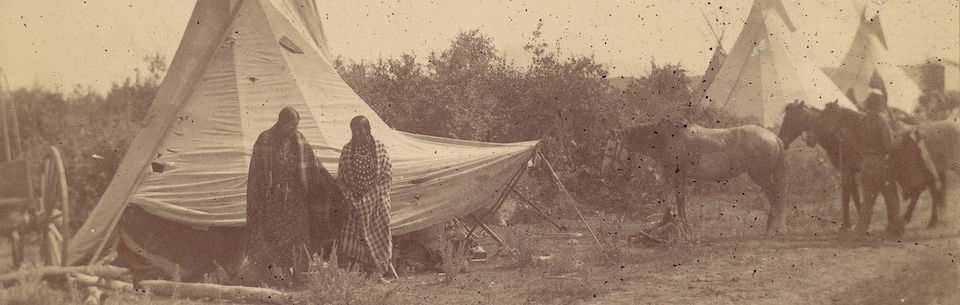
Native Americans and Noah
Are Native Americans related to Noah?
The Bible is explicit in its answer: “Now the sons of Noah who went out of the ark were Shem, Ham, and Japheth. . . . These three were the sons of Noah, and from these the whole earth was populated” (Genesis 9:18–19 NKJV, emphasis added). Everyone on earth descends from Noah. Thus, Native Americans must be descendants of Noah.
But how?
Biblical Framework
Genesis 10 traces the male offspring of Noah’s sons. In short, it details an ancient family tree (Figure 1).1 Native Americans must have descended from one or more of these men.
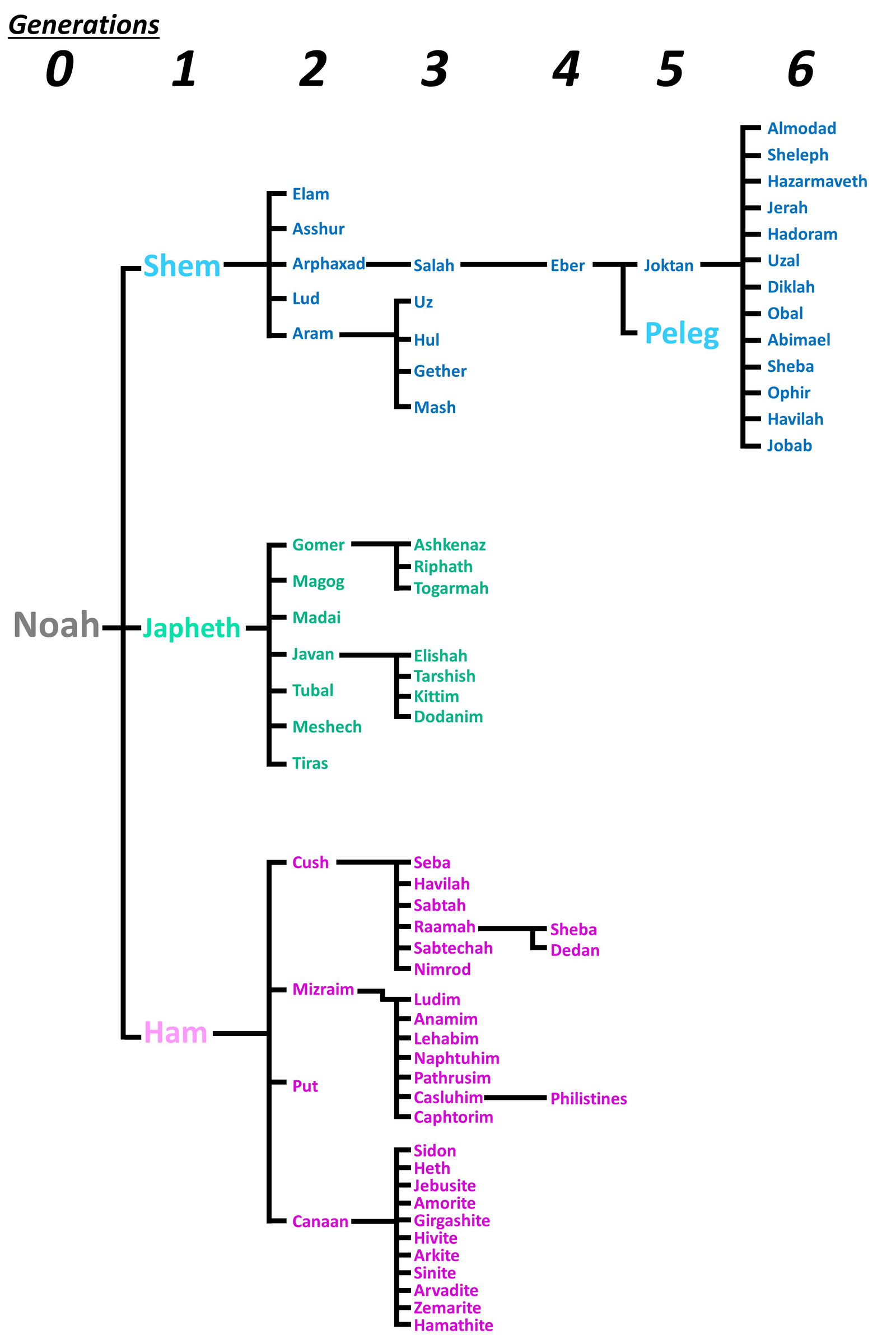
Figure 1. Reconstruction of the genealogy (of males) in Genesis 10.
Genesis 11 describes the initial scattering of the peoples. Rather than obey God’s command to spread out, the descendants of Noah disobeyed and stayed put. They tried to build a city and a tower, and they sought to make a name for themselves. God overturned their designs and forced them to spread out by confusing their languages. Native American ethnolinguistic groups must trace their ultimate origin to this event in the Middle East.
Scientific Discovery
Archaeology describes a cradle of civilization in the Americas in the second millennium before Christ. The Olmecs built their now-famous giant sculpted heads (Figure 2). The timing of Babel—likely around 4,000 years2 ago—is just a few centuries before the conventional date for the Olmec civilization.3 These early Americans likely arrived shortly after Babel.
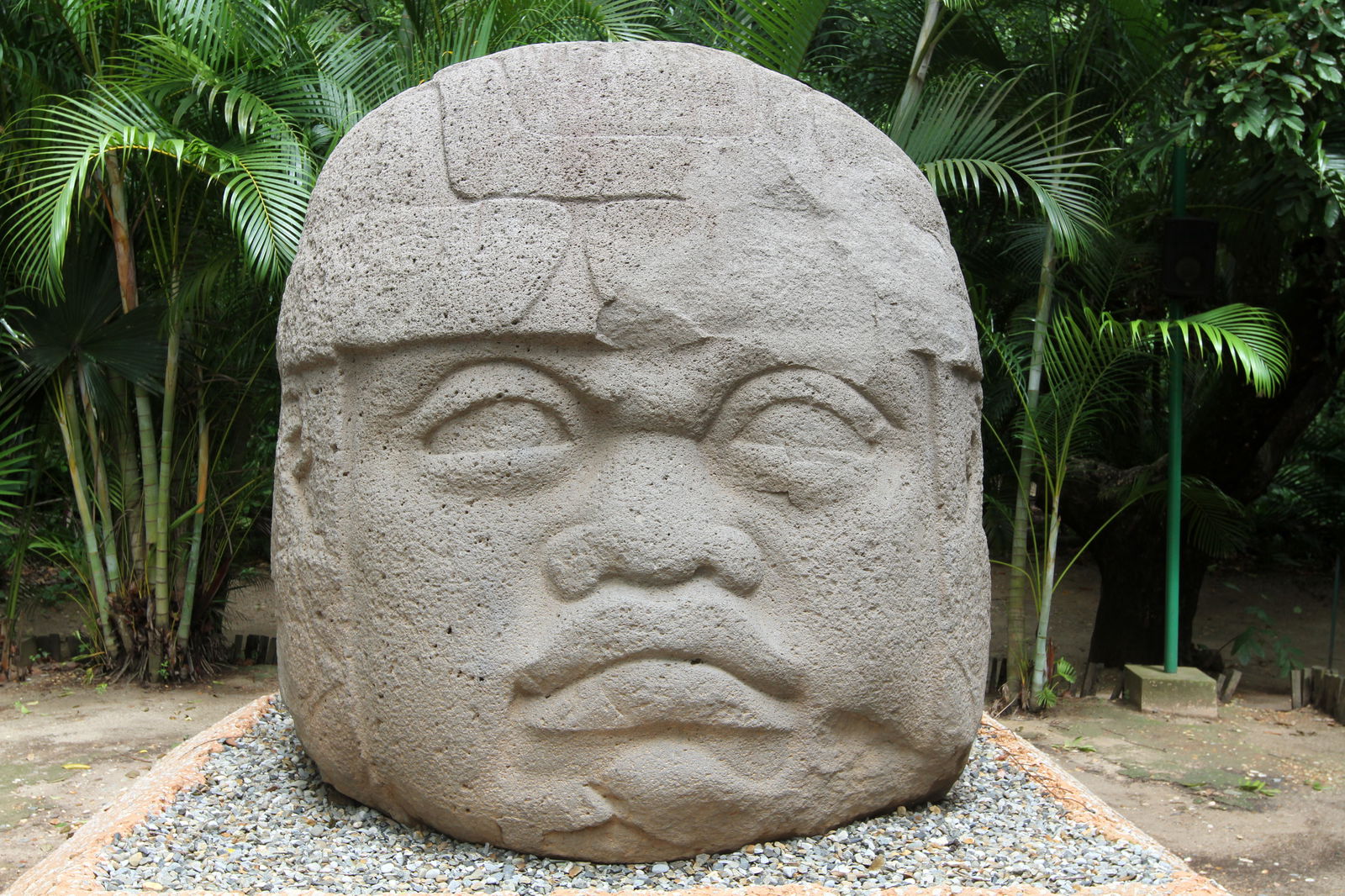
Figure 2. Example of a giant sculpted Olmec head. Image credit: Arturo Peña Romano Medina
These early Americans likely arrived shortly after Babel.
Did they cross from Asia into the Americas via the Bering Strait? An ice age happened shortly after the flood. Hence, the early American arrivals may have used an ice bridge. But these people were also recent descendants of Noah, the great ark builder. Arrival by boat is equally plausible.
Who did these people descend from? To which descendants of Noah do Native Americans trace their ancestry?
In men, fathers pass on the Y chromosome to their sons. It is a small fraction of a male’s total DNA. It’s also passed on imperfectly. On average, each generation accumulates three or so mistakes—mutations.4 Effectively, the Y chromosome acts like a clock. Long story short, from the Y chromosomes of men around the globe, we can reconstruct a family tree.
The base of this tree contains a mirror image of the Genesis 10 genealogy.5
Practically, then, any people group on earth can trace their ancestry back to specific men in Genesis 10 with the Y chromosome (Figure 3).6 For Native Americans, many Y chromosome test results have already been published. They show that both Ham’s descendants and Shem’s descendants gave rise to Native Americans.7 For Ham’s side, my best guess is specifically via Ham’s son Cush. On the Semitic side of the tree, my best guess is one of the 13 sons of Joktan.
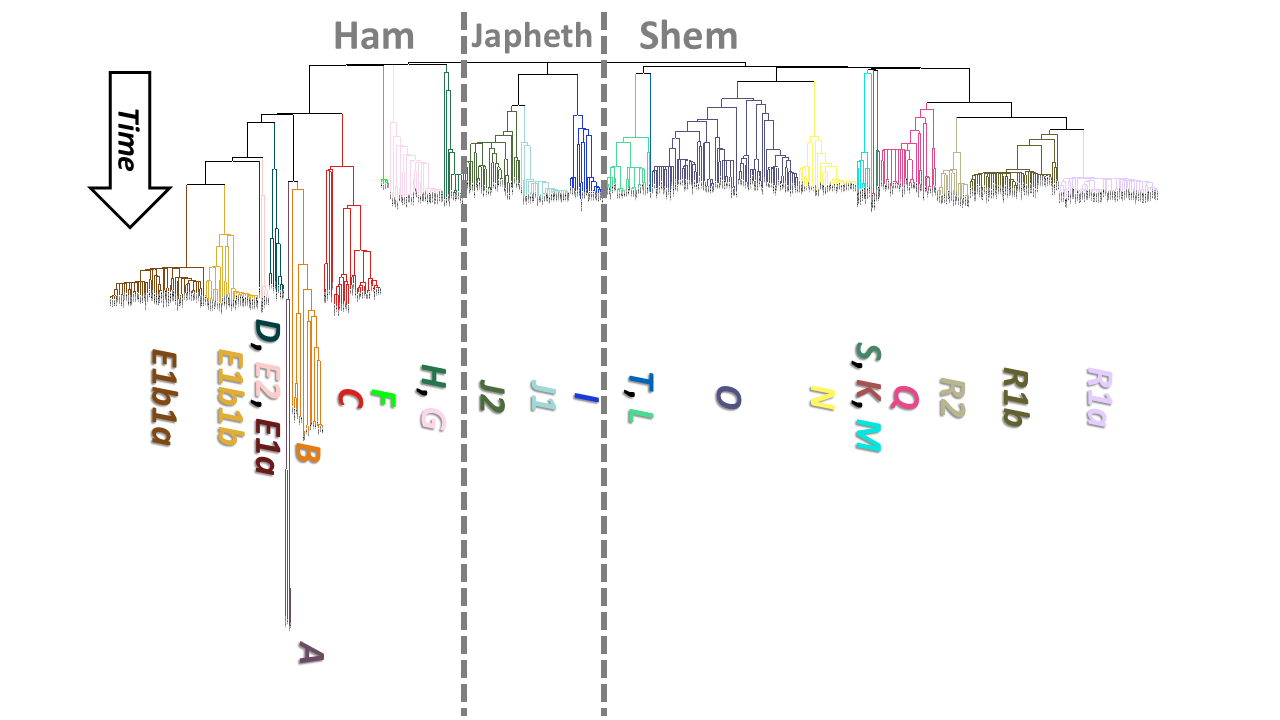
Figure 3. Representative example of a Y chromosome, DNA-based family tree. Letter-number combinations represent technical shorthand for major branch clusters in the tree. These clusters can be traced to specific sons of Noah.
This result is rather typical of people groups around the globe. Almost every ethnicity descends from multiple sons of Noah.8
Why? In short, history is messy. It’s filled with migration, conquest, rape, pillage, and slaughter. Babel was just the start of many migrations that would follow over the next several thousand years.
Making News
In fact, DNA shows that the Americas were settled in multiple waves from Asia.9 The most recent happened in the AD 900s. It followed a migration in the AD 300s to 600s. The 100s BC also saw a migration, as did the 1000s BC. All four of these migrations have clear genetic echoes. The only period still shrouded in genetic mystery is the earliest—the time of the Olmecs. Their genetic lineage appears to have gone extinct. Archaeologically, they disappeared in the 400s BC.10
We’re now breaking new ground and discovering new things about the world and the past.
If this history seems like news to you, it is! Creation science has now matured to such an extent that we’ve gone from defense to offense. We’re no longer occupied solely with rebutting evolutionary claims about the world and about Native Americans. We’re now breaking new ground and discovering new things about the world and the past. These new insights to pre-European Native American history are among the most spectacular findings of the last few years.11 Genetics continues to reveal more information that supports the biblical narrative. As more information comes in, I expect to find even more evidence that confirms what the Bible said all along.


Footnotes
- Adapted from: N. T. Jeanson, Traced: Human DNA’s Big Surprise (Green Forest, AR: Master Books, 2022).
- Genesis 11:1 describes the people after the flood as “the whole earth.” Genesis 10:25 says that, in Peleg’s day, the “earth” was divided. I presume this refers to the division and scattering of peoples described in Genesis 11:1–9. Peleg lived in the first few centuries after the flood. The genealogies from the Masoretic text put the flood date around 4,500 years ago (C. Hardy and R. Carter, “The Biblical Minimum and Maximum Age of the Earth,” Journal of Creation 28, no. 2 [2014]: 89–96). Thus, I estimate the tower of Babel incident to have taken place around 4,000 years ago.
- C. Scarre, ed., The Human Past (New York: Thames & Hudson, 2009).
- N. T. Jeanson and A. D. Holland, “Evidence for a Human Y Chromosome Molecular Clock: Pedigree-Based Mutation Rates Suggest a 4,500-Year History for Human Paternal Inheritance,” Answers Research Journal 12 (2019): 393–404;
N. T. Jeanson, “Testing the Predictions of the Young-Earth Y Chromosome Molecular Clock: Population Growth Curves Confirm the Recent Origin of Human Y Chromosome Differences,” Answers Research Journal 12 (2019): 405–423. - Jeanson, Traced: Human DNA’s Big Surprise.
- Jeanson, Traced: Human DNA’s Big Surprise.
- Jeanson, Traced: Human DNA’s Big Surprise.
- Jeanson, Traced: Human DNA’s Big Surprise.
- Jeanson, Traced: Human DNA’s Big Surprise;
See also: N. T. Jeanson, “Y-Chromosome-Guided Analysis of Mitochondrial DNA Lineages in the Americas: New Evidence for a Mitochondrial DNA Root, for a Mitochondrial DNA Clock, and for at Least One Migration from Asia into the Americas in the First Millennium BC,” Answers Research Journal 18 (2025): 347–375. - Michael D. Coe and Rex Koontz, Mexico: From the Olmecs to the Aztecs (New York: Thames and Hudson, 2013).
- For much more detail on the pre-European history of the Americas, see the following:
Jeanson, Traced: Human DNA’s Big Surprise;
N. T. Jeanson, They Had Names: Tracing the History of the North American Indigenous People (Green Forest, AR: Master Books, 2025);
See also: N. T. Jeanson, “Breaking News: Lost American History Discovered in DNA,” Answers in Genesis, July 16, 2025, https://answersingenesis.org/genetics/lost-american-history-discovered-dna/.
Support the creation/gospel message by donating or getting involved!

Answers in Genesis is an apologetics ministry, dedicated to helping Christians defend their faith and proclaim the good news of Jesus Christ.
- Customer Service 800.778.3390
- Available Monday–Friday | 9 AM–5 PM ET
- © 2026 Answers in Genesis