

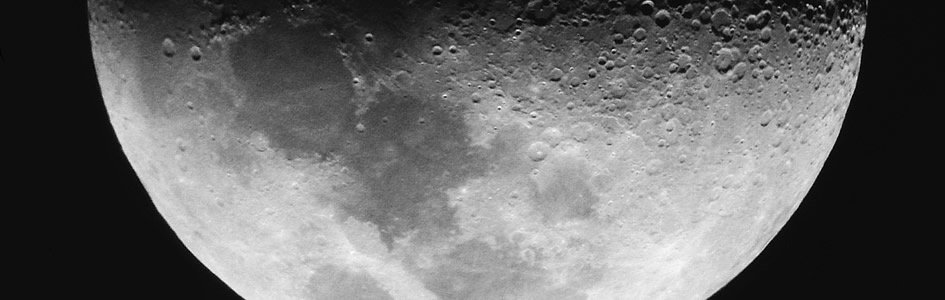
Moon
Lunar Origin Theories
Fifty years ago three theories competed to explain the moon’s origin. Settling this dispute was a major reason for the Apollo program. Lunar rocks brought back by the Apollo astronauts appeared to rule out all three theories. In the post-Apollo world, scientists developed the giant impact hypothesis as a sort of hybrid of the three older models.
Meteors Hit the Moon
Sometime in its past, the earth’s moon was pounded with thousands upon thousands of meteors. Perhaps an asteoroid bombardment helped initiate the Flood, and the stream of destructive meteroids pelted the moon at the same time, as they flew through the solar system.
The Moon—A Perfect Partner
The greatest problem that Newton tackled was the reason the moon orbited the earth each month. In solving that problem, Newton developed his theory of gravity. If the earth didn’t have the moon, Newton might never have reached his amazing insight into the fundamental laws of God’s creation.
Articles About Moon
-
Research PaperProblems for 'Giant Impact' Origin of MoonApril 1, 2000, pp. 6–7
Evolutionary astronomers have great trouble accounting for the origin of the moon. There have generally been three competing hypotheses, but they all have serious physical problems.
-
Technical Research PaperA Biblically-Based Cratering TheoryApril 1, 1999, pp. 100–104
The cratering patterns observed on the moon were formed during two distinct impacting episodes.
-
Technical Research PaperMoon Dust and the Age of the Solar SystemApril 1, 1993, pp. 2–42
One of the evidences for a young earth that creationists have been using now for more than two decades is the so-called “dust on the moon” problem.
-
Magazine ArticleIs the Moon Really Old?Sept. 1, 1992, pp. 43–44
Because the presence of the moon over any part of the earth does not cause an immediate bulging response, this slight delay results in a continuous, slight, forward 'pull' on the moon.
-
Magazine ArticleMoon Quiz WinnerNov. 1, 1980, pp. 19–20
Congratulations to Alex Williams in the Environmental Science Division of the Australian Atomic Energy Commission.
-
Magazine ArticleCan You Prove How Young the Moon Is?May 1, 1980, pp. 15–16
When rocks were brought back from the moon a substance called neptunium was discovered to be present in them.
Support the creation/gospel message by donating or getting involved!

Answers in Genesis is an apologetics ministry, dedicated to helping Christians defend their faith and proclaim the good news of Jesus Christ.
- Customer Service 800.778.3390
- Available Monday–Friday | 9 AM–5 PM ET
- © 2026 Answers in Genesis