


Unicorns, Dragons, and Cockatrices—Are There Monsters in the Bible?
When reading the Bible—especially if you use the King James Version (KJV)—you may run across some interesting words and wonder, “why is that in the Bible?”
Are mythical creatures such as unicorns, dragons, and cockatrices in the Bible?
1. Unicorns
You will find the English word unicorn nine times in the KJV (all Old Testament references). Is the Bible really referring to the mythical horse with a single horn that flies through the air and eats rainbows that nearly every little girl in the twenty-first century is obsessed with?
The answer should be obvious: no. The Hebrew word translated in 1611 as unicorn is re’em. Contextually, it refers to a strong, untamable creature that likely had a single horn. Modern translations typically use wild ox where the KJV used unicorn.
What was the re’em? Translators have debated throughout history, but a few possibilities include:
- A rhino, or even an extinct variety such as Elasmotherium
- The auroch, a wild ox that went extinct in 1627 but had symmetrical horns that appeared as one from a profile view
- One Bible dictionary from 1832 argues that it was a water buffalo before domestication
- Some other extinct creature that we don’t know of today
It’s worth noting that when the KJV translators used unicorn, they were not implying that the Bible was referring to a mythical creature as real. Many of the mythical qualities of the unicorn are modern inventions. We can’t take the modern definition of a word and read that into a translation of the Bible from 400 years ago—English has changed just a bit!
2. Cockatrice
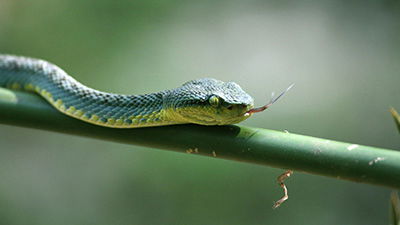
This one might have you scratching your head—what is a cockatrice? It is a mythological creature with a serpent’s body and the head of a rooster. It supposedly could kill with a glance. This English word is used in the KJV four times, generally in poetic passages where it parallels a venomous serpent.
The Hebrew word is tsepha’ or tsephoni, and as the parallelism suggests, it refers to a deadly serpent. Modern translations use adder, viper, cobra, or something similar. Older translations used cockatrice, not because of the mythological elements but to imply something very deadly and venomous.
3. Dragons
Dragon legends are found in cultures around the word—are these creatures also mentioned in the Bible? The Hebrew word tannin is used nine times in the Old Testament (and five times in the plural as tanninim). It’s translated in the KJV as dragon, serpent, or whale—a very wide range of creatures! Modern translations use words such as sea monster, serpent, or great sea creature, depending on the context.
The first mention is in Genesis 1:21,
And God created the great sea monsters [tanninim] and every living creature that moves, with which the waters swarmed after their kind.
Here tannin appears to be a broad category of water creatures, not a specific species.
Another use is when Aaron throws his staff before Pharoah; it becomes a tannin—clearly not a sea monster but rather a serpent.
In prophetic literature, tannin is treated as a real creature and a symbol of strength and power. In some contexts, it seems to be a sea monster of some kind, other times it’s set up as a direct parallel to a cobra, giving the idea of a deadly serpent.
You shall tread upon the lion and the cobra [pethen], the young lion and the serpent [tannin] you shall trample underfoot. (Psalm 91:13 NKJV)
In other words, this Hebrew word refers to a diverse category of creatures, some that live on land and are serpents of some kind, some that are monsterlike and live in the water. The exact species, however, isn’t clear from the text.
For a more detailed exploration of tannin, see Dr. Tim Chaffey’s recent Answers Research Journal paper.
Monsters in the Bible?
There are “monsters” in the Bible, but they aren’t mythical creatures.
There are “monsters” in the Bible, but they aren’t mythical creatures. They were real creatures that the original readers were familiar with so they could understand the illustration being drawn for them. Some of the creatures mentioned throughout the Old Testament are likely extinct now, but perhaps we might recognize some of them from the fossil record.
Discover more about unicorns, dragons, cockatrices, and three other biblical “monsters” in this video from our Answers in Genesis YouTube channel:


Support the creation/gospel message by donating or getting involved!

Answers in Genesis is an apologetics ministry, dedicated to helping Christians defend their faith and proclaim the good news of Jesus Christ.
- Customer Service 800.778.3390
- Available Monday–Friday | 9 AM–5 PM ET
- © 2026 Answers in Genesis