
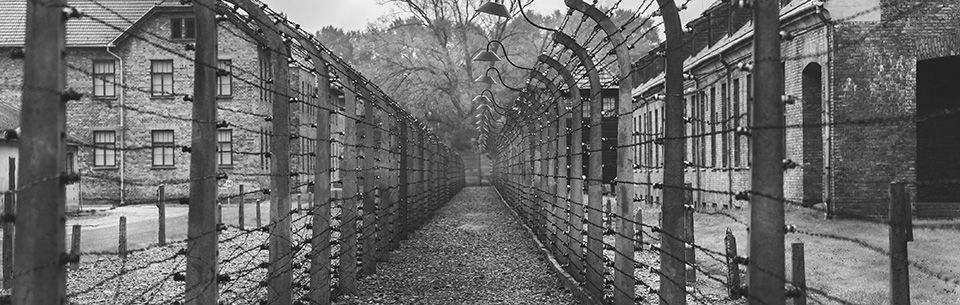
Photo by Karsten Winegeart on Unsplash
Remembering the Horrors of the Holocaust
The deadly consequence of a pseudoscientific and spiritually corrupted racial worldview.
Holocaust Remembrance Day is observed each year on January 27, calling the world to remember the six million Jews and millions of others murdered under Nazi persecution. For Christians—especially those committed to a biblical creationist worldview—this day carries a sobering relevance. The Holocaust stands as one of history’s clearest demonstrations of what happens when human beings are reduced to mere products of biological processes, ranked by supposed evolutionary “fitness,” and stripped of their God-given dignity.
While Nazism was a complex ideology with many influences, its racial hierarchy drew heavily on distorted, pseudoscientific ideas about human evolution that denied the biblical truth that all people are created in the image of God (see later). Remembering the Holocaust challenges the modern church to examine the subtle ways it still compromises with secular views of humanity, views that treat people as accidents of nature rather than divine image bearers. By recognizing this day, Christians affirm both the historical reality of the Holocaust and the theological truth that every human life possesses inherent worth, calling the church to resist any ideology—past or present—that undermines that truth.
Judaism, Christianity, and the Modern Era
Modern thinking about Judaism is undoubtedly shaped by the Holocaust, the terrible killing of around six million Jews and other “undesirable” groups like gypsies, various political prisoners, and the disabled. While Nazism was not Christian in any sense, and Christians who refused to syncretize their faith with Nazism were among the persecuted, some Christians are now hesitant to be critical of Judaism for fear of the charge of “anti-Semitism” or even accidentally promoting hatred of people we ultimately want to see come to salvation in Christ Jesus.
As of mid-2025, there are over 200,000 survivors of the Holocaust still living, and many more Jews personally knew family members who suffered in the Holocaust. And while true Christians were not responsible for the Holocaust, “Christendom” played a significant hand or turned a blind eye. Therefore, Christianity as a whole is often blamed for being complicit in the horrors, which makes it harder to witness to Jews. It is important for us to understand this historical event so we can tell them about their Messiah who suffered and died for them on the cross.
Despite the tragic facts of history, Holocaust denial is a real and pernicious belief among the conspiracy minded. It refers to the false and anti-Semitic claim that the genocide of six million Jews by Nazi Germany during World War II did not occur as documented by extensive historical evidence. Denial typically involves minimizing the scale of the atrocities, disputing the existence of extermination camps, or alleging that the Holocaust was fabricated for political purposes. Historians and institutions worldwide emphasize that Holocaust denial is not a legitimate form of historical revision but a deliberate distortion that fuels prejudice and undermines the memory of victims. Its persistence highlights the ongoing need for education, documentation, and vigilance against misinformation and hate-based narratives.1
Understanding the Rise of Nazism
While nothing excuses the horrors of the Holocaust, understanding the economic position of Germany at the time helps to frame the events in their historical context. Post–World War I Germany was heavily penalized by the Treaty of Versailles, which required Germany to acknowledge guilt in the war, pay reparations, limit their military size, and give up land. The economic sanctions were a huge burden during the period of the Weimar Republic.2 This caused a great deal of resentment in Germany. None of this was the fault of Jews, but Jews were thought to profit off the desperation of the Germans, even though this was generally untrue, and many German Jews fought in World War I.
Adolf Hitler’s political rise began January 30, 1933, when he was appointed chancellor of Germany. The Nazi Party, which he led, capitalized on economic despair, nationalist sentiment, and anti-Semitic propaganda to gain support. Following the destruction by fire of the German parliament in Berlin in February 1933, Hitler pushed through the Enabling Act in March 1933, granting him dictatorial powers. By 1934, many of Hitler’s political rivals were executed in the so-called Night of the Long Knives purge. After the death of Germany’s President Hindenburg, Hitler consolidated his rule as Führer.3 Nazi ideology, rooted in racial purity and authoritarianism, rapidly reshaped German society, laying the groundwork for World War II and the Holocaust.
Unfortunately, not all Christians responded appropriately and biblically, but there were some groups of Christians who did take a stand against Nazism. Germany’s largest Protestant church, the German Evangelical church, had a “theologically grounded tradition of loyalty to the state” and embraced the nationalistic aspects of Nazism and eventually supported a “Nazified” version of Christianity.4 In opposition, the Confessing Church emerged and insisted that its “allegiance was to God and scripture, not a worldly Führer.”5 In the middle were many German Christians who, while they may have privately disagreed with Nazism and its despicable treatment of the Jews and others it deemed “undesirable,” wanted to avoid persecution. The Catholic church was officially against the Holocaust and the persecution of Jews, though the stance of individual priests and bishops varied and the Vatican notoriously helped many Nazis flee Europe after the war. Furthermore, some Christians were influenced by Martin Luther’s writings against the Jews.
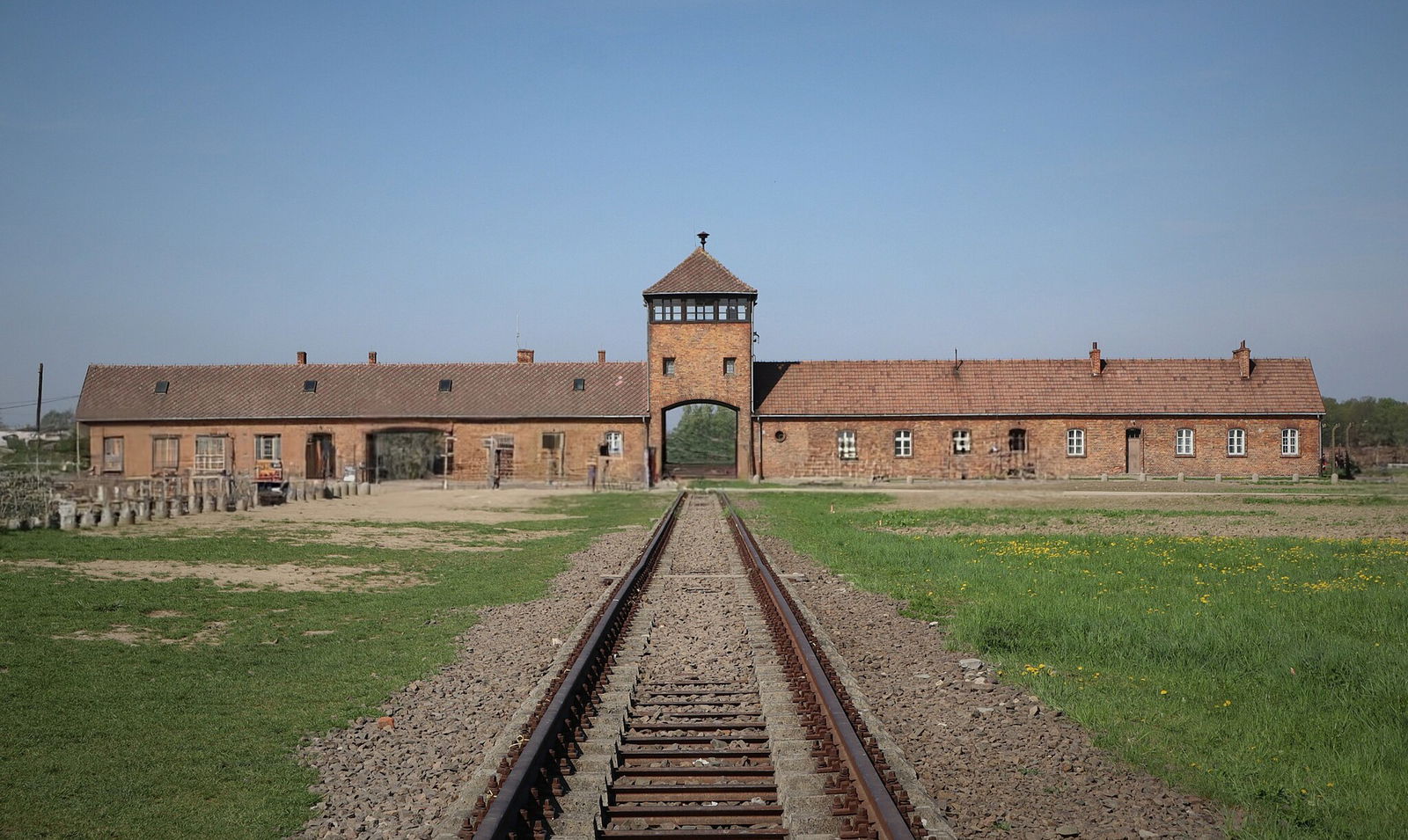
Auschwitz II gate, one of many locations of Nazi crimes against humanity.
Itaypap, CC0, via Wikimedia Commons
The Holocaust was the deadly consequence of a pseudoscientific and spiritually corrupted racial worldview.
The Holocaust was not just a campaign of mass murder—it was the deadly consequence of a pseudoscientific and spiritually corrupted racial worldview. The Nazis believed that humanity was divided into biologically distinct “races” and that these races were locked in a struggle for survival.6 Tragically, the churches of Europe were contaminated themselves by historic anti-Semitism and new evolutionary thinking as Darwin’s views had largely taken over higher education and elite society at this point. So in the eyes of European Jewry, the church utterly failed in its mission to be salt and light and stand against evil in society. Nevertheless, many Christians clung to their biblical convictions and were willing to suffer persecution and death to protect and shelter Jews.
The Myth of the Aryan Race
Nazis idealized the “Aryan” as the pinnacle of human evolution: tall, blond, blue-eyed, athletic, and of Northern European descent. They saw Aryans as the creators of civilization and culture, destined to rule over “lesser races.” This myth had no basis in actual anthropology or genetics—it was a political and ideological construct, and tragically a construct maintained by many German and European churches. This is despite the Bible’s clear teaching of one human race (Acts 17:26) and people made in the image of God (Genesis 1:26–27).7
Twisted Evolutionary Thinking
Nazis utilized Darwinian concepts like natural selection and “survival of the fittest” to justify racial hierarchy and murder. They believed that racial mixing weakened the gene pool and threatened the purity of Germany’s true Aryan heritage. Jews were cast as a parasitic race—allegedly undermining Aryan society from within. Attempts to prove this theory even included the murder of 100 individual Jews purely as anatomical specimens in a “scientific” attempt to “prove” Jewish “racial inferiority.”8
Jews as the “Ultimate Threat”
In German-occupied Soviet territories, Nazi propaganda revived blood libel themes, often combining them with fears of cannibalism and the myth of Judeo-Bolshevism—the idea that Jews were behind communism and social chaos.9
The “Christ-killer” trope, while less emphasized in Nazi racial theory, had already contributed to centuries of hostility toward Jews by many in the European church. This legacy made it easier for Nazi messages to resonate with European populations steeped in such prejudices.
Nazi ideology portrayed Jews as not just different—but dangerous. Hitler depicted Jews as the antithesis of Aryans: corrupt, degenerate, and biologically inferior. This dehumanization paved the way for policies of exclusion, forced sterilization, and ultimately extermination in the slaughterhouses of Europe. Auschwitz and Bergen-Belsen spring to mind, but it is less commonly known that there were six industrial-scale extermination camps in Poland and over a thousand concentration camps spread across occupied Europe. Approximately six million Jews were systematically murdered during the Holocaust. Millions of others—including Roma, disabled individuals, Slavs, and political prisoners—were also targeted and killed by the Nazi regime.
From Belief to Genocide
| Phase | Nazi Action | Ideological Justification |
|---|---|---|
| 1933–1938 | Anti-Jewish laws, propaganda | Protect Aryan purity and culture |
| 1939–1941 | Ghettos, mass shootings | Isolate and weaken the “racial enemy” |
| 1942–1945 | Death camps, final solution | “Cleanse” Europe of Jewish influence |
Impact on Judaism
Judaism was targeted not just as a religion but as an ethnic identity. Synagogues were destroyed, religious leaders murdered, and Jewish cultural life annihilated. Survivors faced the challenge of rebuilding faith and community in the shadow of genocide. Such unspeakable acts reveal how Nazi racial ideology—rooted in evolutionary pseudoscience—combined with centuries of historic “Christian” European anti-Semitism was weaponized to justify one of history’s most horrific crimes.10
Light in the Darkness
While anti-Semitism had deep roots in European Christian history, many Christians defied Nazi ideology and risked their lives to protect Jews. These individuals came from diverse denominations and backgrounds, and their motivations ranged from moral conviction to theological resistance. Here are a few powerful examples:
- Corrie ten Boom (Dutch Reformed): She and her family hid Jews in their home in the Netherlands. They were eventually arrested, and Corrie survived Ravensbrück concentration camp. Her memoir The Hiding Place became a powerful testimony to faith and resistance.
- Dietrich Bonhoeffer (Lutheran theologian): A founding member of the Confessing Church, Bonhoeffer opposed the Nazification of German Protestantism. He was involved in plots to overthrow Hitler and was executed in 1945. His writings, like The Cost of Discipleship, remain influential.
- André and Magda Trocmé (French Protestants): They led a nonviolent resistance movement with other village residents of Le Chambon-sur-Lignon that sheltered thousands of Jews. Their pacifist theology inspired collective action.
- Maximilian Kolbe (Catholic priest): Though not directly involved in rescuing Jews, Kolbe sheltered refugees, including Jews, in his monastery. He was arrested and later volunteered to die in place of another prisoner at Auschwitz, becoming a Catholic martyr.
- The Vatican and individual Catholics: While the role of Pope Pius XII remains controversial, many Catholic clergy and laypeople across Europe sheltered Jews, forged baptismal certificates, and helped smuggle people to safety.
The Aftermath of the Holocaust and Jewish Renewal
After World War II, the Jewish people faced the aftermath of profound trauma but also historic transformation. From the ashes of the Holocaust emerged a renewed Jewish identity, the rebirth of Israel, amid a long, complex legacy of conflict and survival.
Jewish Holocaust survivors faced the daunting task of rebuilding their lives amid shattered communities and lingering anti-Semitism. Many found shelter in refugee camps, while others immigrated to the United States, Canada, and Israel.
In response to the Holocaust, Jewish thinkers reexamined their beliefs and traditions regarding suffering and identity, as well as their relationship to Christianity. Judaism saw a resurgence in spiritual exploration and cultural preservation. In the aftermath of the Holocaust, sadly, many Jews turned to atheism and political activism, which often represented a regressive move away from traditional Jewish standards and practice.11 For many, God’s perceived silence at Auschwitz necessitated a shift from divine reliance to human agency.
The horrors of the Holocaust also prompted Christian theologians to confront centuries of anti-Semitism embedded in unbiblical Catholic and Protestant thinking. Documents like Nostra Aetate (1965) from the Catholic church marked a turning point, acknowledging the church’s role in fostering anti-Jewish sentiment and calling for interfaith reconciliation.12
Conclusion
A departure from the Creator’s design—where all are made in his image, belonging to one human race—paved the way for unparalleled suffering.
This article has underscored how a departure from the Creator’s design—where all are made in his image, belonging to one human race—paved the way for unparalleled suffering. For Christians committed to biblical creation, the Holocaust serves as a powerful reminder of the vital importance of upholding these foundational truths. It challenges us to critically examine any contemporary philosophy that compromises the divine origin and worth of human life. By remembering the horrors, we are called not only to mourn the immense loss but also to passionately proclaim the gospel message of a Messiah who came to redeem and restore us to him and a Creator who imbues all people with sacred value. In doing so, we stand firm against any ideology that seeks to diminish human worth and remain vigilant, grounded in God’s unchanging Word.


Footnotes
- United States Holocaust Memorial Museum, Washington, DC, “Holocaust Deniers and Public Misinformation,” accessed January 20, 2025, https://encyclopedia.ushmm.org/content/en/article/holocaust-deniers-and-public-misinformation.
- Germany’s democratic government from 1919 to 1933, established after World War I, named after the town of Weimar.
- A German word meaning leader or guide.
- United States Holocaust Memorial Museum, Washington, DC, “The German Churches and the Nazi State,” accessed January 20, 2025, https://encyclopedia.ushmm.org/content/en/article/the-german-churches-and-the-nazi-state.
- United States Holocaust Memorial Museum, Washington, DC, “German Churches.”
- Alan Bullock, Wilfrid F. Knapp, and John Lukacs, “Adolf Hitler: Dictator of Germany,” Britannica, January 15, 2026, https://www.britannica.com/biography/Adolf-Hitler.
- See also Ken Ham and A. Charles Ware, One Race, One Blood (Green Forest, AR: Master Books, 2019), https://answersingenesis.org/answers/books/one-race-one-blood.
- Jerry Bergman, “The Failed Attempt to Prove Jewish Inferiority by a Skeleton Collection,” Answers Research Journal 13 (2020): 331–337, https://answersresearchjournal.org/jewish-inferiority-skeleton-collection.
- Elissa Bemporad, Legacy of Blood: Jews, Pogroms, and Ritual Murder in the Lands of the Soviets (New York: Oxford University Press, 2019), 126–146.
- Jerry Bergman, “Darwinism and the Nazi Race Holocaust,” Answers in Genesis, November 1, 1999, https://answersingenesis.org/charles-darwin/racism/darwinism-and-the-nazi-race-holocaust.
- Sara E. Karesh and Michell M. Hurvitz, Encyclopedia of Judaism, Encyclopedia of World Religions, ed. J. Gordon Melton (New York: Facts on File, 2006), 254.
- Gary G. Porton, “Jewish-Christian Theology and Relations After the Holocaust,” My Jewish Learning, accessed January 20, 2025, https://www.myjewishlearning.com/article/judaism-and-christianity-after-the-holocaust.

Support the creation/gospel message by donating or getting involved!

Answers in Genesis is an apologetics ministry, dedicated to helping Christians defend their faith and proclaim the good news of Jesus Christ.
- Customer Service 800.778.3390
- Available Monday–Friday | 9 AM–5 PM ET
- © 2026 Answers in Genesis