

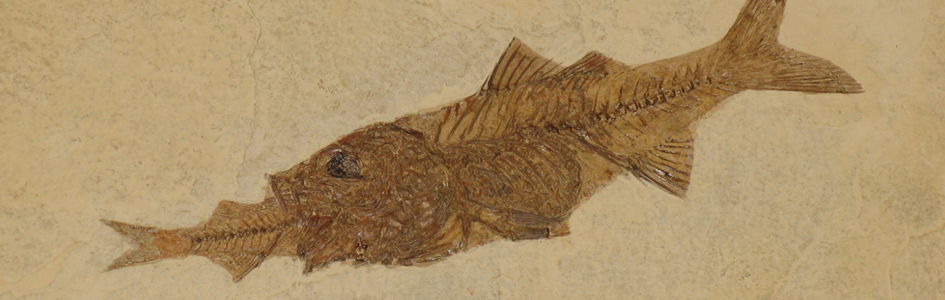
Fossil of a fish eating another fish at the Creation Museum
How Are Fossils Formed?
Fossils Can Form Quickly
While scientists are still trying to sort out the complex details about fossilization, one fact is undisputed: it can be amazingly fast. Massive catastrophes like Noah’s Flood would produce the conditions necessary to quickly bury and protect creatures so that they can fossilize.
Fossil Leaves
Normally leaves shrivel up soon after they die. So why do we find so many leaves so well preserved worldwide—even flatter than they are in life? A unique combination of events, unlike anything we see today, would make this “wonder” possible.
Petrified Animals
A team examining a fossil deposit in the Canadian Rockies has determined that the fossil “bonanza” was buried by a rapid, muddy “miracle of preservation.” The researchers concluded that the deposit was created by a rapid mud slurry that covered the bodies so completely that whole bodies were petrified.
Amazing Preservation
The relatively poor fossil record of octopuses, combined with these incredibly preserved specimens, repudiate the old-earth model of fossilization and provide powerful evidence for a catastrophic Flood that quickly buried these octopuses in sediments (before they could decay or be scavenged).
Articles About How Are Fossils Formed?
-
Magazine Article‘Instant’ Petrified WoodSept. 1, 1995, pp. 38–40
‘Instant petrified wood’—so ran the heading to the announcement in Popular Science, October 1992.
-
Magazine ArticleRapid FossilsJune 1, 1994, pp. 50–51
This is a sketch of the fossilized skull of a reptilian predator (Hypopnous squaliceps) with remains of its prey still lodged in its mouth! This remarkable preservation was found in the Permian beds.
-
Magazine ArticlePetrified WaterwheelMarch 1, 1994, pp. 25–26
Tourists who visit Cape Leeuwin in Western Australia are astonished at the sight of this waterwheel which has become entombed in solid rock in less than 65 years.
-
Magazine ArticleFossil Jellyfish Greeted with Derision!Sept. 1, 1990, pp. 21–22
Countless millions of fossilized jellyfish and other ‘soft’ creatures are contained in an extensive layer of sandstone at Ediacara in South Australia.

Support the creation/gospel message by donating or getting involved!

Answers in Genesis is an apologetics ministry, dedicated to helping Christians defend their faith and proclaim the good news of Jesus Christ.
- Customer Service 800.778.3390
- Available Monday–Friday | 9 AM–5 PM ET
- © 2026 Answers in Genesis