


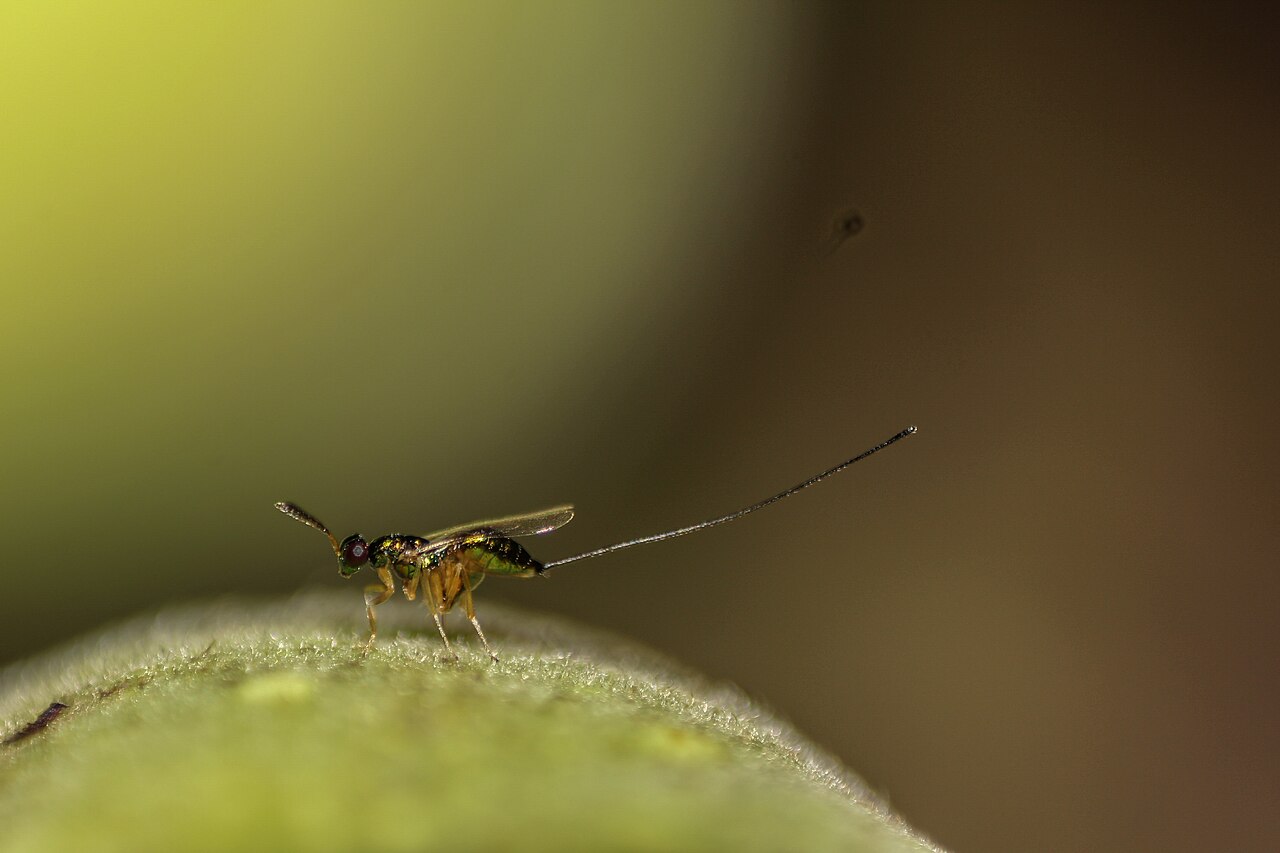
Photo by Norah Tempus, CC BY 4.0, via iNaturalist
What Is Coevolution?
Is coevolution a problem for biblical creationists?
In the evolutionary paradigm, organisms are believed to evolve in response to selection pressures. Sometimes, however, evolutionists stumble across an example of two or more species that appear to be uniquely adapted to each other or to each other’s groups. This is a special case of natural selection, where the selection pressures are not wholly environmental but come from other organisms. This is called coevolution.
The idea of coevolution goes back as far as Darwin, although he called it coadaptation, with coevolution being popularized in the 1960s.1 The general idea of coevolution is that when species X and species Y interact with each other, they influence each other’s evolution.2 These influences take a variety of forms but can be broadly condensed to a few categories.
Pairwise Coevolution
One of the major categories of coevolution is pairwise coevolution. The idea here is that there are two species involved, and they exert a strong influence on each other, such as in the case of a specialist pollinator on a specialist plant.
The classic example is that of the yucca moth and yucca flower relationship. The yucca flowers are specialized such that only specific yucca moth species can pollinate them. In turn, the yucca moths must lay their eggs on yucca flowers so that their young can have food after hatching.3
A similar example occurs in the plant genus Leonardoxa, where ants live in symbiosis with the plant by burrowing into the plant. The shape and size of the organ the ants live in strongly influences ant traits.4 And another common example is the fig wasps and figs. The figs are dependent on the wasps for pollination. The wasps use the figs as homes for their eggs and their larva. The fig reproductive traits appear to also influence the reproductive success of the wasps.5
Female wasp on a fig. Nikhilmore, CC BY-SA 4.0, via Wikimedia Commons.
Gene-for-Gene Model
Another major subcategory of coevolution is the gene-for-gene model. The model assumes that there is a gene in an organism that produces a trait that interacts with a trait in a different organism. This model is famously common in plant pathology, where a resistance allele matches an allele for avirulence in the pathogen. Where these alleles match, the plant is not infected. If there is no match, infection occurs.6
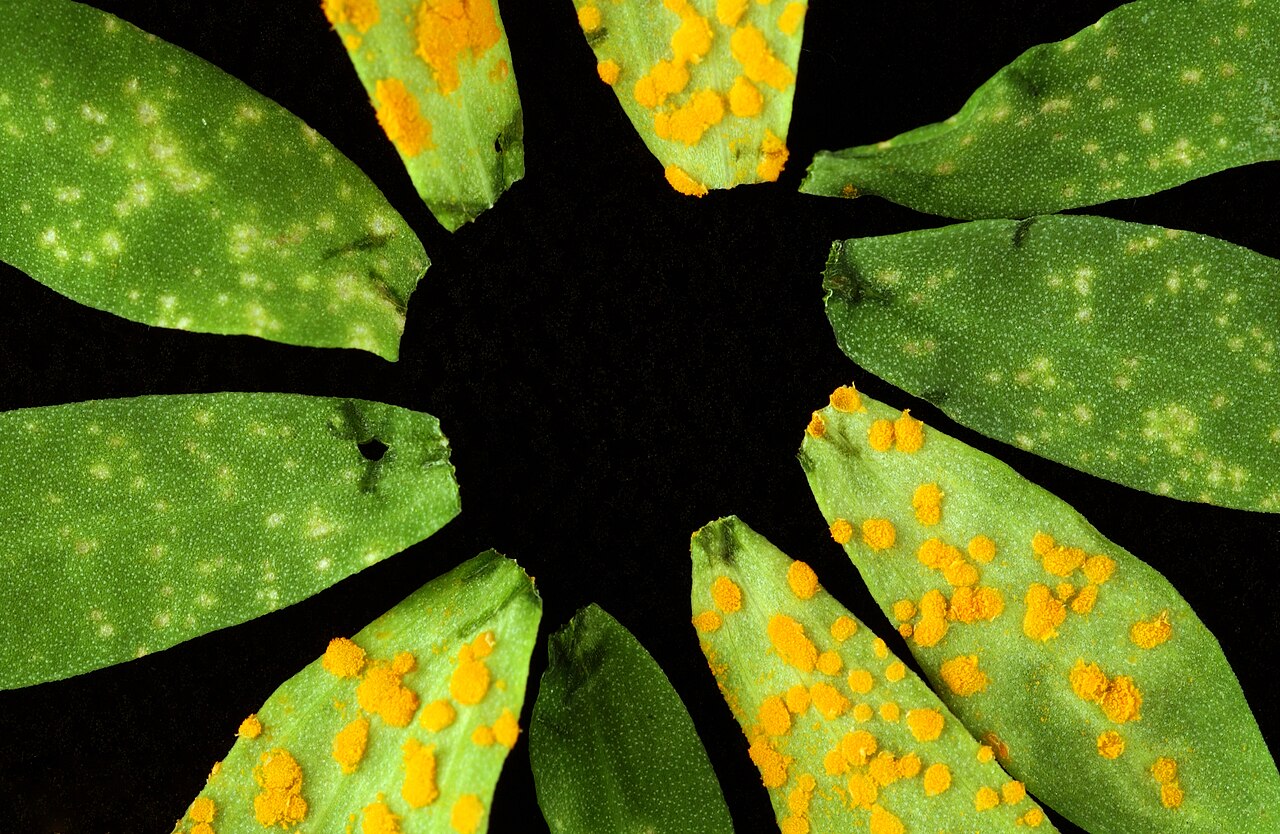
A famous example is the flax and flax rust interaction, where products from the avirulence gene enter the host, are recognized by the resistance gene, and thereby generate a plant response.7 A similar response occurs in the common plant model organism Arabidopsis thaliana, where two resistance genes pair with two avirulence genes to confer resistance to a pathogen.8 These gene-for-gene systems are known in multiple other species as well.9,10
Diffuse Coevolution
Diffuse coevolution is a more complex model, as it involves multiple species interacting with multiple other species. It has been suggested for the relationship between milkweeds and milkweed beetles, where each beetle is specialized to a specific species of milkweed to survive on its toxins.11,12 It has also been applied to plants whose seeds are dispersed by birds, where the plants that produce fruit during the dry season produce fruits with higher water content to help nourish their distributors.13
Another example is a mite that parasitizes two dragonfly species, where only one is resistant. The mite does not distinguish; instead, it simply tracks the susceptible host and times its eggs to hatch when the susceptible host is most readily available. It will still infect both when the more resistant host is available.14 And acacia trees engage in mutualism with ants living on their trunk, with the ants getting a home, and the tree getting defense against herbivores. Multiple ant lineages exist on acacia trees, some of which provide only minimal or no protection to the trees, and multiple lineages are often found on the same tree.15
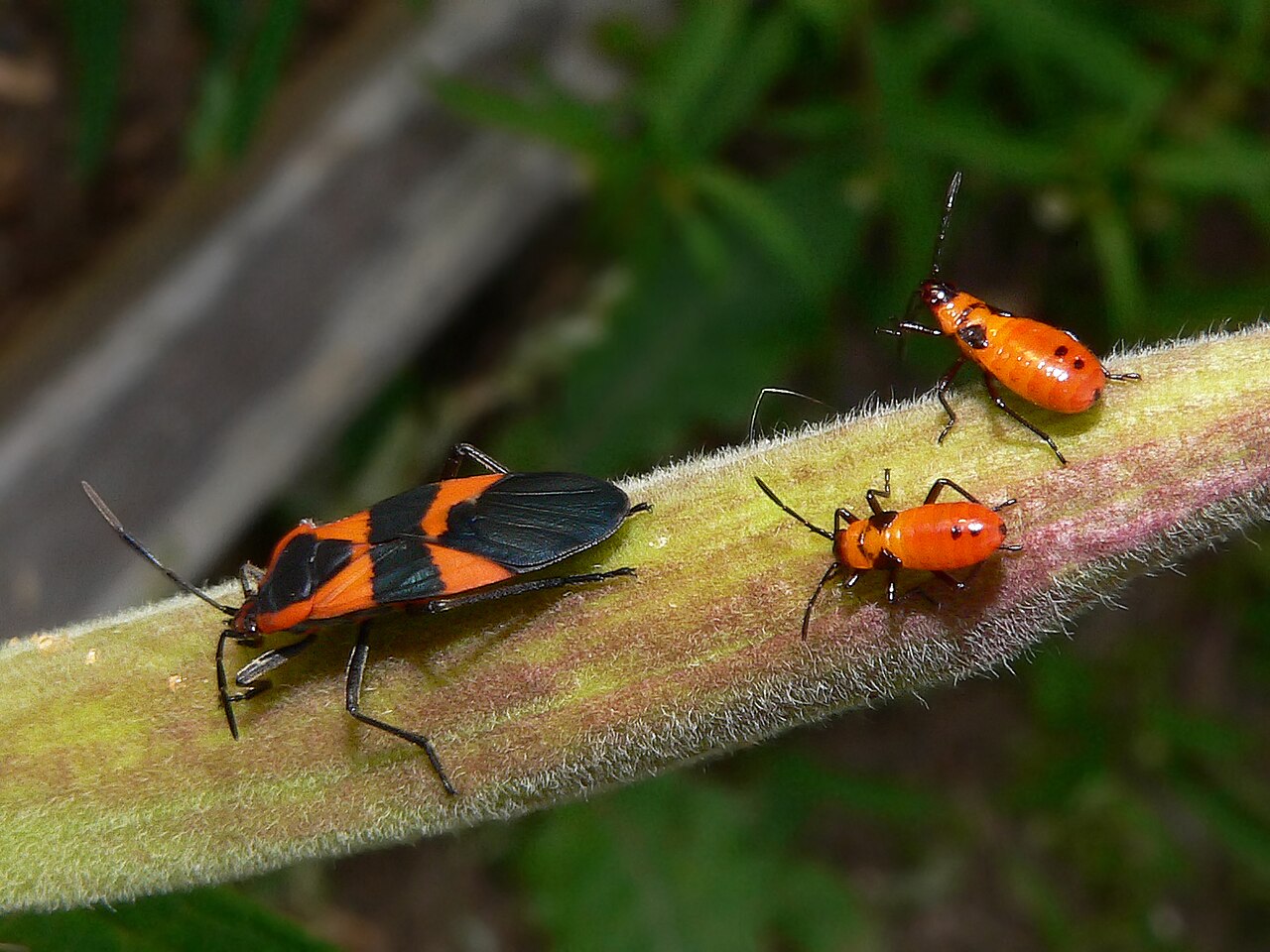
Milkweed bug adult and two juveniles. Photo by Greg Hume (Greg5030), CC BY 3.0, via Wikimedia Commons.
Is Coevolution a Problem for Biblical Creationists?
Many of these scenarios are very simple to explain without the overarching evolutionary baggage. For one thing, many of these coevolutions/mutualisms could easily be explained by our Creator either designing their systems for his glory or for the organisms’ survival in a post-fall world, but most could have arisen within even the shorter biblical timespan of only about 6,000 years. For example, the gene-for-gene model is no surprise to biblical creationists. Mutations occur regularly in every organism, and in any population, there are any number of mutations for any given trait. Suppose that host X mutates such that it now has resistance to pathogen Y. There will be a few members of pathogen Y to which the novel mutation is not resistant. Because these are the only members of pathogen Y that can now infect a host, they will be reproductively favored and quickly rise to dominate the local population. The gene-for-gene model is quite similar to bacterial resistance to antibiotics (although with different underlying genetics) and has nothing to do with molecules-to-man evolution.
Similarly, pairwise coevolution is very straightforward. Creationists do not believe in fixity of species. When a host species, like the aforementioned figs for example, develops slightly modified traits, it is completely reasonable that the wasps best suited to the new traits of their hosts might stick with the host, while the ones well adapted to the previous host would remain there. Again, this has nothing to do with molecules-to-man evolution, simply the development of new species or new biotypes.
Diffuse coevolution is harder to quantify because of the multiple species being involved. However, like pairwise coevolution, this has nothing to do with making men from apes. It only relates to diversification. Thus coevolution really isn’t evolution: It’s basically just species developing matching traits due to either mutual or individual dependence.


Footnotes
- Katie Spence, “Coevolution Explained with Six Examples,” Natural History Museum, accessed June 2026, https://www.nhm.ac.uk/discover/coevolution-explained-with-six-examples.html.
- M. A. Brockhurst and B. Koskella, “Experimental Coevolution of Species Interactions,” Trends in Ecology & Evolution 28, no. 6 (2013): 367–375.
- C. I. Smith and J. H. Leebens-Mack, “150 Years of Coevolution Research: Evolution and Ecology of Yucca Moths (Prodoxidae) and Their Hosts,” The Annual Review of Entomology 69 (2024): 375–391, https://www.annualreviews.org/deliver/fulltext/ento/69/1/annurev-ento-022723-104346.pdf?itemId=/content/journals/10.1146/annurev-ento-022723-104346&mimeType=application/pdf.
- C. Brouat, N. Garcia, C. Andary, and D. McKay, “Plant Lock and Ant Key: Pairwise Coevolution of an Exclusion Filter in an Ant-Plant Mutualism,” Proceedings of Royal Society: B 268, no. 1481 (2001): 2131–2141, https://royalsocietypublishing.org/rspb/article-abstract/268/1481/2131/70978/Plant-lock-and-ant-key-pairwise-coevolution-of-an?redirectedFrom=PDF.
- W. J. Ma, Y. Q. Peng, D. R. Yang, and J. M. Guan, “Coevolution of Reproductive Characteristics in Three Dioecious Fig Species and Their Pollinator Wasps,” Symbiosis 49 (2007): 87–94, https://link.springer.com/content/pdf/10.1007/s13199-009-0018-x.pdf.
- P. N. Dodds, G. J. Lawrence, A. M. Catanzariti, T. Teh, C. I. A. Wang, M. A. Ayliffe, et al., “Direct Protein Interaction Underlies Gene-for-Gene Specificity and Coevolution of the Flax Resistance Genes and Flax Rust Avirulence Genes,” Proceedings of the National Academy of Sciences U.S.A. 103, no. 23 (2006): 8888–8893, https://www.pnas.org/doi/pdf/10.1073/pnas.0602577103.
- J. G. Ellis, P. N. Dodds, and G. J. Lawrence, “Flax Rusts Resistance Gene Specificity Is Based on Direct Resistance-Avirulence Protein Interactions,” The Annual Review of Phytopathology 45 (2007): 289–306.
- S. R. Bisgrove, M. T. Simonich, N. M. Smith, A. Sattler, and R. W. Innes, “A Disease Resistance Gene in Arabidopsis with Specificity for Two Different Pathogen Avirulence Genes,” The Plant Cell 6 (1994): 927–933.
- G. F. J. M. Van den Ackerveken, J. A. L. Van Kan, and P. J. G. M. De Wit, “Molecular Analysis of the Avirulence Gene Avr9 of the Fungal Tomato Pathogen Cladosporium fulvum Fully Supports the Gene for Gene Hypothesis,” The Plant Journal 2, no. 3 (1992): 359–366.
- I. Vogt, T. Wohner, K. Richter, H. Flachowsky, G. W. Sundin, A. Wensing, et al., “Gene-for-Gene Relationship in the Host-Pathogen System Malus x robusta 5-Erwinia amylovora,” New Phytologist 197 (2013): 1262–1275.
- B. D. Farrell and C. Mitter, “The Timing of Insect/Plant Diversification: Might Tetraopes (Coleoptera: Cerambycidae) and Asclepias (Asclepiadaceae) Have Co-Evolved?,” Biological Journal of the Linnean Society 63, no. 4 (1998): 553–577.
- S. Kim and B. D. Farrell, “Tetraopes Milkweed Beetle Genomes Elucidate the Adaptive Basis of a Temperate Coevolutionary Radiation,” Molecular Ecology Resources 26 (2026): https://onlinelibrary.wiley.com/doi/pdf/10.1111/1755-0998.70117.
- C. M. Herrera, “Seasonal Variation in the Quality of Fruits and Diffuse Coevolution Between Plants and Avian Dispersers,” Ecology 63, no. 3 (1982): 773–785.
- M. R. Forbes, K. E. Muma, and B. P. Smith, “Diffuse Coevolution: Constraints on a Generalist Parasite Favor Use of a Dead-End Host,” Ecography 25 (2002): 345–351.
- P. S. Ward and M. G. Branstetter, “The Acacia Ants Revisited: Convergent Evolution and Biogeographic Context in an Iconic Ant/Plant Mutualism,” Proceedings of the Royal Society: B 284, no. 1850 (2017): https://royalsocietypublishing.org/rspb/article/284/1850/20162569/78473.



Support the creation/gospel message by donating or getting involved!

Answers in Genesis is an apologetics ministry, dedicated to helping Christians defend their faith and proclaim the good news of Jesus Christ.
- Customer Service 800.778.3390
- Available Monday–Friday | 9 AM–5 PM ET
- © 2026 Answers in Genesis