


10 Reasons Why Marxism Is Bad News for Humanity
This list is not exhaustive.
“Marxism isn’t so bad. If we only had the right cultural conditions, different leaders, more devotion, and better technology, we could make Karl Marx’s dreams of communism work!”
This type of message may be popular. But is it true? Hardly. Beginning with God’s Word as our standard for truth, let’s look at 10 reasons why Marxism is bad news for humanity.
1. It’s a false gospel.
Nineteenth-century philosopher Karl Marx rejected a biblical worldview to invent a worldview of his own—Marxism. How do these worldviews differ? For starters, God’s Word reveals that humans are, by nature, created beings imbued with value as God’s image bearers. Our problems originated with sin, which is the root of violence, greed, injustice, oppression, and other evils. Our only hope is salvation through Jesus, who will create a new heavens and earth (Revelation 21:1–4) as the destiny for those who trust in Him.
In contrast, Marx believed that we’re uncreated beings who shape ourselves by shaping our world,1 that our problem is our socioeconomic conditions, and that these conditions arose as people began to form societies, divide up labor,2 and privately own the means of production (such as tools for farming). Marx thought these processes created social classes with inequality, conflict, and oppression between them, culminating in capitalist societies where business owners (the bourgeoisie) exploited workers (the proletariat). To Marx, the world’s only hope was for the workers to revolt, overthrow capitalism, and build a communist society as humanity’s ideal destiny.
By painting an unbiblical picture of humanity’s nature, problem, hope, and destiny, Marxism functions as a false gospel.
By painting an unbiblical picture of humanity’s nature, problem, hope, and destiny, Marxism functions as a false gospel. Unfortunately, the more a false gospel diverges from the truth of God’s Word, the more harm can result when people try living out those lies.
2. It sets up a false god.
No false gospel is complete without a false god—something humans set up in God’s place as the authority for truth. Though Marx (and many of his followers) espoused atheism, Marxism still harbors such false gods.3
One is the Marxist ideology itself, which communist regimes have revered as the ultimate “truth” to which people must conform. Two other interrelated false gods are the State and the People. Marx thought the State would be a temporary dictatorship comprised of the working class after their revolution.4 In theory, the State would eventually “wither away,” leaving the People to rule themselves as their own collective “god.”5
In practice, making humans and their ideas the final authority for truth culminates in totalitarianism, a system of total social control that demands people bow to these false gods—or else.6 Totalitarian regimes may claim to have civil and religious freedoms, but those freedoms only apply to people who will compromise on God’s Word when necessary to comply with the pseudo-authority for truth.
3. It redefines morality.
Pseudo-authorities for truth often try to redefine good and evil. In this case, Marxist teachings may redefine anything that promotes revolution (including violence) as “good,” and anything that stabilizes the current social order (including the family unit) as “evil.” For example, Lenin once said, “In what sense do we reject ethics, reject morality? In the sense given to it by the bourgeoisie, who based ethics on God’s commandments. . . . Our morality stems from the interests of the class struggle of the proletariat.”7
As the consequences of Lenin’s “morality” attest, redefining good in ways that contradict God’s Word ends up being anything but good for humanity.
4. It poses faulty solutions to real problems.
At first glance, Marxism might sound like it should be good for humanity because it promises to solve real problems. For example, Marx called attention to the problem of factory owners exploiting workers for profit. But because of Marx’s faulty worldview, he misinterpreted the root issue and proposed a faulty solution.
Marx missed that the deeper problem behind exploitation is not capitalism but sin—human rebellion against God’s Word.
Marx missed that the deeper problem behind exploitation is not capitalism but sin—human rebellion against God’s Word. God’s Word legitimizes private ownership but gives us guardrails for how to rightly steward wealth, recognizing God as the ultimate owner.8 Those guardrails prohibit greed, selfishness, and exploitation, calling instead for voluntary generosity. The factory workers whom Marx critiqued were rebelling against these biblical principles.
Because Marx missed the real problem, his solution (revolution) cannot cure humanity of exploitation, oppression, and greed. Revolutions only change the context of these sins from free market societies to communist ones. There, state-sanctioned atheism may readily promote the growth of further sin, reaping even worse destruction.
5. It gets humanity (really) wrong.
Another reason Marx’s solutions cannot work is that Marxism misrepresents humanity. God’s Word reveals that all humans have sinned, standing equally in need of a Savior (Romans 3:23). But Marxism labels humans guilty or innocent based on their group affiliations more than their individual sins. For example, Marx portrayed the business-owning class as guilty of being oppressors, while later Marxist thinkers (neo-Marxists) added groups like men, colonialists, and Christians to the list.9 Marxism ignores that, as Soviet dissident Alexander Solzenitsyn observed, “The line separating good and evil passes not through states, nor between classes, nor between political parties either—but right through every human heart.”10
That’s not all Marxism misses about humanity. Historical attempts at communism have also underestimated people’s self-interest while overestimating their motivation to work for “the good of all” without much direct return for themselves.11 Most of all, Marxism neglects that humans are corrupted by sin. And sin-corrupted people cannot build, populate, or sustain anything like heaven on earth. Quite the opposite. As Dr. Joe Boot points out, “Because man is a sinner, these utopian schemes must always be dystopian in their outcomes.”12
6. It creates and exacerbates conflict.
Marxism’s faulty view of humans deepens divisions between people. This divisiveness stems from Marxist or neo-Marxist teachings that villainize certain people as automatically oppressive based on their group affiliations, regardless of their individual actions or attitudes.13
Such villainization rends society into warring factions, fueling one group’s anger against another. Marxist activists can then channel this anger to fuel revolutionary action, where in-group rises against in-group. This cycle of conflict, anger, and vengeance revolves around sin rather than love, doing more to perpetuate humanity’s problems than to resolve them.
7. It dehumanizes.
Marxism’s tendencies to create divisions, exacerbate conflict, and redefine “truth” lead to dehumanizing entire groups of people considered “oppressive” or “counterrevolutionary.” Historical examples range from the slurs that radical feminists have wielded against men to the tortures that communist interrogators have wielded against faithful Christians.14 Communist regimes may additionally dehumanize anyone who disagrees with the party’s ideology, to the point that only people who agree count as real “persons” with human rights.15
8. It attacks the family.
These attacks on humans coincide with attacks on the fundamental social unit God designed for humans, the family. Utopian socialists like Robert Owen and Charles Foureir, who advocated for communism even before Karl Marx did, thought abolishing the family would be necessary to create a new social order.16 Marx also called for the “abolition of the family” but thought this would happen after the revolution.17 Later neo-Marxist thinkers such as radical feminist Shulamith Firestone thought such a revolution could only succeed through attacking the family.18
All these views depict the family as a unit of oppression that must be deconstructed. Healthy families promote healthy societies. So breaking down and overthrowing the current society requires breaking down and overthrowing the family.
Because God established the family as part of His very good designs for creation, rejecting this good design predictably leads to grief. For example, after the Soviet communist regime took steps to weaken families, the resulting chaos destabilized the new society so much that the communists had to backtrack.19
9. It’s linked to dark spirituality.
One of the original socialists who advocated for breaking down the family, Robert Owen, claimed that séance spirits endorsed his vision for the new world order.20 In fact, Owen thought the task of setting up his version of global socialism required help from these spirits, which we can biblically recognize as satanic.21
Notably, Owen was not a minor character in the history of modern socialism but one of its founding influencers.22 Marx and his coauthor Friedrich Engels, despite critiquing utopian socialists like Owen for being unscientific, said their thinking owed much to these authors.23 Engels even declared the utopian socialists to rank “among the most eminent thinkers of all time.”24
10. It’s doomed to fail, hurting people in the process.
Such connections are hardly surprising, given that rejecting the truth of God’s Word means embracing lies—and the “father of lies” is the devil (John 8:44). The most devious lies include just enough truth to sound persuasive. Such are the lies of Marxism, which points out real problems but proposes faulty solutions.
As the above examples of chaos, strife, and dehumanization illustrate, living out lies results in grave consequences. If we abandon the Word of the one who alone is the way, truth, and life (John 14:6), the logical outcome will be confusion, deception, and death. Correspondingly, Marxism is doomed to fail because it is a false gospel, founded on the rejection of God and His Word.
Summing Up
This rejection of God’s Word represents the root of all 10 reasons why Marxism is bad news for humanity. As an anti-biblical worldview, Marxism cannot provide the basis for a society that lets us thrive as the humans God created us to be.
Marxism cannot provide the basis for a society that lets us thrive as the humans God created us to be.
Trying to build a Marxist society in hopes that “it will work this time” is like trying to repeatedly construct an apartment complex on a faulty foundation. The building will always fall, hurting people in the process. Similarly, living out unbiblical Marxist or neo-Marxist ideas consistently causes more harm than good, no matter the conditions, leaders, or technology involved. In response to the false gospel of Marxism, we must defend and proclaim the true gospel of Jesus Christ—the good news for every human who will repent and believe (John 3:16–9).



Footnotes
- For more on the teachings of Marxism and neo-Marxism, with references to Marx’s original statements, see “Karl Marx: What Christians Need to Know About Him,” Answers in Genesis, June 23, 2023, answersingenesis.org/blogs/patricia-engler/2023/06/23/karl-marx-what-christians-need-to-know/.
- Divided labor usually refers to a system where different people specialize in different tasks or subtasks, rather than in everyone doing the same thing.
- For more on the importance of atheism in Marx’s thinking, see Peter Schuller, “Karl Marx’s Atheism,” Science & Society 39, no. 3 (1975): 331–345. While Marxism is often associated with materialism (the belief that nothing exists except for physical reality), it has been argued that “Marx is more accurately described as a naturalist” because he did not necessarily think that human consciousness can be reduced to matter. (Philip Kain, “Marx’s Theory of Ideas,” History and Theory 20, no. 4 [1981]: 372.)
- See Karl Marx and Friedrich Engels, Manifesto of the Communist Party, trans. Samuel Moore, ed. Friedrich Engels (Chicago: Charles H. Kerr & Company, 1910), 42.
- Some argue that it was Marx’s coauthor, Friedrich Engels, who primarily predicted the state’s disappearance after communism. See Solomon Bloom, “The ‘Withering Away’ of the State,” Journal of the History of Ideas (1946): 113–121.
- See also Joe Boot, “The Makings of the Utopian Power State,” Ezra Institute, September 2, 2020, www.ezrainstitute.com/resources/the-makings-of-the-utopian-power-state; “Rousseau’s Social Contract: How a False Doctrine Inspired Totalitarianism,” Answers in Genesis, September 16, 2022, answersingenesis.org/blogs/patricia-engler/rousseau-social-contract-totalitarianism/.
- Vladimir Lenin, “The Task of the Youth Leagues,” speech delivered at the Third All-Russia Congress of The Russian Young Communist League, October 1920, English translation accessed July 2024, marxists.org/archive/lenin/works/1920/oct/02.htm#1.
- E.g., see 1 Timothy 6:17–19.
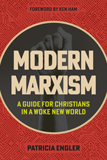
- More on these concepts is available in chapters 2 and 5 of Modern Marxism: A Guide for Christians in a Woke New World.
- Aleksandr Solzhenitsyn, The Gulag Archipelago 1918–1956, trans. Thomas Whitney and Harry Willetts, abridged by Edward Ericson (New York: Perennial Classics, 2002 [originally 1973]), 312.
- See also Tibor Machan, “The Right to Private Property,” Hoover Institution, October 1, 2002, hoover.org/research/right-private-property; Ilya Somin, “Lessons from a Century of Communism,” The Washington Post, November 7, 2017, washingtonpost.com/news/volokh-conspiracy/wp/2017/11/07/lessons-from-a century-of-communism/. (Please read with appropriate discernment; reader discretion is advised due to some language.)
- Boot, “The Makings of the Utopian Power State.”
- For example, see Bryan Osborne, Woke Injustice: A Biblical Response to Critical Race Theory (Green Forest, AR: New Leaf Press, 2024).
- See, for example, Richard Wurmbrand, Tortured for Christ: Today’s Martyred Church (Hayfield Publishing: 1967).
- See Robert Lifton, Thought Reform and the Psychology of Totalism: A Study of ‘Brainwashing’ in China (Chapel Hill, NC: UNC Press, 2012, originally published by Norton, 1963), 433–437.
- See Richard Weikart, “Marx, Engels, and the Abolition of the Family,” History of European Ideas 18, no. 5 (1994): 657–672.
- See Marx and Engels, Manifesto, 36; Weikart, “Marx, Engels, and the Abolition of the Family.”
- Firestone wrote, “Unless revolution disturbs the basic social organization, the biological family . . . the tapeworm of exploitation will never be annihilated. We shall need a sexual revolution much larger than—inclusive of—a socialist one to truly eradicate all class systems.” (Shulamith Firestone, The Dialectic of Sex: The Case for Feminist Revolution [New York: William Morrow, 1970], 12–13.)
- These steps included making divorce easier, decriminalizing adultery, assigning husbands and wives to separate factories, legalizing abortion, and enacting measures that gave children superiority over their parents. See Nicolas Timasheff, “The Family, the School and the Church: The Pillars of Society Shaken and Re-Enforced,” in The Stalinist Dictatorship, ed. Chris Ward (London: Arnold, and New York: Oxford University Press, 1998), 303–308.
- Robert Owen, The Future of the Human Race; Or, A Great, Glorious and Peaceful Revolution Near at Hand, to Be Effected Through the Agency of Departed Spirits of Good and Superior Men and Women (London: Effingham Wilson, 1854). See also “The Dark Spiritual Roots of Global Socialism: Communist Strategies Before Marx,” Answers in Genesis, June 2, 2023, answersingenesis.org/blogs/patricia-engler/dark-spiritual-roots-socialism/.
- Owen, The Future of the Human Race; “The Dark Spiritual Roots of Global Socialism.”
- See, for instance, Graham Wallas, “The Beginning of Modern Socialism,” The Sociological Review 3, no. 1 (1910): 44–50. Wallas declares, “In the case of Socialism the most important tributary is pretty dearly the influence of Robert Owen, the ‘Father of Socialism.’” (Wallas, “The Beginning,” 44.)
- See Roger Paden, “Marx’s Critique of the Utopian Socialists,” Utopian Studies 13, no. 2 (2002): 67–91.
- Friedrich Engels, “Preface to The Peasant War in Germany,” in Karl Marx and Engels Friedrich: Selected Works in Three Volumes, Vol. II (Moscow: Progress Publishers, 1973), 169.


Support the creation/gospel message by donating or getting involved!

Answers in Genesis is an apologetics ministry, dedicated to helping Christians defend their faith and proclaim the good news of Jesus Christ.
- Customer Service 800.778.3390
- Available Monday–Friday | 9 AM–5 PM ET
- © 2026 Answers in Genesis