


Five Things to Check Before You Buy That Christmas Gift
Beneath the wrapping paper, some presents bring more strings attached than we bargained on giving. This can especially be true of popular gifts that link to the internet, social media, or AI, raising new kinds of questions (especially for parents) that aren’t always easy to answer.1 How can we choose presents wisely that will serve our loved ones well? Asking biblical discernment questions can help. While this list isn’t exhaustive, here are five questions for starters:
1. What values does the item reflect?
People design and use products with certain values in mind, reflecting their judgments about what is good.2 For example, art supplies reflect a judgment that creativity is good. Camping equipment reflects a judgment that spending time in God’s creation is good. Video games depicting realistic violence may reflect a judgment that the imaginary experience of killing others for entertainment is good.
Other products reflect different values depending on how we use them. For example, board games could reflect the idea that spending time with others is good. Or they could reflect the idea that trying to outcompete others to further our personal interests is good.
In all these cases, some products and uses harbor values that more clearly align with a biblical view than others. Considering these values can help us base our thinking and lives more wholly on God’s Word.
2. How might using the item influence your loved one’s thinking, choices, habits, worldviews, and relationships?
Even our positive uses of a product can affect us in ways we didn’t expect.
For better or worse, even our positive uses of a product can affect us in ways we didn’t expect.3 Technological products like phones, smart glasses, and items with built-in AI offer some especially striking examples. Even back in the early days of AI, the creator of the first chatbot expressed surprise at how quickly people became emotionally attached to the AI, reflecting in 1976, “What I had not realized is that extremely short exposures to a relatively simple computer program could induce powerful delusional thinking in quite normal people.”4
Media devices can also disproportionately impact us, for as Barna researchers David Kinnaman and Mark Matlock emphasize, “Screens disciple.”5 Our devices feed us ideas, values, and images that—even if we know are false—readily stay lodged in our minds.6 Our devices additionally predispose us to certain choices or habits, making some decisions (and temptations) easier or harder or inclining us to be less personal with others. For all these reasons, it’s worth taking time to think about the potential impacts of a product and exercising biblical wisdom in response.
3. How can you set wise guidelines for using the item in line with God’s Word?
If prayerful reflection leads you to conclude the product’s advantages outweigh its risks for your loved ones, you may still need to set family guidelines for stewarding the product’s use. Thankfully, God’s Word burgeons with truths that apply to setting these guidelines, which are also helpful for being good stewards of technological gifts that others give us!
For example, this article shares seven Genesis truths that help to guide our uses of new technologies. One of these truths is that God designed humans for specific roles (like raising families and making disciples), implying we should use products in ways that support rather than supplant humans in these roles. Parents, for instance, might find AI helpful for brainstorming recipe ideas for family meals but must not outsource parenting to let AI “babysit” their children.
This isn’t a speculative problem but a present one. Parents can already buy AI “toys” for children that teach them educational lessons and read them bedtime stories, detracting from parental interactions. The marketing page for one such product promises that the robopet will “create genuine bonds [with your child] that grow stronger each day. Watch as [the AI product] becomes your child’s trusted companion, giving you the freedom to focus while they play safely an [sic] happily.”7
Hold on. God designed children to create genuine, strengthening bonds with Himself, family members, and other humans—not with robots. Even worse, some of these robots teach children eastern spiritual practices including guided meditation, mindfulness, and yoga, discipling children in unbiblical religions.8 These are just a few examples of how a seemingly harmless product can easily misalign with God’s Word.
4. What kind of data does the product collect?
In 2026, Common Sense Media investigated multiple AI toys for kids, concluding,
More than a quarter of outputs [that is, statements the toys were saying to children] included inappropriate content such as mentions of self-harm, drugs, and risky behaviors. Combined with extensive data collection and subscription models that exploit emotional bonds, these products aren’t safe for kids 5 and under, and pose serious concerns for older kids as well.9
But concerns about data collection don’t only apply to AI toys. Take virtual reality (VR) games, for instance. A 2022 audit of 140 privacy policies for apps associated with Oculus VR reported that 70% of the apps’ data flows “were not properly disclosed” and were “used for purposes unrelated to the core functionality of apps.”10 Smart glasses offer another example, reportedly collecting extremely sensitive personal data that users often don’t seem to realize go to human contractors.11 Looking up privacy reviews on the particular products you’re considering can help you decide how to move forward.
Not only does our data make us easier for marketers to manipulate, but data collection also becomes more concerning as soft totalitarianism rises.
Why does it matter? Not only does our data make us easier for marketers to manipulate, but data collection also becomes more concerning as soft totalitarianism rises. Soft totalitarianism refers to a kind of social control that offers people comfort, convenience, and pleasure so long as they follow the culture’s ideas of “truth” (including ideas that violate God’s Word).12 People who fail to comply risk being “canceled” or losing access to products, platforms, and services. Additionally, digitally collected data can contribute to suppressing Christians in authoritarian societies.13
5. Who is behind the product?
The question of who benefits from the purchase of a product (and from data the product collects) can also be worth noting. For example, many major corporations partner with the World Economic Forum (WEF),14 a global organization working to promote a future that includes more (unbiblically defined) diversity, equity, and inclusion and less private ownership.15 (That’s not to imply Christians must never buy from any of these companies but simply to invite greater awareness about where funds are going.) Along with considering a corporation’s partnerships, looking at the company’s web pages can also reveal if they actively support values that contradict a biblical worldview.
On the bright side, some companies work hard to support initiatives that align with a biblical worldview. For example, the fair trade stores at the Ark Encounter, Creation Museum, and AnswersInGenesis.org partner with ministries around the world that share God’s love in practical ways and proclaim the gospel.
Wrapping Up
In the end, some Christmas gifts harbor more layers than they seem. They can reflect values, lead to unintended impacts, and benefit corporations in ways that can be biblical or not-so-biblical, all while potentially collecting sensitive data about our loved ones. By pausing to ask a few discernment questions and to establish biblical family guidelines for using products, we can double-check that the presents we give will truly serve as the gifts we intend them to be. No strings attached.
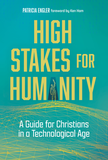
Further Reading: High Stakes for Humanity: A Guide for Christians in a Technological Age



Footnotes
- We’ll see some examples of such products’ unintended consequences (or other strings attached) as we go.
- John Dyer, From the Garden to the City: The Place of Technology in the Story of God, rev. ed. (Grand Rapids, MI: Kregel Publications, 2022), 86–99, ebook version. (Please note this book makes some nods to theistic evolution and should be read, like any resource, with biblical discernment.)
- Dyer, From the Garden to the City, 145–148.
- Joseph Weizenbaum, Computer Power and Human Reason: From Judgment to Calculation (New York: W. H. Freeman, 1976), 7.
- David Kinnaman and Mark Matlock with Aly Hawkins, Faith for Exiles: 5 Ways for a New Generation to Follow Jesus in Digital Babylon (Grand Rapids, MI: Baker Books, 2019), 22, ebook. Emphasis in original.
- See “Cockroaches in the Mind: The Insidious Power of Lies,” in The Briefing with Al Mohler, February 17, 2021, albertmohler.com/2021/02/17/briefing-2-17-21/. See also Aumyo Hassan and Sarah J. Barber, “The Effects of Repetition Frequency on the Illusory Truth Effect,” Cognitive Research: Principles and Implications 6, no. 1 (2021): 38.
- “Your Perfect Family Companion” (item 3 of a rotating list of 4 marketing features on the webpage), Loona Petbot Premium, Loona.com, accessed November 9, 2026, https://keyirobot.com/products/petbot.
- For example, a Facebook reel for marketing the Miko robot says, “Miko’s Cosmic Kids are on a mission to make yoga and mindfulness fun for kids . . . ” Reel by Miko, March 20, 2022, www.facebook.com/reel/700306184715752. References to teaching children yoga and mindfulness also appear on the product website, miko.ai/.
- “Common Sense Media Warns Against AI Toy Companions After Research Reveals Safety Risks” (press release), Common Sense Media, January 22, 2026, about.commonsensemedia.org/press-room/press-releases/common-sense-media-warns-against-ai-toy-companions-after-research-reveals-safety-risks.
- Rahmadi Trimananda et al., “{OVRseen}: Auditing Network Traffic and Privacy Policies in Oculus {VR},” 31st USENIX Security Symposium, USENIX Security (2022): 3789–3806.
- Victor Tangermann, “Meta Workers Say They’re Seeing Disturbing Things Through Users’ Smart Glasses,” Futurism, March 2, 2026, https://futurism.com/artificial-intelligence/meta-disturbing-smart-glasses.
- See Rod Dreher, Live Not by Lies: A Manual for Christian Dissidents (New York: Sentinel, 2020), 7.
- E.g., see US Government Publishing Office, “Control of Religion in China Through Digital Authoritarianism,” Congress, Joint House and Senate Hearing, 117 Congress, September 13, 2022, www.govinfo.gov/content/pkg/CHRG-117jhrg48647/html/CHRG-117jhrg48647.htm.
- See World Economic Forum, “Our Partners,” accessed November 2026, www.weforum.org/partners. See also the list of organizations that contribute to the WEF Center for the New Economy and Society: centres.weforum.org/centre-for-new-economy-and-society/organizations.
- Regarding DEI, for instance, an article on the WEF site says, “The global LGBTQ+ community is up against well-organized and well-funded campaigns by the enemies of equality—an unholy axis of religious fundamentalist groups and populist conservative politicians. The stakes are high and business has a unique role to play. This is about more than Pride flags and rainbow logos. It’s about what it means to run a good business.” (Dominic Arnall, “Has Business Reached ‘Peak Pride’?,” World Economic Forum, June 23, 2023, www.weforum.org/stories/equity-diversity-and-inclusion/has-business-reached-peak-pride.) Regarding private property, multiple WEF papers and articles endorse economic models that move toward prioritizing accessing items and services through renting, sharing, leasing, subscriptions rather than owning so many things. That’s not to say sharing or renting are bad or have no advantages. But these WEF materials together paint a picture of an economy that prioritizes access over ownership, moving toward an access economy of the type in modern communist settings. In fact, a 2016 WEF document states, “China has an opportunity to lead the way in making well-informed policy decisions that provide the right regulatory framework for the sharing economy. Moreover, there is a secondary set of opportunities. The digital platforms on which the sharing economy is based produces huge amounts of data which can help governments in various ways, from environmental monitoring to improved urban planning.” (World Economic Forum, “Understanding the Sharing Economy,” December 2016, https://www3.weforum.org/docs/WEF_Understanding_the_Sharing_Economy_report_2016.pdf, 9.) See also WEF (in collaboration with Bain & Company and the University of Cambridge), “Circular Transformation of Industries: Unlocking Economic Value,” January 2025, www.weforum.org/publications/circular-transformation-of-industries-unlocking-economic-value, 19–21; WEF (in collaboration with PwC), “Collaboration in Cities: From Sharing to ‘Sharing Economy,’” December 2017, https://www3.weforum.org/docs/White_Paper_Collaboration_in_Cities_report_2017.pdf; The Forum of Young Global Leaders, “Young Global Leaders Circular Economy Innovation & New Business Models Dialogue,” World Economic Forum, 2013, https://www3.weforum.org/docs/WEF_YGL_CircularEconomyInnovation_PositionPaper_2013.pdf. (See especially page 3, that says the author group “offers keen insight into ‘access over ownership’ and the reinvention of traditional market behaviours—such as renting, lending and swapping—through technology.”) For a telling overview of the circular economy, see also Thomas Bauwens, Marko Hekkert, and Julian Kirchherr, “Circular Futures: What Will They Look Like?,” Ecological Economics 175 (2020): 106703.

Support the creation/gospel message by donating or getting involved!

Answers in Genesis is an apologetics ministry, dedicated to helping Christians defend their faith and proclaim the good news of Jesus Christ.
- Customer Service 800.778.3390
- Available Monday–Friday | 9 AM–5 PM ET
- © 2026 Answers in Genesis