

Are Planets and Moons Too Hot to Be Old?
How Warm and Active Heavenly Bodies Confirm a Young Solar System
What do you get when you leave a hot cup of coffee sitting out for hours? A cold, lifeless drink. Or if you take a steaming hot potato fresh out of the oven and let it sit on the table for a few hours, what do you get? A lukewarm (unsatisfying) potato to eat. Now imagine leaving that hot coffee or potato out for billions of years. Would you expect it to still be steaming? Obviously not, that’d be absurd.
Yet that’s pretty much the kind of problem secular astronomers are wrestling with today! According to secular models, the planets and moons of our solar system supposedly formed around 4.6 billion years ago from a spinning disk of gas and dust. And as the story goes, these objects heated up as they took shape (by gravitational compression, frequent collisions, and so on) and were initially very hot.
But here’s the catch: heat doesn’t last forever. Over time, heat dissipates (again, think of that hot cup of coffee). That’s a basic law of thermodynamics. And the smaller the object, the faster it should lose that heat because it has more surface area relative to its volume. So while one might expect large planets to retain internal heat for a long time, smaller bodies like dwarf planets and moons should’ve gone cold long ago. In other words, just like how a hot potato loses heat and eventually goes cold, with no major heat source, planets and moons that supposedly formed hot billions of years ago should have long since cooled off and should be frozen solid and geologically inactive by now.
But guess what . . . that’s not what we find! Space probes have and continue to reveal a very different picture. To the surprise of secular scientists, smaller worlds (like Enceladus, Io, and Pluto) are still very warm and geologically active—with erupting geysers, roaring volcanoes, flowing glaciers, and even signs of subsurface oceans.
How is that possible if they’ve been cooling for billions of years? That simply shouldn’t happen if these objects are as old as secular scientists claim. Their internal heat should be long gone, with their surfaces frozen and silent. Simply put, these bodies are supposed to be ancient, yet they actually look “young” (compared to the secular timeline).1 Hence, secular scientists are left scratching their heads and have struggled to come up with rock solid explanations for these hot problems.
Of course, this isn’t a problem for those who start their thinking with the Bible. If God created everything in the solar system around 6,000 years ago, then it’s no surprise that dwarf planets and moons are still warm and active. They simply haven’t had time to cool off yet. So as biblical creationists, we don’t view these bodies as cold, inert rocks drifting through a dying system—we view them as vibrant reminders that God created a young and dynamic creation.
In my previous article, we looked at the decay of the earth’s magnetic field and showed how it stands out as one of the strongest scientific arguments for a young earth.2 In this article, we’ll move further out into the solar system and look at some of these “hot potatoes” to see how their youthful features challenge the secular timeline of long ages—and instead point to a Creator who made a dynamic, purposeful, and young solar system that declares his glory (Psalm 19:1).
Enceladus: The Geyser Moon
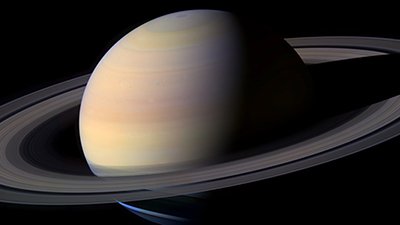
Let’s start with Saturn’s moon Enceladus. At just 300 miles across (about the size of Arizona), it packs an explosive surprise. In 2005, NASA’s Cassini spacecraft flew by and made an astonishing discovery: Enceladus was shooting massive geysers of water vapor and ice into space from cracks near its south pole. And no, these plumes weren’t just little puffs—they soared hundreds of miles high, creating a massive cloud around Saturn and even helping to replenish Saturn’s E ring (its outermost and widest ring). And no, this wasn’t a rare one-time event—Enceladus has been continuously erupting like this for years (and likely much longer).
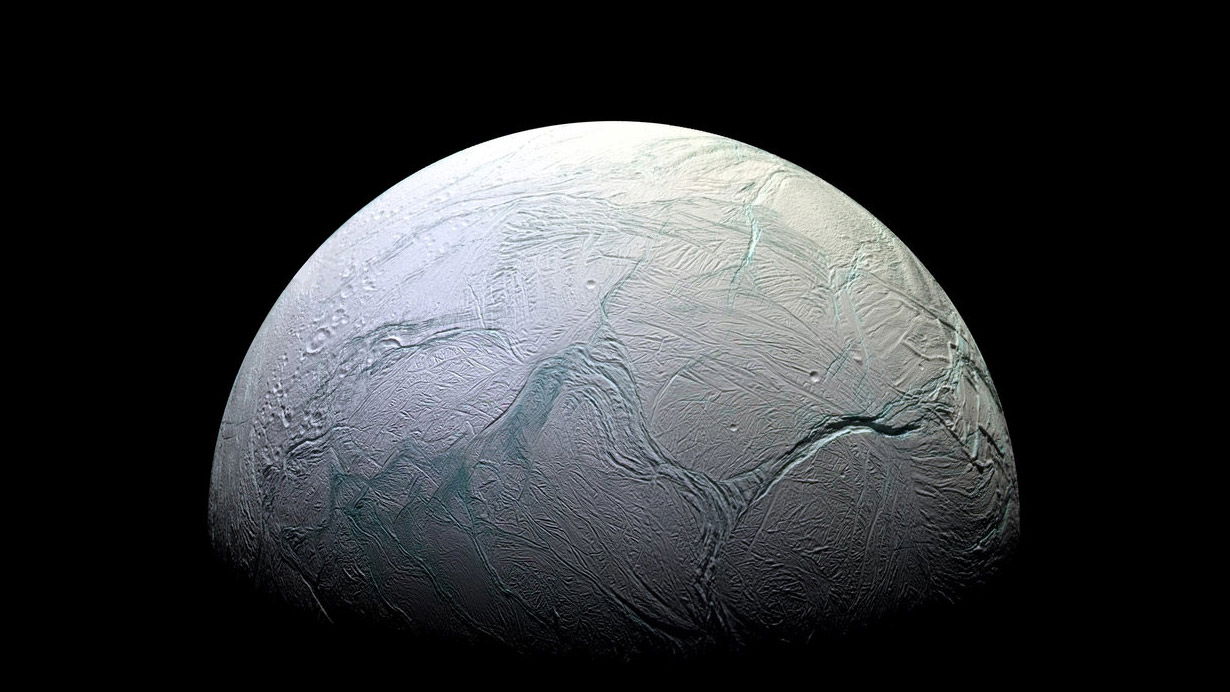
View of Enceladus taken by NASA’s Cassini spacecraft (credit: NASA)
Of course, all of this totally shocked secular scientists. Why? Because a small moon shouldn’t be that active if it’s billions of years old! In fact, Enceladus is losing energy with every eruption and dumping heat into space at a rate that far exceeds what can even be possible (such as through radioactive decay or leftover formation heat). Simply put, it should’ve “gone cold” long ago, like a steaming hot potato in a cold room. So the real question is this: Why is it still hot? (The answer is simpler than secular scientists are willing to admit!)3
Io: The Volcanic Furnace
If there’s ever a contest for the most explosive place in the solar system, Io would (literally!) win by a landslide. This small moon of Jupiter (with a mean diameter of about 2,300 miles, which makes it slightly larger than earth’s moon) is the most volcanically active body we know of. It’s covered in hundreds of volcanoes with some that erupt with plumes of molten sulfur shooting over 200 miles high. (In fact, some eruptions are so big they can be seen from earth-based telescopes!)
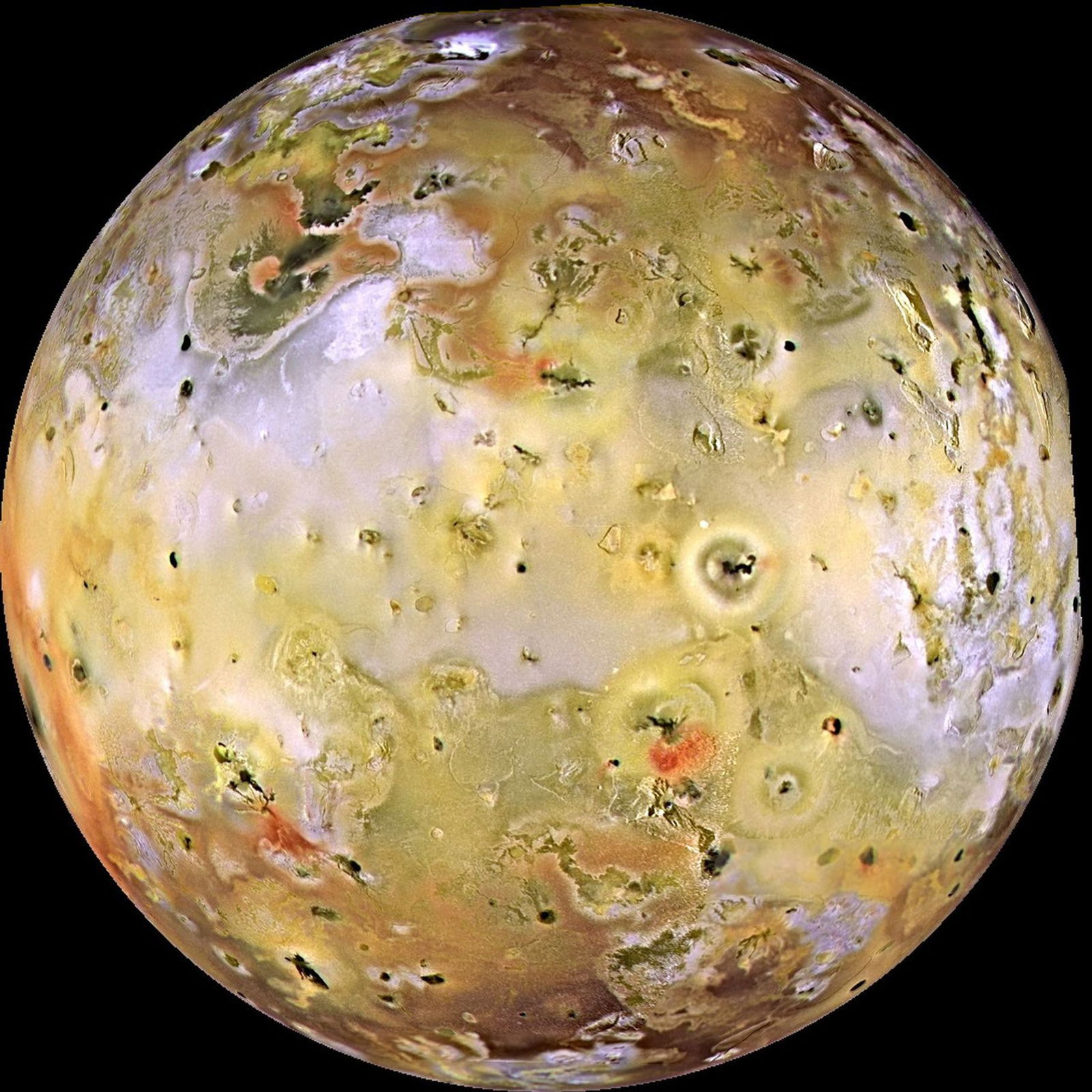
View of Io taken by NASA’s Galileo spacecraft (credit: NASA)
As a result, Io’s surface constantly gets reshaped by lava flows and eruptions, making it quite the fiery sight and the most geologically dynamic world in our solar system. So what’s the problem facing secular scientists? Again, as with Saturn’s moon Enceladus, this moon is just too hot to be that old!4
Pluto: The Active Iceball
When NASA’s New Horizons spacecraft flew past Pluto in 2015, secular scientists expected to find a geologically dead, crater-covered ball of ice. What they found instead stunned them: Pluto is anything but dead. In a nutshell, they discovered nitrogen ice flows, towering cryovolcanoes (also known as ice volcanoes, mountains formed from icy lava rather than molten rock), and even possible subsurface oceans. How can such a small, distant, and supposedly “old” world be so active?
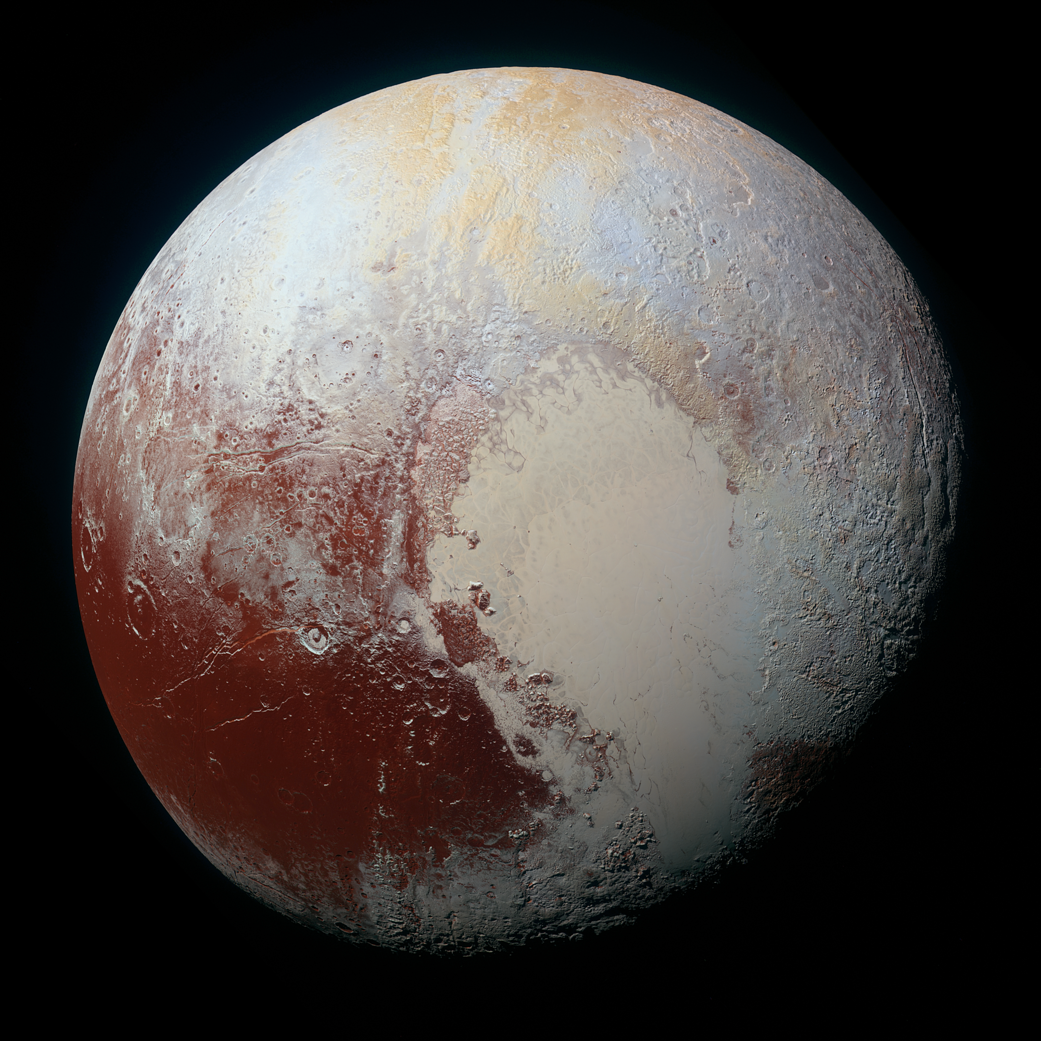
View of Pluto taken by NASA’s New Horizons spacecraft (credit: NASA)
Even more shocking, Pluto’s surface is remarkably smooth in some areas—with hardly any impact craters. That’s a big deal. Why? Because older surfaces accumulate more craters over time. A surface without them is considered “young” and must’ve been resurfaced recently. And Pluto has plenty of these areas, most notably the vast heart-shaped glacier known as Sputnik Planitia.5
Yet Pluto is far from the sun and lacks any obvious source of internal heat, so it shouldn’t have enough energy remaining to support recent or ongoing geological activity.6 So how is it still active? Again, secular scientists are left grasping for answers and have scrambled to explain it away.7
More Worlds That Are Too Hot to Be Old
This isn’t a fluke—it’s a system-wide pattern—not just a few oddballs here and there.
Enceladus, Io, and Pluto are some of the most striking examples that challenge secular thinking. But these aren’t the only worlds with unexpected heat. This isn’t a fluke—it’s a system-wide pattern—not just a few oddballs here and there.
Here are several more examples that defy long-age expectations:
- Jupiter: Emits around twice as much energy as it receives from the sun, which poses a major challenge to secular models that assume a ~4.6-billion-year age.8
- Europa (Jupiter’s Moon): Likely has a deep liquid ocean beneath its icy crust, which shouldn’t still be warm after billions of years.9
- Ganymede (Jupiter’s Moon): Shows signs of a global saltwater ocean (as confirmed by Hubble) and internal activity that shouldn’t persist if it were billions of years old.10
- Saturn: Even more puzzling than Jupiter! Despite being less massive, Saturn also emits roughly twice the solar energy it receives.11
- Neptune: This distant gas giant also emits over twice the heat it gets from the sun, which poses an even bigger challenge to long-age assumptions due to its distance and much smaller size than Jupiter or Saturn.12
- Triton (Neptune’s Moon): This moon surprised secularists when Voyager 2 spotted active plumes shooting nitrogen gas miles high into space, which was unexpected for such an “old” moon.13
- Charon (Pluto’s Moon): Alongside Pluto’s surprising discoveries, New Horizons also revealed tectonic fractures, smooth plains, and signs of resurfacing on its moon—features that shouldn’t exist on a supposedly “geologically dead” moon!14
So yes, from giant planets to small moons, our solar system is bursting with energy it simply shouldn’t have—if it were billions of years old. But once again, if we start with the Bible as our foundation, the observations make perfect sense.
Patchwork Fixes That Don’t Hold Heat
But what happens when scientists—those committed to naturalism—encounter these “too hot” worlds? They don’t rethink their religiously held beliefs in deep time. Instead, they scramble to explain away the contradictions using what are called rescuing devices.
That is, in order to “rescue” their billions-of-years story from the observational contradictions, they propose speculative, complex mechanisms and heat sources (like tidal heating, radioactive decay, and friction-induced chemistry ) to explain how these worlds have supposedly kept warm and geologically active for billions of years—relying on special conditions that we can’t directly observe or test. But even their best models still fall short and don’t account for what we actually observe. The energy output is too high, or the proposed heat source would’ve fizzled out long ago.
One of their most common rescuing devices is tidal heating: a small body getting stretched and squeezed by the gravity of a nearby massive body, and this constant flexing creates internal friction, which in turn generates heat. Of course, tidal heating is a real process and can account for some internal energy in certain cases. But here’s the problem: The numbers don’t add up. The observed heat is far greater than what tidal models can account for, meaning the amount of energy required to sustain ongoing activity in these small bodies far exceeds what the models can produce. For Io and Enceladus, they emit significantly more heat than tidal models allow. And for Pluto, it’s not even close enough to a massive body for this mechanism to apply.15
Another common rescuing device is radioactive decay (heat generated by unstable atomic nuclei breaking down into more stable forms). That is, secular scientists often appeal to this process as a potential long-term internal heat source. But again, the explanation falls short. For radioactive decay to sustain high levels of internal heat over billions of years, these bodies would need an ideal combination of radioactive materials and sufficient insulation to retain that heat—conditions that are speculative, unobserved, and highly unlikely (especially for small icy worlds). And because this kind of heat naturally diminishes over time, the challenge only gets worse the older these objects are assumed to be.16
But the problem isn’t the data—it’s a worldview built on a faulty foundation. Simply put, these rescuing devices don’t come from the data itself but from a commitment to a naturalistic worldview that excludes the Bible from the very start. When you assume naturalism and deep time, you’re forced to invent explanations that keep the story going—regardless of the observational evidence. When your worldview refuses to even consider the possibility of biblical creation, you’re forced to bend the data to fit your story.
So rather than accept the simpler explanation—based on actual measurable observations that point to a much younger age—they outright reject it. Why? Not because of the science, but because of a religious commitment to naturalism. Ultimately, this should serve as a reminder that the belief in “billions of years” is not really science at all (in fact, it’s anti-science!) but rather a fervent precommitment through which all evidence is interpreted.17
Remember: Our Worldview Matters!
This also exposes the key difference between the secular and biblical worldviews. Secular scientists will always interpret all evidence through the lens of naturalism and deep time, and whenever the data contradict that framework (as it so often does in science!), they’re forced to invent patchwork explanations to keep their worldview intact.
But if we stand on God’s Word as our foundation and view the data through a biblical lens, we don’t need to rescue anything or need these kinds of desperate work-arounds. The heat we observe makes sense. Why? Because these worlds aren’t billions of years old! They were created recently by our all-powerful God who made the heavens and the earth.
Scripture plainly teaches that God created the heavens and everything in them around 6,000 years ago. And if that’s true—and it is—then these small heavenly bodies haven’t had eons to cool off. They’re still warm and active, not because of exotic processes stretched over eons of time but because they were created only thousands of years ago, just as God’s Word indicates.
So that means biblical creationists don’t need to twist the data to fit a man-made timeline, nor do we need to come up with imaginary heat sources to keep the story alive. We simply trust what God has said: He was there “in the beginning” and has told us plainly how and when he created (Genesis 1). The heavens declare his glory—not the glory of natural processes stretched across billions of years. That’s our starting point. What’s yours?
Still Hot and Still Declaring His Glory
Our solar system is bursting with activity in places that should be cold and dead by secular expectations.
Our solar system is bursting with activity in places that should be cold and dead by secular expectations. But the ongoing activity we see on moons like Enceladus and Io, and even on distant dwarf planets like Pluto, is only puzzling if you start with the assumption that the solar system is 4.6 billion years old. And no, these aren’t isolated oddities. They reveal a consistent pattern: small, distant worlds that are just too hot to be old.
By starting our thinking with God’s Word, these “puzzles” are incinerated. There’s no need for exotic heat sources or complex models. The bodies in our solar system are still “young” and still retain much of their original heat. That ongoing activity isn’t a problem at all—in fact, it’s exactly what we’d expect when we start our thinking with the truth of Scripture.
So no, the heavens don’t “look old” and filled with cold dead rocks drifting through space. They’re active, vibrant, and still declaring God’s glory—just as we’d expect from a recent creation by the all-powerful God of the Bible. Rather, these dynamic worlds are a reminder of a much younger creation that continues to radiate the power of its Creator.

Footnotes
- Note, when using the term “young” age, it’s in comparison to the secular “old” age idea that celestial bodies are billions of years old, meaning a 6,000-year-old planet is “young” (relatively speaking) compared to the secular age. Though I prefer to use a term like “biblical age” instead (since an age of 6,000 years is still pretty old!), the term “young” is a common one that most people are familiar with, so I’ll be using it throughout the article.
- Also, in case you haven’t already, I encourage you to read my previous article so that you can better understand the role of worldviews in these kinds of discussions. In a nutshell, our interpretation of scientific evidence always depends on our worldview—the basic beliefs (called presuppositions) that shape how we see the world. No one approaches science with a blank slate or “neutral” mind. It’s impossible. Biblical creationists start with God’s Word as the true eyewitness account of history and interpret the evidence accordingly. Secular scientists start with naturalistic assumptions, excluding any supernatural cause and assuming billions of years from the start. So when we look at something like planetary heat, we’re not just “debating the data”—we’re interpreting it through different lenses. In fact, it’s likely that an atheist (maybe you?) will read this article and walk away unconvinced—not because the evidence is weak (it’s not) but because of a prior commitment to a different worldview. That’s why it’s so critical for both believers and unbelievers to recognize and keep this reality in mind when having these kinds of discussions: Our presuppositions really do matter.
- To learn more about this geyser moon around Saturn, here are some good places to start on NASA’s website: https://science.nasa.gov/mission/cassini/science/enceladus/; https://science.nasa.gov/missions/cassini/put-a-ring-on-it/; https://science.nasa.gov/resource/the-enceladus-ring-2/; https://ntrs.nasa.gov/api/citations/20230014603/downloads/Enceladus%20ISSI.pdf; https://www.nasa.gov/missions/cassini/powering-saturns-active-ocean-moon/; https://www.jpl.nasa.gov/news/cassini-finds-enceladus-is-a-powerhouse/.
- To learn more about this explosive moon around Jupiter, here are some good places to start on NASA’s website: https://science.nasa.gov/jupiter/jupiter-moons/io/; https://science.nasa.gov/resource/plume-of-io/; https://www.jpl.nasa.gov/images/pia02592-northern-plume-and-plume-deposits-on-io/; https://science.nasa.gov/missions/hubble/hubble-captures-volcanic-eruption-plume-from-io/.
- That is, Pluto’s apparent youth is strongly supported by data from New Horizons—which revealed an almost complete lack of impact craters in Sputnik Planitia—implying an age of less than 10 million years (based on secular dating). And the surface also shows signs of recent geological activity, including extensive glacial flows and convection—phenomena that were entirely unexpected per secular long-age models.
- A common explanation is radioactive decay deep inside Pluto. Others suggest leftover heat from its formation (though that should’ve dissipated long ago). In short, these ideas require Pluto to have just the right combination of materials, insulation, and finely tuned timing—all by chance. But even then, they still fail to fully explain the observed scale and recency of its geologic activity.
- To learn more about this very active dwarf planet, here are some good places to start on NASA’s website: https://www.nasa.gov/missions/scientists-probe-mystery-of-plutos-icy-heart/; https://www.nasa.gov/solar-system/new-horizons-discovers-flowing-ices-on-pluto/; https://ntrs.nasa.gov/citations/20160009762; https://www.nasa.gov/news-release/nasas-new-horizons-discovers-frozen-plains-in-the-heart-of-plutos-heart/; https://svs.gsfc.nasa.gov/30806; https://www.nasa.gov/image-article/icy-mountains-of-pluto/; https://www.nasa.gov/news-release/four-months-after-pluto-flyby-nasas-new-horizons-yields-wealth-of-discovery/.
- To learn more, here’s a good place to start: ScienceAlert Staff, “Here’s Why Jupiter Is Arguably One of the Weirdest Planets in the Solar System,” ScienceAlert, accessed September 2025, https://www.sciencealert.com/the-weirdest-facts-about-jupiter/.
- To learn more, here’s a good place to start: NASA, “Europa Facts,” accessed September 2025, https://science.nasa.gov/jupiter/jupiter-moons/europa/europa-facts/.
- To learn more, here’s a good place to start: NASA, “Ganymede,” accessed September 2025, https://science.nasa.gov/jupiter/jupiter-moons/ganymede/.
- To learn more, here’s a good place to start: Jet Propulsion Laboratory, “Cassini Sees Saturn on a Cosmic Dimmer Switch,” November 10, 2010, https://www.jpl.nasa.gov/news/cassini-sees-saturn-on-a-cosmic-dimmer-switch/.
- To learn more, here’s a good place to start: David Crookes, “There’s Something Strange Going on Inside Neptune,” Space.com, November 1, 2019, https://www.space.com/something-strange-inside-neptune.html.
- To learn more, here’s a good place to start: NASA, “Triton,” accessed September 2025, https://science.nasa.gov/neptune/moons/triton/.
- To learn more, here’s a good place to start: Tricia Talbert, “Pluto’s Big Moon Charon Reveals a Colorful and Violent History,” NASA, October 1, 2015, https://www.nasa.gov/solar-system/plutos-big-moon-charon-reveals-a-colorful-and-violent-history/.
- For more information, here are some good places to start: https://ntrs.nasa.gov/api/citations/20230014603/downloads/Enceladus%20ISSI.pdf; https://www.nasa.gov/solar-system/io-volcano-observer-following-the-heat-and-hunting-clues-to-planet-evolution/; https://www.jpl.nasa.gov/news/mapping-volcanic-heat-on-io/.
- For more information, here are some good places to start: https://www.jpl.nasa.gov/news/powering-saturns-active-ocean-moon/; https://www.jpl.nasa.gov/news/enceladus-may-keep-its-oceans-liquid-by-wobbling/; https://svs.gsfc.nasa.gov/13000; https://www.nasa.gov/missions/scientists-probe-mystery-of-plutos-icy-heart/.
- Now don’t get me wrong. Secular scientists are very intelligent and knowledgeable. But the issue isn’t intellect—it’s worldview. Or more specifically, here’s the reality: It’s not a head issue—it’s really a heart issue. The Bible makes it clear that because of the sinful heart of man, people are willing to believe anything rather than accept the truth. They suppress what they know to be true and exchange it for a lie because they love darkness rather than light (Jeremiah 17:9–10; Romans 1:18–25; John 3:19–21). That’s why the evidence won’t matter to those in rebellion against their Creator—no amount of data can overcome a heart that’s in rebellion against God. So let’s remember what every person (secularist or not) needs most—not more evidence, but a new heart that loves God, his Word, and his creation that brings glory to him. A change of heart can only happen through the proclamation of the good news. The power of the gospel can transform hearts through the regenerating work of the Holy Spirit. Most importantly, this should serve as a reminder to us Christians to keep faithfully sharing the gospel of Jesus Christ with the world, including those in every field of science today (Mark 16:15).



Support the creation/gospel message by donating or getting involved!

Answers in Genesis is an apologetics ministry, dedicated to helping Christians defend their faith and proclaim the good news of Jesus Christ.
- Customer Service 800.778.3390
- Available Monday–Friday | 9 AM–5 PM ET
- © 2026 Answers in Genesis