
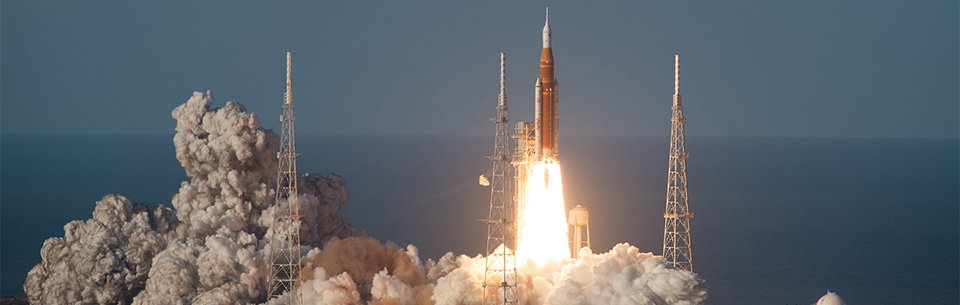
NASA/Joel Kowsky, CC BY-NC-ND 4.0, via Flickr
Artemis II: Over 250,000 Miles from Home—and They Never Stopped Looking Back
And God made the two great lights—the greater light to rule the day and the lesser light to rule the night—and the stars. (Genesis 1:16, emphasis added)
On April 1, 2026, my wife and I, our four kids, and their grandma (they call her “Gran”) held our breath as we watched the Artemis II launch from our living room. The one-year-old was oblivious, of course, but the other three (ages eight, seven, and five) got very quiet as that rocket climbed. No one asked for a snack. No one fought over toys. They just sat there and watched. I think there’s something unique about a rocket launch that does that to people—even little ones who can’t fully explain why.
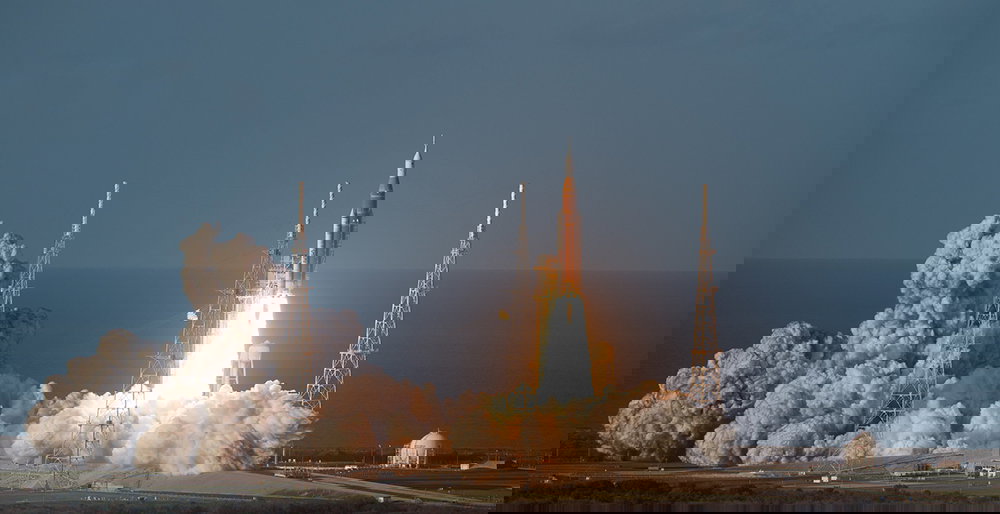
NASA’s Space Launch System lifting off from Launch Pad 39B at Kennedy Space Center (credit: NASA/Joel Kowsky)
Watching their little faces, full of awe and wonder, I think they could sense that what they were seeing mattered—and it did! On that historic day, four brave astronauts (Commander Reid Wiseman, Pilot Victor Glover, Mission Specialist Christina Koch, and Canadian Space Agency astronaut Jeremy Hansen) successfully lifted off from Kennedy Space Center on the first crewed mission to the moon since 1972—a mission that many people are calling the “Apollo 8 of our generation.”1 And over the next 10 days, they traveled farther from the earth than any human ever in history, looped around the far side of the moon, witnessed a solar eclipse (which lasted nearly an hour!), and photographed craters no human eye had ever seen.
And here’s the amazing thing, through all of it, with the moon filling their windows and deep space stretching out in every direction, they kept turning around to look at . . . the earth! Just think about it, these four pioneers were doing something no human had ever done. They literally had the moon right outside the glass. And yet still, photograph after photograph, conversation after conversation, they were drawn back to that small blue world hanging behind them. Why? I believe Scripture gives us a better answer to that than NASA does.
Earth Isn’t Just Another Planet
Yes, the Artemis II mission broke every distance record in history. But through the lens of Scripture, the most remarkable thing about this mission isn’t how far they went—it’s what they kept staring at.
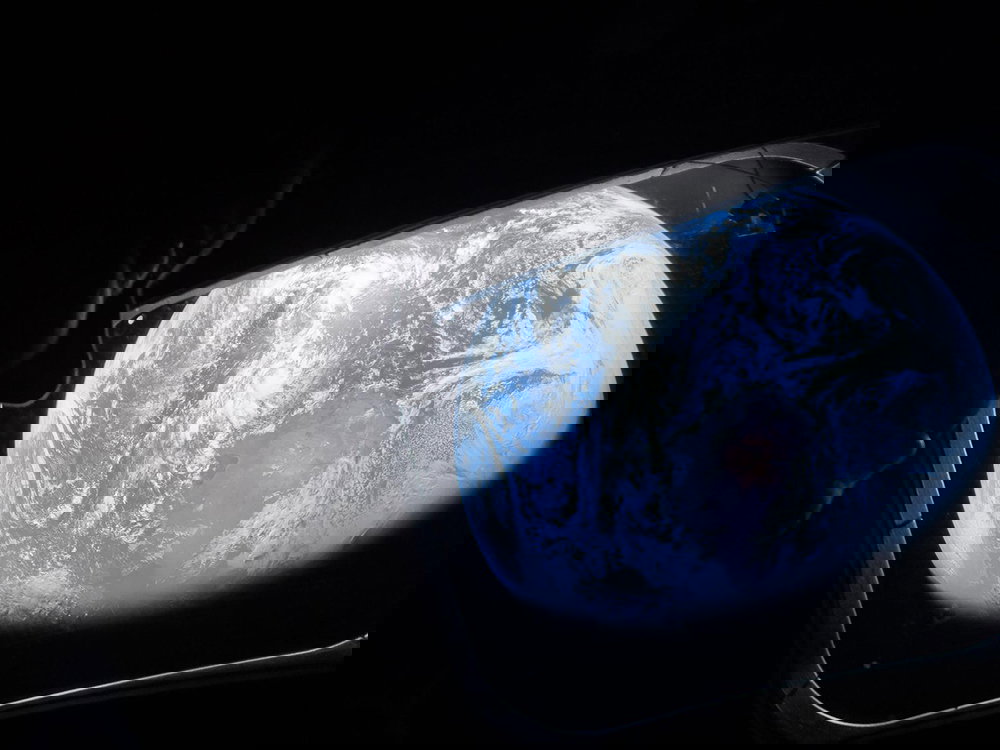
Commander Wiseman looking back at the earth, out of one of Orion’s main cabin windows, as the crew travels toward the moon (credit: NASA)
The typical story that you’ll hear from the secular world usually goes something like this: We live on an unremarkable rock, circling an average star, in one galaxy out of hundreds of billions. Ultimately, we’re a cosmic accident, nothing special, just one tiny dot in an incomprehensibly large and indifferent universe.
But when we open the first book of the Bible, in Genesis, we find a completely different account. And no, not just a different conclusion—but a different starting point altogether. God didn’t make the universe haphazardly and then arbitrarily decide to make the earth. From the very first sentence of the Bible, “In the beginning, God created the heavens and the earth” (Genesis 1:1), he made the heavens and the earth as a deliberate act. From the rest of Genesis 1, we see what God did to that earth in careful detail during creation week. And when it was done, he called it “very good” (Genesis 1:31).
Out of all of Scripture, Isaiah 45:18 might be the most direct statement on this, showing God’s purpose in creating the earth:
For thus says the Lord, who created the heavens (he is God!), who formed the earth and made it (he established it; he did not create it empty, he formed it to be inhabited!): “I am the LORD, and there is no other.”
In other words, the earth was not just some by-product of chance over billions of years. God did not create it to be empty. He purposefully created and designed it to be lived in from the very beginning, uniquely and specially made for us to inhabit and call home.
The earth is our home—set apart for us—and when you look at the photos from Artemis II, with our radiant world against the grey emptiness of the moon and the blackness of space beyond it, these verses suddenly become very real.
The same Creator who asked Job “Where were you when I laid the foundation of the earth?” (Job 38:4) set our blue planet into its precise orbit, at precisely the right distance from the sun, with precisely the right atmospheric composition to sustain life. None of that is just “coincidence” (as secularists like to claim). It’s from our personal God who loves and cares for his creation. That can’t be said about any other place in the entire universe.2
Psalm 115:16 adds, “The heavens are the Lord’s heavens, but the earth he has given to the children of man.”3 Simply put, the earth is our home—set apart for us—and when you look at the photos from Artemis II, with our radiant world against the grey emptiness of the moon and the blackness of space beyond it, these verses suddenly become very real.
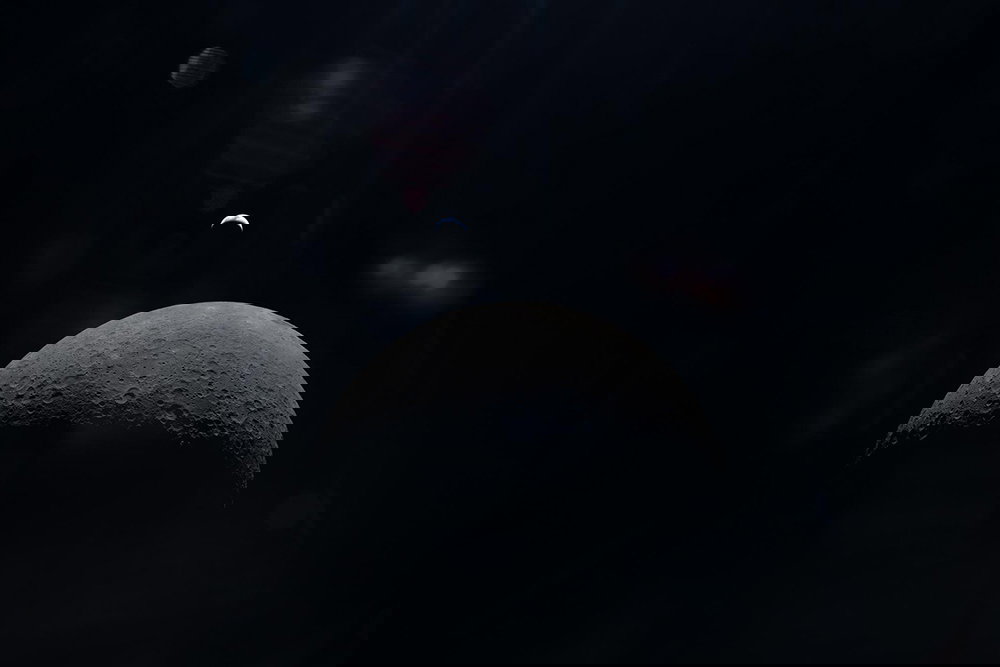
A faint view of a crescent earth above the horizon on the moon’s far side (credit: NASA)
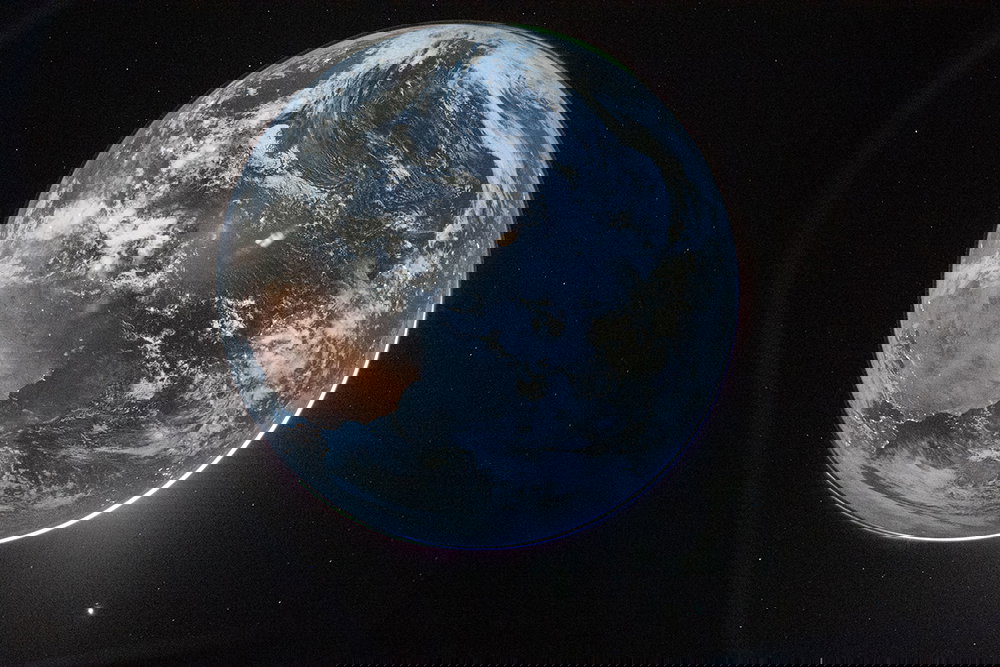
Earth from the Orion spacecraft’s window, after completing the translunar injection burn (credit: NASA)
The earth totally stands out, glowing and alive, while everything else in those photos look cold and silent. From a biblical worldview, I don’t see pictures of a “lucky accident” floating in space. I see pictures of a home that was built for us!
“Earthset” a Quarter Million Miles Away from Home
Speaking of amazing pictures, on April 6, just a few minutes before the Orion spacecraft passed behind the moon and lost all contact with mission control, the crew captured what will probably be the defining image of this mission. It shows our blue planet, partially lit, wrapped in white clouds, setting below the moon’s grey horizon—earthset.
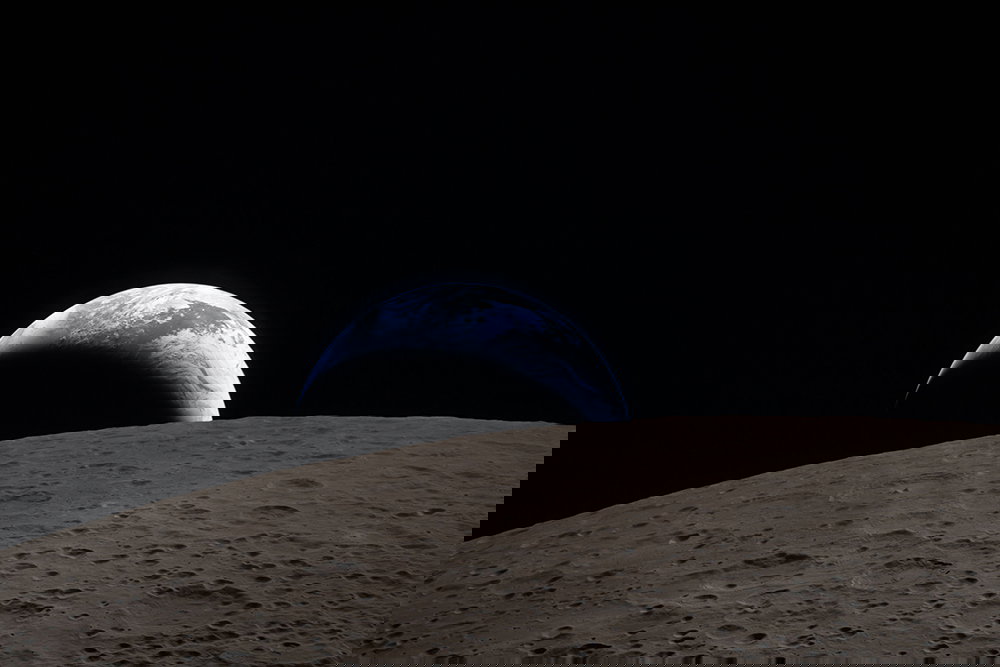
Earthset captured through the Orion spacecraft window, as the earth dips beyond the lunar horizon (credit: NASA)
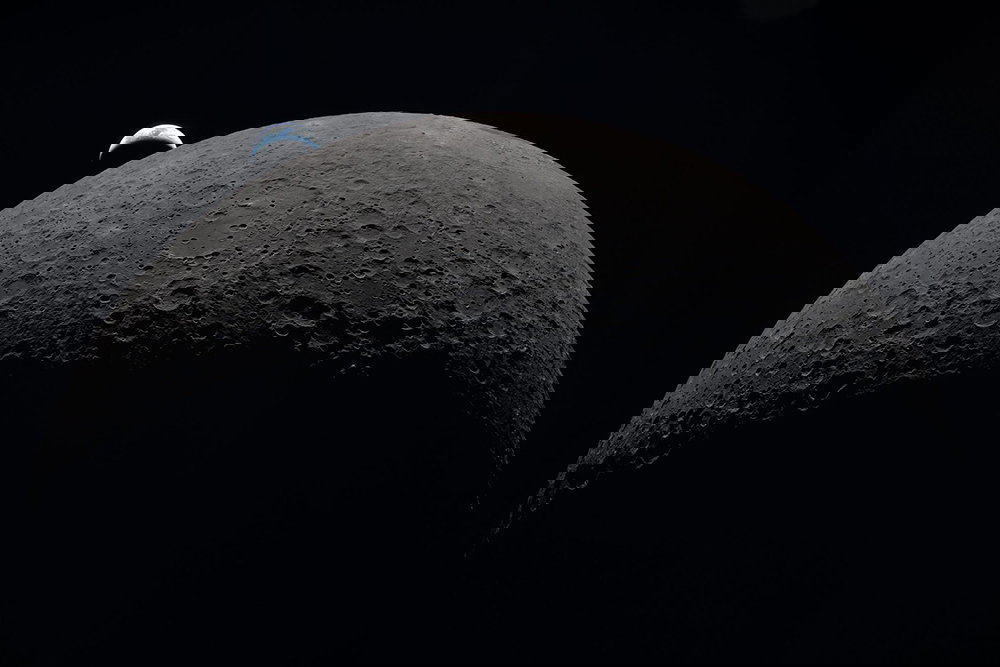
Earth sets over the moon’s curved limb (credit: NASA)
We’ve all watched the moon set below the horizon, and most of us don’t think much about it. But to flip that around, to be so far away from home that you actually get to see our world drop below the horizon really has to be something extraordinary to see. And the Artemis II crew got to watch it happen in real time with their own eyes!
Canadian astronaut Jeremy Hansen tried to describe it afterward, saying:
When we were on the far side of the moon, looking back on Earth, it’s just so obvious you had this sphere out in front of you, the moon. You really felt like you weren’t in a capsule—you’d been transported to the far side of the moon, and it really just bent your mind. It was an extraordinary human experience.4
Why was it so extraordinary? Again, it’s because the earth, moon, and sun aren’t random accidents—God specially designed them for his image bearers. (That’s the good God that we serve!) And these astronauts got the opportunity to experience that glorious design up front and center. Of course, it doesn’t take an astronaut to notice something is special about the earth. Every single person—being made in the image of God—inherently knows it to be true (Romans 1:20). That’s something hardwired into us by the one who put us here. We were made for this place, and this place was made for us. And that truth doesn’t change no matter how far we manage to travel into the cosmos. If anything, it’s amplified!
A Solar Eclipse Unlike Anything Ever Seen
As if earthsets weren’t enough, later in the lunar flyby, the crew was treated to something that no one had ever witnessed: a total solar eclipse from lunar orbit—where the moon blocked the sun entirely for nearly an hour.5 If you’ve ever had the privilege of seeing a total solar eclipse (100% blocked), you’ll know that totality lasts only a few precious minutes at best.6 The Artemis II crew had 57 minutes of it, and it was glorious!
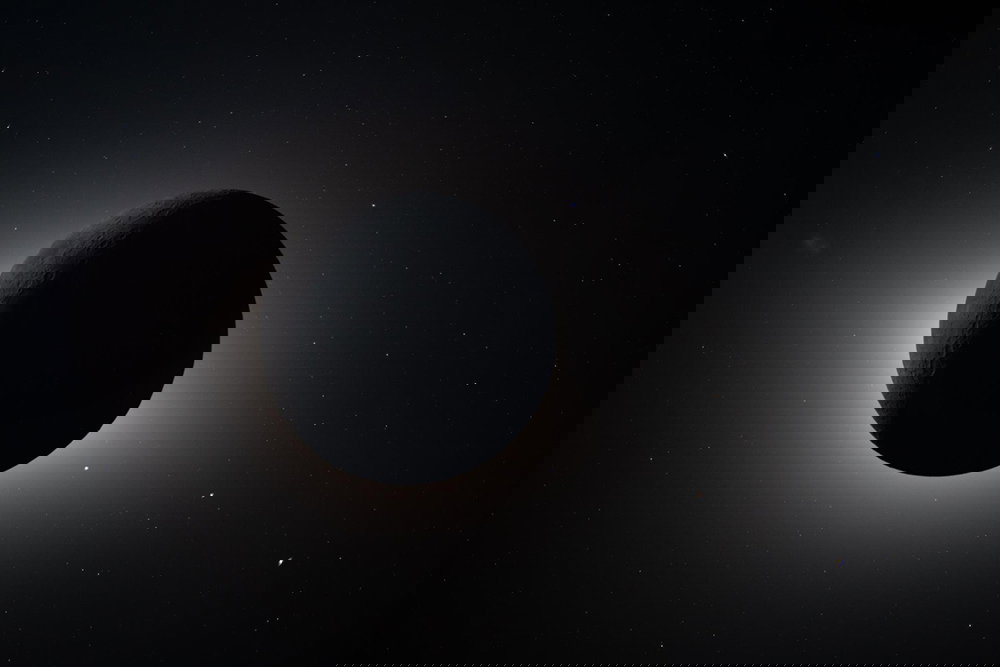
Totality, from the crew’s perspective, when the moon fully eclipses the sun (credit: NASA)
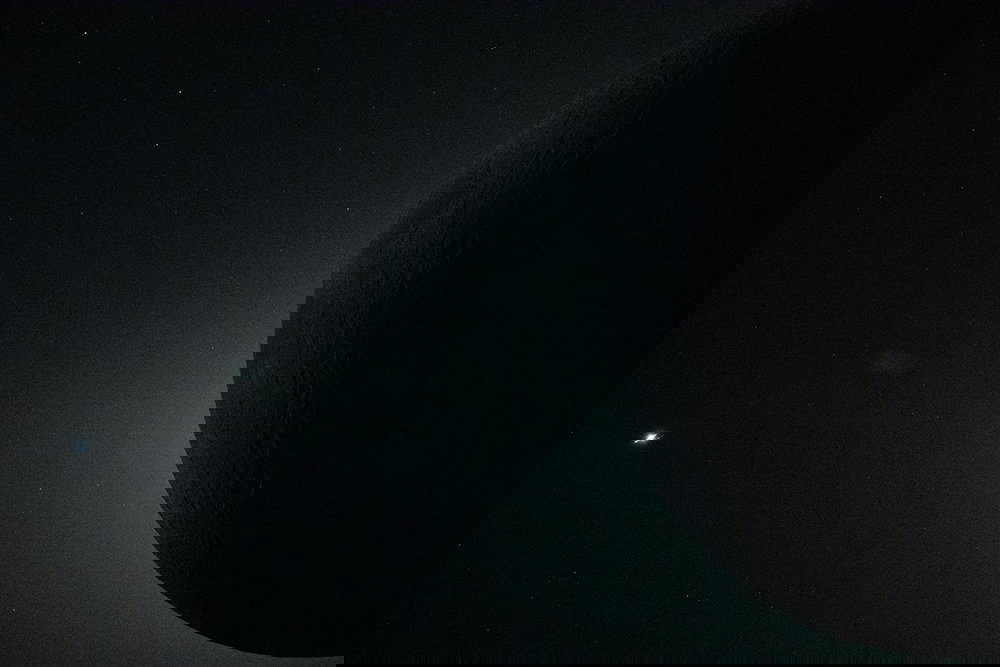
A close-up view with only part of the moon visible and Venus shining brightly to the left (credit: NASA)
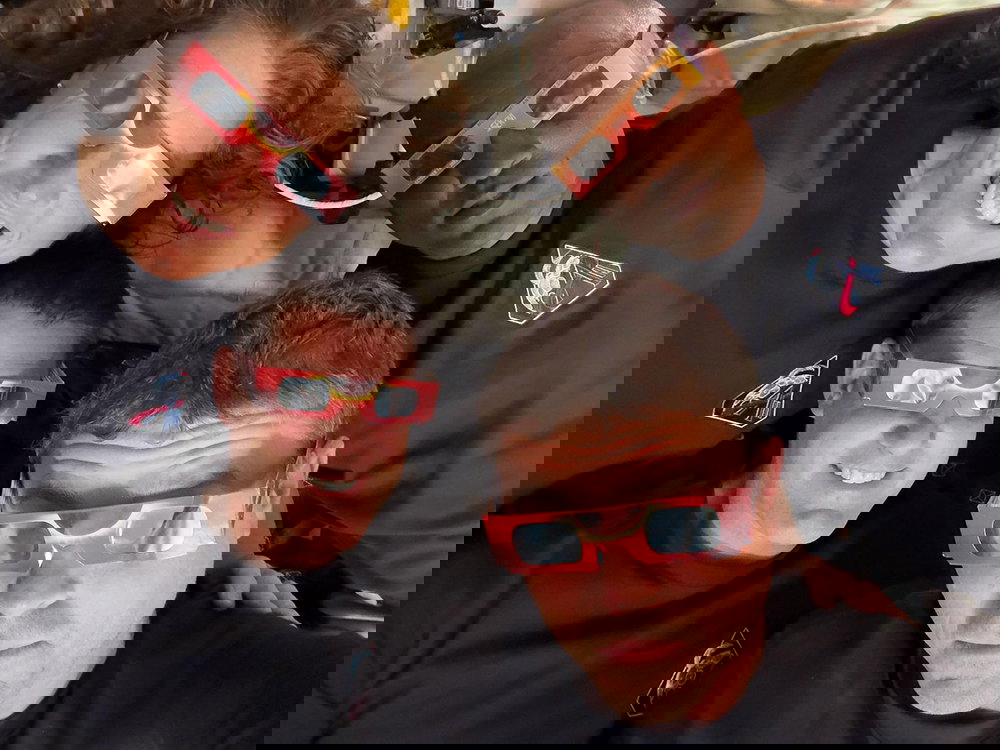
The crew had to wear special glasses to protect their eyes during solar eclipse (credit: NASA)
From these stunning images, you can see the sun’s corona hanging around the moon (like a “glowing crown”), stars appearing in the darkened sky, and even Venus blazing off to the side. During totality, the astronauts also said they had spotted impact flashes on the lunar surface—micrometeors hitting the moon—only visible because the sun’s glare was completely gone.7
The Side of the Moon That Human Eyes Have Never Seen
You might be wondering why it’s such a big deal to see the far side of the moon. Because the moon rotates at exactly the right rate to keep the same face pointed toward the earth (called tidal locking), we’ve never been able to see the other side from the ground. Robotic probes have photographed it, but human eyes had never seen the unique features of the far side . . . until now!
During the lunar flyby on April 6, the Artemis crew captured up close, high-resolution photographs of geological features like the Orientale Basin and Hertzsprung Basin (massive, multi-ringed impact structures) and Vavilov Crater (a prominent 60-mile-wide impact crater, which sits directly on the edge of the Hertzsprung Basin).
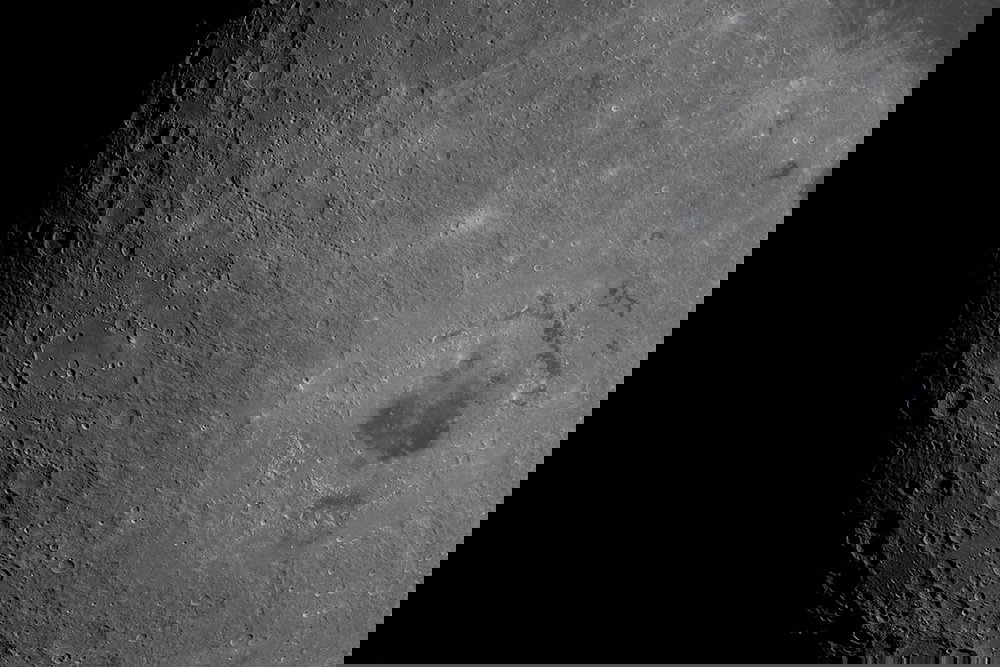
Image of the ringed Orientale Basin and the two newly named craters, Integrity and Carroll (credit: NASA)
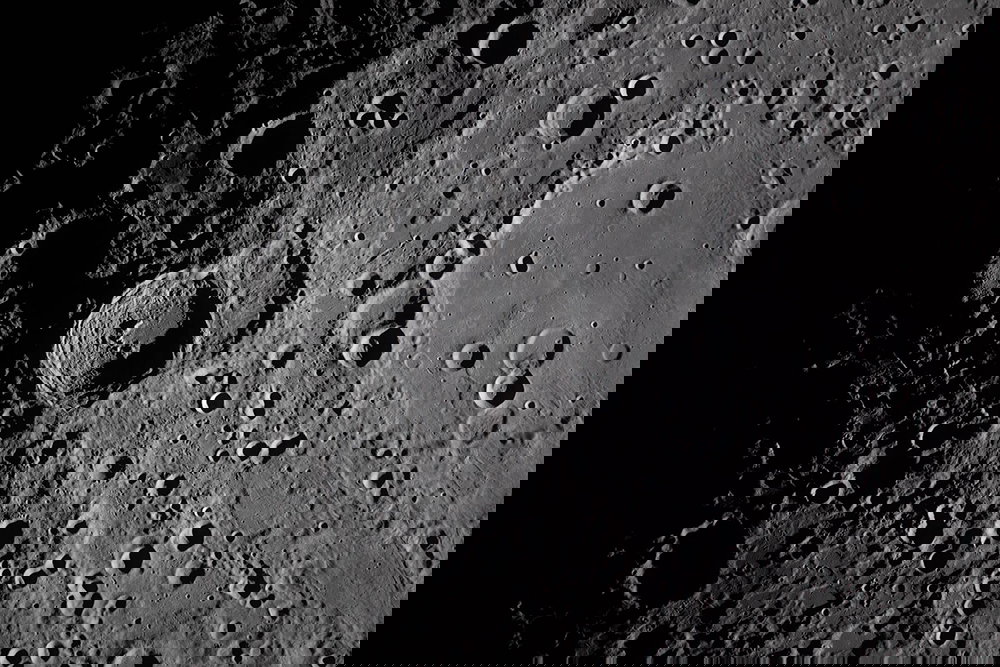
Close up view of Vavilov Crater, located on the rim of the larger Hertzsprung Basin (credit: NASA)
Seeing these images of the moon’s geography was pretty awesome. But I think the most moving moment during the flyby had to be when Jeremy Hansen radioed mission control to say the crew wanted to propose names for two unnamed craters. One they called Integrity (the nickname given to their spacecraft) and the other they called Carroll (named after Commander Reid Wiseman’s wife, Carroll Taylor Wiseman, a NICU nurse who died of cancer in 2020). It was a precious moment when the crew hugged and all of mission control went quiet for that moment of silence.
We name things, we grieve, we remember—that’s the image of God in us (Genesis 1:27).
Think about it: A quarter of a million miles from the earth, on the far side of the moon, these four astronauts stopped their work to remember Carroll—a woman who spent her career caring for newborn babies. It’s a reminder that we’re not accidental by-products of a mindless universe with no ultimate meaning or purpose (as the secular world will teach you). We are relational creatures who have special value. We name things, we grieve, we remember—that’s the image of God in us (Genesis 1:27).
Victor Glover’s Easter Message from Space
Speaking of the specialness of God’s creation, arguably one of the best moments of the whole mission happened two days before the flyby during Easter weekend, April 4, when a news reporter asked Mission Pilot Victor Glover if he had any thoughts to share with people back home. Glover said he hadn’t prepared anything, and then he said this:
As we are so far from Earth and looking at the beauty of creation . . . when I read the Bible, and I look at all of the amazing things that were done for us, who were created, you have this amazing place, this spaceship. You guys are talking to us because we’re in a spaceship really far from Earth, but you’re on a spaceship called Earth that was created to give us a place to live in the universe, in the cosmos. . . . Just trust me, you are special. In all of this emptiness, this is a whole bunch of nothing, this thing we call the universe, you have this oasis, this beautiful place that we get to exist together.8
That’s a biblical worldview, stated clearly and boldly, over 200,000 miles away from the planet that he was describing. In a universe with a whole lot of emptiness, we have this beautiful oasis made for us called earth. And it lines up with what Isaiah wrote thousands of years ago: God formed the earth to be inhabited. (For someone who didn’t have anything prepared, he did a fantastic job proclaiming that biblical truth!)
And right before the Orion capsule disappeared behind the moon and the communications blackout began, Glover’s last words to mission control were:
As we get close to the nearest point to the moon and farthest point from Earth, as we continue to unlock the mysteries of the cosmos, I would like to remind you of one of the most important mysteries there on Earth, and that’s love. Christ said, in response to what was the greatest commandment, that it was to love God with all that you are. And he, also being a great teacher, said the second is equal to it, and that is to love your neighbor as yourself. And so, as we prepare to go out of radio communication, we’re still open to feel your love from Earth, and to all of you down there on Earth and around Earth, we love you from the moon.9
The secular media reported his remarks as a feel-good moment of unity and inspiration. And sure, they were that. But what Glover actually did—with the whole world watching—was point to the most important thing in the entire universe: Jesus and his two greatest commandments. That’s not just some feel-good sound bite. That’s a faithful man who used his last words before the long radio silence to point the whole world back to their Lord and Savior, Jesus Christ.
The Farther We Go, the More Obvious It Becomes
In the end, here’s what I kept coming back to during this exciting 10-day voyage. Four explorers traveled farther from the earth than any human in history, had a front-row seat to the moon, watched a solar eclipse from lunar orbit, saw craters that no one had ever seen. By every measure, they were surrounded by incredibly remarkable things, and yet, they kept looking back at the amazing planet God gave us!
The secular world says the size of the universe should make us feel small and insignificant. But that’s not what these astronauts reported. They pressed their faces to the glass and couldn’t stop photographing the planet they left behind. (And none of them reported feeling like a cosmic accident!)
But from the biblical worldview, it’s simply this: The earth is significant because God made it to be. He spoke it into existence and filled it with life over six days. And then, in the most incredible act in all of history, he became flesh and dwelt among us. Of all the countless worlds in the vast universe, God came to this tiny oasis to take on human flesh, die on a Roman cross, and rise from the dead three days later, in order to redeem his people—on earth! That’s really what makes earth so special.
Or in the words of the late Jim Irwin (Apollo 15 lunar module pilot): “The entire space achievement is put in proper perspective when one realizes that God walking on the earth is more important than man walking on the moon.”10
They Made It Home!
Finally, on April 10, the Artemis II crew splashed down safely off the coast of California. After 9 days, 1 hour, and 32 minutes, and going 252,756 miles from the earth—the farthest any human beings have ever traveled from this planet—they made it home.
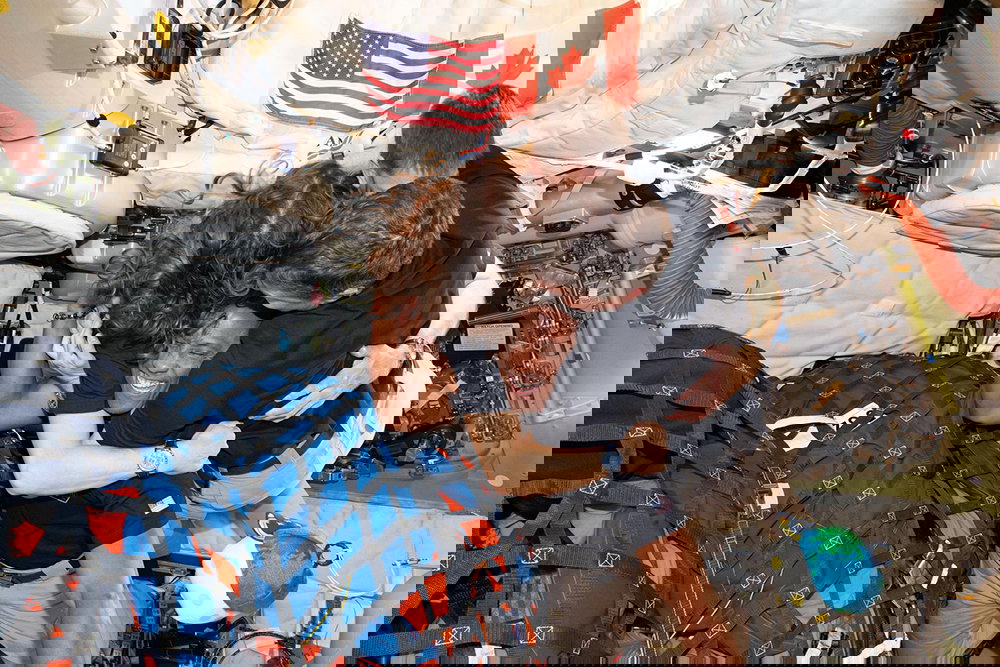
A group hug on their way home (credit: NASA)

Orion spacecraft splashdown in the Pacific Ocean, April 10, 2026 (credit: NASA)
And yes, my kids and I watched that from our living room too. And yes, they went just as quiet at splashdown as they did at launch. Even at eight, seven, and five years old, they recognized that what they were seeing pointed to something bigger than themselves. That we were made for wonder, we were made to look up, and we were made for a home worth looking back at.



Footnotes
- In case you’re unfamiliar, in 1968, Apollo 8 became the first mission to send humans beyond earth orbit, sending astronauts around the moon and capturing the famous “Earthrise” image that forever changed how we view our planet. And while it doesn’t carry the same level of first-time risks or unknowns, the comparison still captures something important: Like Apollo 8, the Artemis II mission gives humanity a unique and fresh perspective of our home planet from deep space. That alone makes the mission worth it.
- As a sidenote, it’s for this reason alone that I believe that it’s very unlikely that God created other life-forms elsewhere in the universe. Which means, out of the countless number of planets in the universe, I can confidently say that life can be found in only one place—here on earth!
- I should also mention that this verse does not mean that we are prohibited from space exploration (as some Christians try to argue). This verse simply emphasizes that God sustains the entire universe by his power, meaning he alone consistently controls the movements of heavenly bodies (something we obviously cannot do!), so it has nothing to do with space-related endeavors. Not to mention the Bible also clearly states that the earth belongs to the Lord (e.g., Psalm 24:1), yet we still explore it and are encouraged to do so.
- You can read more and see some of the highlights of the Artemis II mission here: NBC News, “Highlights: Artemis II Astronauts Circle the Moon on Record-Breaking NASA Mission,” last updated April 6, 2026, https://www.nbcnews.com/science/space/live-blog/artemis-ii-moon-astronauts-live-updates-rcna266588.
- While the Apollo astronauts did experience solar eclipses while in lunar orbit, their views were fundamentally different from the hour-long spectacle witnessed by the Artemis II crew. During Apollo, the astronauts were too close to the surface for the corona to be seen in the same way. Whereas for the Artemis II crew, at over 4,000 miles away, the moon’s apparent size was just right to block the sun while leaving the solar corona visible.
- I had the opportunity to see my first-ever total solar eclipse on April 8, 2024. (Hopefully you were in a location to see totality on that day!) And I must say, it was the most breathtaking, awe-inspiring demonstration of God’s power and glory I’ve ever seen. (It felt like my brain melted while watching it!) It truly was an amazing display of the verse Psalm 19:1: “The heavens declare the glory of God, and the sky above proclaims his handiwork.” On that day, my family and I joined AiG’s resident astronomer Dr. Danny Faulkner and other AiG staff for an eclipse watch party on a small farm in Indiana. The event was recorded for the AiG YouTube channel, which you can watch here: Answers in Genesis, “We Saw Something VERY Different from What the Media Covered,” YouTube, April 12, 2024, https://youtu.be/zhMf8bNNDdA?si=-RxQKCXSsvrv1uvZ.
- You can read more about it here: Josh Dinner, “‘Audible Screams of Delight’ from NASA Scientists over Micrometeorite Impacts on the Moon Witnessed by Artemis 2 Astronauts,” Space.com, April 8, 2026, https://www.space.com/space-exploration/artemis/audible-screams-of-delight-from-nasa-scientists-over-micrometeorite-impacts-on-the-moon-witnessed-by-artemis-2-astronauts.
- You can listen to the full message here: Harris Rigby, “Listen to Artemis Astronaut Victor Glover Deliver an Easter Message We All Need to Hear,” Not the Bee, April 5, 2026, https://notthebee.com/article/listen-to-artemis-astronaut-victor-glover-deliver-an-easter-message-we-all-need-to-hear.
- You can listen to the full message here: Soo Kim, “Tears at Artemis 2 Astronaut’s Final Message Before Communication Blackout,” Newsweek, last updated April 8, 2026, https://www.newsweek.com/tears-artemis-ii-astronaut-final-message-communication-blackout-11794006.
- James Benson Irwin, More Than Earthlings: An Astronaut’s Thoughts for Christ-Centered Living (Broadman Press, 1983).
Support the creation/gospel message by donating or getting involved!

Answers in Genesis is an apologetics ministry, dedicated to helping Christians defend their faith and proclaim the good news of Jesus Christ.
- Customer Service 800.778.3390
- Available Monday–Friday | 9 AM–5 PM ET
- © 2026 Answers in Genesis