
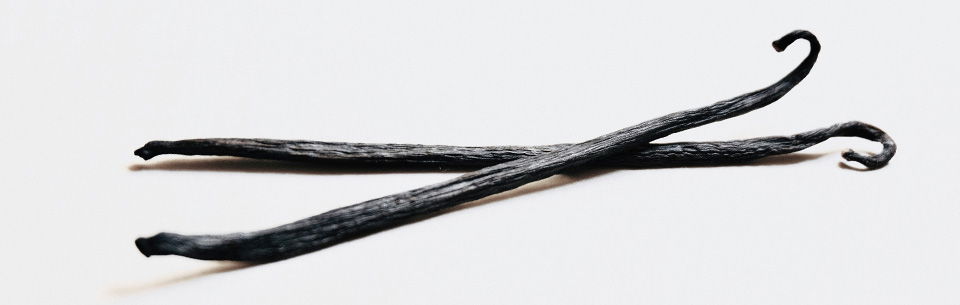
Photo by Jocelyn Morales on Unsplash
Not Just Another “Vanilla” Archaeological Find
It used to be commonly accepted knowledge that the Aztecs were the earliest documented users of domesticated vanilla. Around AD 1300, they cultivated a flat-leafed Vanilla species (Vanilla planifolia) in central Mexico. But that 700-year-old date has been shattered in the past seven years.
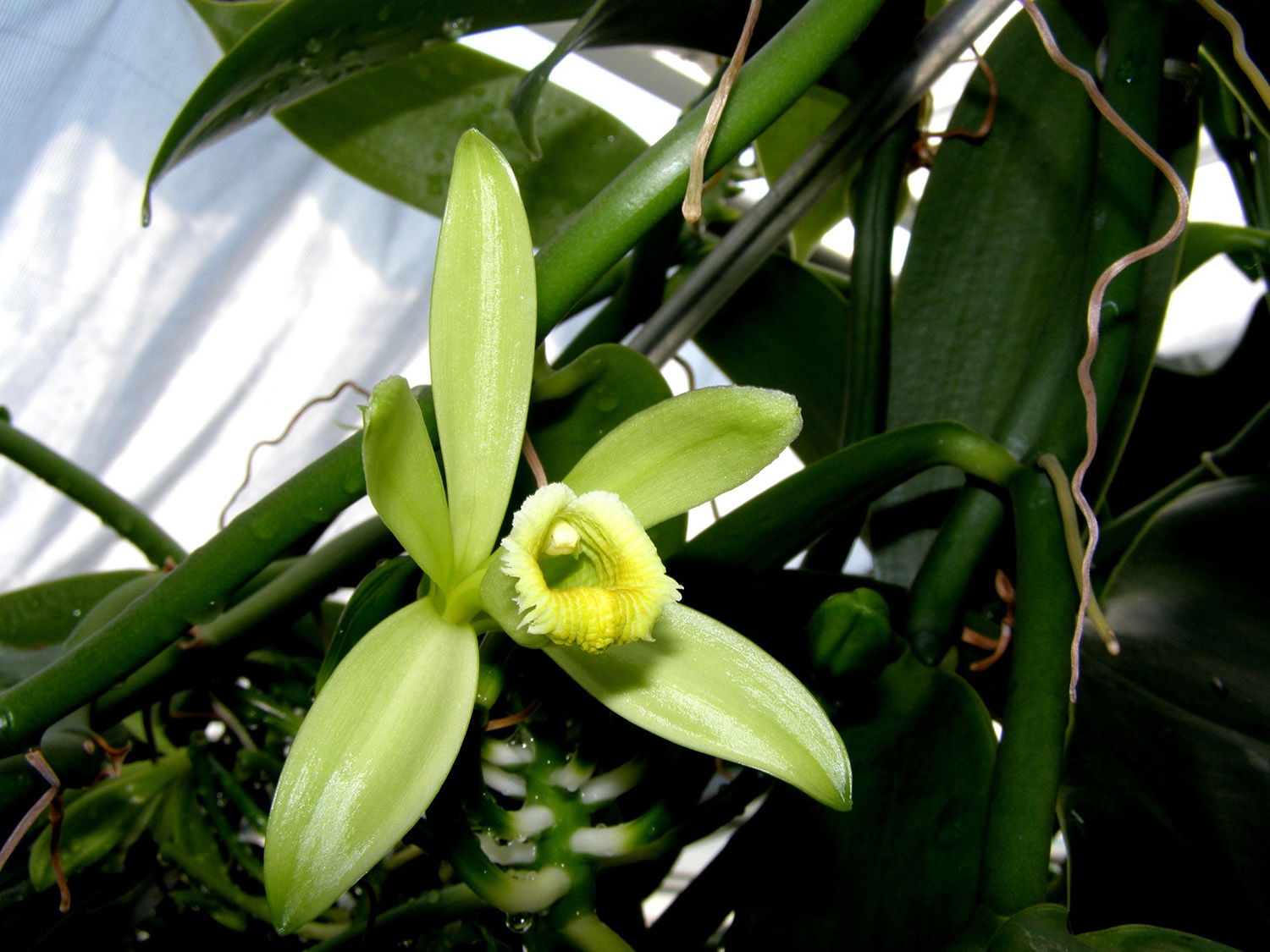
The orchid of vanilla planifolia, the primary species of vanilla in use today.
Vanillinmacher, via Wikimedia Commons
A Little Bit About Vanilla
Vanilla spice comes from different orchid species within the genus Vanilla that grow in many tropical locations across the globe. Its aroma and flavor profiles are derived primarily from the plant’s fruit pods (called vanilla beans) but can also be obtained by steeping the entire plant. Vanilla beans are sun-dried for months, then finished in controlled conditions, a process that can take up to 18 months from harvest.
Two Revealing Archaeological Finds
First at Tel Megiddo in 2019, archaeologists uncovered evidence of the use of vanilla oil and spices as mortuary offerings c. 1650–1550 BC.1 It was likely used in the funerary activities associated with the interment of the individuals laid to rest in the tomb, as vanilla has a desirable fragrance but is also infused with antifungal and antibacterial properties. As such, it might have been used as an embalming agent, or maybe linens were soaked in vanilla before being put on the deceased.
Then, a few years later, archaeologists found vanilla-infused wine residue in ceramic jars in Jerusalem.2 This was dated to c. 600 BC to the reign of the last king of Judah, Zedekiah (prominently featured in the book of Jeremiah). Those wine jars were discovered in two locations in Jerusalem in 2022.
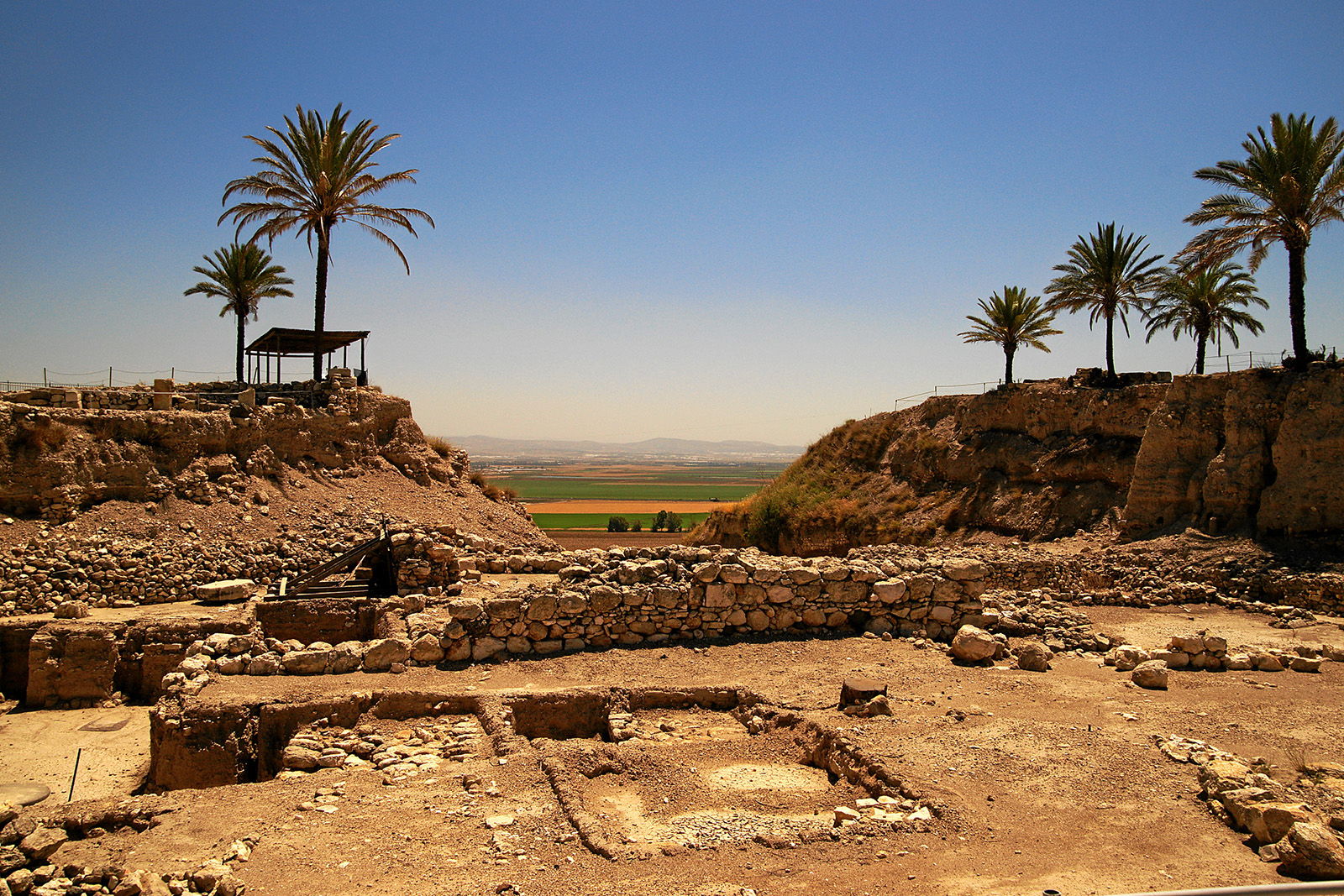
Ancient mound of Megiddo, where vanilla-infused oil was found in Area H.
Mboesch, CC BY-SA 4.0, via Wikimedia Commons
Tel Megiddo: Location of the First Vanilla Oil Use
In the second millennium BC, this important city-state of Megiddo controlled the western part of the Jezreel Valley, which provided an important crossroads of regional and international travel and commerce. Megiddo features prominently in many biblical events and battles (2 Kings 9:27, 23:29–30) and, of course, the future battle of Armageddon (Revelation 16:16). Megiddo was strategically located at this Africa/Eurasia nexus, and due to its location in a valley between rugged mountain terrain, it was quite easy to police the caravans (and also tax those) that came through.
Archaeological evidence from Tel Megiddo reveals that local merchants (whether Canaanite or Israeli) participated in extensive trade networks. We know from Scripture that the inhabitants of Megiddo were difficult to conquer. Joshua 17:11 mentions Megiddo as in the territory of Manasseh (as does 1 Chronicles 7:29). But Joshua 17:12 tells us that Manasseh was not able to conquer Megiddo, and this is reiterated in Judges 1:27. It appears that Megiddo resisted conquest until the time of David or Solomon (1 Kings 9:15–16). The Canaanites at Megiddo appeared to have a strong trading relationship with merchants who traveled through Asia or the interior of Africa as a Biblical Archaeology Society article mentions:
Particularly clear evidence for trade comes from the Megiddo tombs.
Tomb 50, which dates to the Middle Bronze Age III (c. 1650–1550 BC [in a conventional chronology]) . . . was undisturbed and contained three primary inhumations: an adult male, an adult female, and a youth . . . with an assemblage of elite grave goods, which included gold, silver, bronze, and bone items. There was also a large assemblage of pottery, including two Cypriot vessels.
. . . In three small juglets, the analysis detected significant amounts of the principal components of natural vanilla, including vanillin, as well as lower concentrations of 4-hydroxybenzaldehyde and acetovanillone (compounds derivative of vanillin). These compounds are the earliest archaeological evidence for the exploitation of a vanilla-infused oil in the Old World and most probably worldwide.
. . . There are at least four known aromatic vanilla species that could have been exploited as early as the second millennium BCE. These are Vanilla polylepis, which is endemic to central East Africa, and Vanilla albida, Vanilla abundiflora, and Vanilla griffithii, all of which are endemic to Southeast Asia (India, Sri Lanka, Malaysia, and Indonesia). . . . These four species are the most likely source of the vanilla found at Megiddo. It is possible that the vanilla pod as well as the entire plant were used to extract vanilla-enriched oil.3
These two trade systems could have sourced vanilla to Megiddo:
- From South and Southeast Asia to Megiddo: The Canaanites (and later the Israelis) took advantage of their positioning at the crossroads of Africa and Eurasia to establish long-distance trading networks that connected the Levant with the Anatolian plateau (modern-day Turkey). Other intense trade occurred between Ashur (modern-day Iraq) and Mari (modern-day Syria) and places as distant as India and Afghanistan.
- From Africa’s tropical regions to Egypt to Megiddo: Egypt frequently traded with the land of Punt. This may be in or close to the same region where Sheba was, as the listing of resources is almost identical (1 Kings 10:1–10).
Megiddo’s wealthier citizens were buried with vanilla-spiced oil, much like the Egyptian embalming practices, which “revealed the presence of plant oil, resin, and an aromatic plant extract in funerary textiles already in the mid-fourth millennium BC”4 (although in a revised chronology, this would come down to approximately 2100 BC).5 As a BAS article points out, “Like the Egyptian embalmers, Megiddo’s residents probably recognized the qualities of vanilla, which they may have used for embalming rites, cultic practices, medicine, or to flavor food and drink.”6 It is unlikely that King Zedekiah (c. 618–586 BC) was the first ruler to drink vanilla-spiced wine, as vanilla has been attributed to much earlier periods.7
Archaeology Confirms Scripture Again
This archaeological dig at Megiddo only further corroborates what Scripture says about historical events.
Taken together, the finds in Megiddo and Jerusalem showcase that Israel and certain Canaanite peoples (as well as Egyptians, Philistines, and Tyre/Sidon) had extensive trade networks coming from Asia and interior Africa to the Levant. While God wanted Israel to stay separate from the surrounding nations, he never forbade them from trading with other nations (1 Kings 10:14–15), and one of their biggest trading partners was Tyre in modern-day Lebanon (2 Chronicles 2; Ezekiel 27:17). Solomon also had ships docked at Ezion-Geber that could travel around the Arabian Peninsula and over to Asia (1 Kings 9:26–28), so these trading routes were in place by at least 970 BC. Solomon also established (or continued) trade relations with Syria, Egypt, and Turkey (1 Kings 10:28–29).
Once again, we see that even in something so mundane, such as trading partners, the Bible was correct when it mentions the nations that did business with the kings of Israel and Judah. This archaeological dig at Megiddo only further corroborates what Scripture says about historical events.


Footnotes
- Vanessa Linares, Matthew J. Adams, Melissa S. Cradic, Israel Finkelstein, Oded Lipschits, Mario A.S. Martin, et al., “First Evidence for Vanillin in the Old World: Its Use as Mortuary Offering in Middle Bronze Canaan,” Journal of Archaeological Science: Reports 25 (June 2019): 77–84, https://doi.org/10.1016/j.jasrep.2019.03.034.
- Nathan Steinmeyer, “Biblical Kings Drank Vanilla-Flavored Wine,” Biblical Archeology Society: Bible History Daily, April 1, 2022, https://www.biblicalarchaeology.org/daily/biblical-sites-places/jerusalem/biblical-kings-drank-vanilla-flavored-wine/.
- Vanessa Linares, “Vanilla-Spiced Afterlife at Canaanite Megiddo,” Biblical Archaeology Society: Bible History Daily, February 4, 2026, https://www.biblicalarchaeology.org/daily/ancient-cultures/ancient-near-eastern-world/vanilla-spiced-afterlife-at-canaanite-megiddo/, emphasis added.
- Linares, “Vanilla-Spiced Afterlife.”
- Jana Jones, Thomas Higham, David Chivall, Raffaella Bianucci, Gemma Kay, Mark Pallen, et al., “A Prehistoric Egyptian Mummy: Evidence for an ‘Embalming Recipe’ and the Evolution of Early Formative Funerary Treatments,” Journal of Archaeological Science 100 (2018): 191–200, https://doi.org/10.1016/j.jas.2018.07.011.
- Linares, “Vanilla-Spiced Afterlife.”
- Nathan Falde, “Judean Elites Sipped Vanilla Wine 2,600 Years Ago,” Ancient Origins, April 4, 2022, https://www.ancient-origins.net/news-history-archaeology/vanilla-wine-0016600.



Support the creation/gospel message by donating or getting involved!

Answers in Genesis is an apologetics ministry, dedicated to helping Christians defend their faith and proclaim the good news of Jesus Christ.
- Customer Service 800.778.3390
- Available Monday–Friday | 9 AM–5 PM ET
- © 2026 Answers in Genesis